Hugging Face's US$399 Robot Duck Sells Out as Chinese Supply Chain Draws Investor Attention
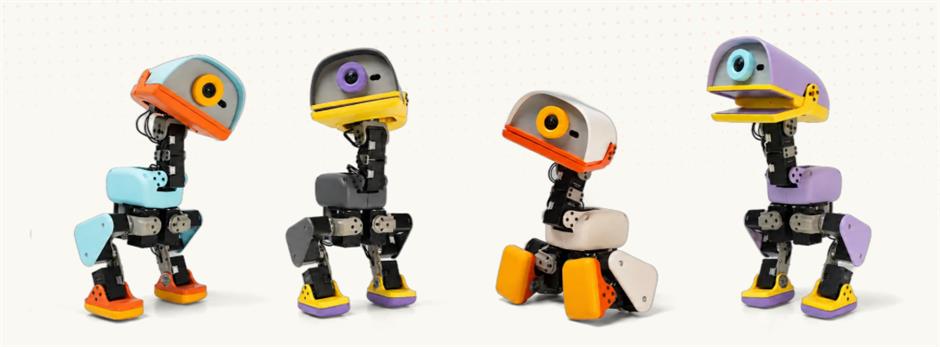
Hugging Face’s new US$399 robot duck has become an unexpected hit, generating more than US$2.6 million in orders in its first 24 hours and putting a spotlight on the Chinese hardware supply chain behind the viral gadget.
Microduck, a nearly 25-cm-tall programmable robot developed by Hugging Face subsidiary Pollen Robotics, was unveiled on August 27. Hugging Face co-founder Thomas Wolf said orders had already topped US$1 million within about 6 hours before exceeding US$2.6 million after a full day, according to Business Insider.
Demand was strong enough to overwhelm the company's original delivery plans. Pollen Robotics warned customers that it could no longer guarantee Christmas delivery for new orders and estimated a four-to-six-month wait as it ramps up production.
The two-legged Microduck can walk, sit, kick a small ball, pick up objects and get back on its feet after falling. Developers can also train it to perform new movements in a physics simulator before deploying the behaviors on the physical robot. It comes equipped with a camera, lidar and motion sensors.
Behind the French-designed robot is a significant Chinese hardware connection. Chinese reports have identified Shenzhen-based Seeed Studio, an open-source hardware company, as Microduck's manufacturer. The robot also uses the RK3566 processor from Shanghai-listed Chinese chip designer Rockchip as its main controller.
Microduck's popularity quickly spilled into China's stock market. Rockchip shares surged by the 10 percent daily limit on August 31 as investors seized on the company's connection to the robot and the broader prospects for edge AI devices. Other Chinese chip and communications companies, including Allwinner Technology, Espressif Systems and Fibocom Wireless, also advanced.
The rally continued the following day, with Rockchip jumping as much as 8.4 percent in morning trading yesterday.
The market enthusiasm is considerably larger than Microduck's immediate financial contribution to Rockchip. The RK3566 is a mature processor launched years ago, and sales from a few thousand robots would represent only a small fraction of the chipmaker's business. Still, Microduck's breakout debut has given investors a highly visible example of how China's established electronics supply chain could benefit as AI increasingly moves from software into affordable consumer robots.
Editor: Wang Qingchu
In Case You Missed It...

 Sep 5, 2026