Minhang Unveils Ambitous Plans for Urban-Rural Integration
Minhang's 15th Five-Year Plan sets out the goal of accelerating the development of a modern central urban area that is innovative, open, eco-friendly, culturally rich, livable and safe, as well as a key hub for new-quality productive forces over the next five years.
The second part of the series looks at the latest developments and key plans for the 15th Five-Year Plan period (2026-2030) in the areas of culture and tourism, the comprehensive revitalization of rural areas and how these initiatives are helping to enhance urban livability in the district.
Rural areas will not only be happy homes where farmers can live and work in peace and contentment, but also be the finest example of urban-rural integration in the city.
According to Zhu Qunying, director of the Minhang Agricultural and Rural Affairs Commission, over the next five years, Minhang will continue to adopt a three-pronged approach for its agricultural and rural affairs, focusing on agricultural industry, people's livelihoods and aesthetics, creating high-quality, beautiful and harmonious living spaces in rural areas so that these communities are not only visually appealing but also possess the momentum for sustainable development.
By the end of 2025, the combined assets of rural collectives across the district had reached 147.4 billion yuan (US$21.73 billion), with total distributable income being 857 million yuan; per capita distribution standing at 3,889 yuan; and the value of publicly traded rural property rights transactions hitting 6.109 billion yuan, all of which ranked first in the city.
Before the end of the year, 300 rural car parking spaces and signage in 20 villages will be upgraded, and 20 public service facilities will be newly built or refurbished, and these "micro-upgrades" would be a part of the major living environment improvement initiative in rural areas.
Over the next five years, the plan is to build 4,000 new "Beautiful Rural Courtyards" and upgrade 8,000 existing ones, linking these courtyards with rural footpaths and public landscapes to form a network of connected sites, thereby allowing the beautiful and harmonious rural areas to be accessible to residents and visitors in the the entire region.
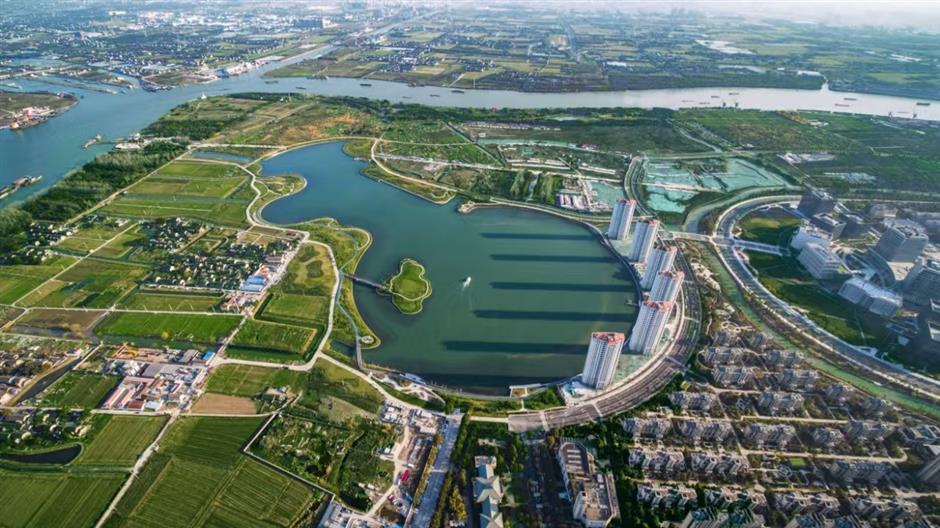
In Pujiang Town, farmlands have been reopening their once-closed gates, signalling the transformation into new urban-rural landmarks that city dwellers are eager to visit and spend their leisure hours.
The Fangyuan Ecological Farm, covering an area of over 226,667 square meters, is one of the examples during this wave of rural transformation.
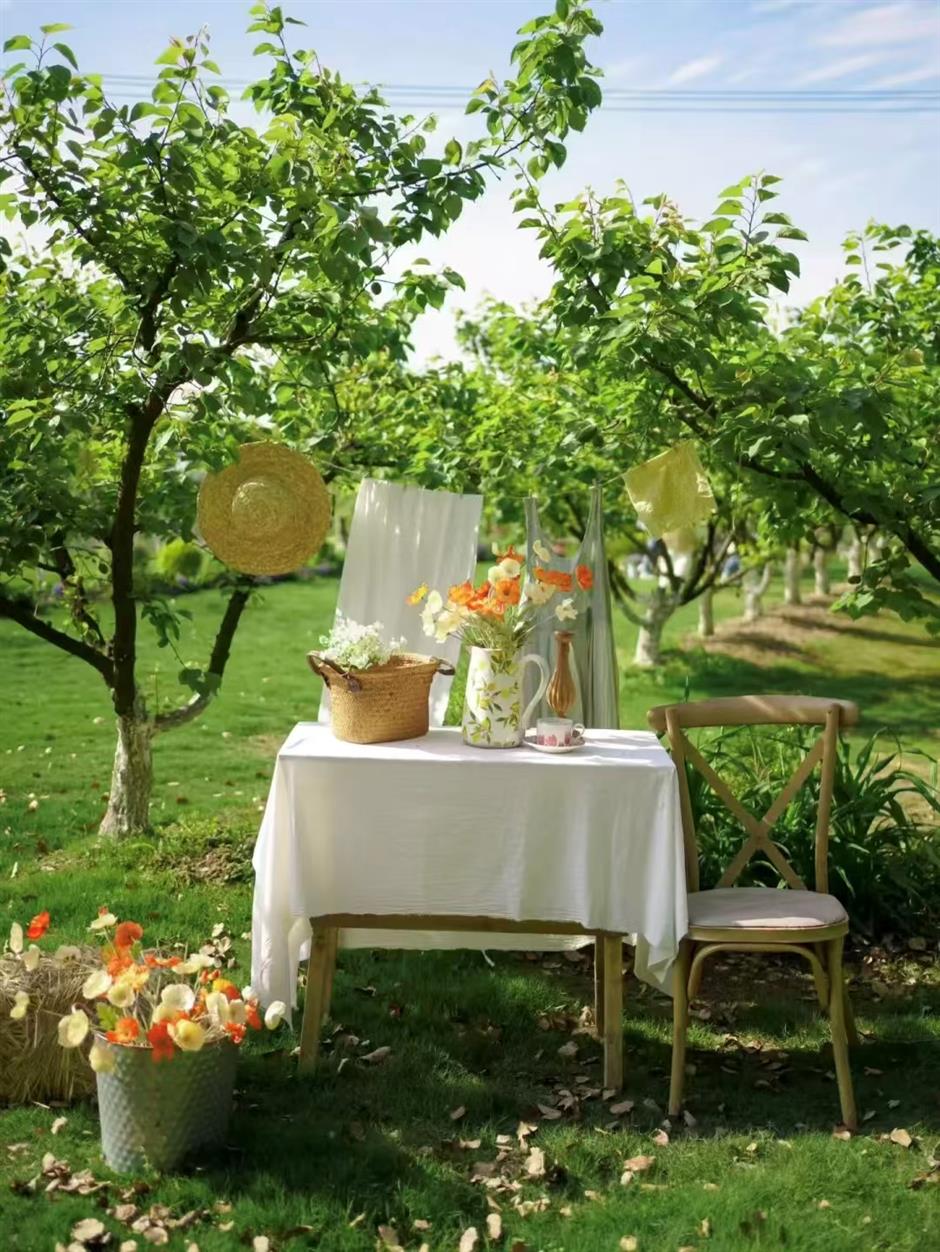
It used to provide citrus, peaches and pears to fruit distributors. It has added a cafè, and a camping area to attract visitors and parents who want to stay close to their children in a natural landscape. Farm operators are also holding handicraft sessions, team building for business owners and executives, as well as seasonal activities.
During the 15th Five-Year Plan period, Minhang will also focus on leveraging technology to drive green development, making the most of limited arable land.
Making use of Minhang's farm land resources, authorities have also been focusing on bringing in cutting-edge research teams to enhance the level of modern agricultural industries in the region.
From 2021 to 2025, Minhang established a seed source incubation center and up a PhD workstation in collaboration with the Shanghai Academy of Agricultural Sciences, and established a professor's studio in partnership with Jiao Tong University, thereby inviting leading research teams to the district to jointly tackle challenges in seed source research.
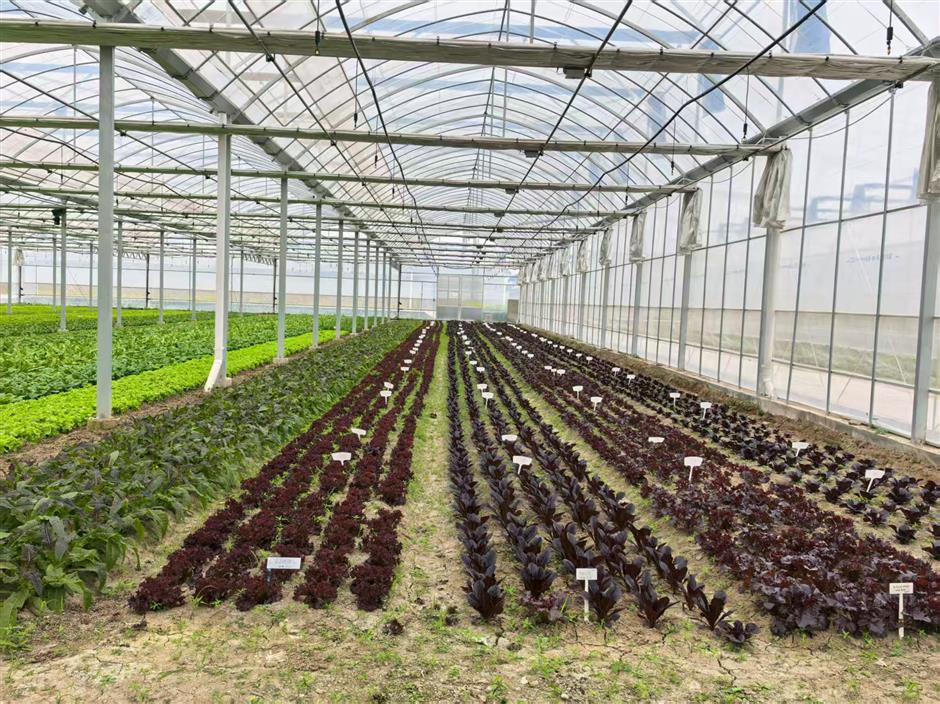
The Qingmei Farming Base in Pujiang Town supplies more than 500 tons of high-quality vegetables to the market every month, and the entire process–from cultivation to supply chain management and harvesting–has now been largely automated.
Currently, more than 100 lettuce seed sources have been sourced and selected at the Qingmei base for breeding, with plant phenotyping technology introduced to enable smart growth monitoring and the selection of the very best varieties.
Minhang is exploring a replicable modern farming model that integrates crop varieties, advanced technologies and equipment, with the aim of transforming the Qingmei base not only into a vegetable production center, but also into a demonstration base for new product types, new equipment, new production materials and technologies with significant influence in Shanghai and across the Yangtze River Delta region.
By the end of this year, the consolidation of 994,000 square meters of fragmented land would be completed and it will be turned into an integrated farmland, so that more arable land can be transformed into high-yielding, stable farmland to ensure high quality and stable food supply.
The Qingmei Farming Base is also planning to launch interactive activities such as science popularization talks, fruit-picking experiences and agricultural machinery demonstrations, and is set to become a popular destination combining science education, educational tours and tourism.
Looking ahead, Zhu said the agricultural industry in Minhang must not only provide residents with stable and ample food supplies but preserve the city-dwellers' "love of the countryside".
Telling rich stories
Lu Xiaoyan, director of the Minhang Culture and Tourism Bureau, stated that the district's culture and tourism sector is accelerating its development path to telling rich stories as well as promote the integration with cultural and historic landmarks with sightseeing and residents' daily lives.
Pujiang Town's Oriental Intelligent Media City hosted the Micro Drama Technology Industry Promotion Conference earlier this year.
The media city is a national-level audiovisual industry cluster developed by SMG. It has brought together more than 300 organizations specializing in film and television, cultural technology and digital content. Minhang has launched eight specific measures for micro-short dramas, allocating 30 million yuan in dedicated funding with a clear focus on platform development, content creation, technological innovation and talent recruitment and development, providing end-to-end support for the deep integration of artificial intelligence (AI) and the micro-drama industry.
"Video documentation and visual storytelling have become a mainstream form of communication," explained Lu. Nowadays, a three-minute short drama can promote an obscure little restaurant in no time, whilst a video exploring a venue with a sense of history can put an old street back on young people's travel itineraries. Micro dramas are not merely entertainment formats, they are becoming one of the most effective mediums for promoting culture and tourism, she explained during the Micro Drama Technology Industry Promotion Conference.
Minhang has a rich foundation and solid industry background and promoting this sector has not come out of thin air. The Zizhu National Online Audio-Visual Base provides the industrial foundation, whilst Oriental Intelligent Media City serves as a hub for industry clustering.
Leading colleges such as Jiao Tong University, the Shanghai Theatre Academy and East China Normal University continue to supply creative talent, whilst the science and technology innovation resources of Grand NeoBay provide support for the application of AI technology. Furthermore, the Hongqiao Business Hub in the north and the policies of the China Free Trade Zone (Shanghai) have opened up channels for content to reach international markets.
With all favorable policies, funding, platforms, talent and technology in place, a complete ecosystem of Minhang's AI-empowered micro-short drama sector is coming into shape.
Authorities are also trying to turning scattered urban memories into a shareable cultural and tourism topics that are fit for online public promotion and communication.
For example, Minhang Hotel has hosted many national leaders and foreign dignitaries, with numerous cultural figures visiting, leaving behind a wealth of cultural stories through their writings and oral accounts, Lu observed.
"The true cultural and tourism value of historic buildings and traditional flavors means they are not merely relics or just anecdotes, but places where emotional resonance is fostered."
"Developing cutural and tourism industry is all about providing people with a rich sense of experience and emotional value," she added. On the basis of this insight, the "Come and Join Our Treasure Hunt in Minhang" competition was launched earlier this year, encouraging all subdistricts, towns and the Xinzhuang Industrial Zone to dig deeply into local history and cultural anecdotes.
Through short plays, micro dramas, oral histories and documentary recordings, the initiative aims to link cultural and tourism sites rich in history, heritage and stories into a cohesive narrative. There is but one objective: to encourage more people to visit Minhang and discover Shanghai's hidden treasure and urban legacies.
The Grand NeoBay Library, spanning an area of 16,000 square meters, is the city's largest subdistrict-level library, and has been designated a municipal model library.
Yet this is more than just a library. Nine major event series run continuously throughout the year, with talks, and forums with famous academicians and scientific researchers held regularly, bringing cutting-edge knowledge closer to ordinary citizens over the weekends.
From 2026 to 2030, organizers and management teams of the library will continue to make full use of the resources of neighboring universities, research institutes and science and technology innovation enterprises to further establish itself as a high-quality cultural landmark within the Grand NeoBay Science and Technology Innovation Zone.
In 2028, the Feng Yuan Art Museum will open within Minhang Cultural Park with a floor area of 22,000 square meters, and it is set to become a major artistic landmark in Shanghai.
The Meilong area will introduce China's first Harry Potter Studio Tour, a 53,000-square-meter attraction and experience project based on the world-renowned film series, along with an immersive experience zone, a themed hotel and a speciality market.
The Zhaojialou Ancient Town will undergo a comprehensive upgrade, re-emerging as a new benchmark for international historic towns.
These projects are not isolated cultural and tourism sites, but rather a network of destinations that is taking shape.
Minhang is striving ahead by promoting in-depth culture experiences, a vibrant tourism atmosphere and a resilient industry and warm-hearted living environment.
Editor: Li Qian
In Case You Missed It...
![[Quick News] Work From Home, Metro Closures, Expected Red Alerts](https://obj.shine.cn/files/2026/08/09/ed7032e4-d8a5-479d-b1e7-2e265a9d67ba_0.jpg)
 Aug 9, 2026
Popular Reads
![[SH Sports Pulse] China U17 and Arsenal U17 Declared Joint Champions of Future Star Cup](https://obj.shine.cn/files/2026/08/10/54564c4e-0208-4d97-8cea-418c84dbc228_0.png)
[SH Sports Pulse] China U17 and Arsenal U17 Declared Joint Champions of Future Star Cup
![[Quick News] Metro Services Resume as Flights, Trains Also Back on Track](https://obj.shine.cn/files/2026/08/10/eac339c2-b469-4c6e-85cb-4038c2f6b9bb_0.jpg)
[Quick News] Metro Services Resume as Flights, Trains Also Back on Track
Lost Letter Reaches Woman Nearly 30 Years After Father Mailed It
![[Quick News] Red Rainstorm Alert in Jinshan, More Shanghai Districts Stay on Orange, Flood Risk Warning](https://obj.shine.cn/files/2026/08/10/33a65033-f079-4d0d-a513-271823d55277_0.jpg)
