Shanghai Malls Roll Back Pet-Friendly Policies Amid New Regulations
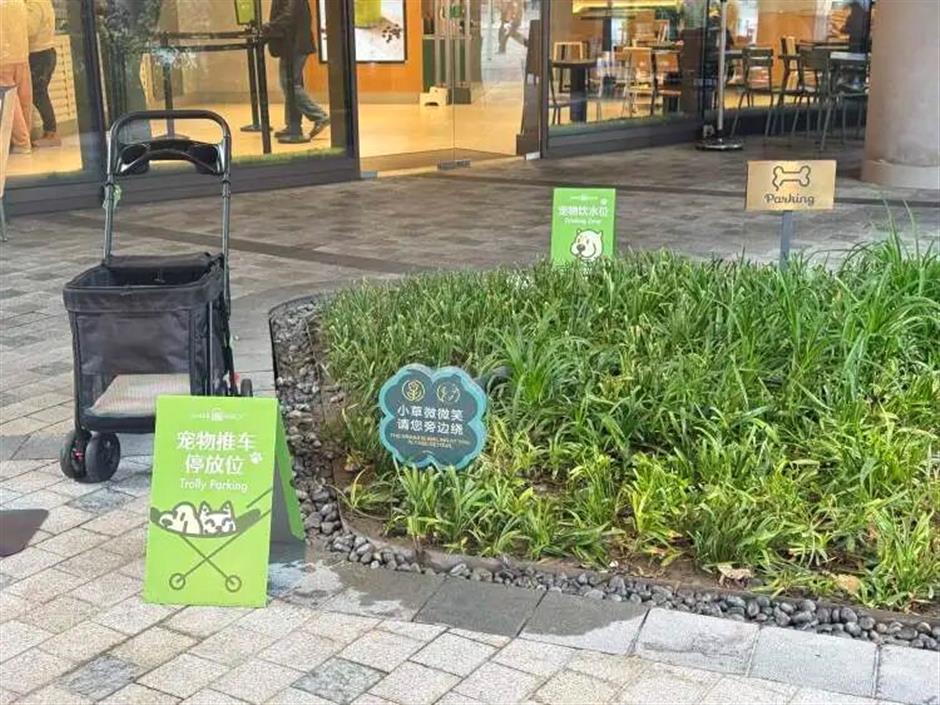
Complaints have flooded Chinese social media as numerous shopping malls in Shanghai have ended or scaled back pet-friendly access, with many pet owners questioning the sudden removal of pet-friendly signage.
However, industry insiders said the adjustments are aimed at regulatory compliance and protecting the interests of all consumers, marking an end to loosely managed pet-friendly policies in Shanghai's retail sector.
Several major commercial complexes have imposed full or partial pet bans. Jing'an Kerry Center and Zhenru Unipark MAX now display "no pets allowed" signs at entrances, with staff confirming that pets are prohibited inside the mall, Shanghai Morning Post reported yesterday.
HKRI Taikoo Hui and Grand Gateway 66, once prominently pet-friendly with dedicated elevators and pet stroller rental services, have removed all related signage and dismantled rental stations. Staff confirmed the venues only permit guide dogs and other assistance animals.
Suhewan MixC World and Qiantan Taikoo Li, previously fully pet-friendly, have restricted pets from indoor stores while keeping outdoor areas open to animals.
The policy shift stems from two sets of rules taking effect in 2026: the revised Shanghai Dog Management Regulations and the Pet-Friendly Shopping Mall Operation Specifications, which went into force on February 1.
The updated Shanghai dog rules ban dogs – except assistance animals – from malls, restaurants, hospitals, schools and public transport, eliminating the vague "prohibition in principle" language and exposing non-compliant businesses to direct penalties. Many former pet-friendly policies operated in a regulatory gray area that has now been closed.
The national Pet-Friendly Shopping Mall Operation Specifications sets strict compliance standards: physically separated pet zones, water stations, dedicated restrooms, kennels, first-aid kits, and rental services for pet strollers and leashes. It also mandates size limits, required leashes and muzzles, vaccination proof, restricted access to sensitive areas, and protocols for conflict and injury response. Sanitation and staff training rules further raise operational barriers.
Editor: Wang Qingchu
In Case You Missed It...

 Sep 17, 2026
![[Hai Lights] A Foodie's Guide to Shanghai's 10 Best Sandwiches](https://obj.shine.cn/files/2026/09/16/660ac7b7-ec7c-404c-9872-976848781dda_0.jpg)