Small Companies, Big Market: The Quiet Battle to Get New Zealand Brands onto Chinese Shelves
This year's CIIE exhibition space covered a record-breaking 440,000 square meters. Within that vast area, the Taste of New Zealand exhibit occupied a comparatively modest 1,170 square meters at Hall 8.2, where 35 smaller companies aimed to break into the massive Chinese market.
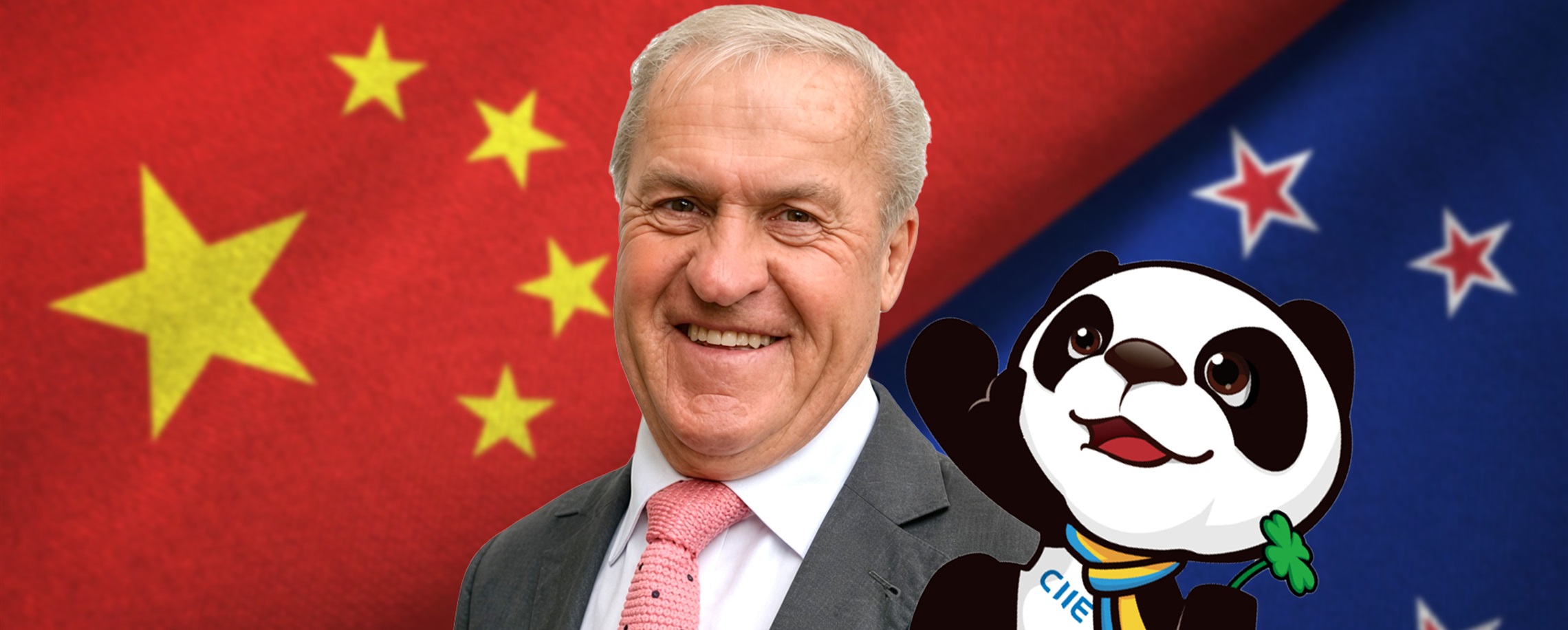
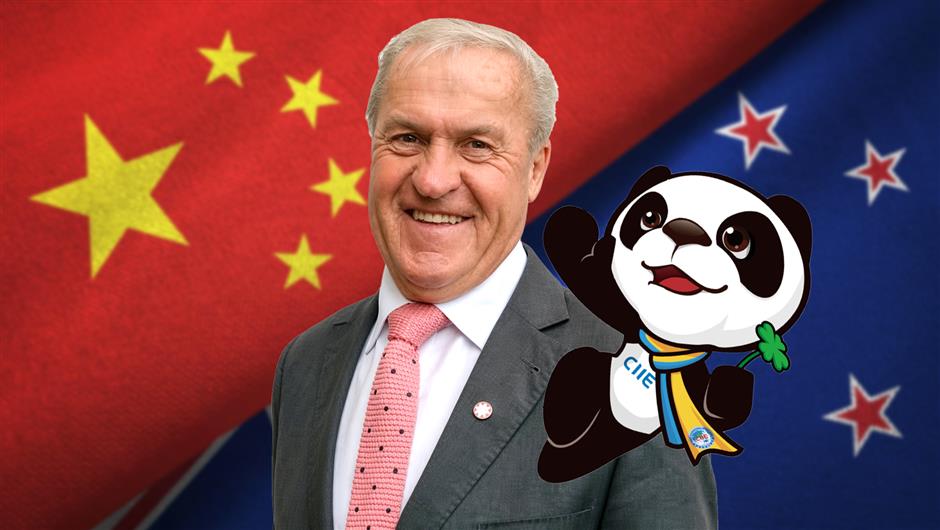
Former speaker of the New Zealand House of Representatives, Sir David Carter, who has worked for years now on the New Zealand-China relationship, visited for the first time. And he was overwhelmed by the share scale of the expo.
"Well, I'm just blown away by the size of it," he told me. "Trade's obviously very good between New Zealand and China, it's our largest trading partner. New Zealanders probably don't realize how dependent we are on China and China's economy."
Sir Carter visited the exhibit to chat with New Zealand companies and see what he can do to help, especially the small and medium-sized ones exhibiting here.
"We all know the big ones (New Zealand companies): the Fonterras, the Zespris, the Silver Fern Farms," he told me as we shuffled between the Kiwi stalls. "It's these small ones that are battling to get into the (Chinese) market – I wish them all the luck."
One such company is ecostore, a family business started in New Zealand three decades ago. Their brand, which offers green and natural home, body, baby, and oral care products, exhibited at the CIIE for the first time ever. And it was a huge success.
Their general manager for China, Chloe Liu, told me they were honored to be invited to attend by New Zealand Trade and Enterprise, and that they had already signed a deal with premium Chinese supermarket chain Hema Fresh. The deal was a "really amazing milestone for us," she told me, adding that ecostore and Hema share similar brand values.
"Our core business value is sustainability – we want to give the consumer the safest products in the Chinese home, which is the same as Hema."
Brett O'Riley, the new president of the New Zealand-China Friendship Society, is also here. He has a long career in technology, innovation, economic development, and business. "I think much of New Zealand's prosperity in the last 20 years is because of the free trade agreement between our two countries."
On April 7, 2008, New Zealand became the very first developed country to sign a free trade agreement with China, becoming the small pacific nation's largest trade deal since the 1983 Closer Economic Relations agreement with neighboring Australia.
"I think as we look to the future, and particularly a lot of the economic challenges that countries like New Zealand face in renewable energy and reducing carbon footprint," he added, "working with a sophisticated, high tech economy like China is pretty important."
So what's next for New Zealand-China trade? And what more can New Zealand companies do to get into the huge Chinese market?
O'Riley has a few ideas. "China is a very competitive market. You only have to be here at CIIE to know how competitive it is. But it's also a market that's very nuanced. The demand for sort of new types of protein, the demands for the nutraceutical, the new uses that we've seen for some of the traditional New Zealand products, I think still offers plenty of potential for New Zealand companies here in China."
Sir Carter's advice is a bit more fundamental. "I think just keep doing the job properly. If you've got a stand and you're from New Zealand, put the effort in, make sure you've got good personnel on the ground (in China) because the people wandering through, there'll be millions go through this expo while it's on … make sure you present your country well. I think the stands that I've seen (that) New Zealand is associated with, they're doing that, and I'm proud of them for doing it."
The 9th China International Import Expo wrapped up today.
Editor: Liu Qi
In Case You Missed It...
 Nov 10, 2026