Viral Chinese Dance Move Turns Out to be Centuries-Old Folk Tradition
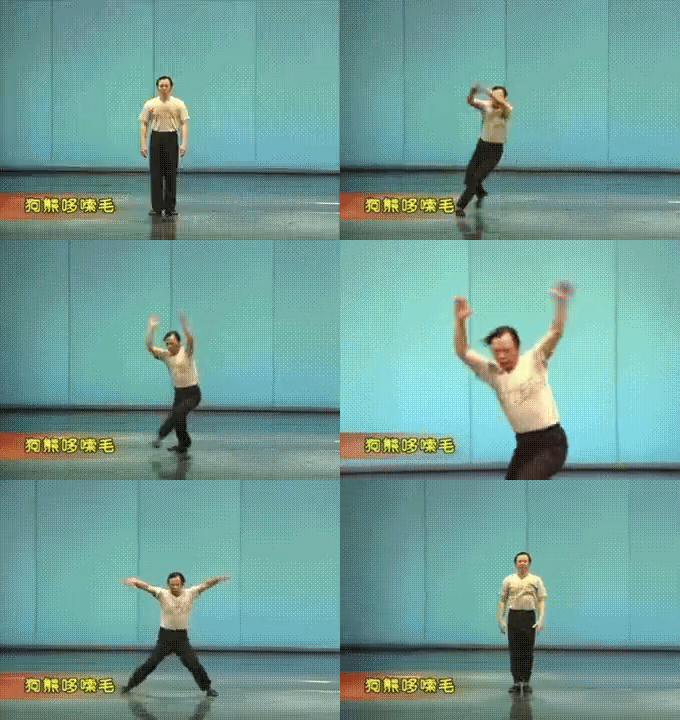
A quirky dance move known online as “Gouxiong Duosuo Mao,” or roughly “a bear shaking its fur,” has gone viral on Chinese social media, sending users imitating its distinctive rhythm and full-body shake.
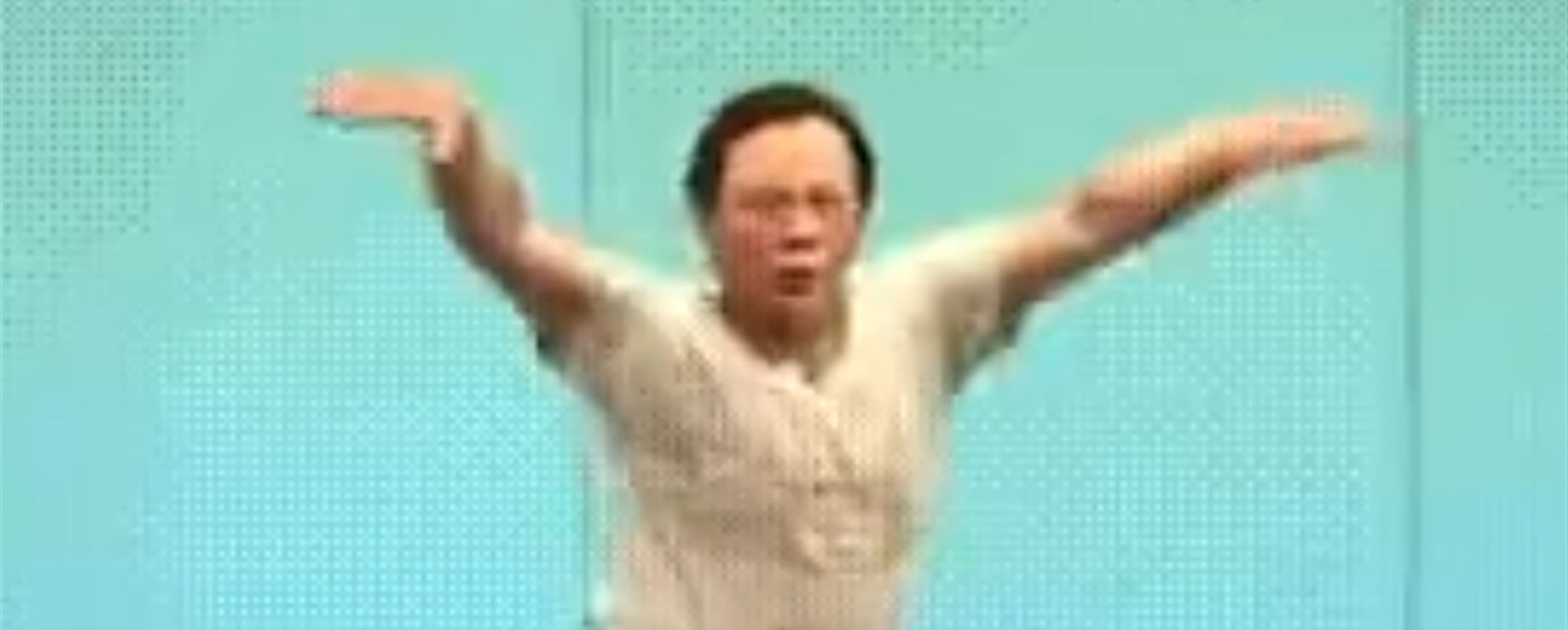
The trend began with a decades-old dance instruction video in which a teacher chants the phrase in a serious tone before swaying from side to side and shaking his body to a strong beat. The contrast between the name and the movement helped turn the clip into a meme.
But the move is not a newly invented Internet dance. It comes from Shandong Guzi Yangge, a traditional folk dance from Shanghe County in Shandong Province that was included in China’s first national list of intangible cultural heritage in 2006.
Guzi Yangge is known for broad, forceful movements and a vigorous style often associated with northern Chinese folk dance. Its history can be traced back to the Northern Song Dynasty, with the form developing further during the Ming and Qing dynasties.
“Gouxiong Duosuo Mao” is one of its basic movements. Dancers initiate the motion from the waist and abdomen, transferring force through the arms and the rest of the body while coordinating with the dance’s characteristic cross-step. The movement looks playful in isolation but becomes much more imposing when performed in formation by a large group.
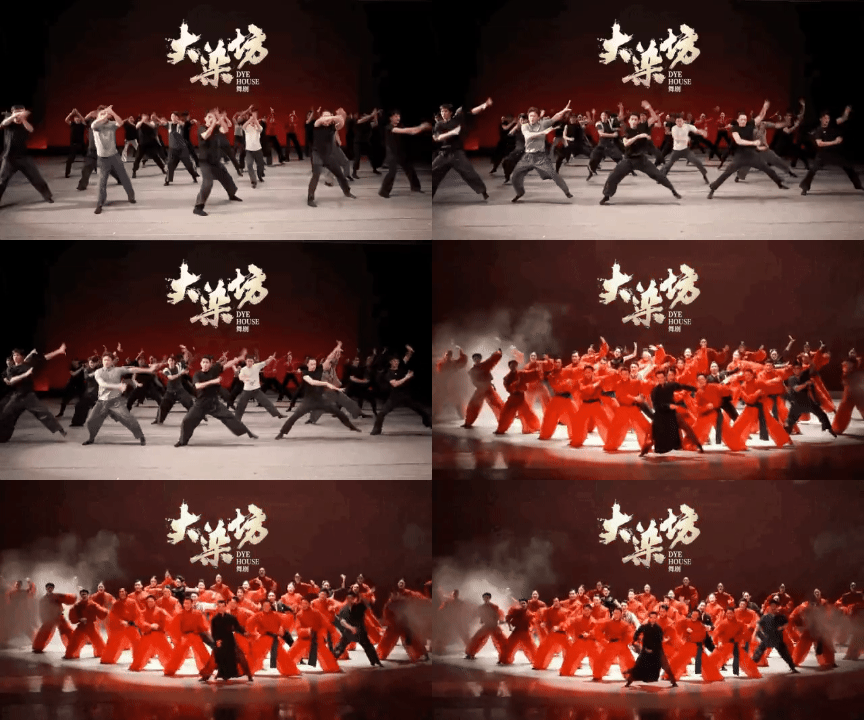
The move has also drawn attention through stage productions. In the Shandong Song and Dance Theatre’s production "Dye House," choreographers incorporated Guzi Yangge movements into scenes inspired by traditional dyeing work, including stirring vats, beating cloth and hanging fabric. A large ensemble sequence at the end of the performance has been widely shared online.
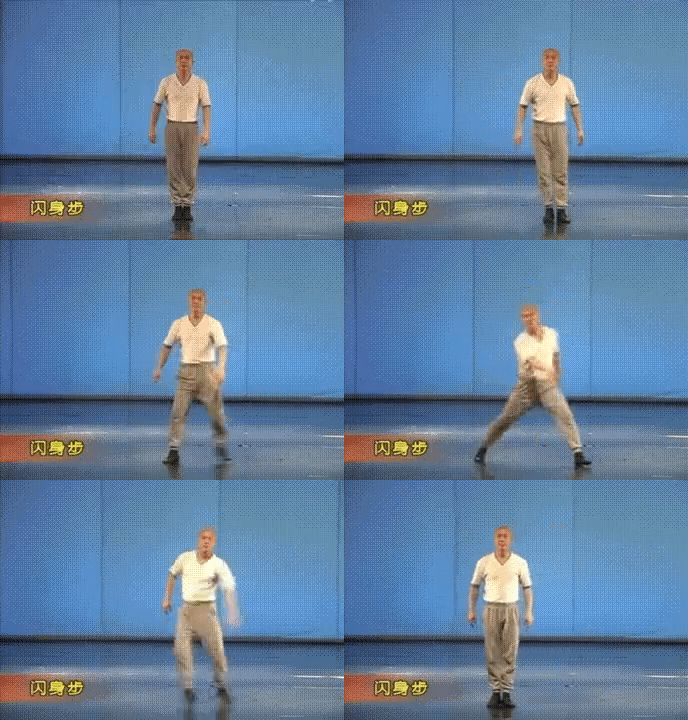
Another movement going viral alongside it, known as the “flash-body step,” also comes from a traditional dance form. It originates from Anhui Huagudeng, or flower-drum lantern dance, which was likewise included in the first national intangible cultural heritage list in 2006.
The step is one of hundreds used in Huagudeng and is often performed during interactions between male and female characters. Male performers typically execute it in a sharper, more direct style, while female performers may combine it with fans or handkerchiefs.
Netizens are racing to copy the two dance moves.
The renewed popularity of the two moves has introduced traditional folk dance to a much wider online audience. Dance professionals and doctors, however, have also cautioned that the movements require strength, coordination and technique, and may be harder to perform safely than they appear in short videos.
Editor: Wang Qingchu
In Case You Missed It...
 Sep 29, 2026