World Laureates Forum Opens in Shanghai as Global Scientists Chart "New Science Paradigm"
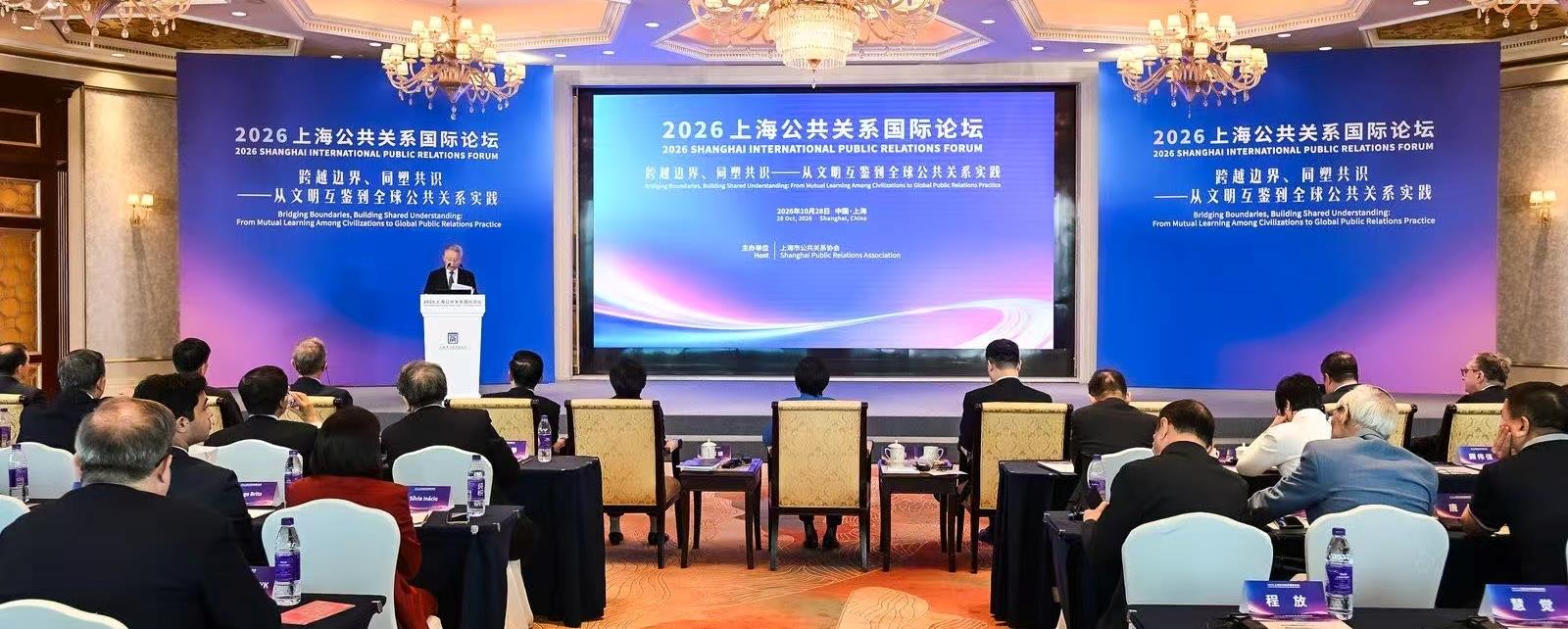
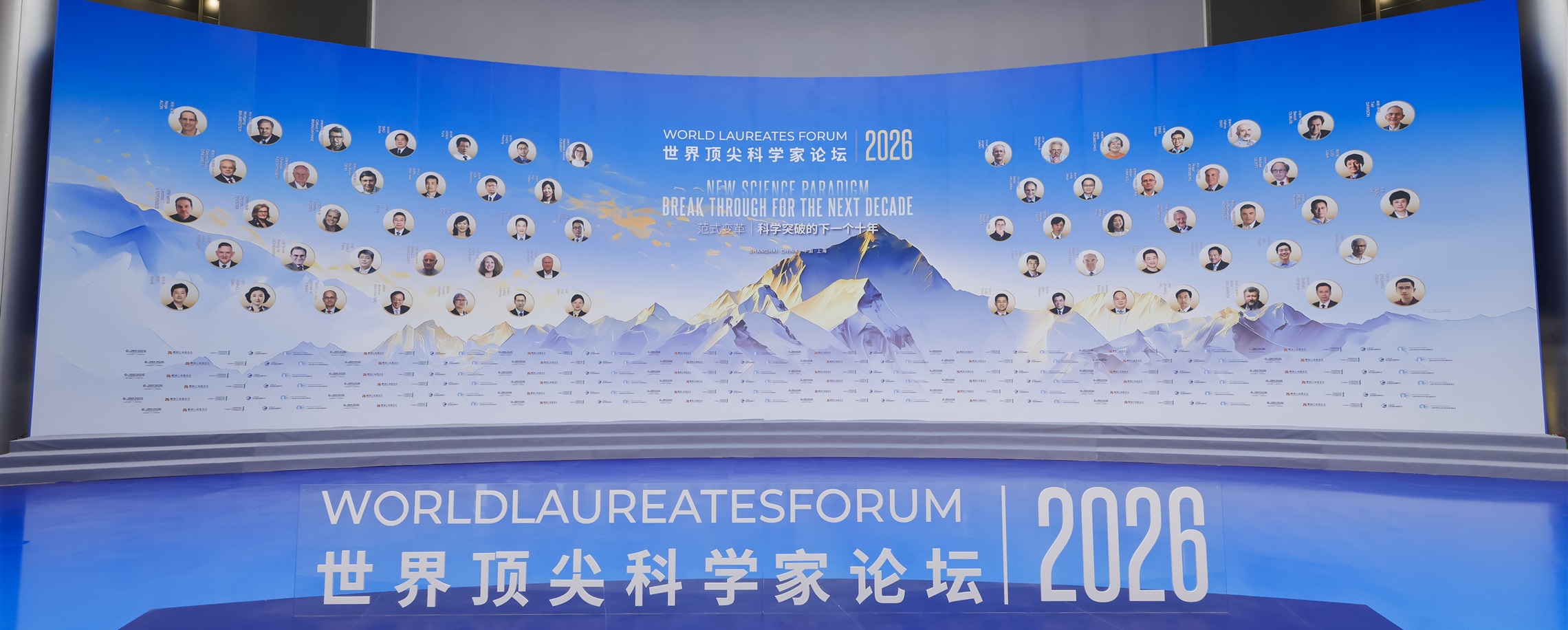
The 2026 World Laureates Forum opened on Saturday in Shanghai's Lin-gang Special Area, gathering 33 recipients of top international honors – including the Nobel Prize, the Turing Award, the Wolf Prize and the Fields Medal – alongside more than 200 academicians, young researchers and industry leaders from around the world.
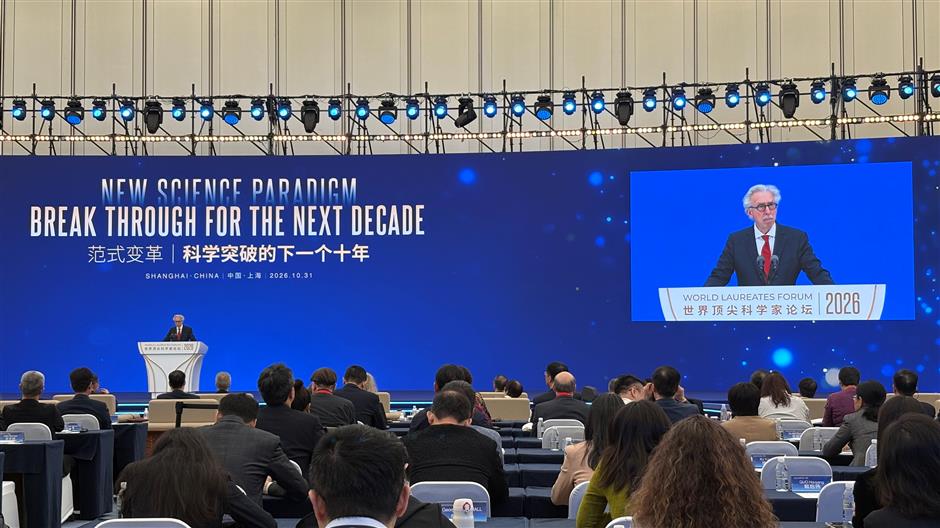
At the opening ceremony, Nicholas Dirks, President and CEO of the New York Academy of Sciences, outlined that a new paradigm in science is not just about new tools or discoveries, but a new paradigm of collaboration. "The defining question for the next decade is not only what we will discover, but whether we can discover it together – and whether we can face global challenges as one scientific community."
The ceremony also hosted the presentation of the 2026 World Laureates Foundation Prize (WLF Prize) in Computer Science or Mathematics and in Life Science or Medicine. This year's honors went to five laureates, including Ingrid Daubechies, Professor of Mathematics at Duke University, whose wavelet-based work on image compression has profoundly shaped data analysis and scientific computing.
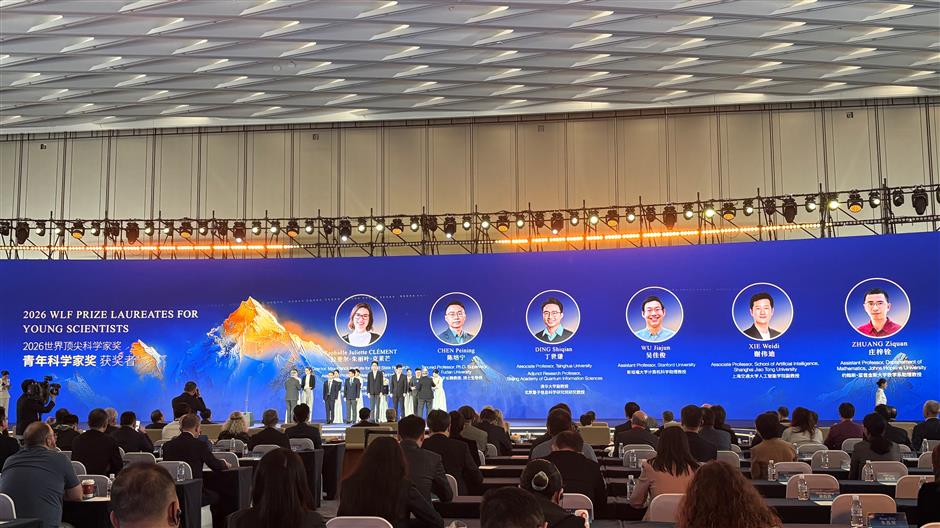
Notably, six researchers were recognized under the newly introduced WLF Prize for Young Scientists. Ding Shiqian, adjunct research professor at the Beijing Academy of Quantum Information Sciences, was honored for pioneering experiments in precision fundamental physics, spanning continuous-wave vacuum-ultraviolet lasers, thorium-229 nuclear clocks and nuclear quantum precision measurement.
Across six sessions, the forum discusses topics such as future semiconductors, biomedicine, aerospace information, artificial intelligence, future energy and quantum science. At the Aerospace Forum, Sir Martin Sweeting, Chairman of the Surrey Space Centre at the University of Surrey and founder of Surrey Satellite Technology Ltd, said humanity stands at a critical moment on the road to 2075: space activities are accelerating, space has become part of every nation's critical infrastructure, and technological advances will drive fundamental changes in life and society on Earth and beyond.
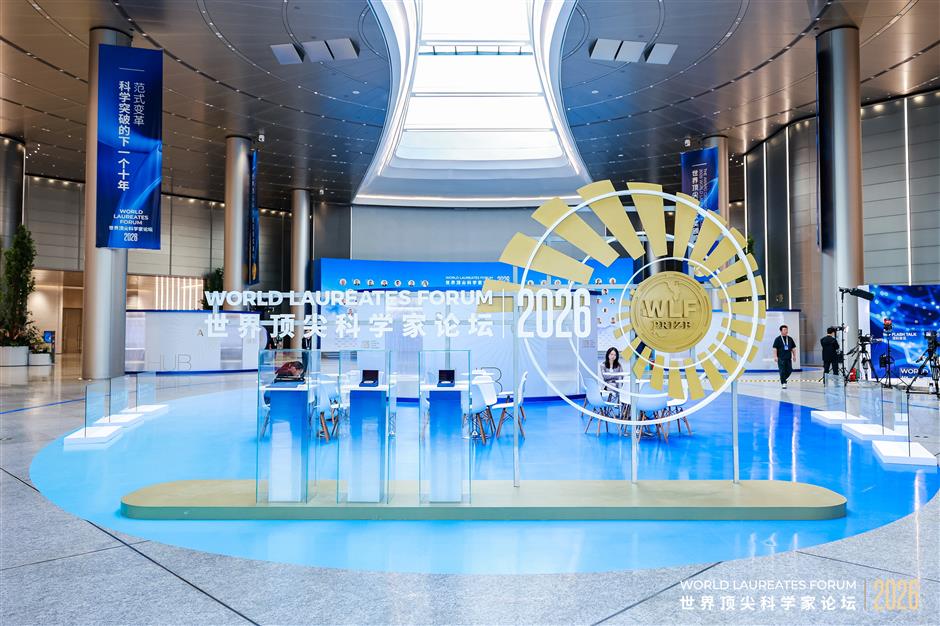
Lingang, the forum's permanent home since 2018, offers more than a venue. As the Lin-gang Special Area of the China (Shanghai) Pilot Free Trade Zone, the coastal district has seen its GDP soar to 136.6 billion yuan (about US$19 billion) in 2025. Home to more than 1,000 high-tech enterprises, it hosts growing clusters in smart vehicles, integrated circuits, and commercial space.
Chen Jining, Shanghai's Party chief, said the forum marks an opportunity to "further engage the global innovation network, participate in global science and technology governance, and focus on major issues vital to all humanity – climate change, energy and the environment, and life and health – so that science and technology advance for good."
The forum concludes on November 1, with organizers expecting its outcomes to help translate frontier science into benefits for humanity.
Editor: Yao Minji
In Case You Missed It...
 Oct 30, 2026