Weekend Buzz: 31 October-1 November
Top News
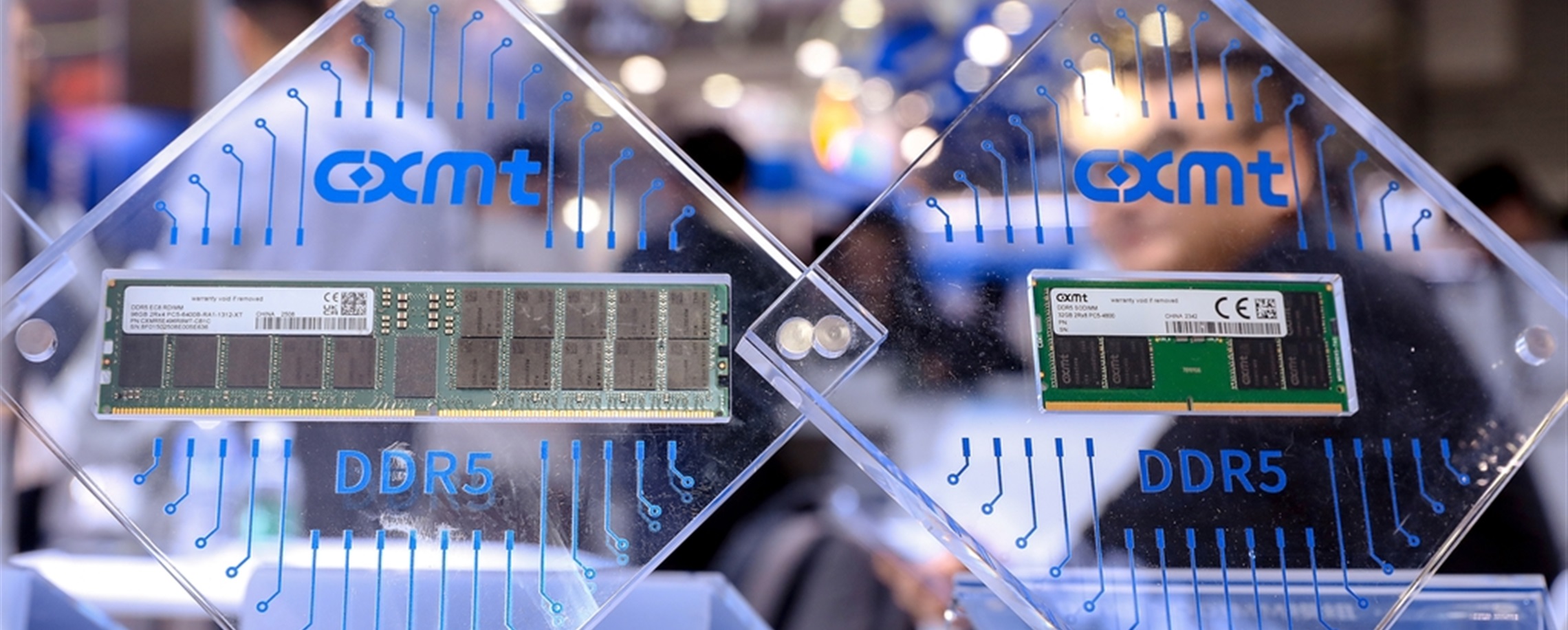
CXMT, China's Most Valuable Listed Company, Swings to Profit
ChangXin Technologies (CXMT), China's biggest maker of dynamic random-access memory chips, turned to third-quarter net profit of 54.4 billion yuan (US$8 billion) from a year earlier loss as strong global demand for chips exceeds supply. Revenue surged 613 percent to 118.7 billion yuan. For the first nine months of the year, revenue climbed 739 percent to 269 billion yuan, driving cumulative net profit to 132 billion yuan. CXMT spent 11.1 billion yuan on research and development in the period, up 73 percent. The Hefei-based company noted significant increases in both DRAM shipment volumes and selling prices. Gross margin in the third quarter rose 1.94 percentage points from the prior three months to 89.53 percent. The company also announced a share buyback of up to 2 billion yuan.
CXMT this week remained China's most valuable listed company after its shares surged more than five times since its debut on the Shanghai exchange in July. The 58-billion-yuan IPO was Asia's largest to date this year. The company is reportedly planning to expand into the NAND flash memory market and is looking at possible production of higher-value HBM, or high bandwidth memory used in AI processors, according to media reports. The moves would pit CXMT more squarely against major rivals Samsung Electronics, SK Hynix and Micron Technology. The company held 285 billion yuan in cash at the end of September, five times the total at the end of last year. CXMT has been building chip factories in Beijing, Shanghai and Hefei that could eventually double monthly capacity to about 600,000 12-inch wafers, Reuters earlier reported.
World's Largest Crypto Heist Pegged at US$6.3 Billion
Binance, the world's largest platform for trading digital assets, said on Friday that hackers stole more than US$6.3 billion in the "biggest cryptocurrency heist" in history. Deposits and withdrawals have been suspended for customers, with Binance pledging to cover all losses. According to TRM Labs, a blockchain intelligence firm that tracks the industry, a North Korean hacking unit called TraderTraitor was probably behind the theft – with billions of dollars moved across eight blockchain networks in about 20 minutes. A team of cryptocurrency firms has managed to freeze about US$3 billion of the stolen loot amid a frenetic battle with the hackers to find and control the digital money. Bitcoin fell 5 percent in New York on Friday to about US$76,752 as the hack weighed on crypto investors.
Seres, Great Wall Post Profit Plunges, Chery Earnings Grow
Seres Group, the automaker that developed the SUV brand AITO with Huawei, reported a net profit of 1.4 billion yuan (US$200 million), a 40 percent decline from a year earlier. Revenue plunged 42 percent to 28 billion yuan. Across the first three quarters, the company swung to a loss of 297 million yuan from year-earlier profit of 5.3 billion yuan. Revenue for the nine months fell 23 percent year-on-year to 85.6 billion yuan. The company attributed the financial downturn to declining new energy vehicle sales, rising core component costs, and significantly increased research and development expenses.
Hebei-based Great Wall Motor reported that its third-quarter profit plunged 41 percent to 1.4 billion yuan, with revenue declining 5.7percent to 57.8 billion yuan. For the first three quarters, profit tanked 56 percent to 3.8 billion yuan, but revenue edged up 4.1 percent to 159.87 billion yuan. The company attributed the significant earnings contraction to sustained pressure in the domestic automotive market, delayed overseas tax subsidies, and exchange rate losses on the stronger yuan.
In a plus for domestic carmakers, Chery reported third-quarter net profit grew 16 percent to 5.4 billion yuan, on a 34 percent rise in revenue to 98 billion yuan, according to extrapolated figures. The gains reflected higher sales volumes and prices, with gross margin rising 1.2 percentage points to 16.3 percent. Profit gains were limited, however, by foreign-exchange losses and increased research and development expenses totaling 11.1 billion yuan.
US Approves Sale of 500 Patriot Missiles to Ukraine
The US State Department approved the potential sale of 500 Patriot air defense interceptor missiles to Ukraine on Friday. Kiev has run out of Patriot missiles used to blunt Russia's continuing ballistic missile attacks on its territory. Russia attacks overnight left more than 350,000 Ukraine residents without power. The Patriot deal relates to the PAC-3 MSE variant of the Patriot – the most advanced version currently in service and one of the few weapons capable of shooting down incoming ballistic missiles. The purchase, estimated at US$2.1 billion, is being financed with from Canada, Germany and Norway, in addition to a loan from the EU. The approval comes after weeks of tensions between the US and Ukraine over Washington's apparent softening in relations with Russia.
Final Vote Count in Israel Confirms Political Deadlock
With all ballots counted in this week's contentious Israeli election, the right-wing bloc led by Prime Minister Benjamin Netanyahu emerged with 53 seats, far below the 68 it controlled going into the election. The opposition bloc, led by centrist former defense chief of staff and general Gadi Eisenkot, secured 48 seats in the 120-member parliament. Both coalitions fell short of the 61 votes needed to form a government. Arab parties pulled off a surprise, winning 19 seats, but their role as kingpin makers is in doubt. Israel's president is expected to decide next week which bloc to tap first to try to form a coalition government. If both blocs fail, new elections would be called early next year.
Top Business
China's Biggest Five Banks Continue Steady Growth Recovery
China's five biggest banks, which rank among the largest lenders in the world, posted some of their strongest profit growth in at least four years, continuing a steady recovery as net interest margins, a key indicator of profitability, stabilize and asset quality strengthens even amid a slower economy. Profit growth in the first nine months of 2026 was driven partly by the repricing of higher-cost deposits that began at the start of the year and by recent government subsidies on mortgages that lowered funding costs.
Industrial and Commercial Bank of China, the largest bank in the world by assets, reported operating revenue in the third quarter rose 9.5 percent to 221 billion yuan (US$33 billion) and net profit increased 10 percent to 112 billion yuan. For the first nine months of this year, the bank posted a 9.2 percent gain in operating revenue to 667 billion yuan, with profit rising 5.8 percent to 285.6 billion yuan. Net interest income gained 9.6 percent to 519 billion yuan, and the net interest margin rose 0.01 percentage point to 1.29 percent. Impairment losses rose 19.6 percent to 152.1 billion, and the non-performing loan ratio fell 0.02 point to 1.29 percent. The bank had assets of 57.8 trillion yuan at the end of September.
Agricultural Bank of China reported third-quarter profit rose 11 percent to 90.2 billion yuan on a 15 percent increase in operating income to 208.4 billion yuan. Nine-month profit rose 6.8 percent to 237 billion yuan, with operating income increasing 12.5 percent to 620 billion yuan. Net interest income rose 10 percent to 472.5 billion yuan, with a net interest margin of 1.2 percent. Credit impairment losses rose 20 billion yuan to 147.3 billion, and the non-performing loan ratio dropped 0.04 point to 1.28 percent. The bank had assets of 52.1 trillion yuan at the end of September. The bank has been expanding from its origins as a rural lender into broader services that include technology, aged care and green finance nationwide.
China Construction Bank reported third-quarter profit rose 9.8 percent to 104.6 billion yuan on a 13 percent increase in operating income to 197 billion yuan. For the first nine months of the year, profit was up 6.6 percent to 274.2 billion on an 11 percent gain in operating income to 623.6 billion yuan. Net interest income in the three quarters rose 10 percent to 470 billion, with net interest margin flat at 1.36 percent. Credit impairment losses jumped 22 percent to 148 billion yuan, with the non-performing loan ratio declining 0.02 point to 1.29 percent. The bank had assets of 48.7 trillion yuan at the end of September.
Bank of China reported third-quarter profit rose 6.4 percent to 63.9 billion yuan on a 4.3 percent increase in operating income to 169.7 billion. For the nine months, profit increased 5.5 percent to 187.5 billion yuan, and operating income rose 7.1 percent to 526.8 billion. Net interest income in the three quarters increased 10 percent to 360 billion yuan, and the net income margin was 1.27 percent. Impairment losses jumped 19 percent to 95.8 billion yuan, and the nonperforming loan ratio fell to 1.22 percent. The bank had assets of 41.1 trillion yuan as of September 30.
Bank of Communications said third-quarter profit rose 10 percent to 26.4 billion yuan on a 10 percent rise in operating income to 73.4 billion yuan. For the nine months, profit was up 6.1 percent at 74.3 billion yuan, with operating income rising 8 percent to 216 billion yuan. Net interest income in the three quarters increased 9.4 percent to 140.7 billion yuan, and the net interest margin rose 0,04 of a point to 1.24 percent. Impairment losses rose 10 percent to 48.6 billion, with the nonperforming loan ratio up 0.01 point to 1.3 percent. The bank had assets of 16.5 trillion at September 30.
Yuanjie Semiconductor Profit Jumps 6-Fold, Tech Slump Shaves Share Price
Chinese semiconductor laser chip supplier Yuanjie Semiconductor reported a 6-fold increase in third-quarter profit from a year earlier to 417 million yuan (US$61.3 million), driven by robust data center demand and higher product margins. Revenue increased 284 percent to 684 million yuan. For the first nine months of the year, total revenue climbed 320 percent to 1.6 billion yuan, while net profit expanded 867 percent to 1 billion yuan. The earnings growth contrasts sharply with Yuanjie's recent stock price performance. After briefly becoming China's highest-priced stock with a price peak above 1,880 yuan in September, the shares have dropped 63 percent to close at 689 yuan on Friday, amid a wider pullback in tech equities.
Chinese Airlines Report Weak Q3 Results on Jet Fuel Costs
China Southern Airlines reported a loss of 609 million yuan (US$91.5 million) in the third quarter, despite generating revenue of 52.5 billion yuan, up 2.3 percent from a year earlier. For the first three quarters, the carrier recorded a net loss of 4.3 billion yuan, although revenue increased 6.9 percent to 147 billion yuan. Southern Air blamed the loss on high jet fuel prices, and disruptions to international routes caused by the Middle East conflict.
Shanghai-based China Eastern Airlines reported profit in the quarter plunged 98 percent from a year earlier to just 64 million yuan in the third quarter, but that was an improvement over a net loss of 2.2 billion yuan in the first half of the year. Revenue rose 8.2 percent to 43 billion yuan. For the first three quarters, the carrier posted a net loss of 2.1 billion yuan, although revenue increased 10 percent to 117 billion yuan.
Cnooc Profit Rises on Higher Oil and Gas Output, Sales
China National Offshore Oil (Cnooc), the nation's third-largest national oil company, reported a 2.7 percent increase in third-quarter net profit to 33.3 billion yuan (US5 billion) as revenue gained 7.6 percent to 113 billion yuan. For the first nine months of the year, profit increased 17 percent to 119.1 billion yuan on a 14 percent revenue gain to 356 billion yuan, supported by higher oil and gas sales revenue and increased production. Oil and gas production totaled 593.7 million barrels of oil equivalent in the first nine months, up 2.7 percent from a year earlier. Domestic output rose 1.9 percent to 408.5 million barrels, while overseas production increased 4.3 percent to 185.1 million barrels. Oil and gas sales revenue climbed 20 percent to 305 billion yuan.
MetaX Swings to Profit on Strong Sales of Graphics Processing Units
Chinese AI chip designer MetaX posted third-quarter net profit 26.5 million yuan (US$3.9 million), turning from a year-earlier loss as surging shipments of graphics processing units drove revenue up 367 percent to 1.5 billion yuan. For the first nine months, revenue rose 128 percent to 2.8 billion yuan while profit turned to 639 million yuan from a year-earlier loss. Gross margin reached 55 percent. Its flagship Xiyun C600 entered mass production in May, and a 10,000-card cluster project began operation in September. The company said its ability to deliver products built on a fully Chinese supply chain continues to strengthen, underpinning future market expansion.
Economy & Markets
Guotai Haitong Q3 Profit Falls 27 Percent on Chinese Market Slump
Guotai Haitong Securities, one of China's largest securities firms formed through the merger of Guotai Junan and Haitong Securities, reported third-quarter net profit fell 27 percent from a year earlier to 4.6 billion yuan (US$695 million) on the slump in Chinese mainland stocks markets in recent months. However, net profit for the first nine months rose 13 percent to 25 billion yuan, while operating income increased 29 percent to 59 billion yuan. Brokerage fee income climbed 34.3 percent, and investment banking fees rose 42 percent on initial public offerings. Fair-value gains on financial instruments surged nearly eightfold during the nine-month period, although weaker market conditions reversed the momentum in the third quarter.
China Life, PICC Post Losses on Weaker Investment Returns
China Life reported a third-quarter net loss attributable to shareholders of 45 billion yuan (US$6.8 billion), while People's Insurance Company (PICC), which sells property, life and health insurance, posted a loss of 4.9 billion yuan. Stock market losses on investments weighed on both insurers' earnings. The CSI 300 Index, which tracks the top shares on the Shanghai and Shenzhen stock markets, declined 12.5 percent in the quarter.
China Life recorded negative third-quarter revenue of 66.5 billion yuan. For the first nine months, profit attributable to shareholders fell 47 percent to 89 billion yuan, while revenue declined 32 percent to 367.8 billion yuan. Nine-month fair-value losses totaled 51 billion yuan, compared with gains of 136 billion yuan a year earlier. Its new-business value, a measure of the profitability of newly sold policies, rose 13 percent in the first nine months.
PICC's third-quarter revenue fell 20 percent to 157 billion yuan. Nine-month profit declined 32 percent to 32 billion yuan, while revenue slipped 1.7 percent to 512 billion yuan. The group said underwriting performance remained relatively stable, but investment results suffered from capital-market conditions. PICC's property-insurance subsidiary reported nine-month underwriting profit of 17 billion yuan, up 11 percent. Its combined ratio improved by 0.3 percentage point to 95.8 percent, remaining below the 100 percent threshold that indicates an underwriting profit.
Shanghai-based China Pacific Insurance, the nation's third-largest life, property and casualty insurer, said third-quarter net profit plunged 68 percent from a year earlier to 5.6 billion yuan on a 45 percent decline in operating revenue to 79.4 billion. For the first nine months profit declined 20 percent to 36.4 billion yuan, with operating revenue was down 15 percent at 292 billion yuan. The insurer had assets of 3.2 trillion at the end of September.
PAG to Buy 51 Percent Stake in Evergrande Property Services
Hong Kong investment firm PAG will buy a 51 percent stake in Evergrande Property Services from liquidators of parent China Evergrande Group for HK$4 billion (US$513 million) as they seek to recover assets for creditors owed US$46 billion. Evergrande Property, which provides property management services across the Chinese mainland, remains profitable but has been struggling to recover 13.4 billion yuan (US$2 billion) of its bank deposits used by its failed parent as collateral for loans. So far, only 9.5 million yuan has been recovered
US Plans to Ban Access to America Phone Numbers by China Mobile, Others
The US seeks to ban Chinese telecom firms from direct access to US phone numbers---it says is aimed at preventing scam-related robocalls. The ban would cover China Mobile, China Telecom and China Unicom and other internet protocol service providers . The Federal Communications Commission will vote on the proposal on November 19. The commission said it also plans to bar IP-enabled service providers from using equipment from companies on a blacklist that includes China's Huawei and ZTE.
It previously banned China's three biggest telecoms from providing international telecommunications services to the US. Separately, the commission voted on Thursday to ban all Chinese labs from testing electronic devices, including smartphones, cameras and computers, that are designed for sale in the US.
Corporate
Longi Green Energy Posts Q3 Loss
Longi Green Energy Technology reported a third-quarter net loss of 1 billion yuan (US$150 million), narrowing from a loss of 1.8 billion yuan in the previous quarter, as foreign-exchange and investment losses weighed on earnings. Revenue fell 7.1 percent to 16.8 billion yuan, the solar equipment maker said in a filing on Friday. For the first nine months of 2026, revenue declined 14 percent to 43.9 billion yuan, while the company posted a net loss of 4.71 billion yuan. Longi said the yuan's stronger value against the US dollar and euro resulted in foreign-exchange losses. Higher investment losses from affiliated companies also contributed to the weaker results.
Dongshan Precision Profit Surges on Expanded Optics Business
Suzhou-based Dongshan Precision Manufacturing reported a 401 percent surge in third-quarter net profit from a year earlier, driven by consolidation of its newly acquired optical communications business. Profit reached 2.3 billion yuan (US$350 million), with revenue rising 74 percent year to 17.6 billion yuan, the company said in a filing on Friday. For the first nine months of 2026, revenue increased 68 percent to 45.4 billion yuan, while net profit jumped 332 percent to 5.3 billion yuan. The company attributed the strong growth mainly to the addition of optical module operations following its acquisition of Source Photonics. The company, which debuted on the Hong Kong stock exchange on Wednesday, closed at HK$78 on Friday, below its IPO price of HK$86.80.
Moutai's Quarterly Profit Rises, but Nine-Month Earnings Flag
Kweichow Moutai, China's premium maker of fiery baijiu liquor, reported a 3.8 percent rise in third-quarter net profit, while nine-month earnings remained slightly below last year's earnings. Profit attributable to shareholders reached 20 billion yuan (US$3 billion) in the quarter, while revenue increased 3.1 percent to 40.3 billion yuan. For the first nine months, net profit edged down 0.25 percent to 64.5 billion yuan, despite a 2 percent increase in revenue to 131 billion yuan. Direct sales generated 74 billion yuan during the nine months, exceeding the 57 billion yuan earned through wholesale and agency channels. The company's online sales platform contributed 59 billion yuan in liquor sales, excluding tax. Operating cash flow more than doubled to 84 billion yuan.
Kling Raises US$3 Billion in Latest Funding Round
Tencent-backed short-video platform Kuaishou Technology (1024) said its Beijing Kling AI unit completed a fundraising round of about 19.8 billion yuan (US$3 billion). The fundraising came after a US$2.8 billion funding in July that valued Kling at US$15 billion. Among new investors in the latest round were a unit of Hong Kong-listed Kingdee International, Gongqingcheng Junke and a unit of Shanghai-listed MetaX. Kling competes with AI video generation models of OpenAI, Google and TikTok owner ByteDance.
AgiBot Launches Embodied Robot Model to Drive Industrial Deployment
Shanghai-based humanoid robotics firm AgiBot showcased its Geni G2 robot series, including the heavy-duty Geni G2 Max, targeting industrial applications such as chip packaging, transit security, retail logistics and pallet movement. To power the hardware, AgiBot introduced its GO-3 Preview embodied foundation model and Genie Master agent framework. It increases the average task success rate from 13 percent to 56 percent across 100 tasks in scaling tests. According to AgiBot Co-President Yao Maoqing, the company is focusing on moving physical AI beyond single-point prototype demonstrations to deploying robots capable of executing full workflows across real manufacturing lines at scale.
Victory Giant Technology Profit Slumps 52 Percent
China's Victory Giant Technology, a leading Nvidia supplier of printed circuit boards for AI servers and graphics cards, posted a 52 percent decline in third-quarter profit to 527 million yuan (US$79.2 million), despite a record quarterly revenue of 6.8 billion yuan. Net margin plunged to 7.7 percent from 26 percent a year earlier. For the first nine months of the year, revenue jumped 31 percent to 18.5 billion yuan, with a profit gain of just 4.3 percent to 3.4 billion yuan. The company blamed one-time losses related to participation in initial public offerings of several supply chain partners. Victory Giant itself listed last April in Hong Kong, with its shares since dropping more than 40 percent below their IPO price.
Junshi Biosciences Narrows Nine-Month Loss
Junshi Biosciences reported nine-month operating revenue rose 39 percent from a year earlier to 2.5 billion yuan (US$371 million), narrowing its loss to 149.2 million yuan from 596 million yuan a year earlier. Operating cash flow turned positive on stronger sales of core product toripalimab, an anti-PD-1 monoclonal antibody drug. The company said the drug has approved for marketing in more than 50 countries. In June 2026, Junshi and Fosun Wanbang reached a research and commercialization agreement for rucozybimab, another monoclonal antibody. The deal is worth up to 1.3 billion yuan for Junshi.
Pony.ai Teams Up with InDrive, Nvidia to Launch Robotaxis in Kazakhstan
Autonomous driving Chinese company Pony.ai partnered with global ride-hailing service inDrive and chipmaker Nvidia to deploy self-driving robotaxis in Kazakhstan in the first pilot market in Central Asia.
As part of its 2026 growth strategy, Pony.ai aims to scale up its global robotaxi fleet to over 3,500 vehicles across more than 20 cities by the end of the year.
Editor: Yao Minji
In Case You Missed It...

 Oct 28, 2026