A Royal Gift or a Grim Omen? When Western Honor Meets Eastern Taboo
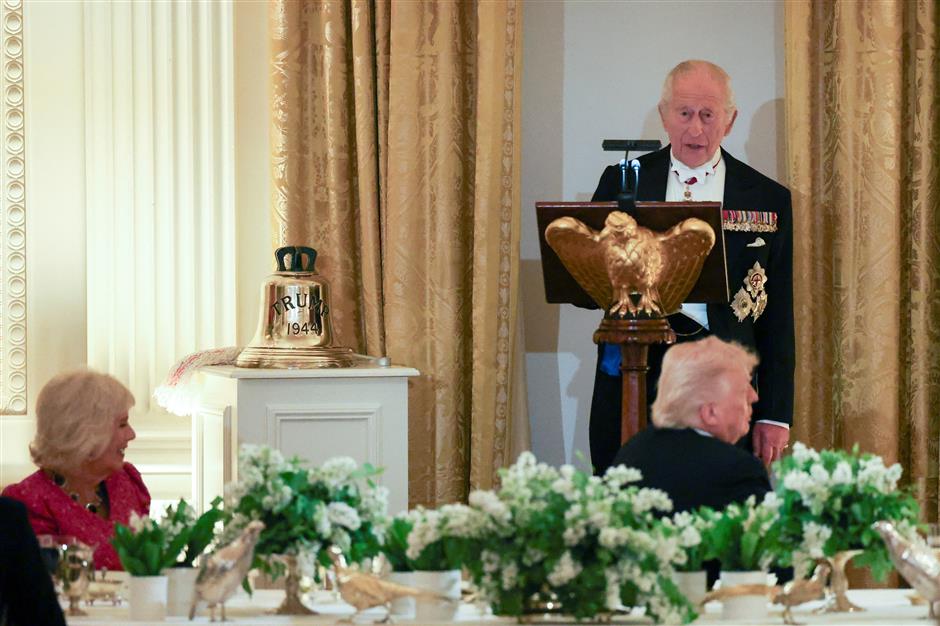
When King Charles III presented US President Donald Trump with a historic naval bell during his state visit to Washington DC this month, the gesture was intended as a masterstroke of diplomatic symbolism. The artifact – the original bell from the decommissioned submarine HMS Trump – carried the weight of shared military history and was a cheeky, eponymous nod to the American head of state.
In the annals of the Royal Navy, a ship's bell is a sacred object, representing the soul of the vessel and a spirit of constant readiness. Yet, as news of the exchange rippled across the Chinese Internet, the reception was marked not by solemnity but by a collective, stifled gasp.
In Chinese culture, such a gift is the ultimate social gaffe. In Mandarin, the phrase "to give a bell" (sòng zhōng 送钟) is homophonous with the phrase "to attend a funeral" or "to bid farewell to the dying" (sòngzhōng 送终). Through the lens of Chinese cultural logic, King Charles III hadn't just honored a contemporary – he had inadvertently signaled his demise.
The power of the pun
This cross-cultural friction reveals a fundamental divide in how civilizations process symbols. In the West, particularly within the Anglo-American tradition, a clock or a bell is a testament to precision, order and the preciousness of shared time. The focus is utilitarian and historical.
In China, however, language is a minefield of homophones. Because Mandarin relies on a limited set of syllables distinguished by tones, the culture has developed a sophisticated, almost instinctual code of "linguistic luck." To navigate Chinese social life is to constantly seek the auspicious while dodging the ominous.
The number four (sì 四) is shunned because it sounds like "death" (sǐ 死); broken porcelain is met with the phrase suì
suì píng ān (岁岁平安), a pun transforming "shattered" (suì 碎) into "year-after-year peace" (suì 岁).
In this world, a gift is never just an object; it is a spoken prophecy. To "give a bell" is to force the recipient to hear the tolling of their own end, regardless of the giver's intent.
A catalog of errors
The bell is merely the most dramatic entry in a long list of Western "thoughtful" gifts that translate poorly in the East:
- Umbrellas: A stylish accessory in London, but in China, the word for umbrella (sǎn 伞) sounds like "to scatter" or "to break up" (sàn 散). Giving one to a couple is a subtle suggestion of divorce.
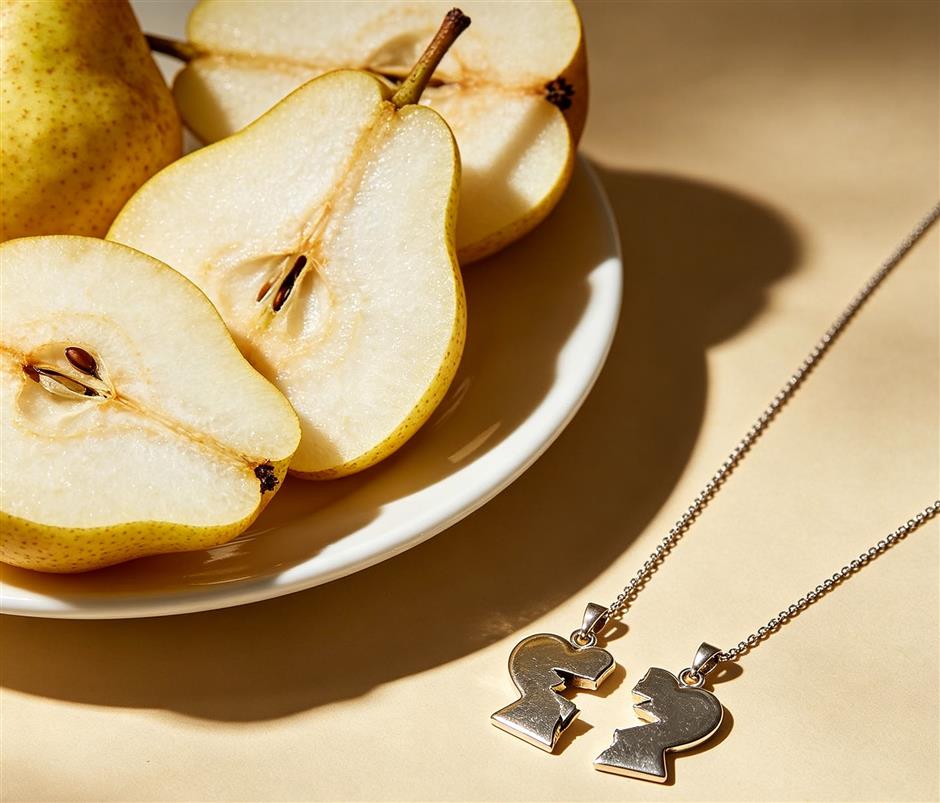
- Pears: Sharing a pear (fēn lí 分梨) sounds identical to "separation" (fēnlí分离). It is the forbidden fruit of Chinese romances.
- Shoes: Because the word sounds like "evil" (xié 邪), gifting footwear can be considered sending bad luck – unless the recipient "buys" them from you for a symbolic penny to break the spell.
- Green hats: While a green cap might be a fashion statement or a nod to environmentalism in the West, in China, "wearing a green hat" is the universal idiom for being a cuckold.
Pragmatism vs symbolism
Why does this divide persist? It is not a matter of superstition versus rationality, but rather a difference in the "philosophy of the gift."
In the West, influenced by Enlightenment pragmatism and the Protestant work ethic, the value of a gift lies in its utility or the personal sentiment of the giver. It is common for couples to provide registries of vacuum cleaners and Dutch ovens; the goal is to provide what is needed.
In traditional Chinese society, rooted in agrarian Confucianism, gifts function as "social lubricant" within a complex web of miànzi (面子 face) and rénqíng (人情human obligation). A gift's primary job is to maintain harmony. Therefore, the "vibe" or symbolic resonance of an object often outweighs its price tag or usefulness. The Westerner asks, "Will they use this item?" The Chinese giver asks, "What does this signal about our future?"
The enduring taboo
To be sure, globalism is blurring these lines. A tech-savvy professional in Shanghai today likely won't end a friendship over a gifted pair of sneakers. But in the high-stakes arenas of business, weddings and diplomacy, these ancient scripts still run in the background.
Ultimately, the gift is a mirror. It reflects how a culture views time, how it fears death, and how it values its bonds with others. In the collision between a British king and an American president, we are reminded that in the global village, the most dangerous distance between two people is often a pun.
(The author is dean of the School of Foreign Languages at Sanda University in Shanghai.)
Editor: Liu Qi
![[Hai Guide] Your Fun & Food Guide to the Longines Global Champions Tour Shanghai](https://obj.shine.cn/files/2026/04/30/a759d72c-ce68-484c-a126-b0e5257fc396_0.jpg)