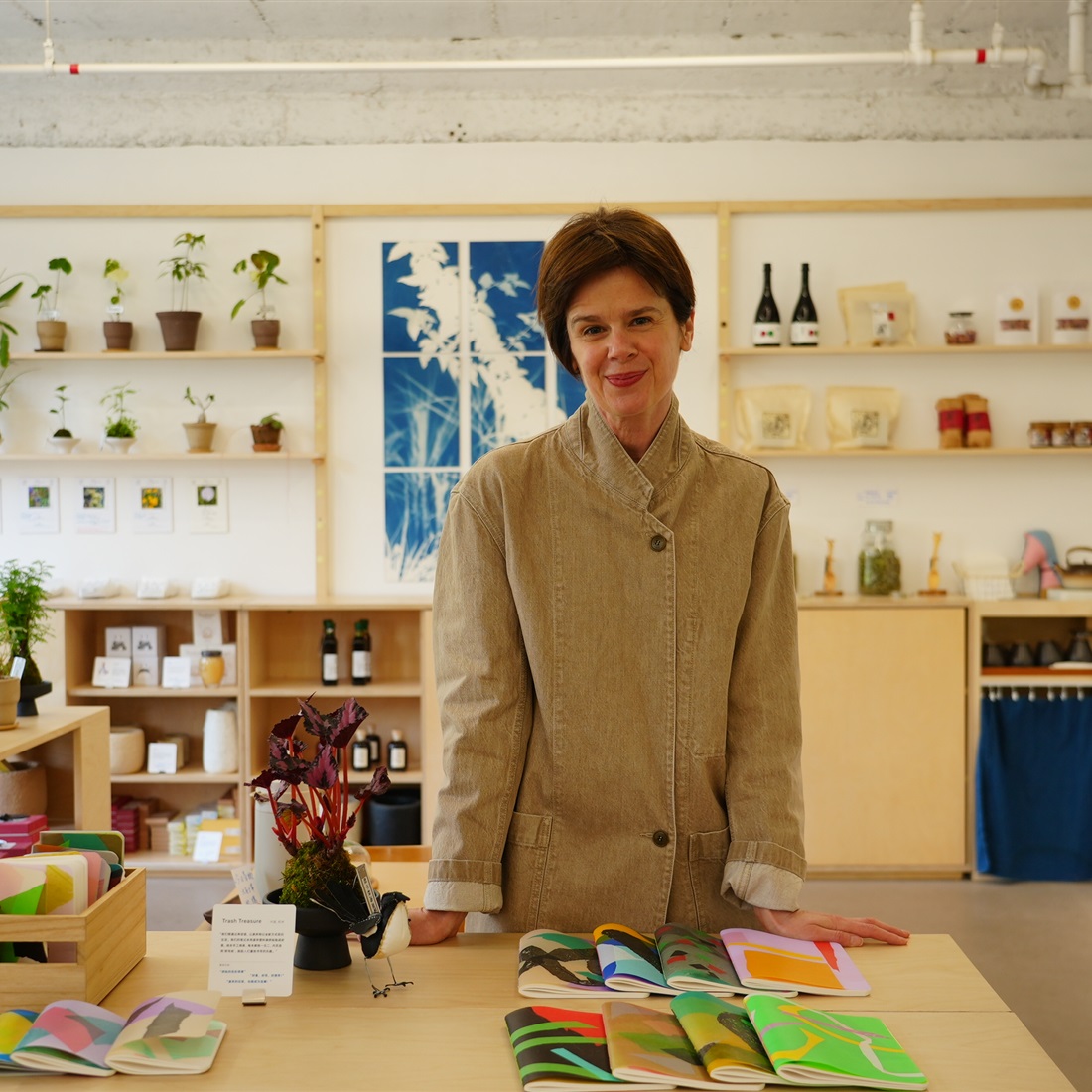
Building a Well-Read Society by Perusing Books in Public Spaces
I used to regard reading as a private matter to be enjoyed in solitude, so I rarely went to a bookstore or a library.
But a recent random exploration of a niche bookstore and a 24-hour library in downtown Shanghai changed my mind. I began to realize that being present in a well-designed brick-and-mortar reading space could broaden my view with a surprising pleasure – something I could hardly have experienced reading alone.
Take the word "zine" for example. Though an avid reader of English literature, I had never heard of the word "zine" until I joined a workshop on December 20 at a bookstore in Changning District named Bananafish.
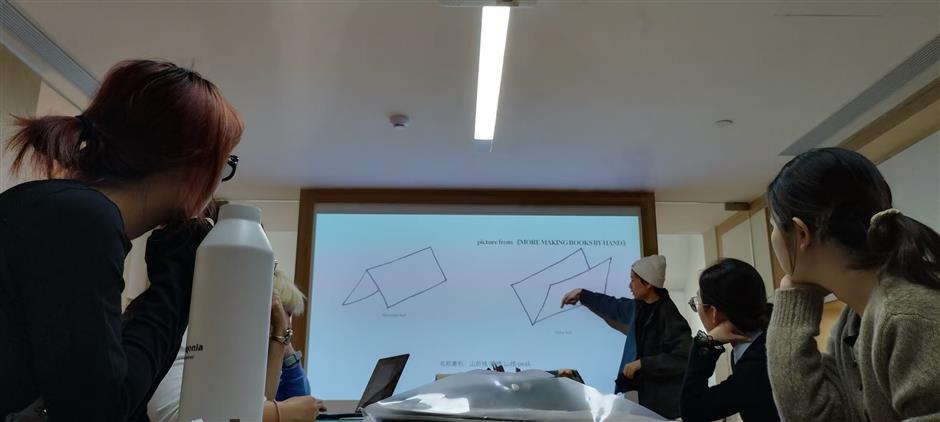
I happened to be the only male student in the workshop on how to make a zine for oneself. The other five were young ladies who were all dexterous at making handicraft.
I was not discouraged, though, as I readily asked for their advice and the teacher's guidance when I learned to fold a piece of paper into a zine – a small magazine or fanzine – for the first time.
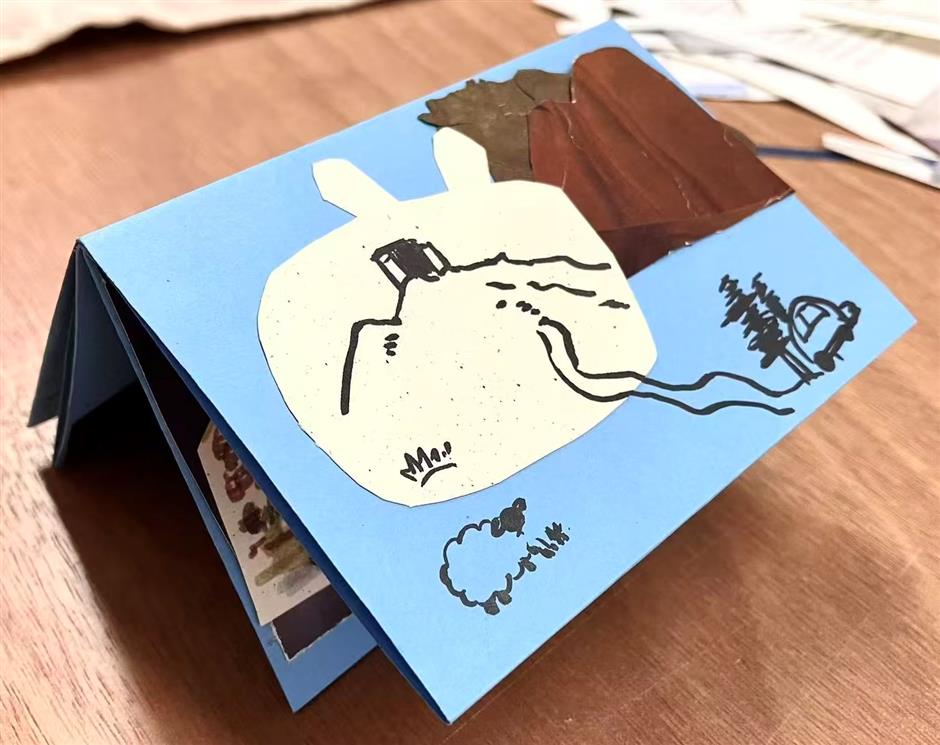
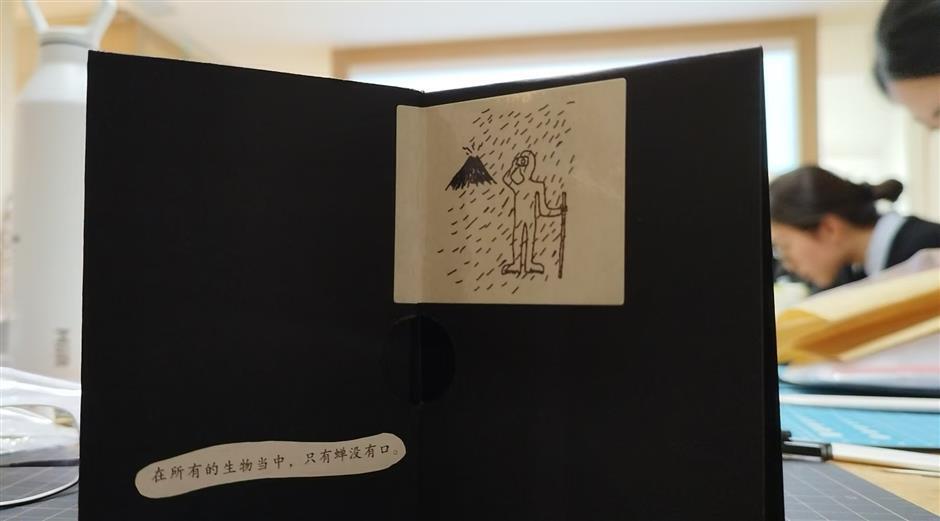

In the end, everyone made at least three eight-page zines and filled them with pasted pictures, hand-drawn patterns, or a paragraph or a sentence cut out of discarded book pages.
The very short Chinese sentence I cut from a discarded book page read: "Of all the creatures, only cicadas don't have a mouth." I had just cut a small round hole in one of my zines to make it look fancier, so I pasted the sentence near the hole to express my hope that every creature could ultimately have a mouth.
It was in this brick-and-mortar bookstore where I learned the word "zine" for the first time and eventually succeeded in making the first four zines in my life. A zine is usually small and noncommercial, created either for self-reflection or as a handy gift.
In trying to make a meaningful zine, I browsed through many discarded book pages with enlightening content before I finally selected the short sentence that best reflected my mood at the moment. Like never before, I felt the joy of reading across genres – a novel way to expand my knowledge and perspective.
A casual visit
It all began with my casual visit to Bananafish on December 19. I wanted to find out how a brick-and-mortar reading space like a bookstore or a library works, now that China is poised to promote reading among the public.
On December 16, Xinhua news agency reported that Premier Li Qiang had signed a State Council decree issuing a regulation to promote public reading, which will take effect on February 1, 2026.
I read the full text of the regulation in earnest, and was inspired by its principles and measures aimed at building a well-read society in which everyone is encouraged to read.
Among other things, the regulation emphasizes support for brick-and-mortar reading spaces, including those in rural areas. The regulation also encourages the high-quality development of cultural industries related to the promotion of reading across the country. Moreover, community resources are welcome to participate in the construction of public reading spaces, so as to help innovate and diversify public reading environments.
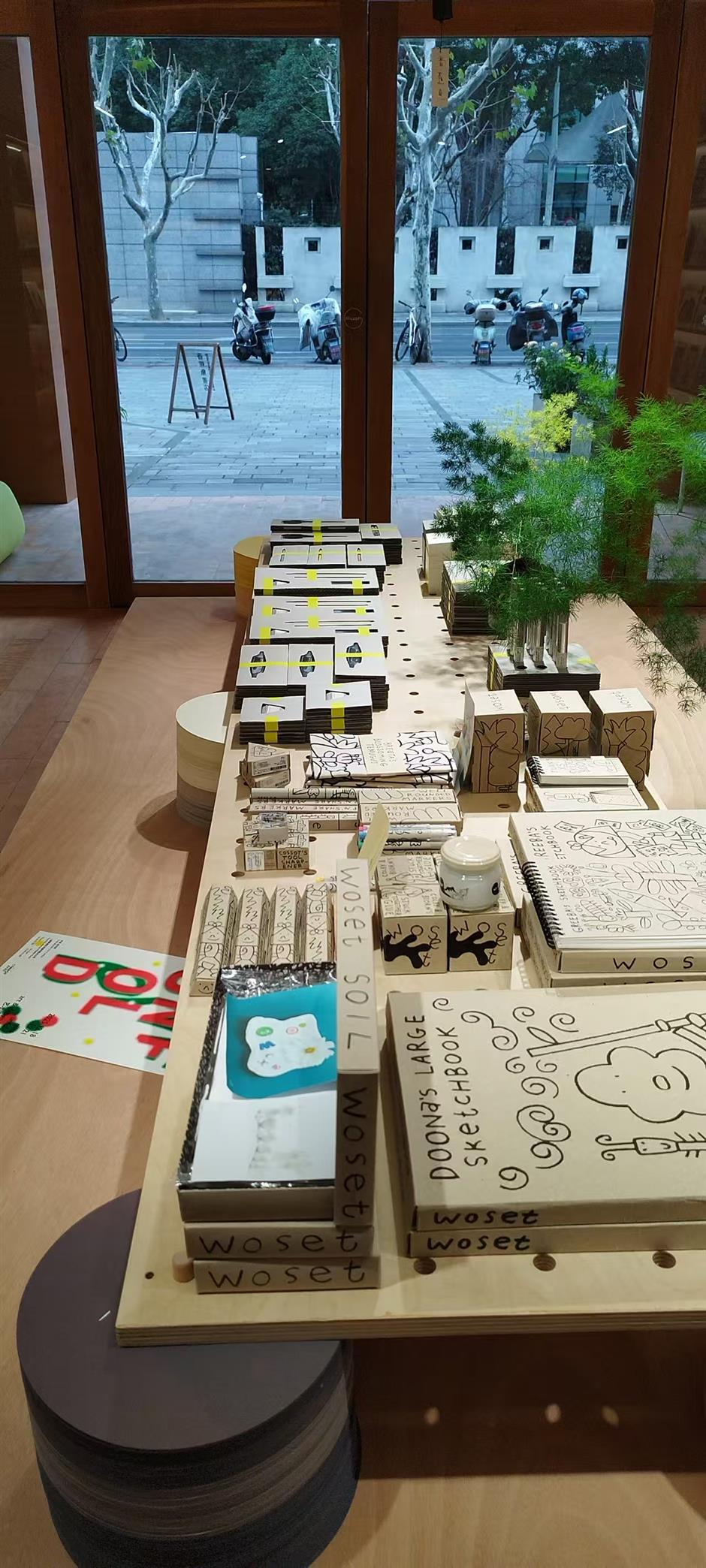
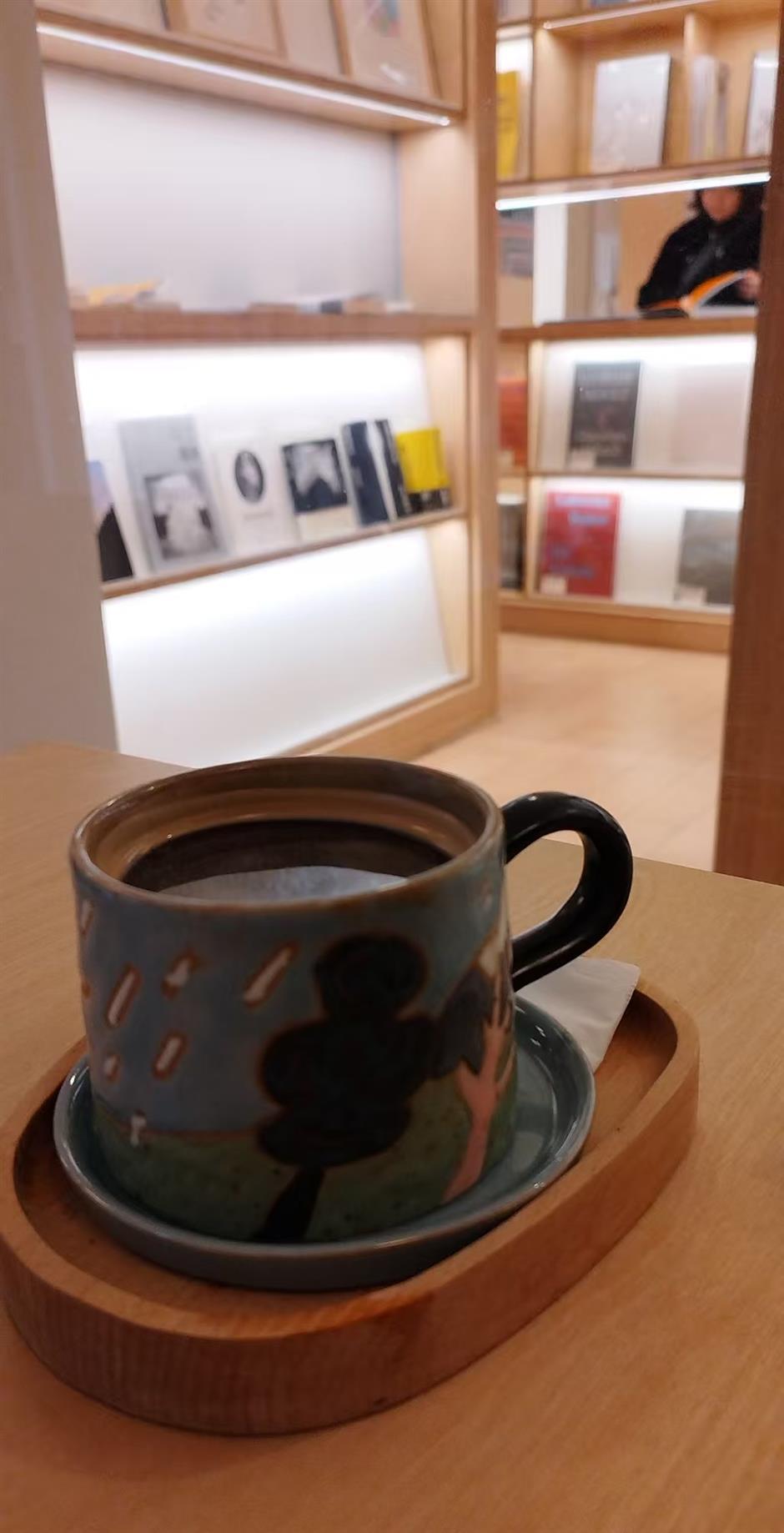
The workshop on how to make a zine turned out to be an innovative example of infusing traditional reading with creative handicraft.
It was during my visit to Bananafish that I noticed a poster about the workshop. I applied to join it at the last minute.
My occasional presence in a physical bookstore has benefited me in more than one way. Through my casual talk with one of Bananafish's co-founders, as well as my previous online research, I learned that the name of the bookstore was inspired by American writer J.D. Salinger's famous short story titled "A Perfect Day for Bananafish" – a story about the value of innocence and how it can be lost.
In a way, it was the Bananafish bookstore that first introduced me into the spiritual world of Salinger (1919-2010), who also wrote the acclaimed novel "The Catcher in Rye" (1951).
"Mom, I want to read this book!"
The workshop on December 20 concluded around 4pm. I bade farewell to my teacher and fellow students and then headed toward Heping Library in Hongkou District. Opened last April, it's Shanghai's first 24-hour library, nestled in Heping Park. (Heping means peace in Chinese.)
It was my first visit to the library and I was surprised by the huge crowds of readers the moment I entered. Even a noodle restaurant inside the library, flanked by a giant bookshelf on one side and floor-to-ceiling windows on the other, was nearly fully occupied, where people either ate food or read books.
As I strolled along the giant bookshelf separating the noodle restaurant from the parlor of the library, I heard a boy begging his mother to stay: "Mom, I want to read this book!"
I looked across the bookshelf and saw a family of three sitting by a dining table near the shelf. They had just finished their dinner and were ready to leave when the boy suddenly spotted a book on the shelf that he liked. While his mother hesitated, his father said: "It's good that he has found his favorite book. Why not let him read it as long as he likes?" So they stayed.
This seemingly small anecdote unwittingly helped me better understand why reading is not necessarily a private matter as I used to believe. Public reading has a unique way of opening a window to a world unknown to us before but nevertheless worthy of our exploration.
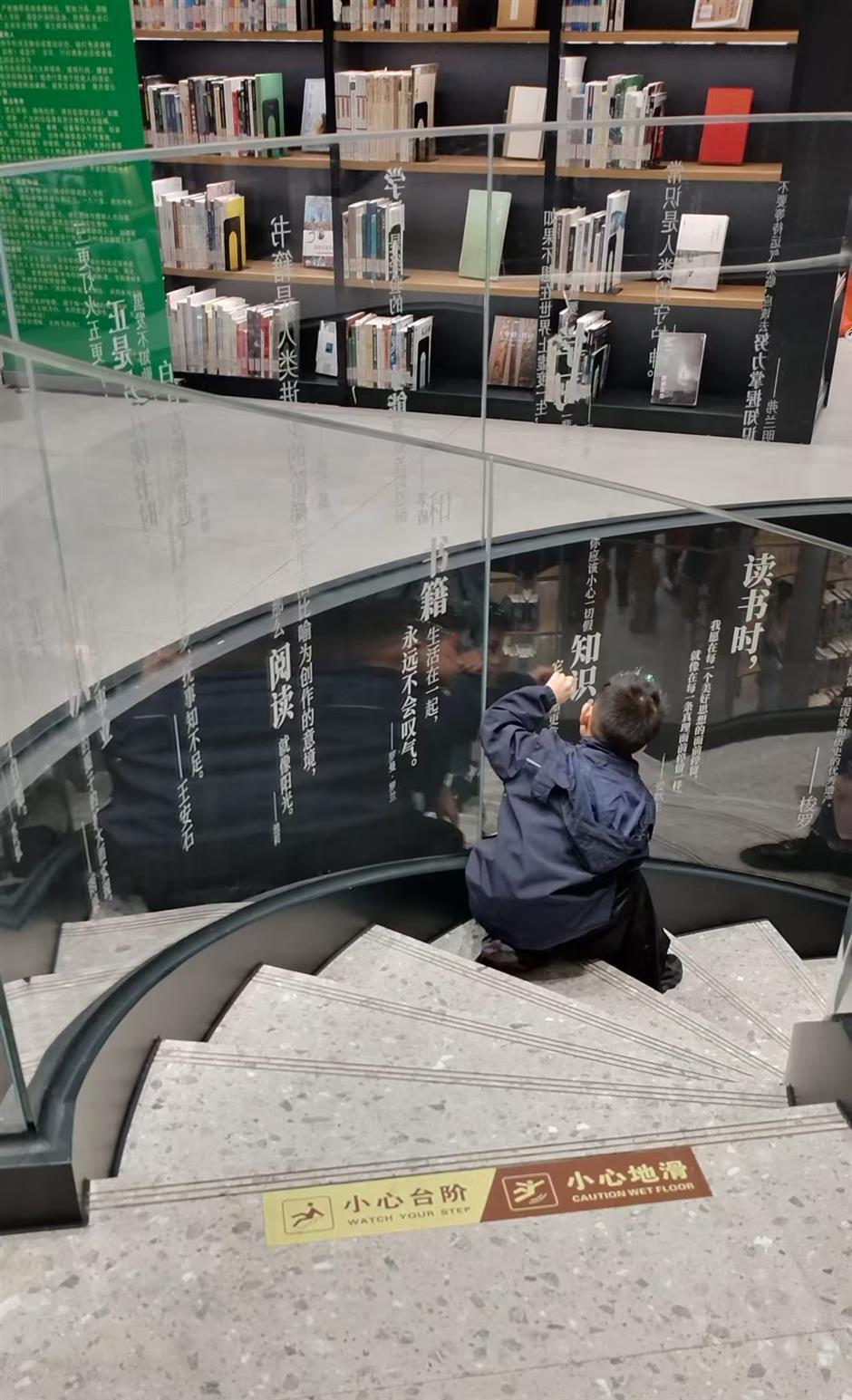
As I walked on a spiral staircase leading to the second floor of the library, I saw a boy squatting to read a quote (in Chinese) from George Bernard Shaw: "Beware of false knowledge; it's more dangerous than ignorance."
"Mom, what does wuzhi (a Chinese term for ignorance) mean?"
"It means you know nothing about something," the young mother replied.
I didn't know if it was the first time the boy had read this quote, but I definitely hadn't heard about it before. What a pity I hadn't visited the library earlier.
If more brick-and-mortar bookstores and libraries are available across the country, highbrow culture will find it easier to enter and enrich people's daily lives, going a long way toward building a well-read society in which people are nudged to expand their perspectives in meaningful ways.
I can read and borrow books for free!
"Here I can even find books that are usually available only in urban bookstores or libraries," said Tserang Gyatso, a junior middle school student of Tibetan ethnicity in Sumdo Village of northwest China's Qinghai Province.
He was referring to the Sumdo Munsel Library built three years ago. "Munsel" is a transliteration of the Tibetan term meaning "the elimination of darkness."
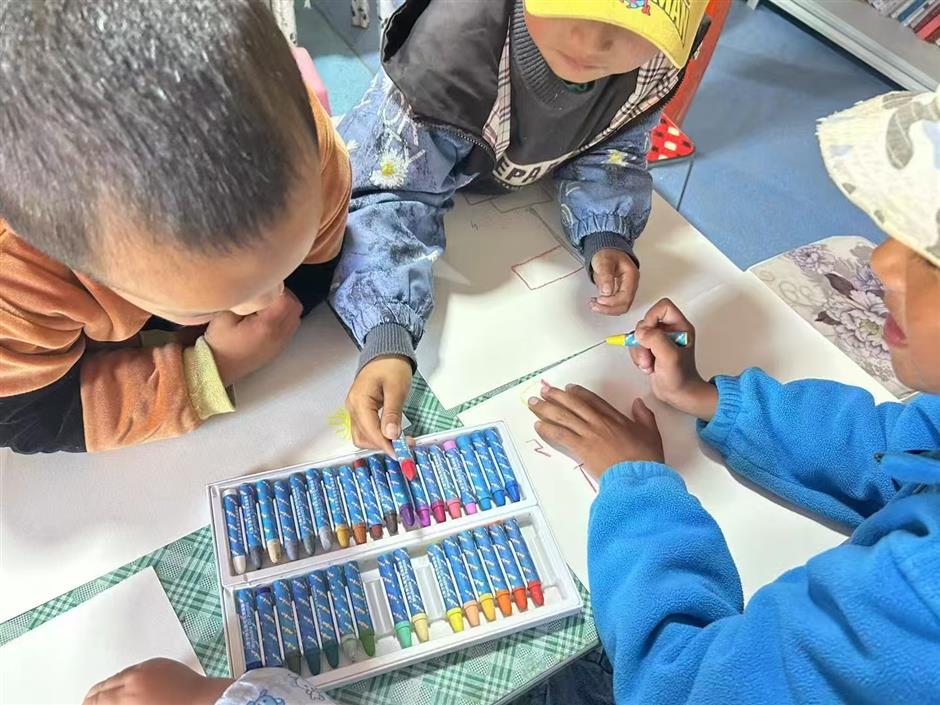
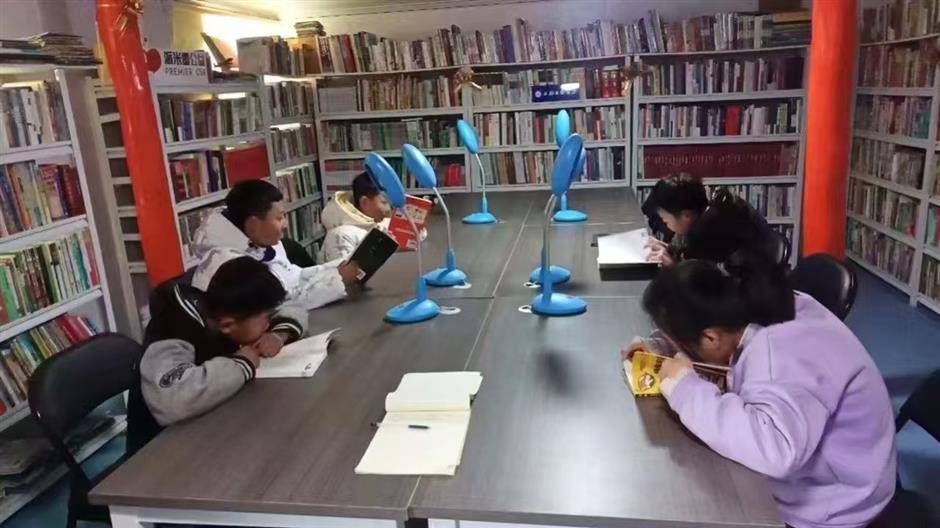
"Children in Sumdo Village didn't have many extracurricular books in the past, but now they can choose from a wide variety of books according to their different interests," Pariwa Kalsang Thamchan, a young social entrepreneur specializing in child education and cultural communication, said in a written interview with Shanghai Daily.
He has a bachelor's degree in computer science and a master's degree in linguistics. He launched the library for his home village three years ago. Now, with the help of many volunteers, including those from Shanghai's publishing circles, the village library has collected nearly 10,000 books, including encyclopedia for children and Chinese and English dictionaries.
"At first I thought I could only read the books within the library, but later I learned that I could borrow them as well," said Tserang Gyatso.
"I like picture books very much, and I usually read at least 10 picture books each time I come to the library," said Drolma Tso, another junior middle school student.
Pariwa Kalsang Thamchan said the regulation to promote public reading, which emphasizes support for rural libraries, will be a boon to the children in Sumdo Village.
"The library has become a gathering place for kids, especially during their vacations, where they read and chat together," he said. "I think a village library should be a place where children can read and grow together."
I donated a box of stationary, mainly ball pens and pencils, to the Sumdo Munsel Library three years ago. One person's contribution is limited. How I hope that one day children from Sumdo Village or other villages may be able to visit a brick-and-mortar library or bookstore in Shanghai or other cities, where rural and urban kids can exchange views and mutually expand perspectives.
Read across the country, and you are sure to get more pleasant surprises that help you become a truly well-read person.
Editor: Liu Qi
In Case You Missed It...

 Oct 15, 2026