The Perils of Prioritizing Profit Over Knowledge
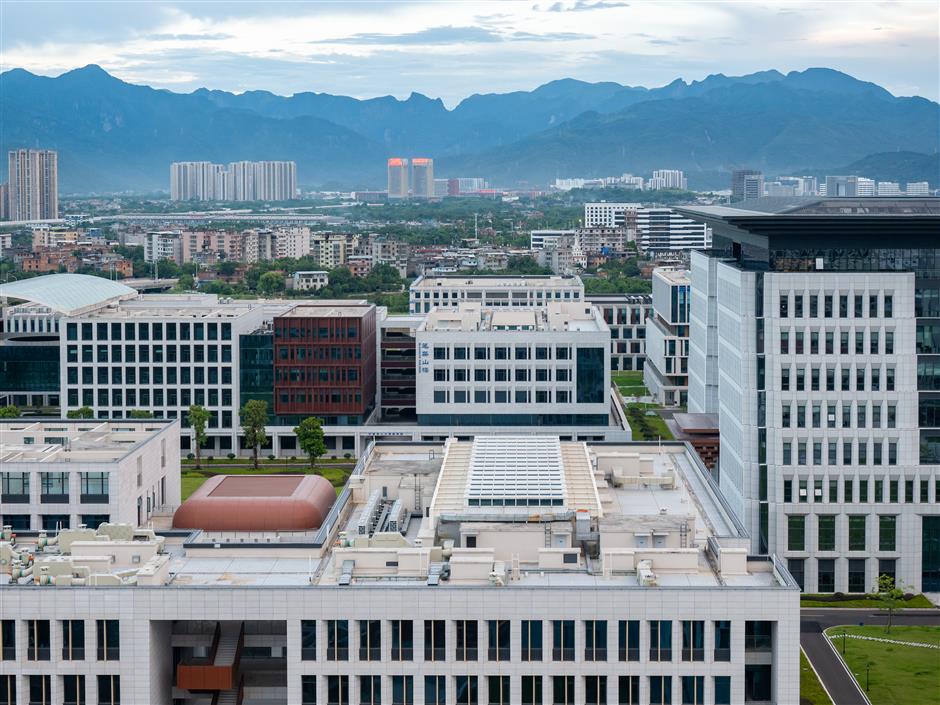
The president of Fuyao University of Science and Technology (FYUST), a recently established research university keen to set the standard for elite application-oriented higher education, has made remarks that have sparked debate regarding the organization's objective.
"If you cannot even feed yourself, it only reflects on your incompetence. If your research addresses genuine industrial challenges, how could you fail to support yourselves? Your failure to translate research outcomes into applications stems either from divorce from real demands or technical incapacity," Wang Shuguo said in a recent interview.
Cao Dewang, the chairman of the FYUST Board of Trustees, had previously stated that "all schools and departments of the university should gradually achieve financial self-sufficiency in their operations." Wang's comments were meant to build on that statement.
The remarks generated public discussion regarding the new university's direction, which focuses on innovation and encourages the integration of business and academia, drawing inspiration from institutions such as Stanford.
Wang's advocacy for increasing self-sustaining research revenue by addressing real technical issues may not be coincidental, given his decades-long tenure as president of Xi'an Jiaotong University and Harbin Institute of Technology.
The need to reconsider an institution's goal may be indicated by recent high-profile revelations of flagrant fabrications in published papers co-authored by some renowned academics from prestigious Chinese colleges.
However, there is also a chance that economic gains will be overemphasized at the expense of fundamental research.
Wang used a successful project involving an ultra-high-precision mounting manufacturing line for the chip industry's post-packaging section in collaboration with a few businesses to support his position.
The achievement of embedding four independently controlled chips into a modest 0.2 by 0.2 millimeter region would be made possible by the research procedure, which would only take ten months.
According to Wang, if this technology is implemented, it can utilize up to 25 percent of the nation's wafer raw resources, including the whole supply chain.
This is an excellent way to address the overwhelming fixation that certain universities have with research publications that are disconnected from societal demands. It is necessary to change the biased evaluation system that is based on "publish or perish."
However, even with FYUST, putting too much emphasis on financial rewards at the expense of fundamental research can be hazardous.
For example, it would be difficult for instructors in the School of Arts and Sciences at FYUST to make a living teaching core subjects like biology, physics, and mathematics.
The commercial usage of technology would follow its own timeframes, even in science and engineering schools that prioritize applications.
If you look around, you'll see that some of the most significant technological advancements are unplanned spin-offs from research meant for other uses, such LCD, MRI, the Internet, Google search, and proton cancer therapy.
The focus on financial self-sufficiency may cause researchers to focus more on making money from their findings, which could undermine original research and innovative ideas with possible spin-offs.
In any case, the most innovative and fundamental research is frequently motivated by enthusiasm and curiosity, is long-term, and has little chance of producing results right away.
Additionally, the financial mandate conflicts with FYUST's primary goal of being a premier research university entrusted with the social mission of producing high-caliber graduates.
One could readily assume that student cultivation will be neglected.
In light of these factors, FYUST needs to take a cue from the universities it aspires to emulate.
Just a small portion of Stanford University's total revenue comes from technology transfers and patent licensing; the majority comes from research grants from sponsors and endowment funds.
To put it another way, it cannot expect to become financially independent on its own.
Universities should wean themselves from paper-centric evaluation and prioritize industry-academia-research integration as well as real industrial concerns.
However, the opposite extreme of complete economic independence might be just as dangerous.
The university may stray from the foundational ideas of higher education by exposing research institutes to the whims of transient market forces.
Editor: Yang Meiping
In Case You Missed It...

 Sep 29, 2026