When Voyeuristic Spectacles Get Going, Rules Should Get Tougher
A Chinese smart glasses maker has vowed to crack down on secret filming after users shared covert footage of flight attendants and strangers on its app community ( Read more on our previous coverage: Rokid Cracks Down on AR Glasses Community After Users Post Covert Footage of Flight Attendants).
The crackdown comes after online warnings that this bunch of glasses, with simple tweaking of its alert indicators, could be used as tools for secret filming.
Subsequent media investigations have uncovered numerous videos of passersby – secretly recorded – and then shared on the brand's app community.
On the official webpage of the glass brand, a woman, with her hand touching the temple of the seemingly normal glasses, poses against these ad lines: With your eyes acting as lenses, recording freely what you see.
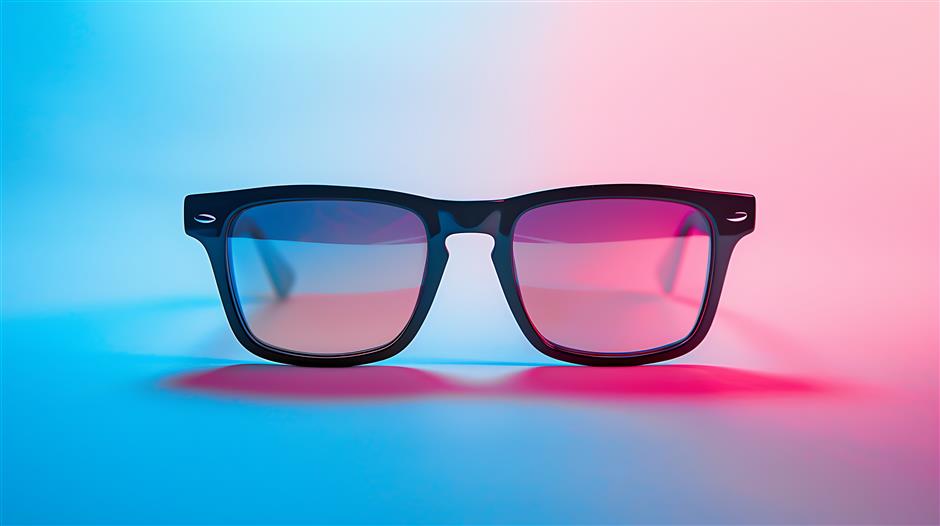
These disarmingly ordinary glasses are erasing the already thin line between legitimate recording and covert filming, particularly as the voice warning is so feeble that it eludes people standing just 10 centimeters away.
As for their warning flashlights, they are thoughtfully embedded on the inner side of the temples, with the flash lasting only a second, and could be covered up in stickers. The sales of such stickers now exceed 5,000 units.
With these indicators effectively dysfunctional, these smart glasses are little different from regular eyewear.
The legal provisions for the distinction between normal shooting and infringement of privacy have been clear cut.
Under China's current Civil Code, such infringement no longer presupposes the intent for profit, meaning that unauthorized filming or photographing of others' private spaces, activities, or body parts is a civil tort.
Unfortunately, this provision can no longer keep up with technological advances.
Surreptitious filming with conventional cameras, or even mobiles phones, could involve relatively conspicuous hand movements, thus can be detected.
But who would find fault with someone wearing a pair of ordinary-looking glasses?
Thus, secret footage can be easily obtained without the knowledge of the victims, and when these images are shared in the public domain, it is nearly impossible for the victims to stake a claim to their images.
As usual, device providers are pleading innocence, citing neutrality of technology, or shifting the onus on to the users, which is untenable.
Just as a platform should be held responsible for misdemeanors occurring on its turf, technology providers should show commonsense clairvoyance in conceiving and designing their devices.
Ironically, in the introduction to smart glasses, privacy reminders are either lacking or buried deep in the fine print.
With alerts barely discernible and such glasses easily passed off as regular eyewear, the maker's plea for innocence is beyond the pale.
Editor: Fu Rong
In Case You Missed It...

 Sep 29, 2026