[Built on China] Amber, Other Russian Consumer Goods Are Making Inroads in China Market
Editor's note:
China's manufacturing base is both a source of competition and infrastructure that businesses elsewhere can build on. Its factories, machinery and supplier networks can help firms make new products, develop skills and win customers. In "Built on China: The Upside, the Dependency, the Deals," a series designed for APEC, we ask what businesses across the Asia-Pacific gain from that access, what they come to depend on and which deals give them room to grow on their own terms.
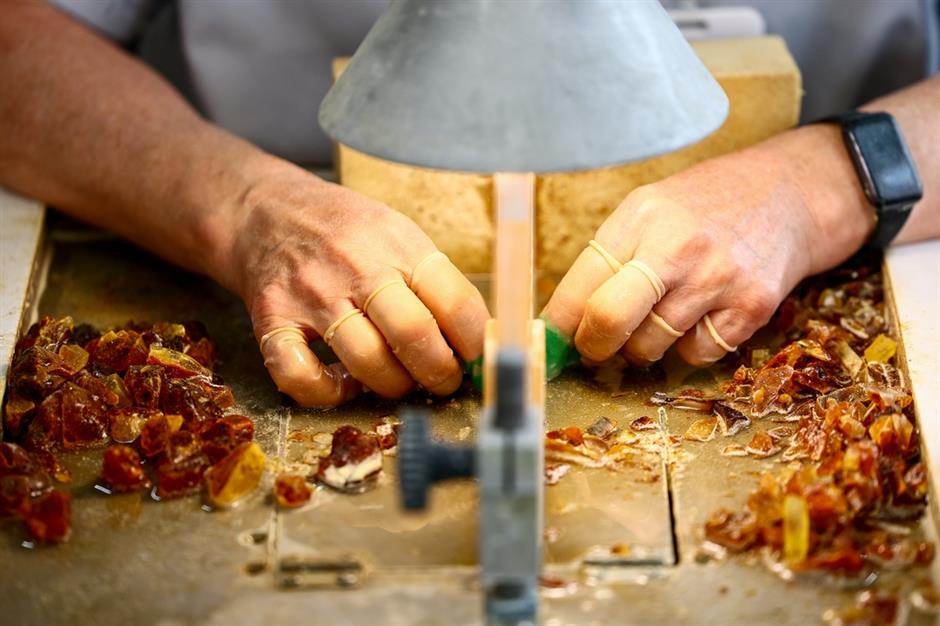
For decades, the Kaliningrad region in Russia, which holds more than 90 percent of the world's proven amber reserves, has operated at the bottom of the global value chain.
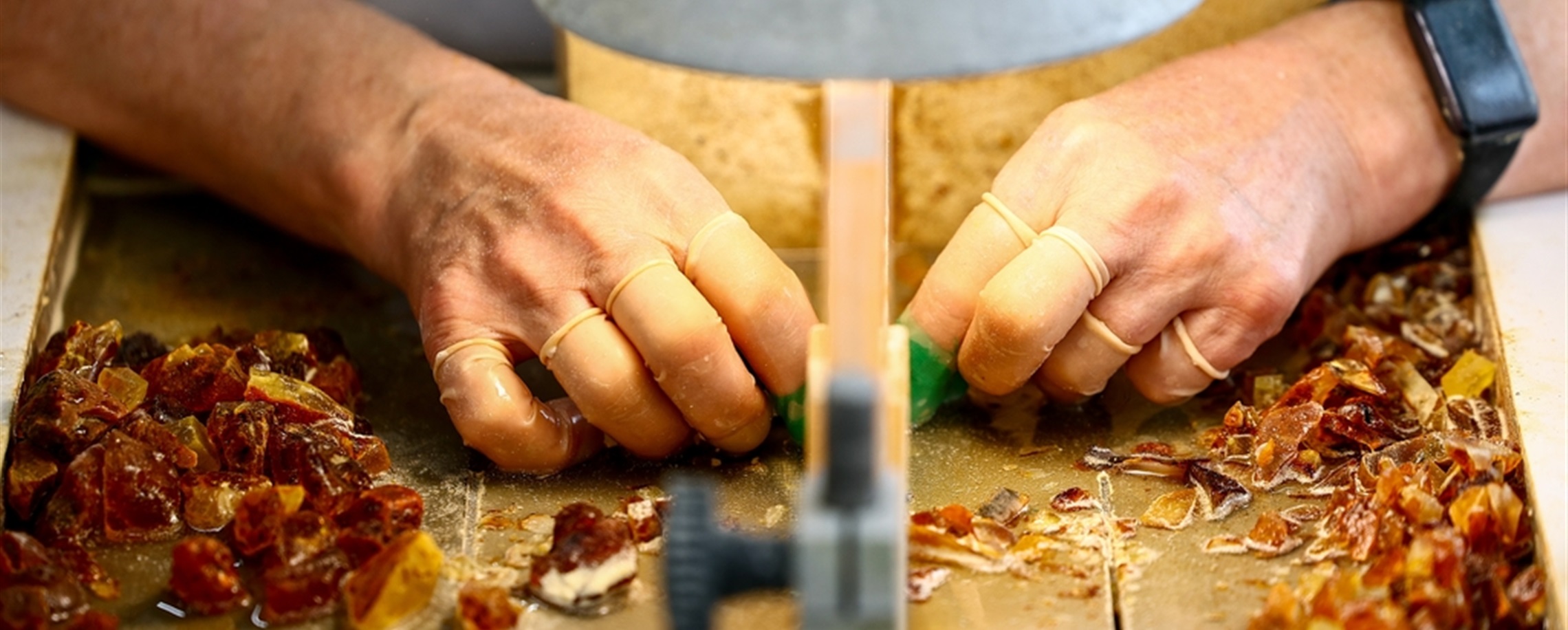
It annually extracts about 600 tons of the fossilized tree resin prized in jewelry-making but produces only 170,000 finished pieces. Most of the amber is shipped abroad, mainly to China, where it has spawned a lively industry.
That dynamic is now shifting. By opening a directly operated brand store in Shenzhen of southern China and planning a themed museum, the Kaliningrad Amber Combine is moving up the industrial curve to capture brand premium directly from Chinese consumers.
This pivot highlights a broader evolution of bilateral commerce that dovetails with this week's summit of the Asia-Pacific Economic Cooperation (APEC) group of nations in China, which is themed "Building an Asia-Pacific Community to Prosper Together."
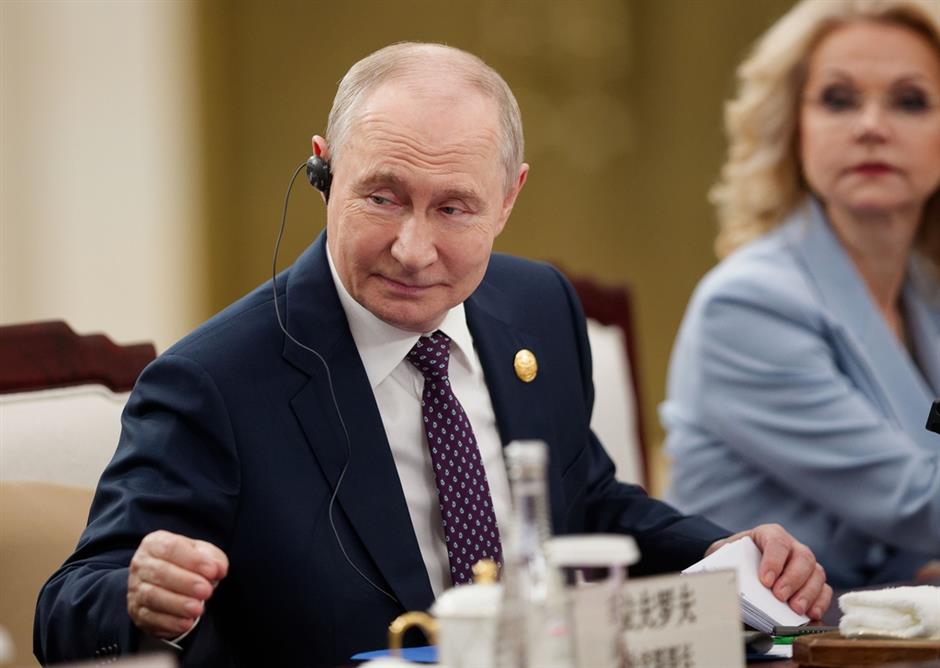
Bilateral trade between China and Russia, which are both APEC members, rose 32 percent in the first 10 months of the year to US$242.5 billion, with Chinese imports from Russia totaling US$133 billion. While energy, metals, timber, chemicals and agricultural goods still dominate those figures, China's large market offers opportunities in consumer goods.
The key to success is reading demand in the market and tailoring quality, well-designed products to address it. The Kaliningrad Amber Combine is attempting to do just that. According to General Director Mikhail Zatsepin, the company integrates extraction, processing and sales to design and produce its own goods, driven by a core goal "to make as many people as possible fall in love with amber." The warm yellow-orangish brown hue of amber is finding its way into jewelry, buttons and other decorative accessories, with collections featuring in Chinese mainland fashion shows.
Beyond amber, the cosmetics sector also demonstrates how Chinese consumption is transforming Russian go-to-market strategies. Veronika Nikishina, general director of the Russian Export Center, said in August that Russian light-industry exports to China surged by over 49 percent in the first half of 2026, fueled by growing Chinese appetite for Russian cosmetics and perfumes.
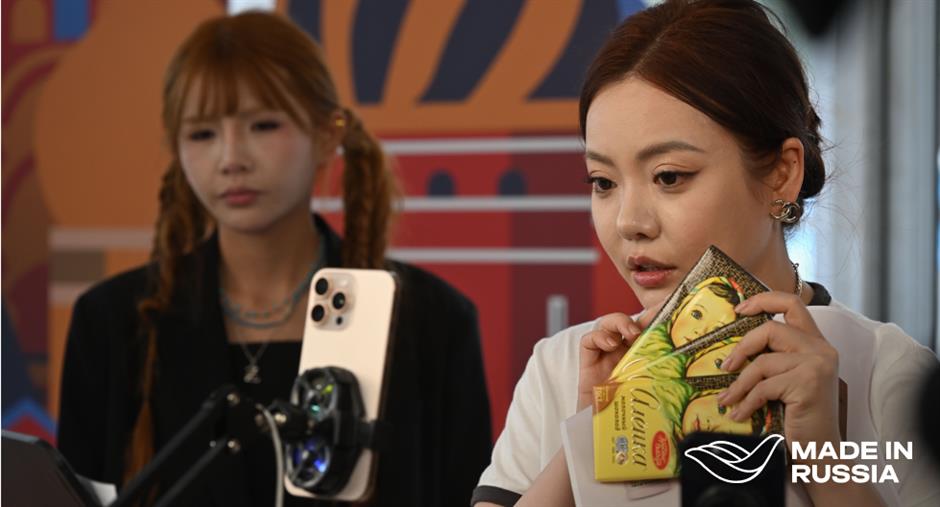
Alexey Maslov, director of the Institute of Asian and African Studies at Moscow State University, observed that Russian cosmetics makers are actively entering the Chinese market. Under the Russian Export Center's "Made in Russia" program, over 300 sales outlets have opened across China, with sales climbing.
The Red Square e-commerce livestream festival in China last May featured more than 100 products, and generated over 100 million yuan (US$14 million) in sales.
Rapid market expansion, however, depends on consumer trust. Since late 2024, Chinese regulatory crackdowns on unauthorized Russian "goods stores" have shown that once trust in a product's origin is compromised, brand premiums vanish quickly.
Authorities in Chengdu inspected 72 stores and filed cases against two for selling food without Chinese labels, while Shanghai inspected 47 stores and suspended unlicensed operators. The Russian Embassy in China subsequently clarified that only pavilions backed by the Russian Export Center are official.
China, hosting APEC for the first time since 2014, has framed the summit agenda around openness, innovation and cooperation. Foreign Minister Wang Yi said the goal is "turning the building of an Asia-Pacific community from a goal into action, and from a blueprint into reality."
This year marks the 30th anniversary of the China-Russia strategic partnership of coordination. Kaliningrad amber and Russia cosmetics are merely the tip of an iceberg of tantalizing opportunities.
(The author is an assistant research fellow at the Institute of Area Studies, Shanghai Academy of Social Sciences.)
Editor: Liu Qi
In Case You Missed It...
 Nov 17, 2026