China to Ban Futuristic Car Controls That Endanger Safety
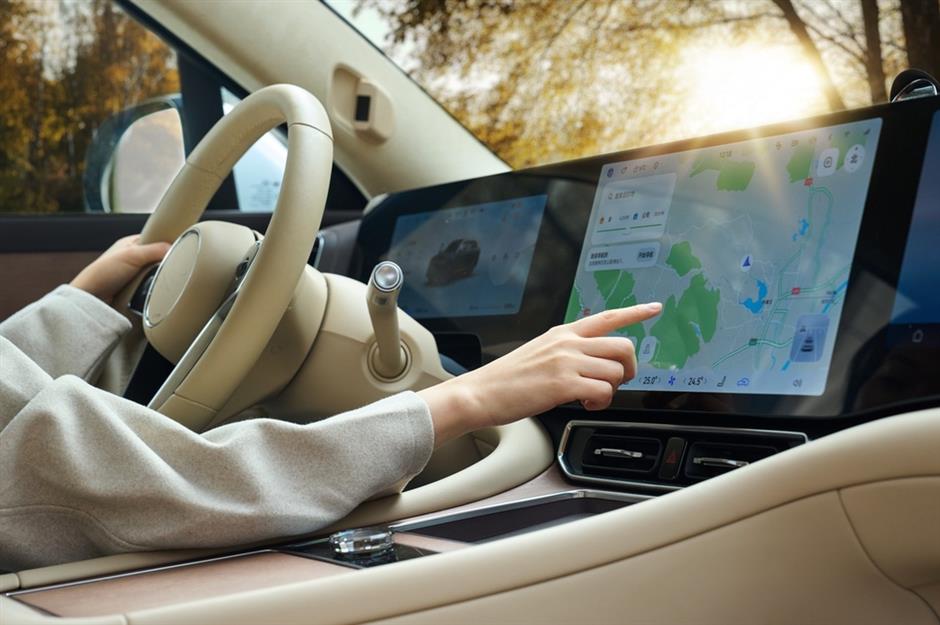
You are driving in a pouring rain. Your windshield suddenly fogs up, and you are forced to take your eyes off the road momentarily to dig through touchscreen sub-menus to find the defroster. By the time you find it and turn it on, your car is drifting dangerously out of its lane.
Or picture cruising down the highway when your infotainment screen suddenly goes black, locking up the climate controls and hazard lights, leaving you to panic-park on the shoulder as semi-trucks roar past. Or perhaps you are simply driving with winter gloves on, tapping the volume control 10 times with no response, growing more frustrated and distracted by the second.
Such are dangerous driving situation that you soon won't have to confront.
China's Ministry of Industry and Information Technology has released a new mandatory national standard, laying down a hard line for automakers.
Starting from July 1, new vehicle models must come allow control of 19 core safety functions with physical buttons, not controls hidden exclusively in menus, including turn signals, hazard lights, gear selection and wipers, with physical controls.
The new regulations are even stricter than the pending standards from the European New Car Assessment Program, commonly known as Euro NCAP. Beginning this year, any carmaker hoping to earn top marks in the prestigious Euro NCAP safety ratings will have to restore physical controls for five basic functions, including the horn, turn signals, hazard lights, windscreen wipers, and the eCall emergency system. Sole reliance on touchscreens will be banned for these critical actions.
"With the new standards, currently mainstream smart cabins in China are predominantly adopting a 'physical buttons plus large touchscreen' dual-track design: safety-critical functions rely on physical controls to ensure reliability and enable blind operation, while experiential features, such as entertainment and navigation, are managed through large screens and voice commands," said Wang Yifei, CEO of JDO Auto, A Shanghai-based provider of automotive software and services.
"The new regulations compel the industry to simultaneously meet both domestic and EU standards right from the initial research and development phase, which will benefit the global expansion of the Chinese automotive supply chain in the long run."
Tucking basic operating functions into a large touch screen was a trend started by Tesla and swept through the entire auto industry over the past decade. Physical controls were phased out, and central screens grew from 10 inches to 15 inches, eventually evolving into massive displays spanning the entire dashboard. Many automakers packaged this "zero physical button" design as a selling point representing futurism and high-tech appeal.
But the real-world consequences have been severe. A legal case in 2020 in Germany highlighted the inherent risks. A Tesla Model 3 owner driving in the rain crashed into an embankment and trees after taking his eyes off the road to adjust the wiper speed in a touchscreen sub-menu. A German court ruled that a touchscreen is an electronic device and causing a prolonged visual distraction for a crucial function like wipers constitutes a traffic violation. The case has since served as a defining counter-example of touchscreen safety.
In fact, most drivers don't like touchscreens. According to the JD Power 2025 survey, infotainment systems remain the most problematic vehicle category of about 43 problems cited per 100 vehicles. The issues stem from manufacturers relocating essential physical controls to touchscreen interfaces. Functions previously controlled by dedicated buttons, including climate control and fan speed, seat heating, gear selection and even glove box releases, now require multiple taps and swipes through digital menus.
"While customers do find the larger touchscreens visually appealing, their functionality within the vehicle is an increasing source of frustration," said Frank Hanley, senior director of auto benchmarking at JD Power. "Customers are having to tap and swipe through multiple screens to access key vehicle functions like climate settings and built-in garage door openers. Owners find these things to be overly complicated and too distracting to use while driving."
Among all issues, safety hazard is the most outstanding.
Studies conducted by the UK-based Transport Research Laboratory measured driver distraction during common tasks. The research found that drivers using touchscreen interfaces took their eyes off the road for an average of 12-15 seconds per task, substantially longer than the 4-6 seconds typically required for similar activities using traditional button controls.
So why automakers are still pursuing the design shift despite everything all the negative feedback? The underlying business logic is simple: cost savings.
A single automotive-grade tactile control built to withstand summer heat, winter cold and years of vibration can cost more than 10 yuan (US$1.40) in materials alone. Meanwhile, developing a complete set of interior buttons involves complex mold development, wiring, mechanical assembly and quality control.
The tooling cost for just one set of dashboard button molds can range from hundreds of thousands to over a million yuan. Conversely, a single 12-inch automotive-grade touch screen can integrate dozens of functions, eliminating the need to independently mold, wire, and test individual switches.
Sam Abuelsamid, vice president of market research at Guidehouse Insights, told an interview with US auto media The Drive that there's a lot of engineering effort that goes into the real buttons – designing them and validating all the components.
"From a manufacturing perspective," he said, "it adds a lot of complexity to develop a dashboard or steering wheel that has physical controls on it."
Beyond touchscreens, other heavily marketed "high-tech" features, such as voice control system, yoke steering wheels and hidden door handles, have also proven to be safety hazards, prompting rapid regulatory and corporate course corrections.
Voice control systems, for instance, are highly susceptible to bugs and environmental interference.
In February, a Lynk Z20 driver on an unlit highway asked the voice assistant to "turn off the reading light." The Flyme Auto 2.0 system misinterpreted the command as "turn off all lighting," instantly blacking out headlights and plunging the car into darkness. Unable to restart the lights via voice command, the driver crashed into a guardrail due to the sudden loss of visibility.
The following day, Lynk & Co Vice President Mu Jun apologized, announcing an immediate update that would ensure headlights can turned off only manually while the vehicle is in motion.

A series of new standards issued by the ministry, expected to come into effect next year, is expected to solve all these problems once and for all.
The new standards will regulate voice control for high-risk functions, such as headlights, braking and steering. They will mandate that no deactivation commands come automatically into effect while the vehicle is in motion or require secondary confirmation plus physical verification, such as pressing a button or engaging a control stalk, prior to execution.
Similarly, the yoke steering wheel, a common feature in aeronautics, will be banned beginning next year. Inspired by Formula 1 racing cars and adopted by models like the Tesla Model S, IM LS7 and Lexus RZ, the yoke was marketed as a premium, futuristic feature.
However, while F1 cars require only half a turn lock-to-lock, civilian vehicles require a turn and a half or more. Drivers frequently struggle with one-handed operations like U-turns, often grasping at thin air or accidentally swiping the central screen.
Hidden door handles are also facing a regulatory reckoning. From next year, both interior and exterior handles must possess independent mechanical release mechanisms. They must be operable after a total power failure or collision, resolving the fatal flaw of occupants being trapped in electronically dead vehicles. Brands like AITO, Zeekr and Geely Galaxy are already shifting back to semi-hidden or traditional exposed door handles.
The automotive industry is finally waking up from its minimalist fever dream. For years, the pursuit of "disruptive" aesthetics and aggressive cost-cutting compromised the fundamental tenets of automotive engineering: safety, reliability and intuitive control. Now the message to automakers is clear: true technological progress should enhance human capability, not endanger it.
Editor: Liu Qi
Popular Reads

Nanpu Bridge Exit Ramp in Pudong to be Closed for Major Interchange Reconstruction

The Perils of Prioritizing Profit Over Knowledge

Overseas Oral and Maxillofacial Surgeons Invited to Apply for a Fellowship Named After a Chinese Scholar