China's Auto Industry, Largest in the World, Faces Make-or-Break Juncture
The mid-year 2026 financial reports of China's automakers present a mixed picture that shows an industry entering a rigorous "survival test." Join China Biz Buzz as we break down the current market landscape and explore the opportunities and challenges facing both traditional giants and emerging players.
One clear trend in the interim reports is the struggle to turn sales volume into actual profits.
The reasons are multifaceted. Domestically, consumer demand remains weak. Frequent policy shifts regarding government trade-in subsidy policies, coupled with this year's gradual phase-out of tax exemptions on new energy vehicles have made buyers cautious.
Furthermore, the auto market is facing an intense cost squeeze, with rapid product rollouts compressing profit margins. With the rising costs of raw materials and semiconductor chips in the first half, automakers' profit margins have been under pressure.
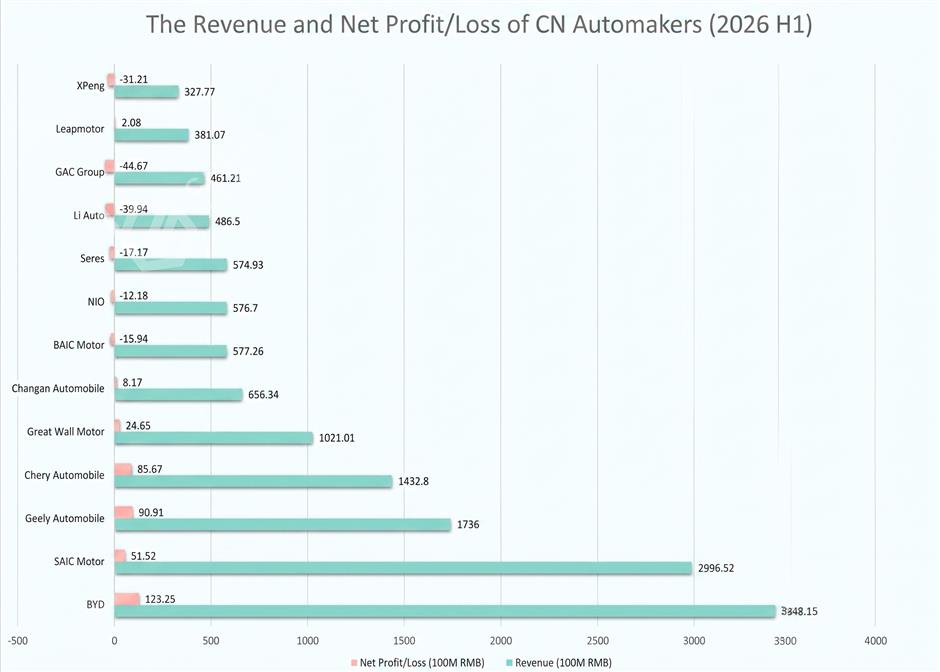
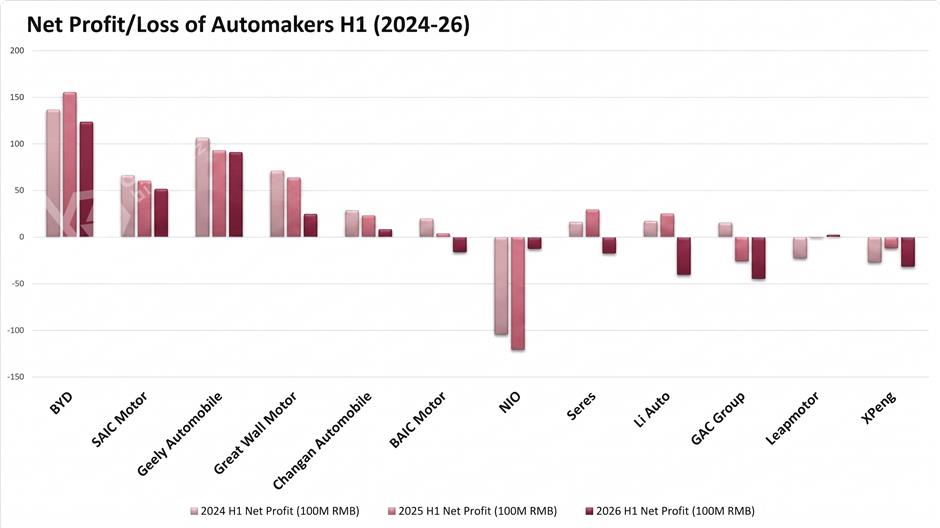
Even industry leaders are feeling the pinch. BYD achieved first-half profit attributable to shareholders of 12.3 billion yuan (US$1.7 billion) and revenue of 344.8 billion yuan. However, revenue declined 7.1 percent from a year earlier, and profit fell 20.5 percent. Great Wall Motor's pain from sacrificing price for volume is even more striking. Despite a 10.68 percent revenue increase, its net profit plummeted 61 percent to 2.5 billion yuan.
Among the new-energy startups, XPeng and Li Auto stand out as prime examples of margin pressure.
XPeng reported a first-half net loss of 3.1 billion yuan, widening 173 percent from a year earlier. Its vehicle gross margin slipped to 12.1 percent from 12.6 percent. Other net income fell 59 percent to 320 million yuan, largely on reduced government trade-in subsidies.
Li Auto's overall gross margin plunged to 9.5 percent from 20 percent a year earlier. Its margin on vehicles took an even harder hit, sliding from 19.6 percent to 7.8 percent, driven primarily by changes in product mix and a lower average selling price.
For automakers posting healthier reports, the key to profitability or narrowed losses rested largely on overseas factors. For many automakers, foreign sales helped offset sagging domestic earnings.
Take Leapmotor, the standout performer in terms of profit growth this year. After facing profit pressure and temporary losses in the first quarter, Leapmotor staged an explosive turnaround in the second quarter.Net profit approached 600 million yuan, wiping out a first-quarter deficit and driving positive first-half net income of 210 million yuan. In the hyper-competitive domestic market of vehicles priced between 100,000 yuan and 200,000 yuan, its models leveraged high value-for-money to build a massive user base.
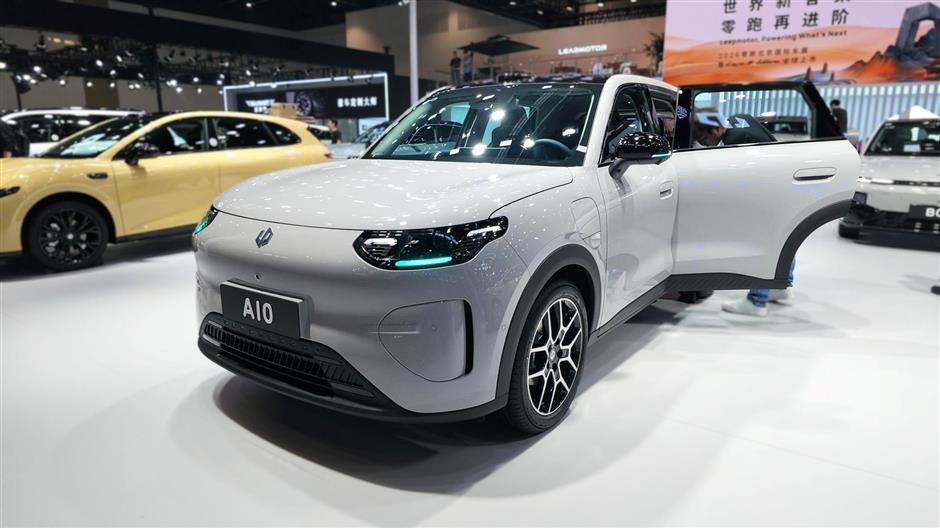
However, a significant portion of its profit surge stemmed from massive dividends reaped through the low-emission compliance system in overseas markets. Leveraging a deep global partnership with Stellantis, Leapmotor secured roughly 900 million yuan in carbon-credit trading revenue in the first half, with about 500 million yuan in the second quarter acting as a powerful catalyst for its profitability.
From a pure sales perspective, Leapmotor's average net profit per vehicle was only about 589 yuan. If strong overseas sales and tied-in carbon credit revenues were stripped out, its mainland business would likely be hovering around the break-even point.
Nio is probably the only player showing positive momentum when it comes to car sales. In the first half, Nio narrowed its net loss by 90 percent from a year earlier to 1.2 billion yuan. The synergy of its multi-brand matrix played a crucial role. All its brands, including the high-end Nio, mid-tier Onvo and premium small car Firefly, sold well, pushing its vehicle gross margin to 18.5 percent.
Whether that momentum can be sustained remains a question. Nio's guidance for the third quarter was flat from the first quarter at between 108,000 and 111,000 vehicles.
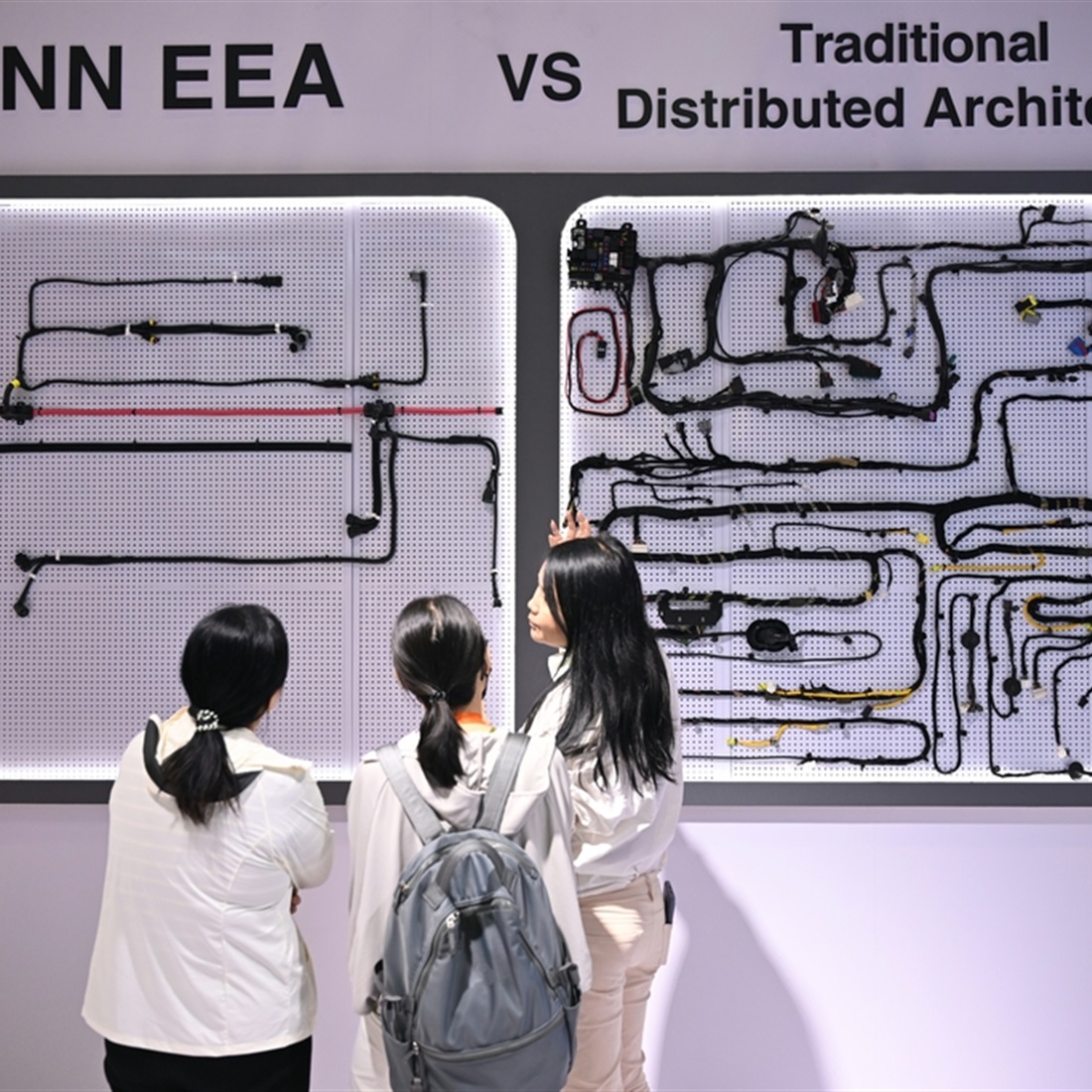
Under these prevailing market trends, developing a secondary growth curve has become a necessary path for automakers. Besides the well-trodden strategy of overseas expansion, technological development, system licensing and a pivot into entirely new tech sectors like robotics have become Take XPeng as an example. Its total gross margin rose to 20.6 in the first half from 16.5 percent a year earlier, and the margin from services and other businesses soared to 71.4 percent. This was primarily driven by high-margin technical service revenue earned through licensing its electronic and electrical architecture and co-developing smart driving platforms with Volkswagen and other manufacturers.
In its financial report, XPeng no longer positioned itself merely as an automaker, but as a leading global "physical AI" company. Its development of mass-production humanoid robots has hit several key milestones, which are expected to drive profit growth ahead. The company's investment in research and development grew 39 percent to 5.8 billion yuan.
Li Auto is undergoing a similar transition. It turned to a first-half loss of 4 billion yuan from a 1.7-billion-yuan profit a year earlier. Vehicle sales revenue dropped 15 percent to 45.6 billion yuan. The company now embraces "embodied AI" as its core strategy, having mass-produced its self-developed 5-nanometer automotive inference chip, the Mach M100, alongside its Mach VLA model. It is advancing the application of its multi-modal large model MindGPT and non-automotive AI products like its Livis AI smart glasses.

However, in the short term, these secondary growth paths may significantly improve gross margins and slow cash burn, but they cannot fully offset massive financial losses. Whether they can turn the tide to profitability in the mid- to long-term will depend heavily on the ability to scale up replication of technology licensing and the penetration rate of software monetization. This is especially true for Li Auto, whose secondary curve is still in a high-investment incubation phase.
Traditional brands like BYD and Geely will look to boost their overall average selling prices through high-end sub-brands like Yangwang and Zeekr. Nio and Leapmotor will face the challenge of stabilizing gross margins as their multi-brand matrix deliveries explode. And XPeng and Li Auto must bank on new high-margin flagship models or the true monetization of end-to-end smart driving to stem their profit slides. For automakers lacking a solid supply chain or robust ecosystem moat, a much deeper crisis awaits.
Editor: Liu Qi
In Case You Missed It...

 Sep 16, 2026

![[Community] Say Bye, Say Hi: An Evening of Swapping, Sharing and Connecting](https://obj.shine.cn/files/2026/09/16/699fe833-2ba8-4118-b51a-6cee96e14a30_0.jpg)