China is conducting a sweeping crackdown on the illegal recycling and disposal of power batteries, targeting those used in electric vehicles and mopeds.
A special joint enforcement campaign undertaken by the Ministry of Industry and Information Technology, the Ministry of Ecology and Environment and other authorities will run to the end of June.
The goal is to end the black market in battery recycling that has been operating for years. The campaign follows new regulations that came into effect in April mandating full-lifecycle supervision over power batteries.
A power battery recycling company located in Shanghai's Fengxian District told China Biz Buzz that it hopes the campaign will finally reverse the long-standing market phenomenon of "bad money driving out good."
Prior to the new regulations, the industry relied heavily on "standard industry conditions" – commonly known as the "whitelist." However, the standard lacked enforcement power. The Fengxian company, which extracts batteries from junked cars, operates on a whitelist of companies adhering to the rules.
"Once we receive the batteries, we go through testing, dismantling, screening and finally, reassembly," said a company official who asked his name not be used. "Our entire system connects directly with the national traceability platform, enabling full-lifecycle track-and-trace management for retired batteries. After these steps, the retired batteries are repurposed into other battery products widely used in energy storage systems and low-speed electric vehicles."
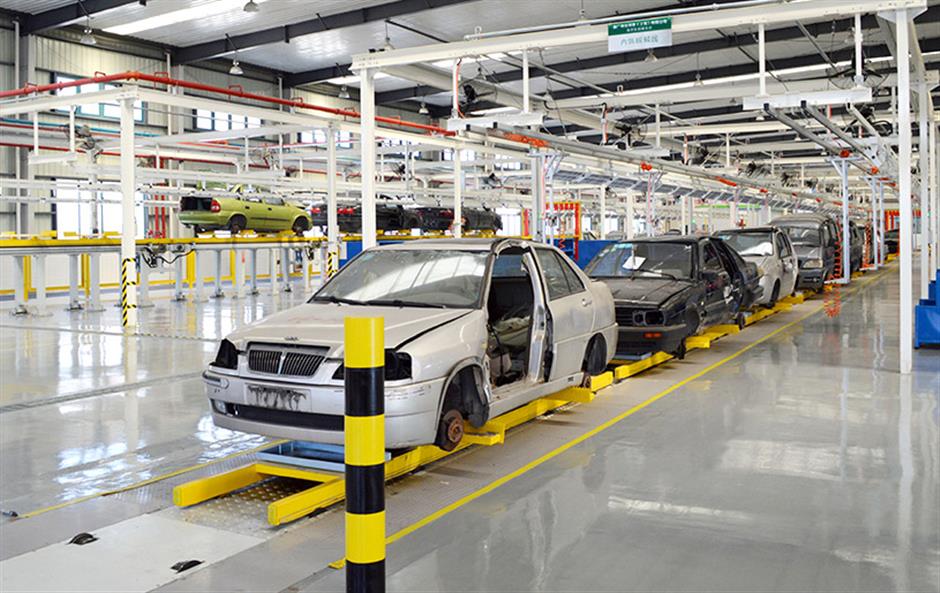
The battery recycling market potential is huge because of the boom in sales of new energy vehicles, which comprised 60 percent of all domestic car sales in April. Given that the initial new vehicle sales explosion began in 2014-15 and a power battery has a lifespan of five to eight years, China is currently facing its first massive wave of battery retirements.
Last year, the country recycled over 400,000 tons of waste power batteries, an increase of 33 percent from 2024. The Industry Research Department of the China Electronic Energy-Saving Technology Association predicts that by 2028, retired power batteries will exceed 4 million tons, generating an industry output value surpassing 280 billion yuan (US$39 billion).
"However, the industry has long been trapped in a vicious cycle where whitelist companies suffer from idle capacity while blacklist workshops fiercely bid for supply at premium prices," the Fengxian recycler said. "Some underground workshops offer prices up to 30 percent higher than compliant companies, resulting in approximately 75 percent of waste batteries flowing into black channels."
The Shanghai commerce commission overseas five fully qualified scrapped motor vehicle recycling companies, which collectively processed only 65,000 vehicles in 2025, leaving local capacity severely underutilized.
To address this, the new regulations stipulate that new energy vehicle owners cannot deregister their vehicles if the power battery is missing. If the battery flows into unqualified channels, the owner faces severe restrictions on registering a new vehicle or renewing a driver's license.
"The new rules force car owners to verify whether a service provider holds a legitimate qualification certificate before scrapping their old cars," said the official with the company in Fengxian. "Otherwise, they risk being caught in a double crisis of legal liabilities and inability to unregister vehicles."
Power batteries are a treasure trove of rare metals like lithium, cobalt, and nickel.
Lin Daoyong, general manager of Shanghai Yiding New Material Technology, said the rapid growth of new energy vehicles and energy storage systems is driving global demand for lithium salts, projected to reach 3 million tons by 2030.
"Global lithium reserves are finite," Lin said. "Once peak annual demand is met, recycled lithium will account for a steadily growing share, while the absolute volume of mined lithium will decrease."
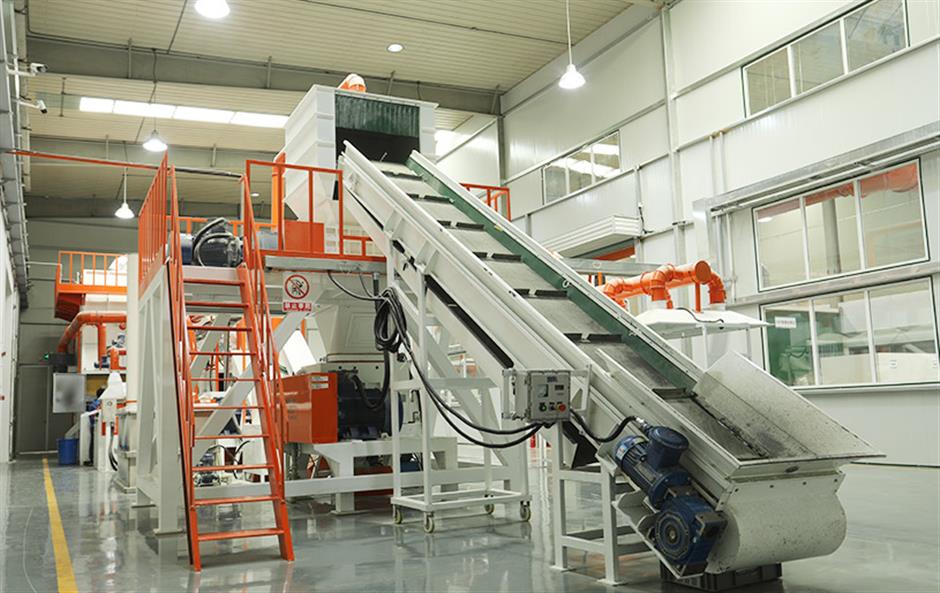
However, improper handling of these heavy metals can pose severe safety and environmental risks. The previous lack of mandatory legislation led to frequent reports of illegal dumping cases.
In July 2025, police in the Guangdong Province city of Qingyuan dismantled a hidden operation inside an abandoned pig farm, seizing 860 tons of illegally processed batteries. Workers were found using axes to split batteries open, discharging toxic electrolytes directly into nearby agricultural irrigation canals. The black market acquired the batteries for 4,000 yuan a ton, and after dismantling, the materials were sold for 25,000 yuan a ton.
In July 2024, the Guangxi Zanyang Co triggered a major fire by piling up waste lithium batteries without any safety precautions. Water used to fight the fire overflowed into a nearby agricultural ditch, causing manganese levels to exceed safe limits by 182 percent. The company was subsequently fined 114,000 yuan.
Earlier in 2024, authorities exposed two illicit workshops in Shanghai's Songjiang District. These workshops "borrowed" the whitelist qualifications of a legitimate company in Anhui Province, maintaining the facade of compliance while secretly dismantling batteries illegally. Sourcing their supply from major automakers and testing centers, they were able to buy spent batteries for 300,000 yuan and resell them for 1.3 million yuan.
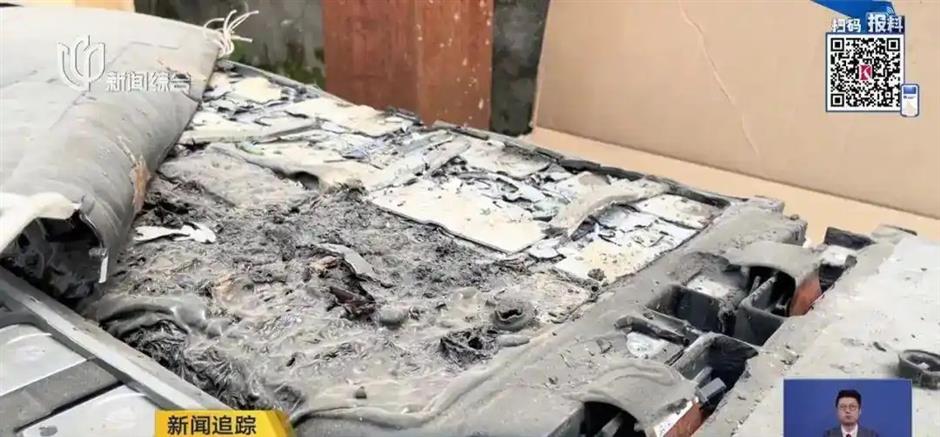
To bring order to the market, the National NEV Power Battery Traceability Information Platform has been set up. By assigning a unique code to every power battery, the platform integrates data across upstream and downstream supply chains, enabling seamless tracking of battery flows.
Wang Pan, an expert at the China Automotive Technology and Research Center, explained that the platform covers four core functions and bridges the information gap across the entire lifecycle of a battery.
"Companies must now upload data covering production, installation, sales, scrapping and recycling of batteries in a closed-loop chain of responsibility. Downstream recyclers can now precisely query technical data," Wang said in an interview with China National Radio.
Battery recycling is a universal challenge. The EU requires a digital "battery passport" for all power batteries sold in the bloc. The passport tracks raw material origins, recycled content proportions and carbon footprints. Products lacking traceability or failing to meet recycling standards face a blanket ban in the EU. Furthermore, automakers and battery producers bear full responsibility, facing substantial fines for illegal dumping.
The US views battery recycling primarily as a shortcut to securing critical minerals. It relies on leading companies like Redwood Materials, which partner directly with automakers such as Ford, Toyota, and Volkswagen, to bring scrapped vehicles into factories, extract the batteries and process them into cathode and anode materials for new batteries.
However, challenges persist in the West. Electric car fleets in Europe and the US are much smaller than in China, leaving many Western recycling plants struggling to secure enough raw materials to make a profit.
Swedish company Northvolt is one example. Once hailed as the new hope of Europe's battery industry, it aimed for a 100 percent loop in battery materials through its Revolt recycling project. In March 2025, the company filed for bankruptcy following an exhaustive effort to secure sufficient financial support.
Back in China, the intensification of state supervision marks a critical step toward industry standardization. With every battery tracked from birth to retirement, the gray market of vehicle-battery separation is expected to be permanently crippled. Where the industry goes from here will be a defining narrative for the next decade of green technology.
Editor: Yao Minji
In Case You Missed It...
 Oct 12, 2026