Cancer-Fighting T-Cell Therapy Added to China Public Medical Insurance, Hefty Price Plunges
More than 1 million yuan (US$150,046) has been wiped off the price of a cancer therapy tailored to one patient at a time. For patients, it could be a breakthrough. For China's CAR T-cell industry, it presents a daunting equation: far less revenue per treatment, far more patients to serve.
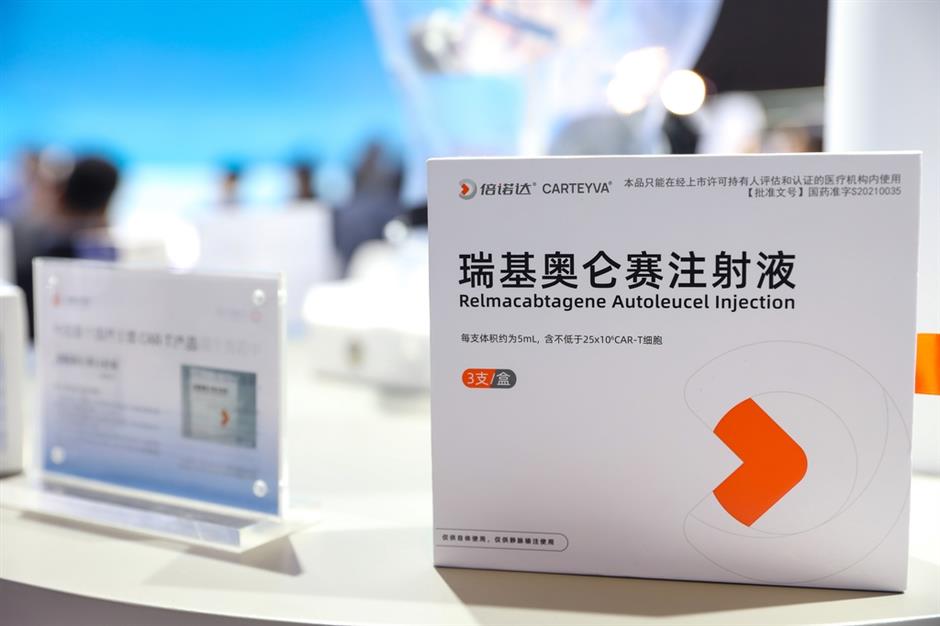
The challenge comes as Shanghai-based JW Therapeutics becomes the first CAR-T drugmaker to secure a place in China's basic medical insurance program, with the price of its lymphoma therapy price slashed nearly 78 percent to 288,600 yuan, effective from January.
The milestone could unlock a much larger market for personalized cancer treatments, but it also puts the industry's economics to the test - from manufacturing costs and clinical capacity to whether higher patient volumes can make up for lower prices.
At Shanghai Tongji Hospital, where more than 100 patients undergo CAR-T treatment each year, the financial barrier is all too familiar.
"Out of 10 patients we would recommend CAR-T for, perhaps only two or three would actually receive it," said Xiu Bing, a chief physician specializing in blood cancers in the Department of Hematology at Tongji Hospital. "If money were no longer a barrier, that number could rise to five or six."
The estimate is drawn from her clinical experience, rather than a formal survey. But it offers a glimpse of the demand that high prices have long kept out of reach.
"Financial constraints are the dominant reason," Xiu said, referring to patients who ultimately forgo the treatment.
CAR-T, short for chimeric antigen receptor T-cell therapy, takes a patient's immune cells, genetically reprograms them to recognize cancer and infuses them back into the body. The therapy has offered new hope to patients with certain blood cancers who have exhausted conventional options.
Unlike pills or injectable medicines churned out in large batches, every CAR-T treatment must be manufactured from an individual patient's cells. That complexity has helped keep prices above a million yuan in China, even as more therapies have reached the market.
The clinical promise can be striking. Xiu recalls a patient with mantle cell lymphoma who has remained free of disease progression for seven or eight years after receiving CAR-T.
"The biggest beneficiaries are high-risk patients with clear indications, especially those unlikely to respond well to conventional chemotherapy and those who previously could not afford CAR-T," she said.
Yet such outcomes are far from guaranteed. Some patients will also relapse without systematic treatment, including well controlled bridging therapy and relapse prevention management. Therefore, collaborative MDT throughout the entire CAR-T process, along with the prevention and control of toxic and adverse reactions, is far more important than CAR-T itself.
Xiu worries that wider insurance coverage could also encourage premature use among patients who might still benefit from conventional treatments.
"Some patients may actually be better suited to conventional treatment," she said. "We need to identify patients who are unlikely to benefit from CAR-T and consider alternative treatments, such as bispecific antibodies or enrollment in clinical trials."
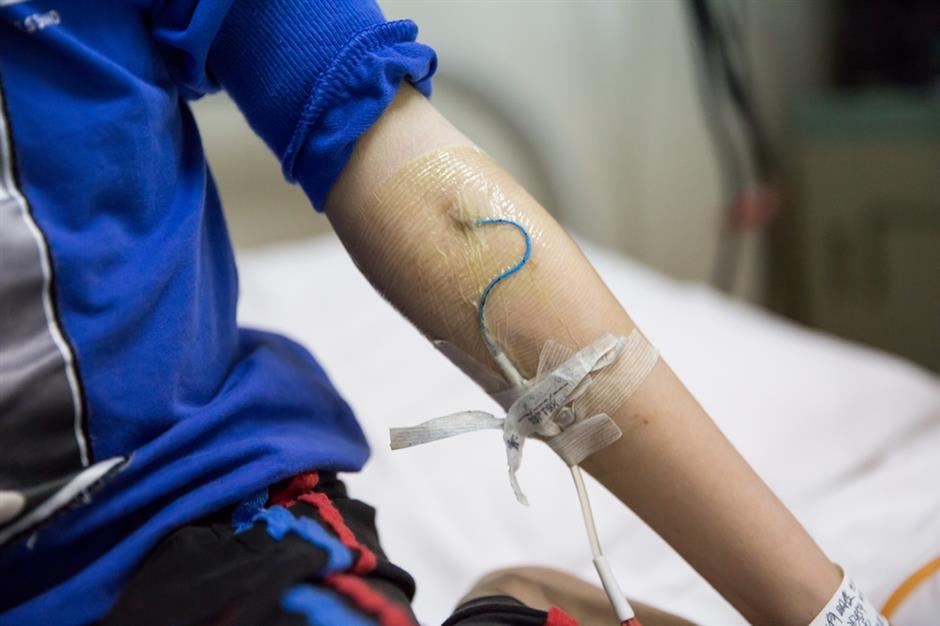
The distinction matters for a market whose potential size is often measured in patient numbers.
JW Therapeutics estimates that about 11,000 new patients in China each year fall within the three approved lymphoma indications covered by the new reimbursement arrangement. Its treatment, called relmacabtagene autoleucel, is intended for certain patients with relapsed or refractory large B-cell lymphoma, follicular lymphoma or mantle cell lymphoma after at least two previous lines of systemic treatment.
That figure suggests considerable room for expansion, although it is a company estimate of the eligible patient population, not a forecast of actual treatment volumes.
Opening the door to reimbursement will not instantly translate into thousands of additional treatments.
"Trading lower prices for higher volumes makes sense in principle for CAR-T," said Jin Chunlin, director of the Shanghai Health Development Research Center. "But its expansion will be gradual rather than explosive."
The limitations lie partly in CAR-T's unusual manufacturing process. Patients must undergo cell collection, followed by genetic modification, cell expansion, quality testing and, eventually, infusion. The process can take several weeks, during which some patients may become too ill to proceed.
Treatment also requires specialized hospitals capable of managing serious adverse reactions. Even if demand rises sharply, expanding the network of qualified treatment centers will take time.
"CAR-T production capacity cannot expand nearly as quickly as that of conventional drugs," Jin said.
The economics of making CAR-T are no less complicated.
JW Therapeutics recorded 111.2 million yuan in product sales in the first half of 2026, up 37 percent from a year earlier, with a gross profit margin of 51.8 percent. Yet the company still posted a net loss of 50.4 million yuan.
Those figures predate the reimbursement deal. A nearly 78 percent cut from the original list price raises the stakes for manufacturers trying to turn sophisticated cell therapies into sustainable businesses.
One answer may lie in the very technology that has made CAR-T so expensive.
A major cost component is the "lentiviral vector," which delivers genetic instructions into a patient's T cells, enabling them to recognize cancer cells.
JW Therapeutics previously relied on imported vectors costing roughly US$30,000 per patient, according to chairman and chief executive Tian Feng in an earlier interview.
After six to seven years of development, the company has established its own vector manufacturing technology, aiming to sharply reduce that expense.
"We can now produce enough for more than 1,000 patients from the same batch of viral vectors," Tian said in the interview.
The company said its manufacturing cost stood at about 500,000 yuan to 550,000 yuan per patient in 2025, and projected that it could fall to 150,000 yuan to 200,000 yuan in 2027 through improved production processes and economies of scale.
In a November 18 statement addressing concerns over profitability, JW Therapeutics cautioned against comparing its historical manufacturing costs directly with the new reimbursement price. The projected savings depend on further production improvements, including regulatory approval for the use of its domestically developed lentiviral vector.
Tian said the combination of lower manufacturing costs and a larger market should allow the company to earn reasonable returns under the new reimbursement arrangement.
The experiment could reshape how other Chinese CAR-T developers approach the market.
Since China's first CAR-T approval in 2021, manufacturers have relied on commercial insurance, supplementary coverage and patient assistance programs to make their treatments more accessible. Basic medical insurance offers a route to a much larger patient pool, but at a price that would have been difficult to contemplate only a few years ago.
For companies still selling CAR-T therapies at higher prices, the first reimbursement deal raises a question that goes well beyond a single product: how much of their pricing power must they surrender to reach more patients?
Jin sees the deal as a turning point in China's approach to paying for expensive innovative medicines.
"This is a breakthrough from zero to one at the institutional level," he said. "It also shows that when a drug has sufficiently strong clinical value and a company is willing to lower its price, the insurance authorities are prepared to negotiate its inclusion."
JW Therapeutics' product was included in China's commercial health insurance innovative drug catalog before moving into the basic reimbursement system, a transition Jin believes could provide a pathway for other costly treatments.
But bringing CAR-T into public insurance raises another question: who bears the financial risk when the benefits of a single infusion may last for years, or disappear within months?
Unlike medicines taken over repeated treatment cycles, most of the cost is incurred upfront, long before the full clinical outcome is known.
"Some patients respond well, while others do not," Jin said. "In the medium to long term, we could explore payment based on treatment outcomes and installment payments."
Under such arrangements, insurers and manufacturers could link payments to clinical results, reducing or adjusting the amount paid if patients fail to achieve or sustain a meaningful response.
"Linking payment to outcomes could help balance uncertainty over treatment effectiveness with the financial risks faced by insurance funds," Jin said.
Such arrangements remain proposals rather than an established payment mechanism for the newly reimbursed therapy. They would require reliable long-term clinical data and agreement among insurers, hospitals and drugmakers on how success should be measured.
At Tongji Hospital, Xiu expects the lower price to bring more patients into treatment, but she is equally concerned about what happens after the infusion.
"The key is to consider what happens if the disease progresses again after CAR-T," she said. "We cannot stop at the treatment itself."
Editor: Lu Feiran
In Case You Missed It...

 Nov 26, 2026