China Market for New Hepatitis B Drugs Is Large, Actual Sales Prospects Smaller
Seventy-five million people make for a compelling market. Finding patients who will actually take a new medicine is a more demanding business.
That is the challenge facing UK pharma giant GSK as it prepares to bring its hepatitis B drug to China – a development Chinese drugmakers are watching closely as they develop their own new treatments for the viral liver disease.
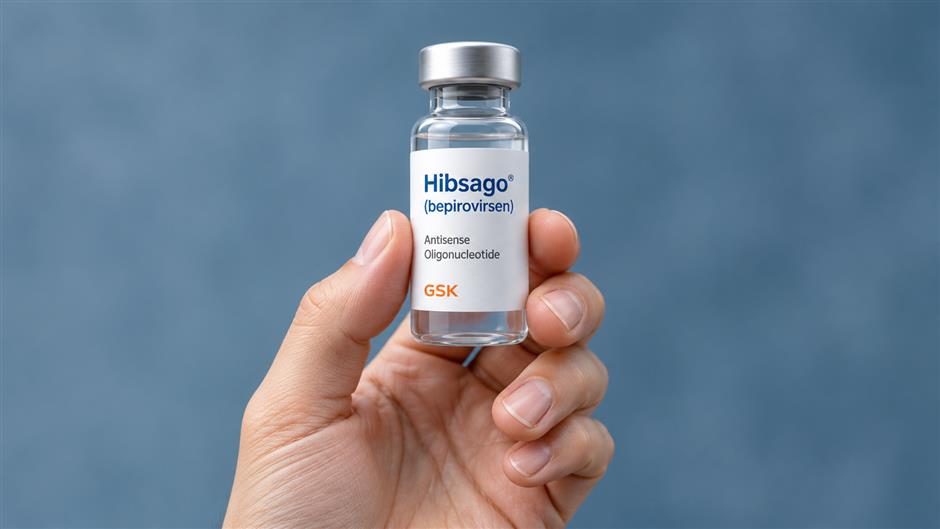
GSK's bepirovirsen, sold under the brand name Hibsago, won US regulatory approval in October, offering some patients the possibility of stopping medication while keeping the infection under control.
At the American Association for the Study of Liver Diseases meeting in Denver earlier this month, Chinese drugmakers Hengrui Pharma and Brii Biosciences presented research pursuing the same broad ambition.
For companies hoping to build a business around that promise, China's vast patient population is only the starting point. The nearer-term opportunity lies within a much smaller group already receiving care, and narrows further once the requirements of a new treatment are applied.
GSK's own investor presentation illustrates the gap. Of an estimated 75 million people living with chronic hepatitis B in China, about 44 million have been diagnosed and around six million are on treatment. The company said in October that bepirovirsen remained under priority review in China, with a regulatory decision expected in the first half of 2027. Even those six million currently on treatment cannot simply be counted as prospective customers.
Under its US approval, Hibsago is available to adults without cirrhosis who have received antiviral treatment for at least six months, have suppressed virus levels and have hepatitis B surface antigen levels of 3,000 international units per milliliter. The antigen is a viral protein measured in blood. China's eventual prescribing rules will determine eligibility there.
The published figures do not establish how many Chinese patients would qualify. Nor do they tell companies how many eligible patients would choose treatment, obtain coverage or pay for it themselves.
For a patient whose infection is already controlled with daily pills, the attraction is the chance to stop treatment. But that possibility comes with additional treatment and monitoring, without any guarantee of success.
In the trials supporting US approval, 24 percent of patients receiving bepirovirsen met the criteria to stop their existing antiviral medication. Twenty-four weeks after stopping all hepatitis B treatment, 19 percent had maintained viral control with no detectable surface antigen – an outcome known as a "functional cure." Most patients did not reach that endpoint. The drug also carries a boxed warning for serious liver reactions and low platelet counts.
Hou Jinlin, director of the Department of Infectious Diseases at Nanfang Hospital and a lead investigator in GSK's global phase III bepirovirsen trials, said the studies enrolled patients with surface antigen levels above 100 and up to 3,000 units. He explained that earlier research suggested patients with very low antigen levels could sometimes achieve clearance with existing treatment, while those with higher levels were harder to treat. He made the comments in an interview with the Yicai news group last week.
"New drugs usually face high price barriers when they are first approved," Hou told Yicai, adding that reimbursement negotiations and lower costs as the industry matures could improve access.
The economics may prove as demanding as the medicine.
In Japan, Hibsago was listed in October at 183,015 yen (about US$1,150) per 150 milligram syringe. At the standard dosage, a 24-week course requires 52 syringes, putting the drug cost at roughly 9.5 million yen, before any insurance coverage.
In the US, prescription discount platform GoodRx listed a coupon price of US$12,989 for five syringes as of November 12, although GSK has yet to disclose an official US list price. The two figures reflect different pricing systems and do not indicate what the drug might cost in China.
With relatively inexpensive antivirals already keeping the virus under control for many patients, a new treatment will need to justify not only its price but also the cost of monitoring and the likelihood of a lasting response.
GSK has already chosen a partner to help reach those patients in China.
In May, it signed an exclusive agreement with Chia Tai Tianqing, a subsidiary of Sino Biopharmaceutical, whose commercial network covers more than 5,000 medical centers. The Chinese company will handle imports, distribution, hospital access and promotion in mainland China, while GSK retains regulatory, quality and drug-safety responsibilities.
The deal puts an established hospital network behind a medicine that requires doctors to identify suitable patients and follow them through treatment.
It also gives the Chinese company a stake in GSK's launch while others work on potential alternatives.
Hengrui's HRS-5635 is among them. A phase II study of the experimental RNA-based medicine appeared in the same November 7 conference session as GSK's late-stage research. Hengrui's interim report lists the program as having entered phase III development in China.
Brii, meanwhile, is testing whether combining an RNA-based drug with treatments that stimulate the immune system can help more patients respond. Its program includes BRII-179, a therapeutic vaccine intended for people already infected with hepatitis B.
One finding from Brii's Denver presentation speaks directly to the challenge of expanding treatment options.
In its phase II Enrich study, 11 of 53 participants with starting surface antigen levels above 1,000 and up to 3,000 units per milliliter maintained antigen loss 24 weeks after the study treatment ended. These patients are considered harder to treat, but their antigen levels still fall within the range covered by GSK's US approval.
The small study group does not establish a broader eligible market or superiority over GSK. It does, however, offer a potential route to improving responses among patients less likely to benefit from existing approaches.
Brii is also investigating whether it can shorten the interferon component of its combination treatment. If confirmed in further trials, a less burdensome course could make a difference to patients weighing a new treatment against the daily pills they already take.
But Brii faces a hurdle beyond clinical performance. A dispute with US-based Vir Biotechnology over the transfer of manufacturing responsibilities for elebsiran, a key component of its combination therapy, has complicated its development plans. Brii said in August that it was not advancing an elebsiran-containing hepatitis B regimen into phase III while the arbitration remained unresolved.
For later entrants, these are potential points of distinction. Better response rates, simpler treatment or fewer safety concerns could give doctors a reason to choose another medicine. But each advantage will need evidence from larger studies. Percentages drawn from different trials cannot settle the comparison.
There is also a distinction between winning patients already in care and reaching those who have yet to start treatment. The former requires identifying suitable candidates within existing clinics. The latter entails more diagnosis, referral and sustained engagement with the health system.
That makes the 75 million figure a measure of the disease's burden, rather than a ready-made sales forecast.
GSK has secured a route into thousands of Chinese medical centers. Hengrui and Brii are still assembling the evidence for medicines that could follow. Their prospects will depend on the choices made inside those clinics: Who qualifies, who is willing to try and who can afford a chance to put the pill bottle away.
Editor: Liu Qi
In Case You Missed It...
 Nov 10, 2026