From Display to Pharmacies: China's Import Expo Offers Peek Into Latest Drugs
The latest medicines on display at the ongoing 9th China International Import Expo in Shanghai are offering a glimpse of what could soon reach Chinese hospitals and pharmacies.
For global pharmaceutical companies, the annual trade fair is an opportunity to introduce new treatments to the Chinese market, sometimes well before they become commercially available.
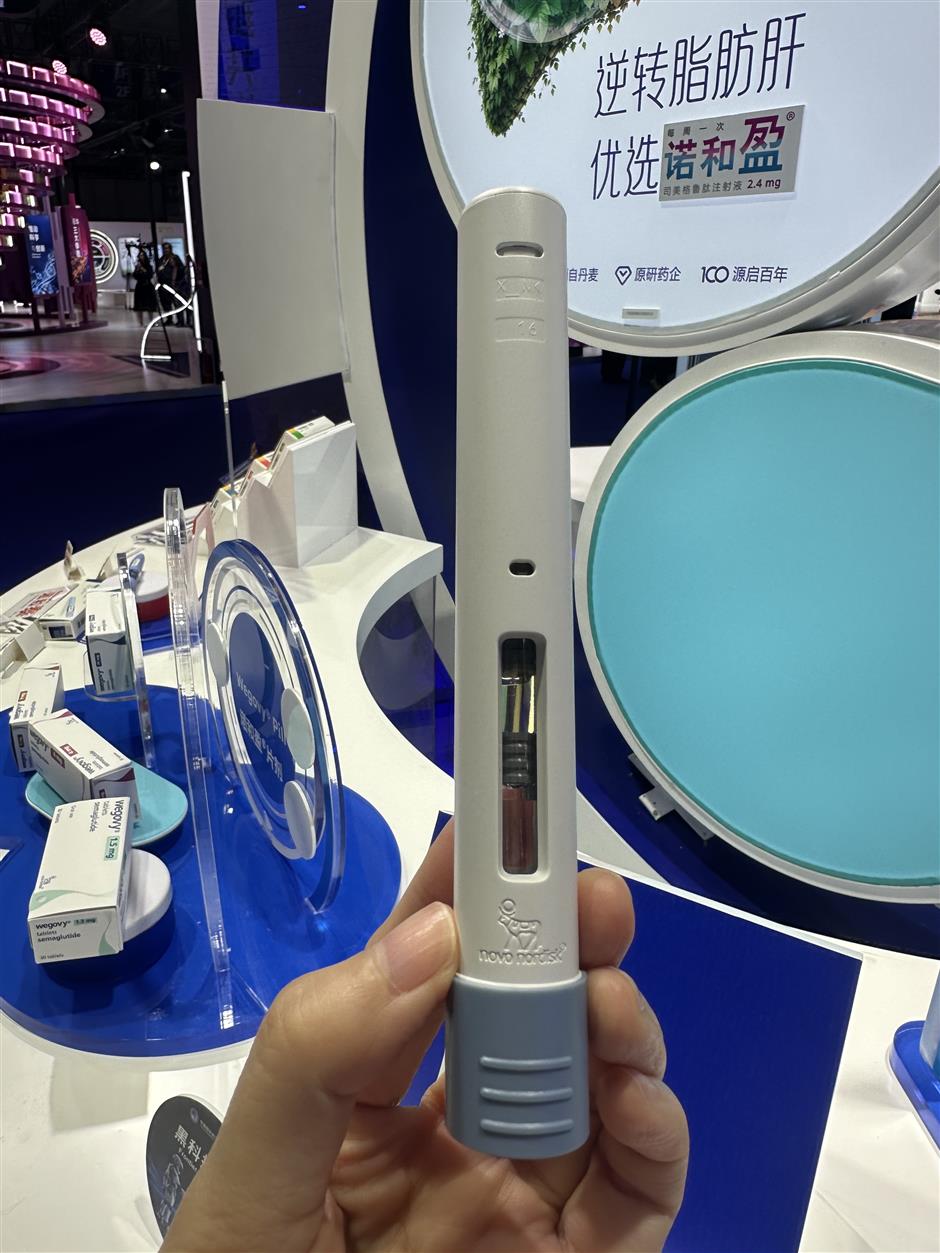
At Novo Nordisk's booth, attention has turned to CagriSema, the Danish drugmaker's next-generation obesity treatment that combines two medicines in a single weekly injection.
The experimental drug pairs semaglutide, the active ingredient in the company's blockbuster weight-loss treatment Wegovy, with cagrilintide, a long-acting amylin analogue. The two target different pathways involved in appetite regulation, aiming to deliver greater weight loss than either medicine alone.
"It's a combination of two strengths, so the weight loss can be greater," said Ling Yunzhi, a medical adviser at Novo Nordisk's CIIE booth.
Clinical results suggest the combination could push weight loss beyond what is typically achieved with standard-dose semaglutide.
In the Phase III REDEFINE 1 trial, CagriSema delivered an estimated average weight loss of 22.7 percent after 68 weeks, compared with 16.1 percent for semaglutide alone, assuming patients remained on treatment.
For someone weighing 100 kilograms, the higher percentage would translate into nearly 23kg of weight loss.
The drug has been submitted for regulatory approval in both the United States and China. Novo Nordisk said in its November 4 quarterly report that it expects the Chinese regulatory review to be completed in the first half of 2028.
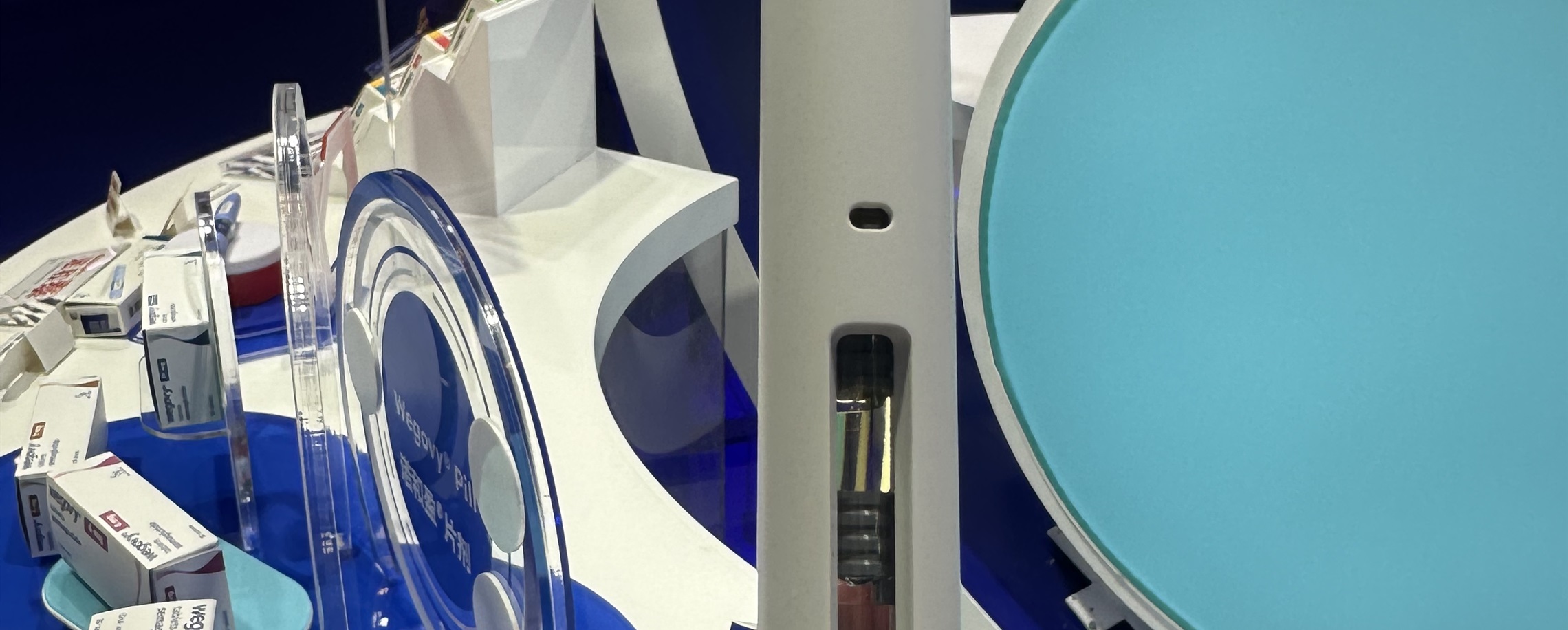
The company is also seeking Chinese approval for an oral version of semaglutide for weight management, giving patients a potential alternative to weekly injections.
Beyond treatments aimed at widespread conditions such as obesity, some of the new medicines making their China debut are designed for diseases that remain little known – even among patients who have them.
That is the territory CSL is exploring at its first CIIE appearance, which coincides with the Australian biotechnology company's 40th anniversary in China.
Long associated with plasma-derived medicines, particularly human albumin, CSL is now showcasing a broader portfolio that includes innovative treatments for rare diseases.
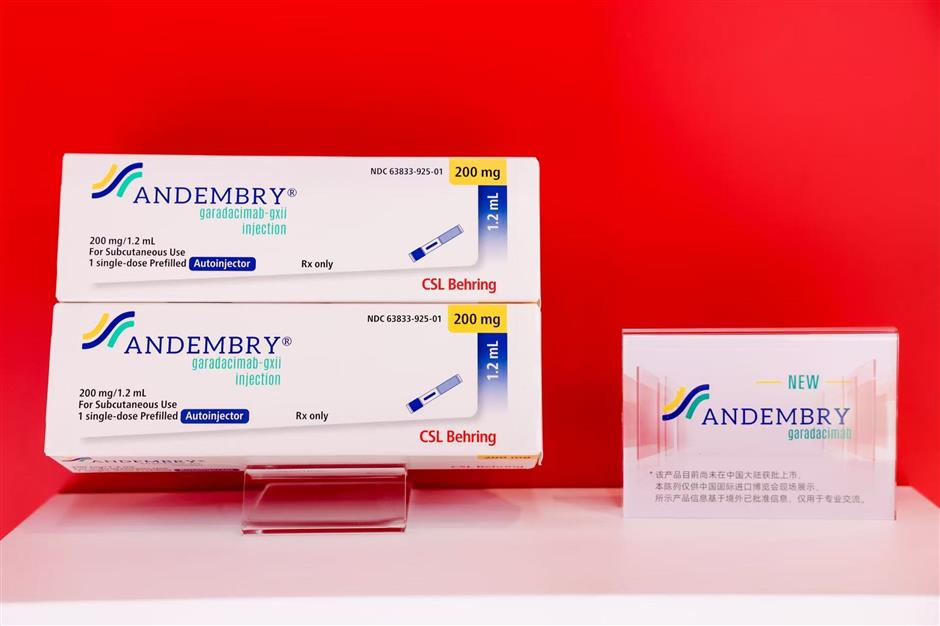
One highlight is ANDEMBRY, or garadacimab, an activated Factor XII (FXIIa) inhibitor (monoclonal antibody) indicated for routine prevention of recurrent attacks of hereditary angioedema (HAE) in adult and adolescent patients aged 12 years and older.
The rare genetic disorder can cause sudden, unpredictable swelling of the face, limbs, abdomen and throat. An attack involving the airway can become life-threatening.
ANDEMBRY targets activated FXIIa, a protein involved in triggering the attacks. Administered through a prefilled pen, the treatment requires maintenance injection once monthly, the injection may take up to 15 seconds., according to the company.
Already approved in certain markets outside China, the therapy is awaiting regulatory clearance in China.
"We may be new to the expo, but we're good students," said Cissy Wang, CSL China General Manager, who has already signed an agreement for the company to return to next year's event.
Yet for patients with rare diseases, getting treatment often begins with a more basic challenge: finding out what is wrong.
During the expo, CSL signed an agreement with Peking Union Medical College Hospital to explore the potential of artificial intelligence to support earlier identification and diagnosis.
The collaboration will focus on developing and validating AI-assisted diagnostic approaches, extending the company's ambitions in China beyond its established plasma products business.
Wang said the CIIE could help the company reach more patients while creating opportunities to bring Chinese innovations to the world.
For some medicines, the hurdle is no longer regulatory approval but getting them into hospitals.
Bayer is showcasing Sunharbo (asundexian), a new stroke-prevention drug approved by China's National Medical Products Administration on October 26, just days before the expo opened.
The approval made China the first country in the world to clear a Factor XIa inhibitor, a new class of medicines designed to prevent harmful blood clots while limiting bleeding complications.
The once-daily oral drug is intended to reduce the risk of another stroke in adults who have suffered a non-cardioembolic ischemic stroke or a high-risk transient ischemic attack, commonly called a mini-stroke.
The potential need in China is substantial.
An estimated 21.23 million people were living with ischemic stroke in China in 2023, while 2.66 million new cases occurred that year, according to national stroke statistics released in 2026. Although not all these patients would qualify for Sunharbo, the figures underscore the country's heavy stroke burden and the need for better prevention.
For patients who have already suffered a stroke, preventing another can be especially challenging. Existing antithrombotic treatments reduce blood clot formation but can also increase bleeding risk.
Sunharbo targets Factor XIa, a protein involved in blood clotting, offering a different approach to balancing stroke prevention and bleeding risk.
In the global Phase III OCEANIC-STROKE trial involving more than 12,000 patients, asundexian, when added to antiplatelet therapy, reduced the relative risk of ischemic stroke by 26 percent compared with antiplatelet therapy alone. The incidence of bleeding events was similar between the two groups.
China was among the countries participating in the large international study.
With regulatory approval secured, Bayer is working through the next steps, from import clearance and distribution to hospital access.
The German pharma giant said it hopes to make Sunharbo available in Chinese hospitals and pharmacies in the first quarter of 2027.
Bayer is also looking toward future inclusion in China's national medical insurance system, a step that could help make the treatment more affordable.
"We hope to lower the barriers so that more patients can benefit from the medicine," the Leverkusen-headquartered company said.
Editor: Yao Minji
In Case You Missed It...

 Nov 10, 2026