[China's Next Order] Who's Winning the Business?
Editor's note:
This series, "China's Next Order," focuses on Chinese buyers and what they need. Reporting from the ground in Shanghai, including the China International Import Expo, reporters and expert columnists follow purchasing decisions. From households to manufacturers selling abroad, we try to understand where foreign businesses win orders, what keeps them competitive and what puts that business at risk.
China's import bill is not shrinking: Its merchandise imports hit 18.48 trillion yuan (US$2.77 trillion) in 2025, retaining its status as the world's second-largest importer for the 17th straight year.
But spending patterns within this total are changing. Broad, value-for-money volume purchases are losing ground to targeted, evidence-driven solutions to specific challenges.
Two very different firms show how market winners are pulling this off.
The bearing maker that bet on a new demand curve
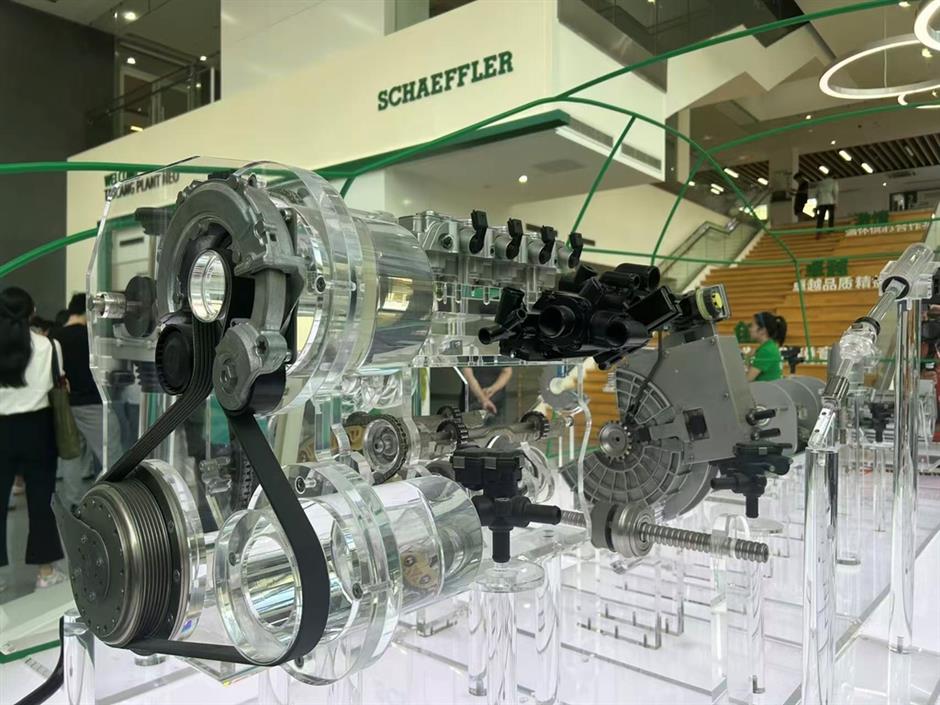
German motion-technology group Schaeffler opened a 7,500-square-metre "lighthouse factory" in Taicang, Jiangsu Province, on October 20. Six humanoid robots man five workstations at the facility, assembling linear and rotary actuators for next-generation humanoid robots. In the third quarter of 2026, two new China clients pushed the group's global humanoid robotics order book to roughly 400 million euros, up from around 350 million euros at mid-year.
What stands out is where this new business sits within the company's China footprint. Schaeffler's Taicang base – its largest outside Germany – generated 23.5 billion yuan in output in 2025, even as it placed a 1 billion yuan bet on a product line that barely existed three years ago.
Schaeffler's success is not built on price. Domestic Chinese suppliers can undercut its prices on standard bearings. It has won out because planetary roller screws, the load-bearing components of robot legs, demand precision tolerances and service life that few manufacturers can achieve at scale – and because 30 years of localisation meant over 95 percent of its automotive supply chain was already rooted in China when robot orders began rolling in. For customers racing to fulfil shipments, this is no premium – it is simple arithmetic.
Selling proof, not promises
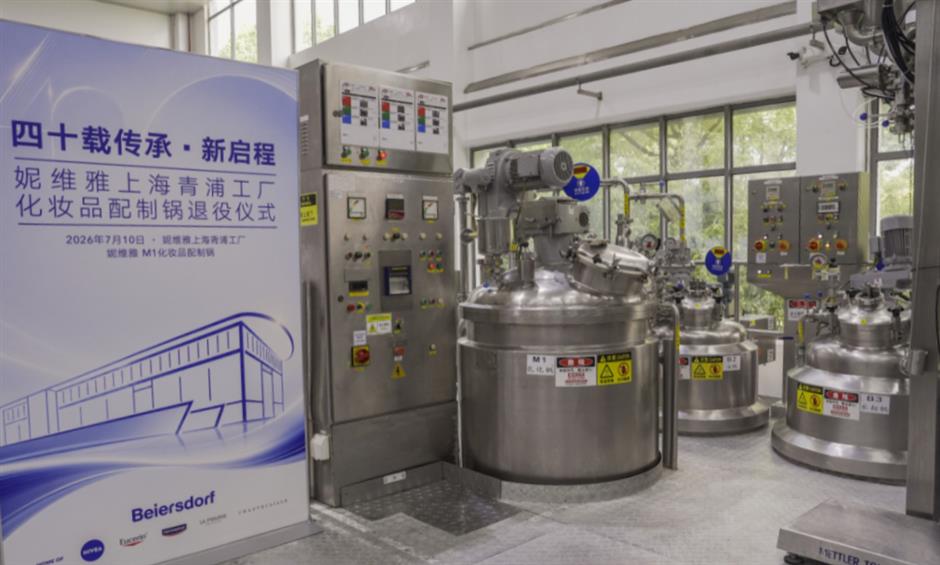
On the other side of the market, Beiersdorf's Eucerin posted a 62 percent rise in its China skincare science business in the second quarter of 2026. This came in the same six-month period when parent brand NIVEA saw its organic sales dip 6.8 percent. Same group, same market, divergent outcomes.
The secret lies in clinical evidence. Eucerin's Thiamidol 630 was the first brightening active approved under China's stricter cosmetics regulations. It is supported by more than 120 clinical investigations and local trials involving over 500 Chinese participants, and is now recognised as a first-line topical agent in the International Consensus on Pigmentary Disorders. The brand has earned recommendations from 1,886 Chinese dermatologists.
This shift carries weight because Chinese beauty consumers no longer stay loyal to brand logos. Domestic brands captured 57.37 percent of the market in 2025, rising from 52.82 percent in 2023. Foreign brands that once marketed aspirational appeal now make verifiable claims shoppers can look up instantly on their phones.
What buyers actually want
A defined problem, not a broad product category. "Quality engineering" is a broad category. "An actuator that maintains tight tolerances across 100,000 duty cycles" is a clearly defined problem. Chinese buyers – both industrial and consumer – are paying for the latter.
Evidence where the decision happens. A factory floor, a dermatologist's office, a livestream. Eucerin's hospital partnerships and Schaeffler's robot training centre in Taicang – modelled on its roughly 100 plants worldwide – are the same strategy in different clothes.
Local iteration, not local translation. Beiersdorf put US$81 million into its Shanghai operation in 2026 for R&D and smart production lines. Schaeffler has added capital to its Taicang base thirteen times since 1995, and its Chinese customers now co-design components rather than order them from a catalogue.
Where the next winner comes from
Three demand areas show strong potential. Preventive health is expanding from pets to humans: China's online pet supplement market rose 20.3 percent in the 12 months ending November 2025, and the same market logic is taking hold in elderly care. Industrial decarbonization is another promising frontier. At Schneider Electric's Shanghai factory, AI-powered scheduling has slashed order-to-delivery lead time by 67 percent. Clinical-grade consumer health sits at the intersection of these two trends.
For a new entrant securing just one order at the CIIE, the road ahead is unglamorous. Complete proper product registration. Localize product specifications, not merely marketing brochures. Keep technical support staff accessible to buyers long after exhibition booths are taken down. The CIIE is an entry point, not a distribution channel.
The takeaway from Schaeffler and Eucerin is straightforward. In today's China, foreign origin may get you a hearing – but it will not secure a sale. Deals are sealed on a targeted value proposition, backed by verifiable data, and sustained by technical support that remains responsive seven months after the initial contact.
(The author is an assistant research fellow with the institute of Journalism, Shanghai Academy of Social Sciences.)
Editor: Liu Qi
In Case You Missed It...
 Nov 9, 2026