The Flu Bug Is a Scourge for the Public and an Impetus for Drugmakers
It's a mid-winter morning. The respiratory ward at Renji Hospital in Shanghai is overflowing. People sit shoulder to shoulder in padded winter coats along the corridor. Most wear masks: some cough into tissues. Others lean forward, checking progress on the appointment screens.
Inside the exam rooms, doctors are struggling to work through a surge of flu cases not seen since the pandemic years.
"We used to see about 30 respiratory patients a day," said Ju Suzhen, an attending physician in the hospital's respiratory and critical care department. "Now it's around 130."
She added that the influenza positivity rate is running as high as 60 to 70 percent, with more than 95 percent related to a mutated form of influenza A(H3N2), one of the main drivers of seasonal flu
For patients, it may feel like just another winter health tribulation. For China's pharmaceutical industry, it's something far bigger – a virus season turning into a fiercely contested market in flu vaccines and antivirals.
Across China's major e-commerce and pharmacy platforms, orders for flu medicine have surged this season.
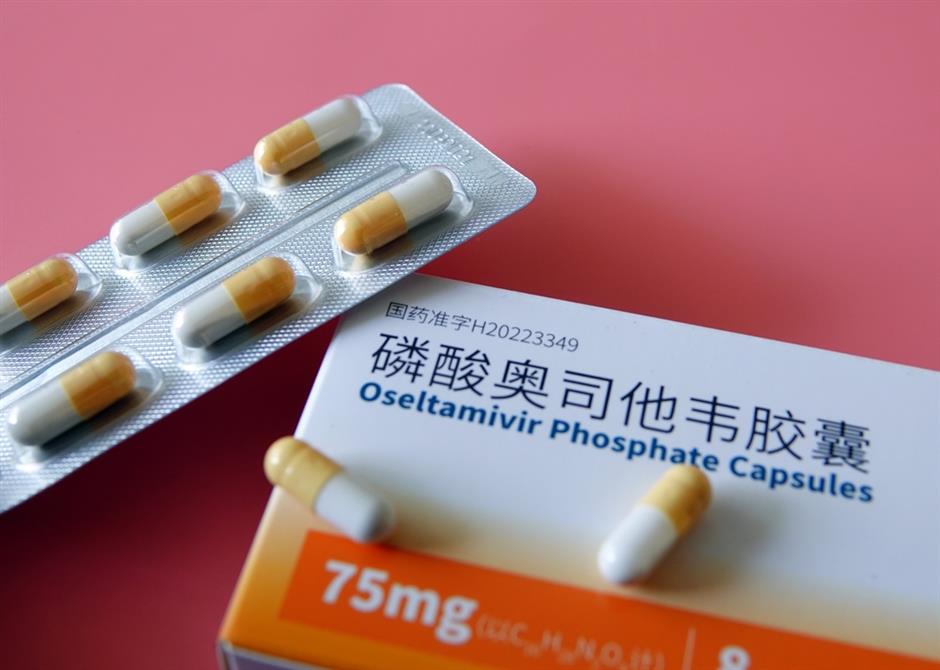
On Meituan's Maiyao pharmacy service, orders for antiviral flu medicines such as oseltamivir and baloxavir -- the two dominant treatments -- jumped nearly ninefold in recent weeks from October. In Shanghai, week-on-week growth is doubling or tripling.
Alibaba Health reported that between November 10-23, the number of people buying antiviral influenza drugs rose more than fivefold from the prior two weeks. Purchases of baloxavir led the surge, climbing more than sixfold, while demand for oral antiviral syrups increased by about 50 percent.
The same pattern appeared on JD Health's rapid-delivery pharmacy service. From November 17-23, sales of oseltamivir rose 4.5 times from the previous week, while baloxavir jumped fivefold. Purchases of influenza test kits climbed nearly five times, and demand for cough suppressants and fever reducers more than tripled.
The surge is not expected to fade quickly.
China's disease-control authorities have warned that influenza activity is likely to remain elevated through late December and early January, effectively stretching what used to be a short winter spike into a longer - more commercially significant - window.
That forecast has sharpened the stakes for the domestic drug makers.
Last March, Qingfeng Pharmaceutical launched Suraxavir Marboxil tablets, its first domestically developed antiviral influenza drug, which was added to China's national reimbursement drug list earlier this month. Zhongsheng Pharma followed in May with Onradivir. In July, Jumpcan Pharmaceutical, in partnership with ZenShine Pharma, secured approval for Sebaloxavir Marboxil.
Two more locally developed antivirals, from Joincare Group and Simcere Pharmaceutical, have since filed for regulatory approval, signaling that the wave of domestic challengers is only beginning.
"Overall, spending on anti-influenza medicines in China has been on a sustained upward trend in recent years," said Zou Kun, analyst from Hua'an Securities. "Annual compound growth has been running at about 36 percent, underscoring both the recurrent nature of influenza and the rapid expansion of the market to treat it."
For years, China's flu drug market has been anchored by oseltamivir, which remains the most widely used antiviral treatment in the country.
Best known under Roche's Tamiflu brand, it was approved in China in 2002, and benefited from long patent protection. Swiss-based Roche licensed local production to Shanghai Pharmaceuticals and HEC Pharm in the mid-2000s, creating domestic brands Ao'erfei and Kewei that came to dominate prescriptions nationwide.
Even after its core patent expired in 2016, oseltamivir did not fade. Instead, it became one of China's largest generic franchises, with the number of approved products approaching 140 by late 2025.
But the drug is now showing its age.
Oseltamivir requires twice-daily doses for five consecutive days, a regimen that increases the risk of missed doses and early discontinuation. At the same time, national volume-based procurement programs have pushed prices sharply lower, compressing margins for manufacturers and reducing what was once a cash-cow franchise.
The balance began to shift with the arrival of Baloxavir Marboxil.
Marketed in China by Roche as Sufuda, baloxavir is an RNA polymerase inhibitor that directly blocks viral replication. Developed by Japan's Shionogi and later licensed to Roche, the drug was first approved in Japan and the US in 2018 before entering China in 2021.
Its commercial impact has been swift.
Data from Pharnexcloud show that in 2024, sales of Sufuda rose 217 percent in hospital channels, 9.8 percent in offline pharmacies and 76 percent online, while domestic sales volumes of oseltamivir fell nearly 35 percent year-on-year.
"The revenue gap between baloxavir and oseltamivir is expected to narrow," Zou said. "Meanwhile, a growing pipeline of next-generation flu antivirals is emerging, with domestic companies moving particularly fast."
Indeed, a new wave of domestically developed antivirals hit the market this year, many of them modeled on baloxavir's RNA polymerase-inhibition mechanism.
The country's first locally developed RNA polymerase inhibitor, Favipiravir from Hisun Pharmaceutical, was approved in early 2020 and was added this January to China's latest national influenza treatment guidelines.
These moves underscore how China's influenza market has entered a phase of open competition, with domestic pharma innovators and global drugmakers now converging on what was once a narrow, seasonal market niche.
China is not the only country facing a trying flu season. The UK hospital system has been swamped by cases, with patients hospitalized by severe systems of what is dubbed "super flu" jumping by 55 percent in one week alone. The major difference from recent flu seasons is that the virus started spreading a month earlier. Japan declared an influenza epidemic in early October, and the Centers for Disease Control in the US estimates that 1,200 people have died from the flu so far this season. Even in summertime Australia, the incidence of flu this month is four times greater than in December last year.
The World Health Organization, which monitors flu virus variants, said influenza and other respiratory viruses are surging and advises people to get vaccinated.
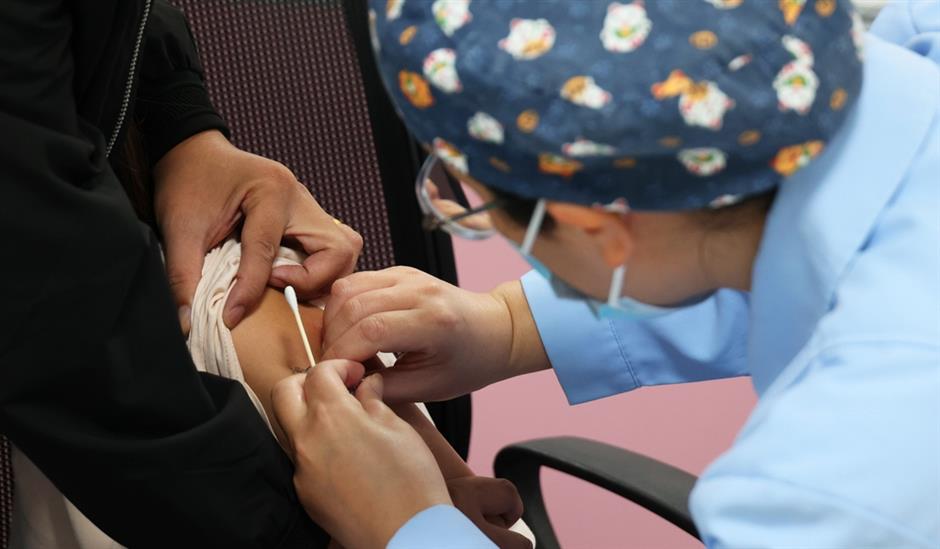
In China, that's a bit of a hurdle. The nation's influenza vaccination rate is low, at just below 4 percent. That compares with uptake of 51 percent in the US and 39 percent in Canada. Australia provides free shots to the elderly and other high-risk groups to encourage vaccination.
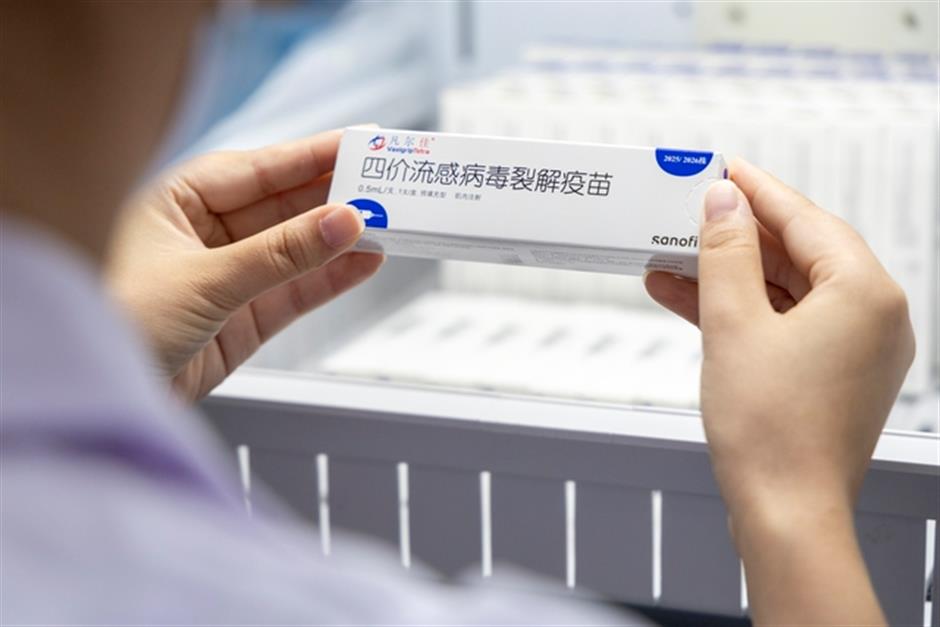
"Influenza vaccine penetration in China is relatively low," said Hua'an Securities analyst Zou. "But as more manufacturers receive approvals, production capacity expands, and wealthier regions of China begin to offer vaccinations to priority risk groups, the industry has substantial room to grow. The market is expected to exceed 10 billion yuan (US$1.4 billion) in size."
Four-valent flu vaccines dominate the prevention realm, supplied by a crowded field of domestic manufacturers, including Hualan, GDK, Sinopharm and Sinovac. But after years of capacity expansion, the market has been squeezed by slow demand growth, price competition and persistently low vaccination rates.
Flu vaccines are not part of China's national immunization program, leaving most people who want them paying out of pocket. As manufacturers multiply and competition intensifies, prices have been steadily dropping.
Memories of last year's price war are still fresh. Major vaccine makers announced sweeping price cuts as rising supply collided with weak demand. This November, the China Vaccine Industry Association issued a rare public call to avoid a "rat-race" in pricing, a sign of growing unease over how far the market is being pushed.
Yet price is only one factor in shaping public response. For many families, trust and safety in vaccines matter as much, if not more, than cost.
"Effectiveness, convenience, price and brand reputation. Those are the four factors in deciding on vaccinations for my family," said Chen Xuan, a Minhang District resident.
For her elderly parents this winter, she chose a flu vaccine made by Hualan Biological, even though it costs more.
"The adverse reaction rate is lower," she explained.
For herself, she opted for a cheaper, quadrivalent shot produced by Shanghai Institute of Biological Products, a brand she said she trusts.
Editor: Liu Qi
In Case You Missed It...

 Oct 3, 2026