Top News
US Unveils New Import Tariff Regime, China Rejects Its Pretext
The Trump administration announced a new framework of import tariffs ranging from 20 percent to 40 percent, based on excess industrial capacity in individual countries, including China, Japan, India, the EU bloc and most of Southeast Asia. The administration said the new tariff regime reflects the results of an eight-month study of excess industrial capacity – a situation that can lead to producers flooding markets with cheaper goods. The study is part of the Trump administration's efforts to justify tariffs after the Supreme Court last February ruled his 2025 blanket tariffs had no legal basis. Chinese Foreign Ministry spokesman Guo Jiakun said claims of Chinese industrial overcapacity are a false narrative and should not be used as a pretext for political manipulation.
It appears the tariff on Chinese goods would rise to 40 percent if a trade truce due to expire on January 10 isn't renewed. However, US Trade Representative Jamieson Greer said the proposed tariffs won't apply to about US$30 billion of Chinese imports under consideration for tariff reductions through a bilateral mechanism known as the Board of Trade. Rates for other countries vary. India, which has yet to reach a trade deal with the Trump administration, would face a 17 percent tariff if an agreement is finalized and a 25 percent rate if talks fail. In a separate action, the US said it will levy a new 10 percent tariff on imports of Embraer commercial aircraft from Brazil and increase sugar duties after no progress in trade talks. President Donald Trump has wielded punitive tariffs as a tool to counter what he calls unfair trade practices that drive the US trade deficit higher. However, his policies have been blamed for elevating prices for American consumers because US importers, not exporting countries, pay the higher tariffs and pass them down the supply chain.
Russian Army Losses in Ukraine War Approach Half a Million
At least 490,334 Russian soldiers have died since the start of the war in Ukraine in 2022, the BBC reported, citing leaked Russian government statistics from a cyberattack. The BBC said it compared the data with its list of confirmed military deaths and found matches for 90 percent. Some Western analysts have put Russia's military death toll as high as 700,000.
Ukraine doesn't issue casualty figures, but estimates place the total at between 115,000 and 150,000 killed. The figures don't include civilian casualties. US President Donald Trump frequently cites the battleground carnage as a major reason to end the war, but his efforts at brokering peace have so far failed.
Houthi Rebels Attack Saudi Oil Refinery, Financial Skyscraper in Riyadh
Yemen's Iran-backed Houthis said they attacked Saudi Arabia's largest oil refinery and claimed responsibility for a drone attack on the Public Investment Fund Tower, owned by the nation's sovereign wealth fund, in the Saudi capital of Riyadh, injuring 11 people. The strikes are the latest in a series of attacks on Saudi energy facilities and other infrastructure. The Saudis lead a multinational coalition trying to restore the internationally recognized government of Yemen after it was forced to flee from the capital, Sanaa, following Houthi offensives. Global benchmark Brent crude futures rose 3.6 percent in late New York trading to nearly US$95 a barrel.
Macy's Postpones Iconic Holiday Parade
The 100th annual Macy's Thanksgiving Day Parade in New York, an iconic event featuring supersize balloon characters, was postponed to Saturday from today due to severe weather. The event, which draws large curbside crowds and is watched by millions of TV and online viewers, has never been canceled but was suspended between 1942 and 44 because of World War II. The US retailer said strong winds forecast from a coastal storm were too dangerous for the balloons.
Top Business
Li Auto Q3 Net Loss Narrows, Revenue and Margins Beat Forecasts
China's Li Auto reported a third-quarter net loss of 309.7 million yuan (US$46.6 million), narrowing 50 percent from a year earlier and 82 percent from the previous three quarters. Operating loss narrowed 41 percent from a year earlier to 699.6 million yuan. Revenue rose 5.4 percent to 28.8 billion yuan from a year earlier, beating market forecasts. Gross margin improved to 16.7 percent from 11 percent in the second quarter, and the vehicle margin rose to 15.3 percent from 9.4 percent. The company reported vehicle deliveries of 99,964 units, up 7.2 percent. Looking ahead, the automaker is predicting a return to profit in the current quarter, with deliveries of between 110,000 and 115,000 vehicles, and revenue as high as 33.1 billion yuan.
Company President Ma Donghui said on an earnings call with analysts that Li Auto is working to increase supply and shorten delivery times. Its transition to the self-developed Lianshan battery hasn't negatively affected sales, he said. The company plans to shift its vehicle update cycle from roughly once a year to about once every two years and pursue overseas expansion. Ma also said Li Auto is developing wheeled robots for use in its own vehicle and component plants, with several hundred units expected to be deployed by 2027.
Shein's Q3 Profit Jumps Despite Trade Headwinds
Online discount fashion giant Shein said adjusted third-quarter net profit rose 27 percent from a year earlier to US$790 million. Revenue was US$10.3 billion, down 5.9 percent. Unadjusted net income of US$4.7 billion reflected a US$4.1 billion fair-value gain on convertible redeemable preferred shares. Shein said it fulfilled 264 million orders in the latest quarter, and active customers for the 12 months ended September 30 reached 291 million. Following its high-profile Hong Kong listing earlier this year, Shein has faced intense scrutiny over whether tightening foreign customs policies and tariff regimes in the US and Europe would erode earnings. Europe was its weakest region, with revenue falling 28 percent after Shein raised prices to reflect a new package delivery fee on the small parcels that form the backbone of its business model. In the US, revenue fell 9.4 percent. Shein announced this week that it will pay US$100 million to settle US Federal Trade Commission claims that it misled consumers on shipping times, product reviews and the origin of cotton in some of its goods.
Kingsoft Adjusted Profit Rises 12 Percent, Cloud Arm Growth at Five-Year High
Chinese software and gaming giant Kingsoft said adjusted net profit attributable to owners of the parent grew 12 percent to 300 million yuan (US$45 million), but the company posted a loss of 204 million yuan when non-operating, one-time items were included in the results. Operating profit increased 40 percent to 388 million yuan. Group revenue edged up 1 percent from a year earlier to 2.4 billion yuan. Kingsoft operates across three core segments: office software, online gaming and cloud computing. Its WPS 365 office software delivered 34 percent growth in revenue, with monthly active devices reaching 678 million. Its Kingsoft Cloud associate reported that quarterly revenue surged 40 percent from a year earlier to 3.5 billion yuan, its fastest top-line growth rate in nearly five years. However, online games and other businesses posted a 25 percent drop in revenue.
HarmonyOS Devices Hit 100-Million Milestone
Huawei announced that the number of smartphones, tablets and computers running its self-developed HarmonyOS operating system has exceeded 100 million, marking a major milestone in the company's efforts to build an independent software ecosystem. Operating systems are the foundation of the digital ecosystem, while the number of devices running them is a key factor determining whether an ecosystem can achieve sufficient scale to take root and sustain itself. It took about 25 months for the self-developed HarmonyOS to grow from commercial launch to surpassing the 100 million milestone.
Economy & Markets
US Tech Stocks Tumble Further Ahead of Holiday
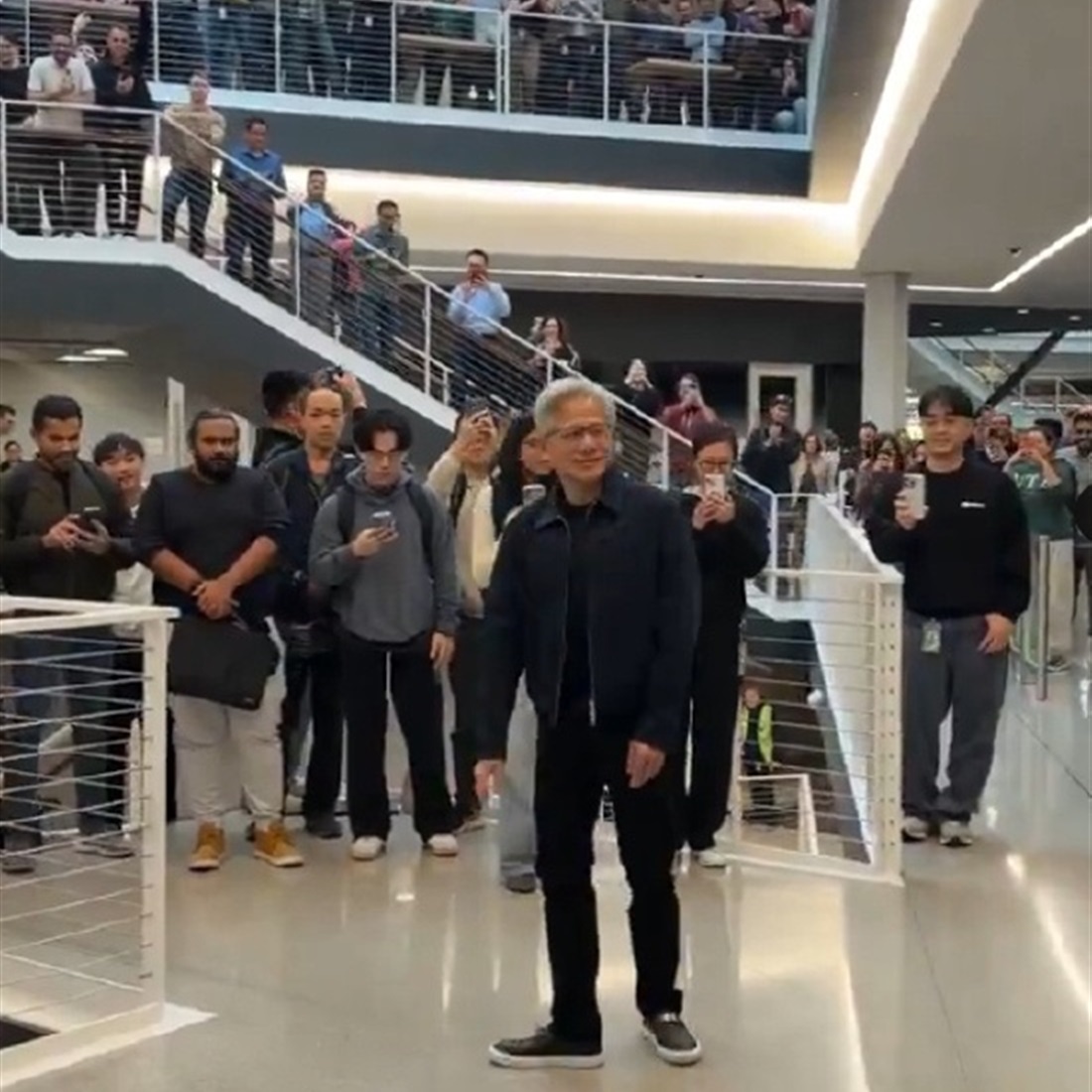
US technology stocks fell again on Wednesday ahead of the Thanksgiving holiday today and an abbreviated trading session on Friday. The tech-heavy Nasdaq dropped 0.6 percent, though it closed above intraday lows triggered by heavy selling. Nvidia shares lost 3.4 percent, adding to a day-earlier loss in a pullback from the stock's 31 percent surge on Monday, after co-founder Jensen Huang was reinstated as chief executive following a scandal that forced his resignation. Standard & Poor's signaled it may lower its debt rating outlook on Nvidia to negative, citing rising management and governance risks. Shares in Advanced Micro Devices, Intel and Micron Technology also declined. However, Anthropic shares rose 1.1 percent, though they remained below the offer price of its record IPO last week. The widely watched Philadelphia Semiconductor Index closed down 0.65 percent. Venu Krishna, head of US equity strategy at Barclays, told CNBC that the market is saying "the AI growth narrative has hit a wall." The Wall Street losses followed declines in Asian tech stocks earlier in the day.
China's AI Accelerator Market Set for Boom
China's domestic AI accelerator market could approach 2 trillion yuan (US$300 billion) by 2030, as demand for computing power and efforts to replace foreign technology drive industry growth, according to a UBS Securities report. The investment bank estimates that shipments of domestically produced AI accelerators will rise to 10.4 million units in 2030, from 1.7 million in 2025. Based on an assumed average selling price of 191,000 yuan per unit, the total addressable market could reach about 2 trillion yuan by the end of the decade. UBS projects a compound annual growth rate of around 72 percent in the market's revenue. The report cautioned that the industry's development remains subject to several factors, including advances in AI models, computing demand, technology choices, supply availability, policy support and the pace of domestic substitution.
Guangzhou Auto Expo to Open With Accent on Green Vehicles
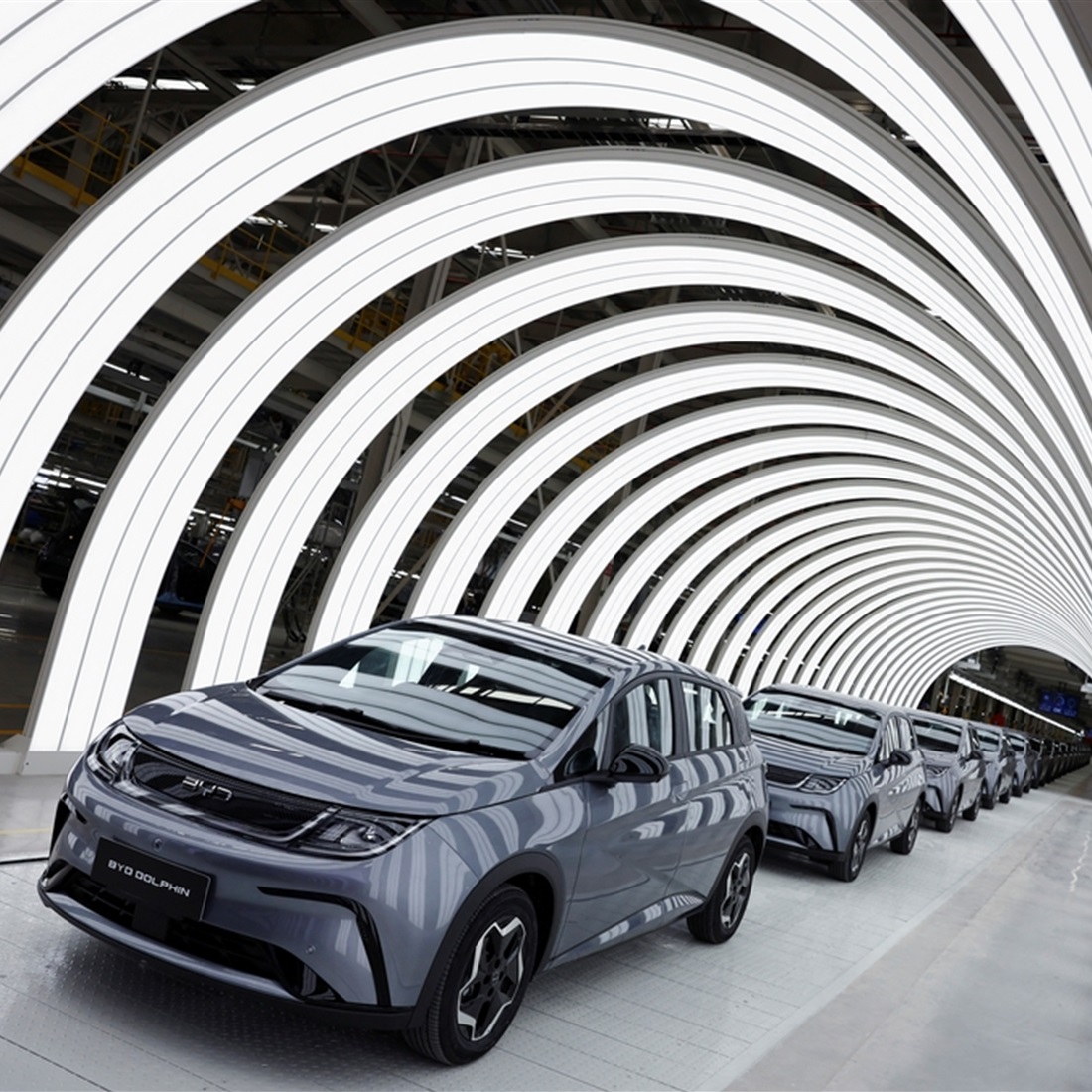
The 24th Guangzhou International Automobile Exhibition opens on Friday, displaying 1,106 vehicles, including a record 115 world premieres and 707 new energy vehicles that comprise 64 percent of exhibits. Unlike previous years, industry startups Nio, XPeng and Li Auto are largely absent from major debuts, with longer-established automakers like BMW, BYD, GAC Honda, Dongfeng Nissan and Chery returning to center stage. Competition in China's domestic market is shifting from price wars to competing on value and smart-driving capabilities. In the first nine months of the year, China's auto industry posted a 23 percent drop in profits on a 27 percent decline in retail car sales.
Corporate
Hansoh Pharma Signs Cancer-Drug Licensing Deal With Bayer
China's Hansoh Pharmaceutical said three of its units granted a unit of German drugmaker Bayer an exclusive license to its experimental cancer drug in a deal potentially worth up to US$3.25 billion. The license will allow Bayer Consumer Care to develop, manufacture and commercialize HS-20122 on a global scale, excluding the Chinese mainland, Hong Kong, Macau and Taiwan. HS-20122 is an experimental antibody-drug conjugate designed to target solid tumors by delivering cancer-killing therapy directly to tumor cells.
XPeng Builds Large-Scale Robot Data Factory
Chinese electric vehicle maker XPeng said it has built a robotics data factory to train its Iron humanoid robot, with the facility covering more than 250 scenarios and 15 job categories to collect real-world data on movements, environments and human-machine interactions to support AI model training. The Iron robot is equipped with three Turing AI chips delivering 2,250 trillion operations per second of computing power. Its architecture allows it to maintain local control even without a network connection, XPeng said. The company also reported progress in electric vertical takeoff and landing aircraft development. Its full-size A868 electric flying car, featuring a full-tilt design, has completed a transition flight test.
Sany Unveils Electrification of Heavy Construction Equipment
Sany Group, China's multinational heavy construction equipment manufacturer, unveiled a new AI agent and embodied heavy-duty robot platform at an industrial fair in Shanghai. New models account for more than 60 percent of products on display, with the electrification rate exceeding 80 percent. The company said 120 self-driving trucks have been deployed at a mining area in northwestern China, and an unmanned paving and compaction fleet operating on the Beijing-Harbin Expressway has lifted efficiency by 20 percent. Sany's new energy business now covers more than 30 countries.
Foxconn's India Unit Hit With Insolvency Petition
Taiwan-based Foxconn, the world's biggest contract electronics maker, has been hit with an insolvency petition against its unit in India by one of its local suppliers amid a payments dispute with multiple local vendors. The petition seeks about US$15.3 million in unpaid rent, interest and damages tied to a dormitory lease for workers at the Bengaluru plant. At least four other vendors have reportedly waited months to more than a year for payments. The case is unlikely to derail Foxconn's India expansion, but it complicates its competition with Tata Electronics for a larger role in Apple's supply chain.
Editor: Lu Feiran
In Case You Missed It...
 Nov 24, 2026