Sam's Club Struggles to Stand Out in a Changing Chinese Market
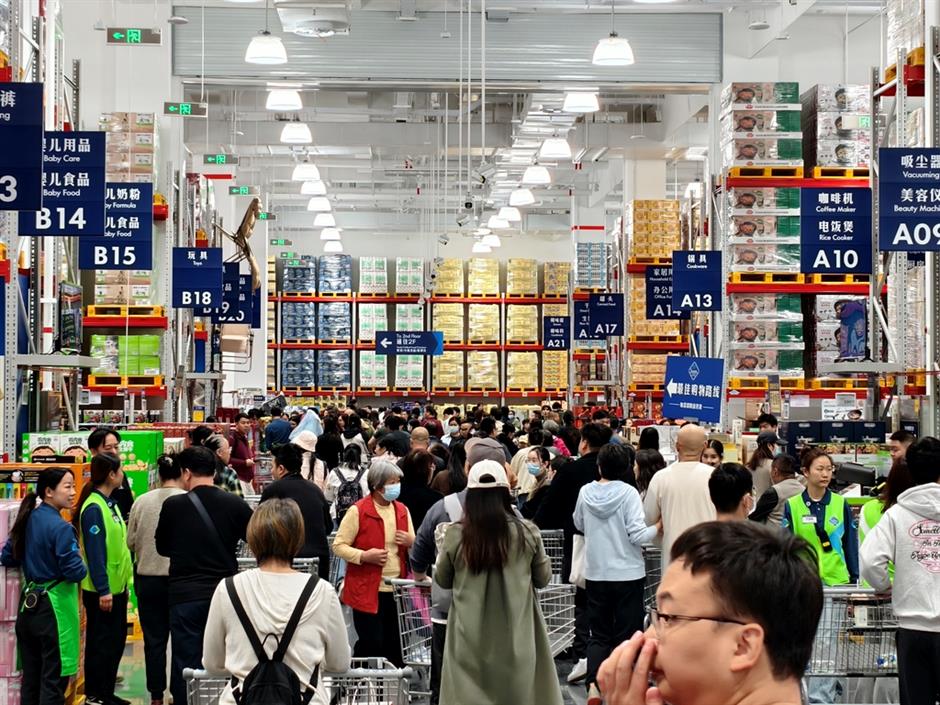
A member of Walmart's Sam's Club for three years, Victoria Huang hesitated about renewing her membership at the end of last year.
Huang, who lives in Pudong, Shanghai, with her husband and daughter, originally signed up for the club because she said it provided both online and offline services, with better-quality foods than most supermarkets. Now, she doesn't think it's unique anymore.
"Sam's has fewer imported groceries and dairy products than before, and prices are not so favorable," she said. "So why should I pay for a membership when I have other choices that are free?"
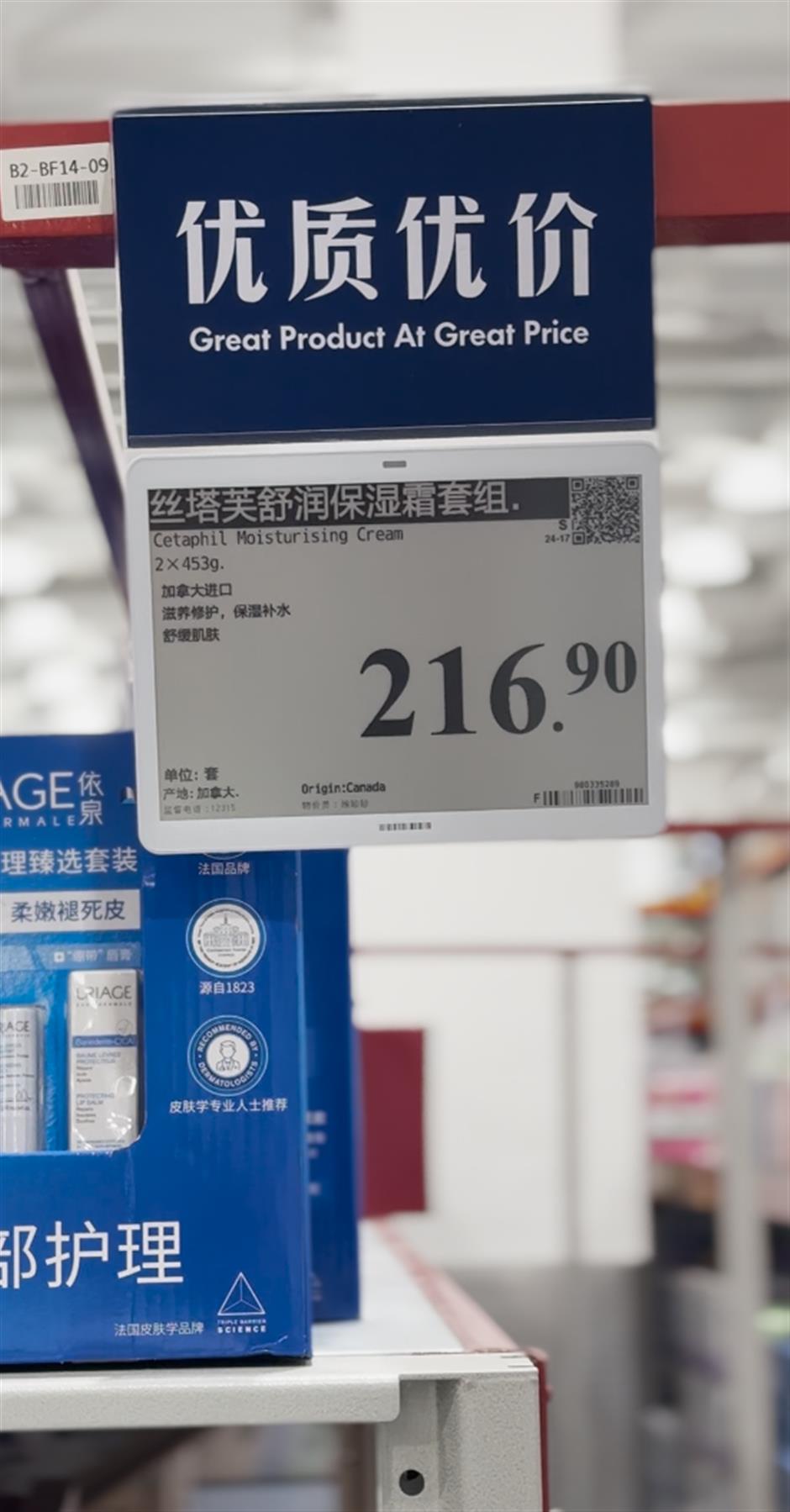
Sam's Club, named after US-based Walmart founder Sam Walton, was created in 1983 as a membership-only hypermarket offering wholesale prices. It operates throughout the US and in Canada, Mexico, Brazil and China. It has 55 outlets on the Chinese mainland, where it originally began as a rival to US-based, big-box retailer Costco, also a membership only hypermart chain.
Christina Zhu, chief executive of the Sam' Club in China, said annual sales of eight of its China stores in 2024 reached 3.67 billion yuan (US$508 million) per store. She pointed out that performance was not only 7-12 times higher than annual sales at non-membership hypermarkets, but it also rivaled the scale of top-tier luxury malls like Beijing SKP.
Sam's Club in China has a membership surpassing 5 million, generating over 1.3 billion yuan in annual membership fees.
However, discerning consumers, especially middle-class shoppers with strong spending power, are beginning to say that the qualities that first drew them to Sam's Club have changed.
Huang told China Biz Buzz that products sold under the private label Member's Mark brand just aren't as good as they were in the past.
"I often buy a type of oatmeal with chia seeds, and the volume of chia in recent jars has dropped," she said. "And millet, formerly labeled as top-tier Grade 1 tasted differently, the Grade 1 label disappeared, and the prices stayed pretty much the same."
The loss of the Grade 1 label worried Huang, who is conscious about food nutrition and safety.
Last week, local media reported that a Sam's Club shopper in the southern Chinese city of Dongguan found a strand of hair in Member's Mark brand handmade shiitake and vegetable buns purchased at a store there. And last month, a buyer in nearby Shenzhen reported a live rat in a package ordered from Sam's Club one-hour delivery service. In the same month, a consumer reported bloody, strip-shaped objects embedded in cod fillets purchased from a Sam's Club supermarket in the northern city of Tianjin. Sam's Club offered a refund.
What's causing such an apparent slide in quality? One reason may be the rapid expansion of Sam's Club from big metropolitan areas to smaller, county-level cities like Zhangjiagang, Jinjiang and Kunshan.
The core competitiveness of Sam's Club lies in its curated supply chain. However, as the number of its stores widens, the quality-control system has faced challenges in overseeing a large number of new local partners who are supposed to adhere to the so-called "Sam's Standard." With a wider geographical footprint, long-distance transportation and multilevel warehousing also increase the risk of food spoilage or contamination.
In fact, quality control is a universal problem for all rapidly expanding grocery brands. This week a consumer reported receiving poisonous narcissus bulbs in an order for fresh lily bulbs from Alibaba's Hema supermarket, resulting in two people being hospitalized. In May last year, Hema's "antibiotic-free" eggs were once again found to contain excessive veterinary drug residues during inspections in Shandong Province.
Consumers considering their options look at entry costs. You need a Sam's Club membership – 260 a year for a standard pass or 680 yuan for a premium one – to get in the door. Hema's Freshippo and NB stores are free to enter.
Meanwhile, the one-hour delivery service from Sam's Club is under challenge from competitors like never before.
Sam's Club was once defined as the "weekend bulk-shopping" model, where members drove to suburban warehouses to fetch loads of groceries and other products once a week. Sam's, however, pivoted to fast delivery service as that trend began defining consumer grocery-shopping habits. Online orders now account for over 50 percent of Sam's total sales.
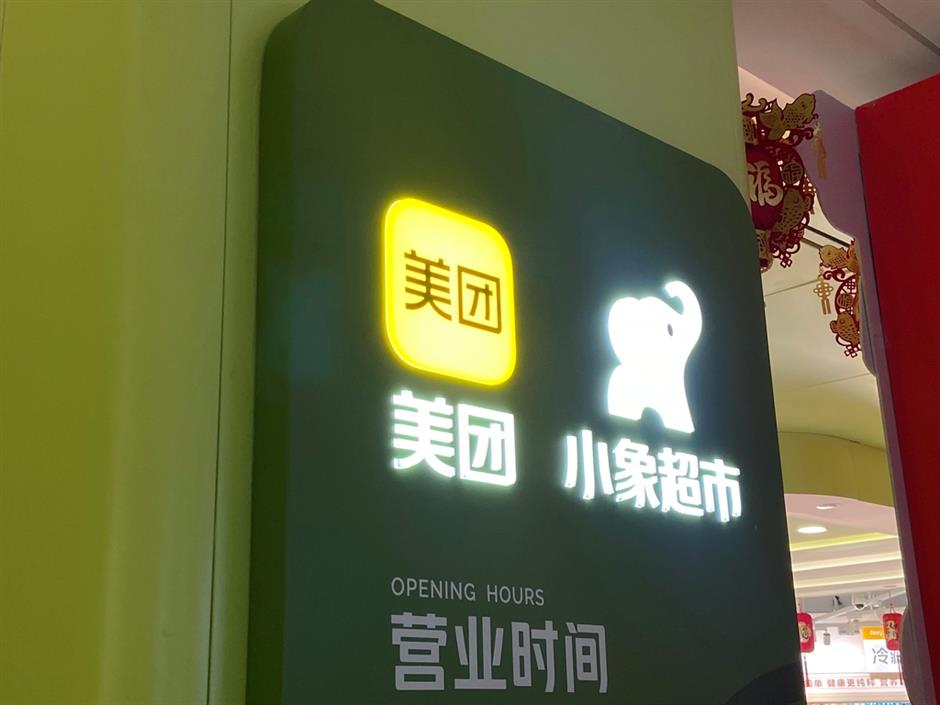
This shift is not just a matter of competing with traditional big-box retailers like Costco, but it also is a reaction to the rising success of flash delivery services offered by the likes of Hema, Dingdong Fresh and Meituan's Xiaoxiang Supermarkets.
Alibaba last August announced that it would close the last of its Freshippo X membership supermarkets and end a four-year rivalry with the Sam's Club and Costco formats. Months later, it entered the fast-delivery fray.
While industry focus may be on consumers, the vital factor in competition is securing suppliers.
Foodtalks, a global food news website, reported that approximately 80 percent of Sam's Club China products are sourced from local suppliers who don't operate under exclusive contracts.
Last month, some consumers noted that Sam's Club shared the suppliers of fresh eggs and frozen chicken wings with Xiaoxiang Supermarket, which doesn't require a membership fee. A China Biz Buzz inspection last week found the frozen chicken wings in question had been replaced on Sam's shelves, but the eggs were still sold at an outlet in Shanghai's Putuo District.
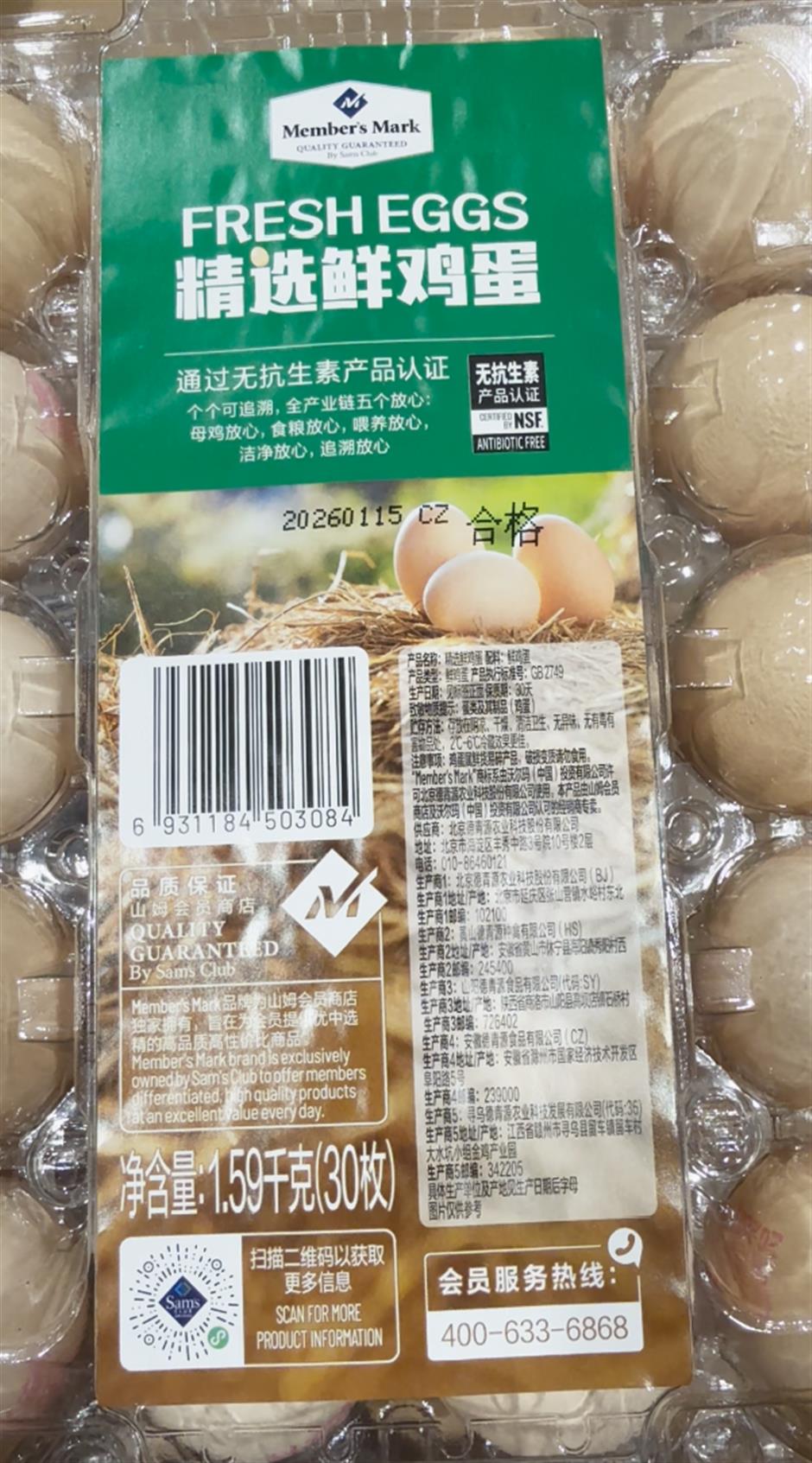
Meanwhile, to many consumers, Sam's isn't the premium brand seller it was once, with "exclusive" labels being replaced with mass-market brands. Last July, Sam's Club removed several highly rated "exclusive" items from its shelves, such as rice pudding and low-sugar egg yolk pastries, and replaced them with standard brands such as Weilong snacks, Orion Pies and Liuliumei.
Sam's Club responded that the products from such brands were "partly exclusive for membership stores," leaving more questions than answers.
Then, too, Sam's signature "bulk-size" packaging – such as a 12-16 pack of Swiss rolls – is often too large for small households, while other supermarket chains typically offer smaller, more "daily-size" portions.
Competition in China's grocery sector is expected to intensify this year, especially as fast-delivery services such as Xiaoxiang target offline shoppers as well as online. And many rivals are offering brands aimed at more upper-income buyers.
Last month Xiaoxiang Supermarket opened its first physical outlet in the Haidian District of Beijing. The store, situated near high-end residential communities and the core Zhongguancun business zone, offers upmarket ready-to-cook meals at prices often lower than online counterparts.
Pupu Supermarket, a leading platform in the instant retail sector, is also set to open its first offline store in the southeastern city of Fuzhou, and the live-stream, e-commerce platform East Buy is currently recruiting a manager the debut of a physical flagship.
So the question becomes: Whither Sam's Club in the mix of competition? Will it struggle to compete with an increasing number of rivals or will it seek to go back to its original marketing formula and focus on Costco, which has only seven stores on the Chinese mainland?
In Case You Missed It...

 Oct 3, 2026