Shanghai Fashion Week Looks To Expand Its Fashion Footprint
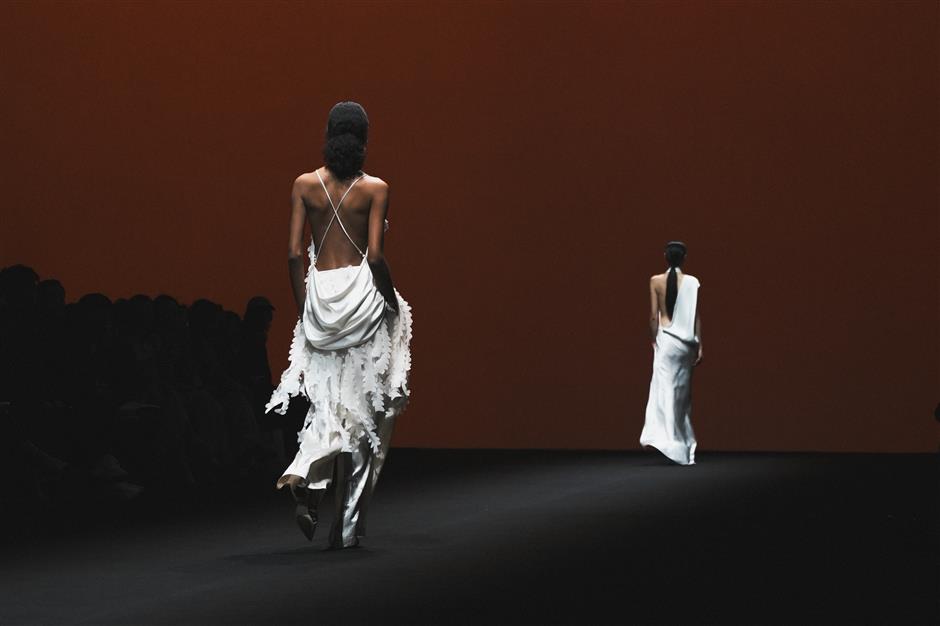
Shanghai Fashion Week will return on October 8 with nearly 100 shows, brand debuts, trade fairs, and consumer events to strengthen its role in Asia's fashion business.
The Spring/Summer 2027 season will stretch well beyond the runway. Alongside shows in Xintiandi and other venues, the program includes MODE Shanghai, showrooms, industry forums and public events linking major shopping areas like Huaihai Road and Nanjing Road West. Nearly 1,000 brands will be involved in debut exhibitions and product launches during the season.
But officials are increasingly framing the event in commercial, rather than purely creative, terms.
"The runway has never been just about display. It is a real industrial platform, a track for innovation and a commercial marketplace," said Zhang Jie, deputy director of the Shanghai Municipal Commission of Commerce.
He said Shanghai Fashion Week was seeking to connect the full chain from design and product launches to trade orders, market conversion and brand incubation.
Behind the packed calendar is a more consequential question for Shanghai's fashion industry: whether a fashion week can turn creative attention into orders, market access and, eventually, consumer spending.
That commercial role is becoming increasingly visible.
This season, more than half of the brands taking part in MODE Shanghai will be from South Korea, Russia, France, Greece, Hungary, Italy, and the US. International buyers like Italy's ANTONIOLI, New York's 3NY, and Vietnam's RUNWAY will return, while Saks Fifth Avenue from Kazakhstan will participate for the first time.
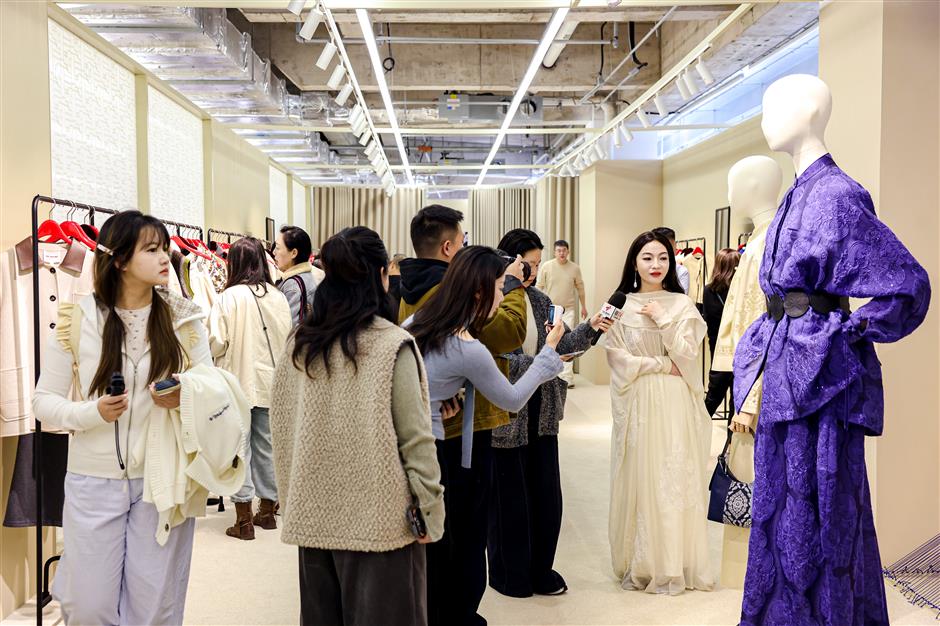
MODE will also work with 10 showrooms, while the wider Shanghai ordering season will span more than 50,000 square meters across several districts and cover categories ranging from apparel and accessories to fragrance and lifestyle products.
One Chinese brand using MODE as part of its overseas expansion is RAXXY. The label launched its first commercial collection in 2025 and has since expanded from 16 overseas markets to 19, according to William Shen, founder and designer of RAXXY.
"If we want to become a truly global brand, I think the most effective and direct way is still to innovate within the global system," Shen said, adding that another challenge was turning that innovation into a system that could be commercialized and taken to global markets.
The shift matters as global fashion companies rethink their Chinese consumer strategy. Opening more stores in China is no longer enough for some brands. Product launches, collaborations, and localized events are becoming more common.
Adidas, for example, will stage a multi-day event in Shanghai featuring the return of Stan Smith, Y-3 and its Spring/Summer 2027 collections. The French menswear federation will make its Shanghai Fashion Week debut with five French labels, while the ELIE SAAB designer collaboration with H&M will receive a China preview in Shanghai before a limited launch at HOUSE OF H&M.
The events suggest that Shanghai is being used not only as a sales market but also as a place for international brands to test how products, design and cultural positioning travel in China.
Chinese brands, meanwhile, are confronting a different challenge: turning growing interest in Chinese design into businesses that can last beyond a few seasons.
That tension between creativity and commercial scale came through clearly in comments from Li Xiao, founder and design director of XIAOLI.
"We hope XIAOLI can gradually grow from a designer label into a brand with stronger commercial capabilities while still retaining its sense of design," Li said.
That is a more complicated challenge for brands building products around traditional Chinese craftsmanship, where intricate techniques can add both time and cost.
HEMU, which will open the season on October 8, offers one example.
Founded in Shanghai in 2010, the label will present a collection inspired by the Silk Road and incorporating techniques and materials including yunjin and Song brocade, kesi silk weaving, gambiered Canton gauze, batik and embroidery.
It is also working with national-level yunjin craftsman Jin Wen on the collection.
For Yang Fengrui, founder and design director of HEMU, customization has become one way of accommodating craft techniques that are difficult and expensive to scale.
"These crafts often require a long production time, which also means higher costs," Yang said. "Customization serves as a crucial means for practitioners of intangible cultural heritage and traditional crafts to implement their skills."
HEMU now effectively operates two product lines: a ready-to-wear line aimed at a broader market and a customized line through which it continues to use traditional craft techniques.
The more interesting issue is no longer simply whether Chinese designers can place traditional motifs on contemporary clothing. It is whether they can convert cultural references and craft techniques into recognizable products that consumers are willing to buy – and whether those products can be produced at commercially viable prices.
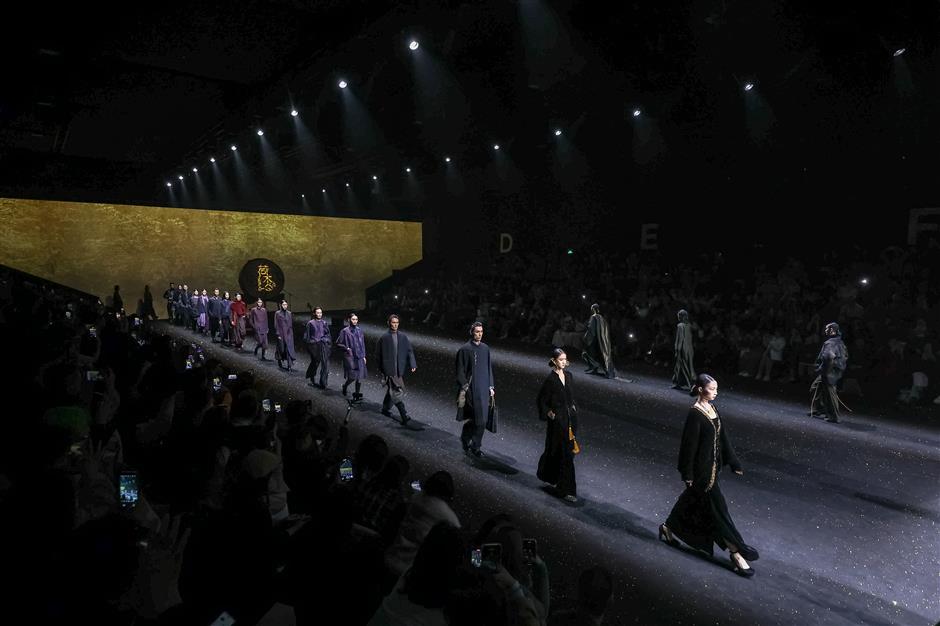
Some large Chinese groups are also experimenting with closer relationships between designers and commercial product development. Anta, for instance, will bring its ANTA ICONIC collection to MODE with designer Chen Peng and has established an Anta Shanghai Design Center-Chen Peng Studio in the city, moving the relationship beyond a one-off collaboration.
That evolution, from runway collaboration to longer-term product development, could prove more significant for the industry than the number of shows on the calendar.
Shanghai is also trying to bring more of Fashion Week's activity outside professional venues. From Oct 16 to 25, public-facing events will spread into commercial areas, including Xintiandi and Yongyuan Road, with markets, street shows and other activities connected through a city fashion map. Major retail districts, including Huaihai Road and Nanjing Road West, will also participate.
The logic is straightforward: turn fashion-week traffic into retail traffic.
Organizers have some numbers to support that argument.
Ji Shengjun, director of the Shanghai Fashion Week Organizing Committee, said average daily sales at Xintiandi Dongtaili during last year's fashion week rose 18 percent from the previous month, while cumulative foot traffic reached 180,000 visits.
Xintiandi is trying to push the model further this year.
"We hope to bridge the last mile between the runway and commerce, further amplify Fashion Week's impact on consumption, and turn its buzz into momentum for consumer spending and the market," said Tao Ran, general manager of Shui On Xintiandi.
Editor: Yao Minji
In Case You Missed It...
 Sep 24, 2026
![[Inside China] Did You Know Xuhui Has a Center to Help Foreign Businesses?](https://obj.shine.cn/files/2026/09/20/e7485259-6a51-478d-93dd-13a6c1691cb9_0.jpg)
![[The City Asks] Survey One Is Closed. Thank You. Check If You Won](https://obj.shine.cn/files/2026/09/24/774e71dd-bbc2-474e-ac6d-b5b1761197e4_0.jpg)