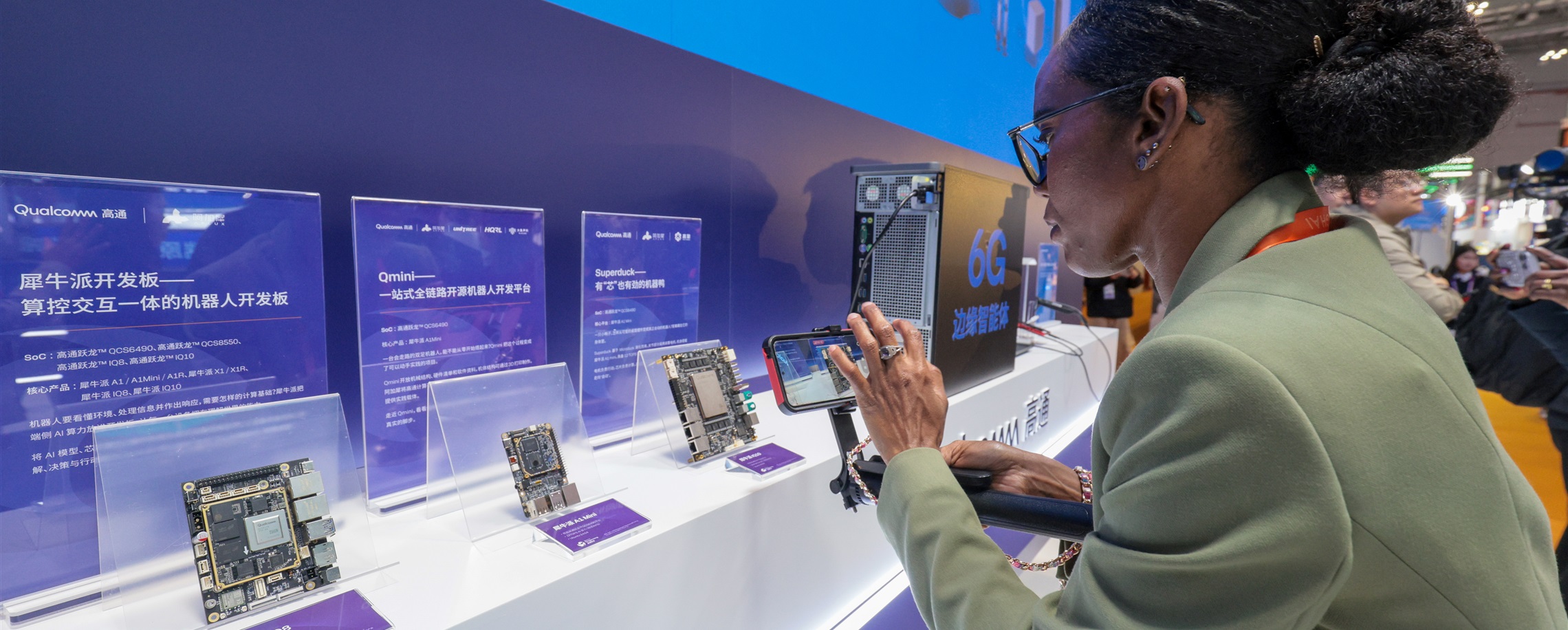
Tech Giants Showcase Innovations at CIIE, Reaffirming Deep Commitment to China
Global technology leaders are showcasing their latest products and cutting-edge innovations at the ongoing 9th China International Import Expo (CIIE), with senior business executives expressing strong confidence in and deep commitment to the Chinese market.
Spanning industries from consumer electronics and telecommunications to life sciences and integrated circuits, this year's expo features several high-profile China and Asia debuts, highlighting the event's role as a premier launchpad for global technology.
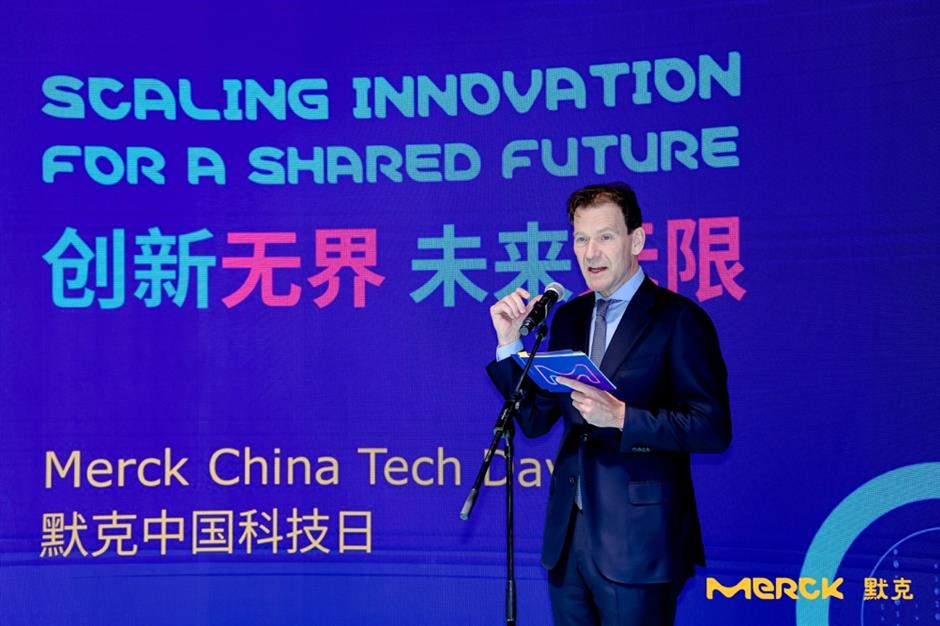
Merck aligns with 15th Five-Year Plan
Seizing new opportunities under China's 15th Five-Year Plan (2026-2030), German science and technology giant Merck is connecting global scientific expertise with local innovation to drive breakthroughs and scale applications while supporting industrial upgrade across its core business of Life Science, Healthcare and Electronics.
Building on a 93-year history in China, Merck aims to further strengthen its local footprint and actively participate in the country's evolving innovation ecosystem.
"As China enters a new phase of development under its 15th Five-Year Plan, the accelerating integration of scientific and technological innovation with industry is opening up greater opportunities," Rogier Janssens, president of Merck China, said at the company's expo booth.
In Life Sciences, Merck operates the M Lab Collaboration Center in Shanghai along with major manufacturing sites in Wuxi and Nantong. Under its "smart localization" strategy for Electronics, the firm broke ground in September on the Suzhou Lithography Materials Technology Center to advance production of key materials essential for chipmaking.
ZEISS deepens local roots and STEM education
Optical and optoelectronic technology giant ZEISS also reaffirmed its long-term strategy for the country.
"China is not only ZEISS' largest market globally, but also a vital source of innovation," said Martin Fischer, president and CEO of ZEISS China. "ZEISS will firmly maintain its long-term investment in China."
During the expo, the Shanghai Municipal Science and Technology Commission signed a memorandum of understanding (MoU) with the firm to support the ZEISS Science Popularization Center.
The partnership aims to enhance high-quality science communication, strengthen STEM (science, technology, engineering and mathematics) education for youth, and cultivate local talent – supporting Shanghai's ambition to become a global science and technology innovation hub.
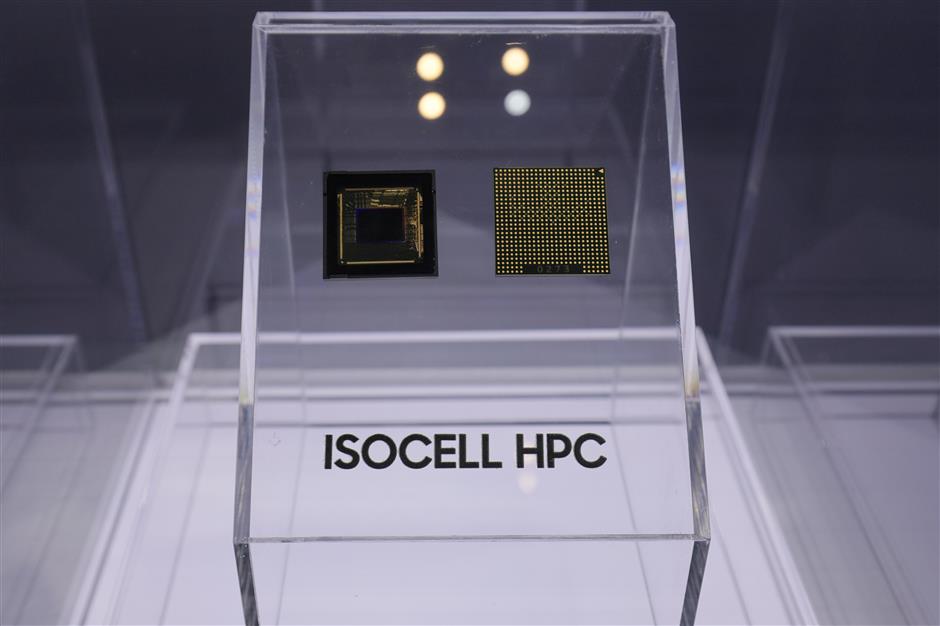
Samsung highlights advanced semiconductor and AI tech
Samsung has a strong presence at the CIIE, displaying front-line layouts in semiconductors and artificial intelligence. The South Korean tech giant is showcasing a full-chain innovation portfolio spanning memory chips, core components, smart terminals and automotive solutions.
A major crowd-puller at the Samsung booth is the R20, a flagship full-body ultrasound system making its China debut following localized mass production.
Another spotlight is the next-generation LPDDR6 DRAM, engineered for high-performance and high-energy-efficiency AI environments. Featuring enhanced bandwidth and advanced power management, LPDDR6 supports real-time AI workloads across servers, mobile devices, AI personal computers (PCs) and automotive systems, boosting transmission bandwidth by up to 45 percent over the previous generation to reach speeds of up to 125 gigabytes per second (GB/s).
To date, Samsung has set up 15 manufacturing enterprises and 14 research and development (R&D) centers in China. Over its nine consecutive years at the CIIE, Samsung's cumulative investment in China has reached US$29 billion, with 94 percent directed toward cutting-edge sectors such as semiconductors and Multi-Layer Ceramic Capacitors (MLCC).
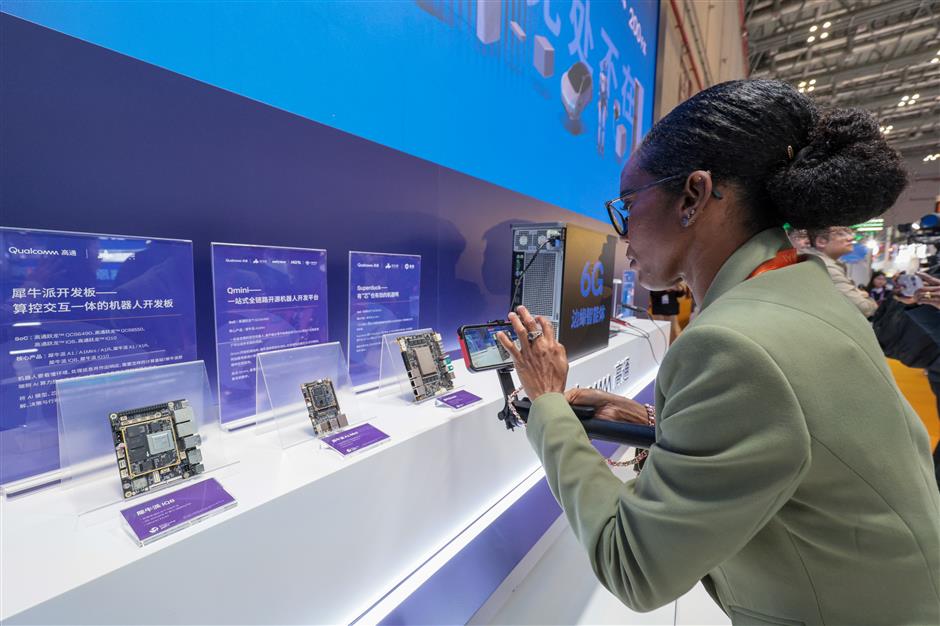
Ericsson prepares networks for the 6G and AI era
With a 134-year history in China, telecommunications giant Ericsson plays a core role in the evolution of the country's mobile networks, partnering with major domestic operators as the industry transitions toward 6G.
Zhang Yongtao, deputy general manager of technology at Ericsson China, highlighted the Swedish company's Multi-Reuse Spectrum Sharing (MRSS) technology, designed to protect operators' existing investments by allowing them to re-farm current 5G spectrum for 6G deployment.
At the CIIE, Ericsson released an industry report revealing that "AI Super Users" currently make up 15 percent of mobile users in China – higher than the global average of 10 percent. By 2030, nearly half (46 percent) of Chinese users are projected to exhibit super-user behavior, defined as using AI for over 5.5 hours daily, engaging with more than five AI applications, completing over 60 tasks and uploading content more than 15 times a day.
Editor: Liu Qi
In Case You Missed It...
 Nov 6, 2026