Anime And AI Give Fuxing Island A New Life
Nicole Wang set aside two days of her October holiday for Fuxing Island. The Hefei University lecturer chose October 2 and 3 for a return to Red Land, the anime and gaming festival she attended last year.
"It has that adventure-island feel," she said before the festival. "Last time, the main issues were the heat and that it was a bit dirty. It should be a little better this time."
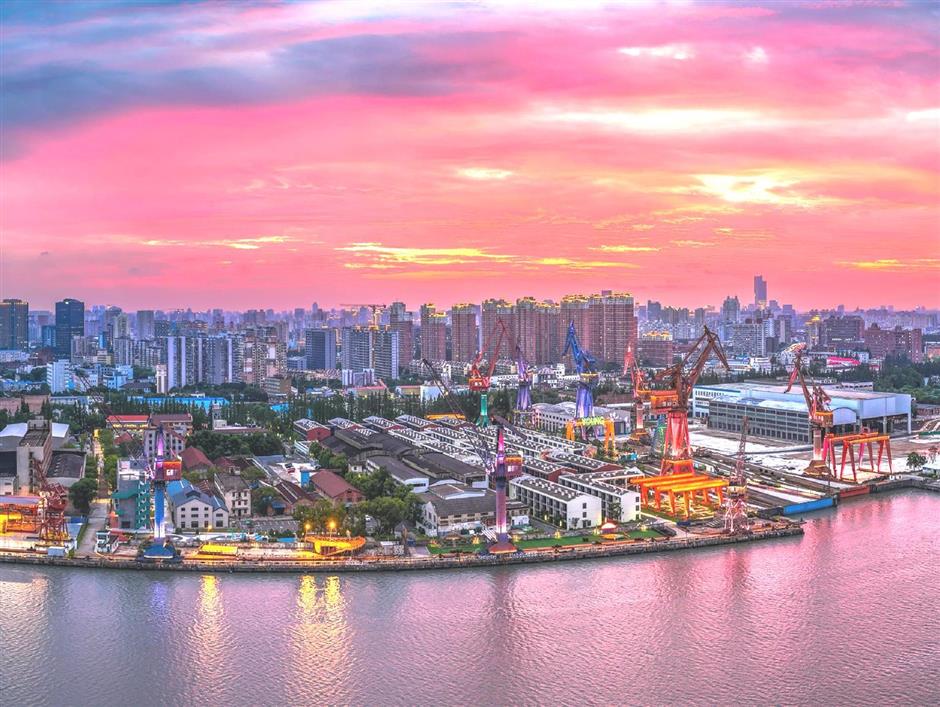
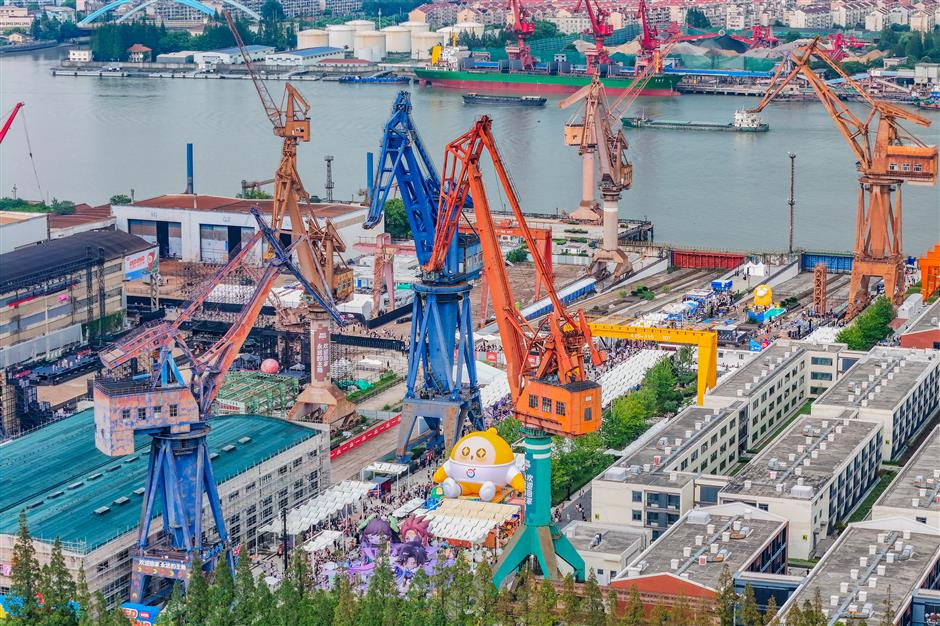
The festival, which runs through October 6, is part of a broader change. Shanghai is opening the island's former industrial spaces to anime fans, artificial intelligence developers and young entrepreneurs. Warehouses and shipyard grounds are becoming places to gather, test robots and start businesses.
The island lies in the Huangpu River in Yangpu District and covers about 1.3 square kilometers, roughly the size of 180 standard football pitches. Last year's three-day festival drew about 100,000 visitors, according to district accounts. That works out to an average of roughly 33,000 a day on this small island.
Much of its industrial land was once held in reserve for future development. The Global Makers Island plan now gives it three roles: a testing ground for future cities, a base for entrepreneurs and skilled workers, and a center for technology that helps cities understand and manage their physical surroundings. Design, art and public recreation form part of Yangpu's broader vision.
Architect Shen Lu, who has led planning studies for the island, described its intended place on Shanghai's waterfront.
"The richest people may end up on one stretch of the river, the smartest on another," he said. "But the youngest belong on Fuxing Island."
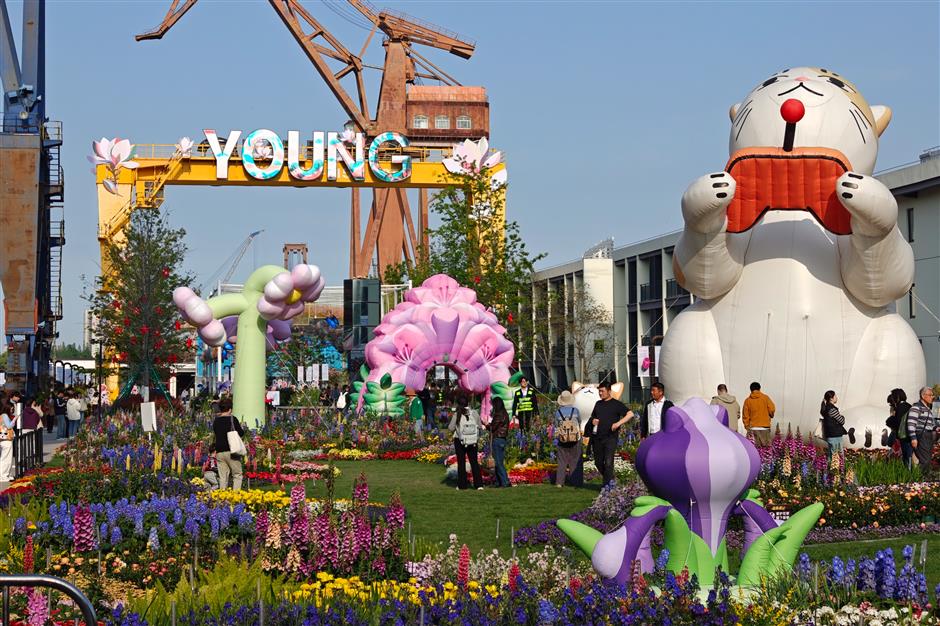
Red Land makes the industrial setting part of the attraction. Xiaohongshu, the social media platform also known as RedNote, organizes the festival. At last year's debut, visitors completed missions and traded badges among warehouses, trees and shipyard structures.
Xiaohongshu content supervisor Bai Ban explained the choice of venue at the time.
"It fits the worlds of games and anime. We want more young people to know this place," Bai said.
The event draws on China's anime, comics and gaming culture, known as erciyuan. Fans dress as fictional characters and make costumes and props. The outdoor setting lets them take part in stories they usually encounter on a screen.
This year's program lists more than 100 game and entertainment franchises, including Genshin Impact and Marvel, according to Yangpu's September announcement. It adds evening float parades and daytime and nighttime performances, giving visitors reasons to stay beyond the exhibition booths.
The festival also reaches beyond the island. About 150 merchants are offering ticket holders dining, shopping and entertainment discounts under a district program. Visitors must show valid tickets, and offers vary.
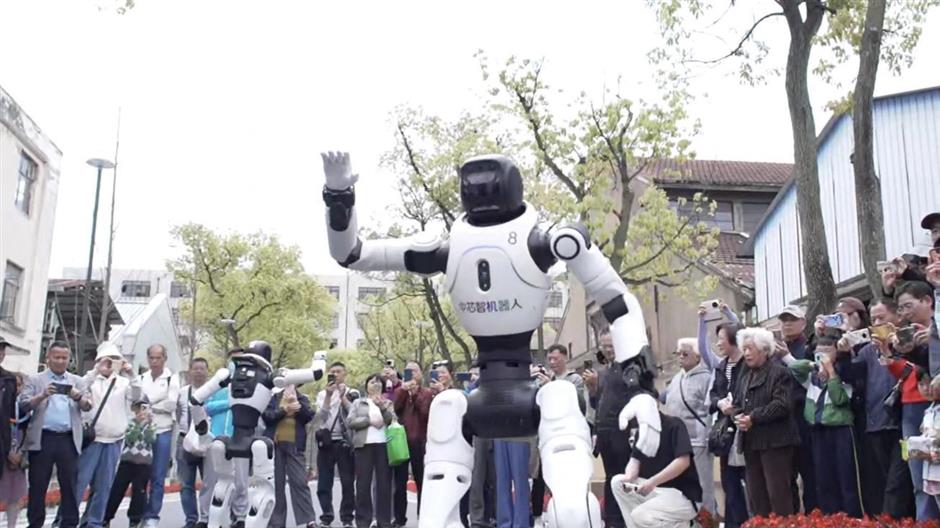
The island's AI work serves a different purpose: giving developers room to test machines outside a laboratory.
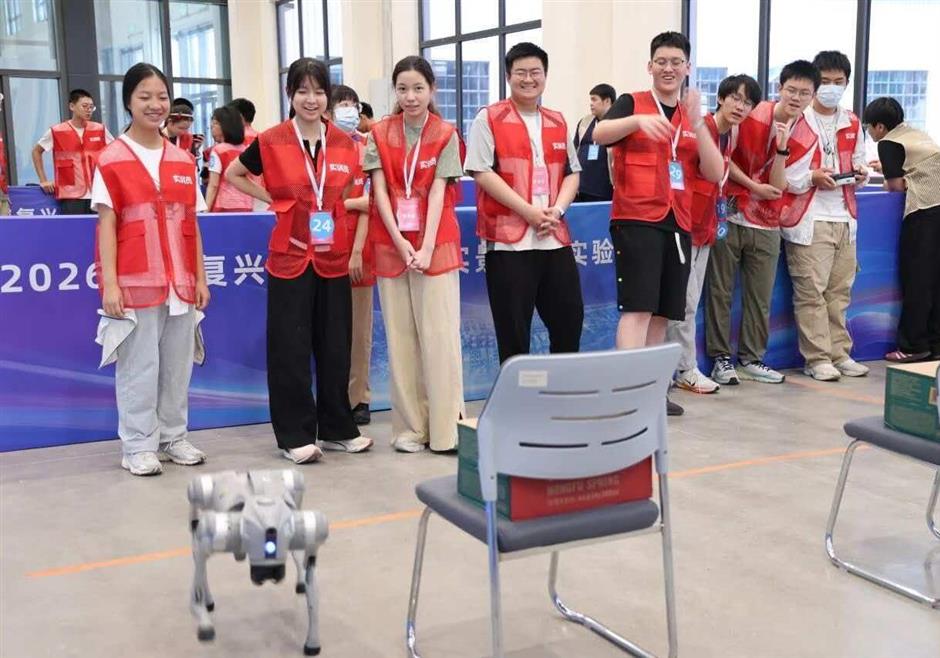
Seventy university students tried that work at a robotics camp in late August. One participant, a third-year student surnamed Wang at the University of Shanghai for Science and Technology, quickly learned to control a four-legged robot's movements.
His next task was to set up a patrol the robot could complete on its own. He marked the start, finish, and inspection points on a map. The robot's task was then to follow that route and find its way around obstacles. The exercise moved beyond controlling individual movements to preparing a machine for a job.
Other trainees remotely operated robots to sort objects. Their different ways of performing the task produced training data for developers. When students noticed hot robot joints, an instructor explained that such feedback could help companies improve the equipment.
This is "embodied AI": artificial intelligence that allows machines to sense their surroundings and act in the physical world. The island's testing platform opened in April, with training scenarios including coffee delivery, river patrols and shopping assistance, according to Xinhua.
Sensors in the island's northern public spaces collect information on pedestrian flows, environmental conditions and facilities. The data support AI models and experiments in managing urban spaces.
The island also offers a base for small businesses using AI. A district briefing listed 92 businesses physically based in its Xinghuo (Star Fire) community, working on short animated dramas, mini-games and AI agents, software designed to carry out tasks.
Admitted businesses receive AI tools, technical services and first-year office rent and property-fee waivers. The support aims to lower the cost of turning an idea into a product.
Reusing factories is part of that approach. Plans favor adaptable workplaces and shared laboratories and meeting rooms to keep costs down.
The buildings preserve a longer story. Dredging and reclamation formed Fuxing Island in the early 20th century. Shipbuilding, fishing and warehousing followed.
The White Cottage, or Bailu, once served as a dredging authority staff club. Former Kuomintang leader Chiang Kai-shek once stayed there in 1949. Today, it provides visitor information and other public services.
The next changes extend to the water's edge. Officials are designing a pedestrian bridge and connected public areas along Fuxing Island Canal, with nearly three kilometers identified for an initial section. September planning materials envision leisure and water activities there.
After returning from the Red Land event, Nicole Wang has plans for her classroom, too. She said AI would come up in her teaching, and she hoped to develop a course on digital and intelligent technologies in entertainment and the cultural and creative industries.
Her classes now include an introduction to radio and television. The new course would need a curriculum change for a future student intake, she said.
Editor: Fu Rong
In Case You Missed It...

 Oct 4, 2026