CNY Dinner: The Meaning Behind China's Most Important Meal
The first rule of Chinese New Year is this: you go home. The second rule: you eat.
For hundreds of millions of people, the Spring Festival triggers a singular pilgrimage: back to hometowns, back to family kitchens, back to dining tables that may only see everyone gathered once a year. Trains sell out and flights spike. Kitchens work overtime. People who rarely cook suddenly find themselves responsible for feeding three generations and whoever else the evening may bring.
This is the nianyefan (年夜饭), the reunion dinner on Chinese New Year's Eve – the one meal everyone shows up for.
A Menu Built on Meaning
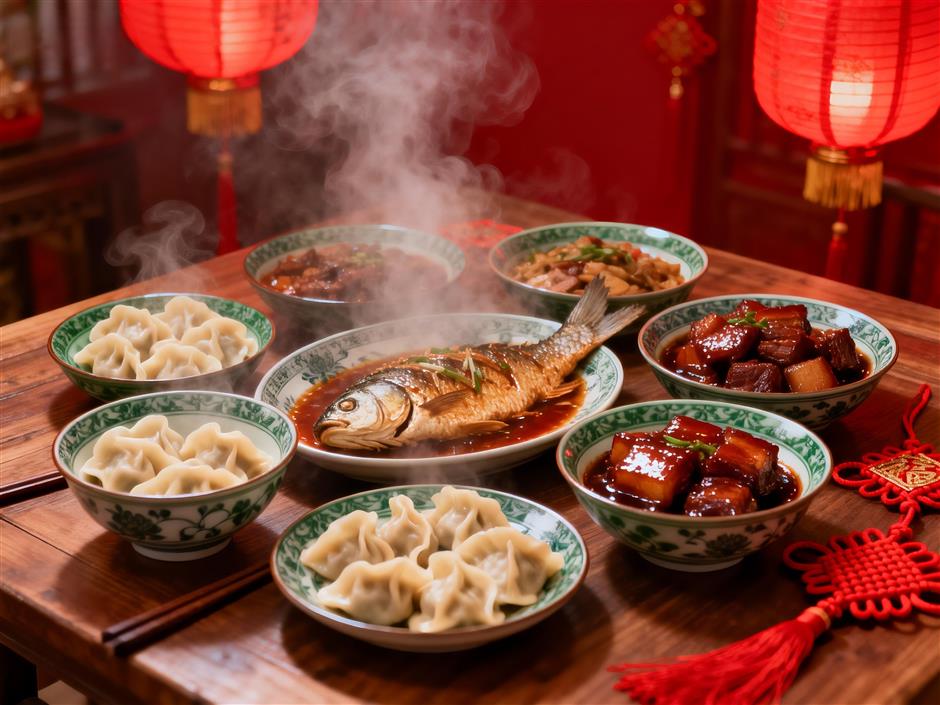
A proper nianyefan doesn't apologize for abundance. Eight dishes would be considered the minimum – the number eight sounding like "prosperity" in Mandarin. Twelve is better. Sixteen, ambitious.
While dishes vary by region, certain foods appear again and again across China, chosen not only for their flavor but also for what they represent.
Fish is essential. The word for fish, yu (鱼), is a homophone for "surplus," making it a wish for abundance in the year ahead. Traditionally, the fish is served whole, head and tail intact, and deliberately left partially uneaten. To finish it would be to finish your luck. The most commonly invoked phrase is nian nian you yu (年年有余): "May there be surplus every year."
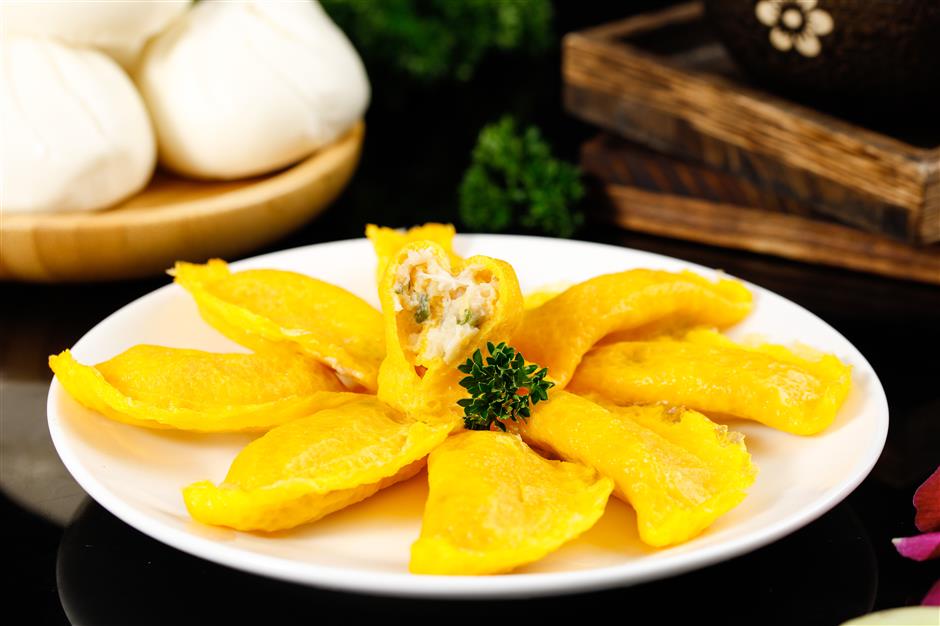
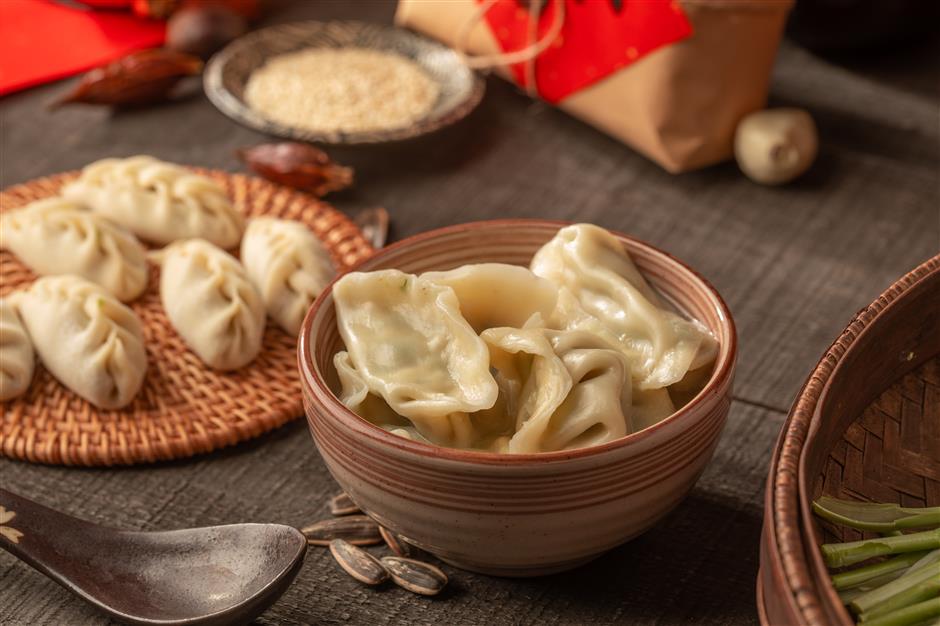
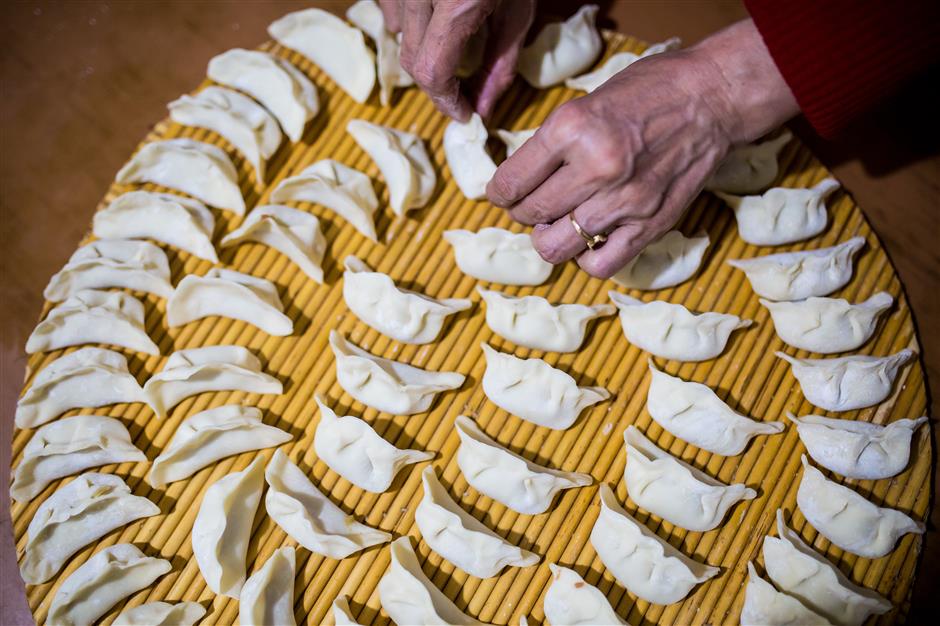
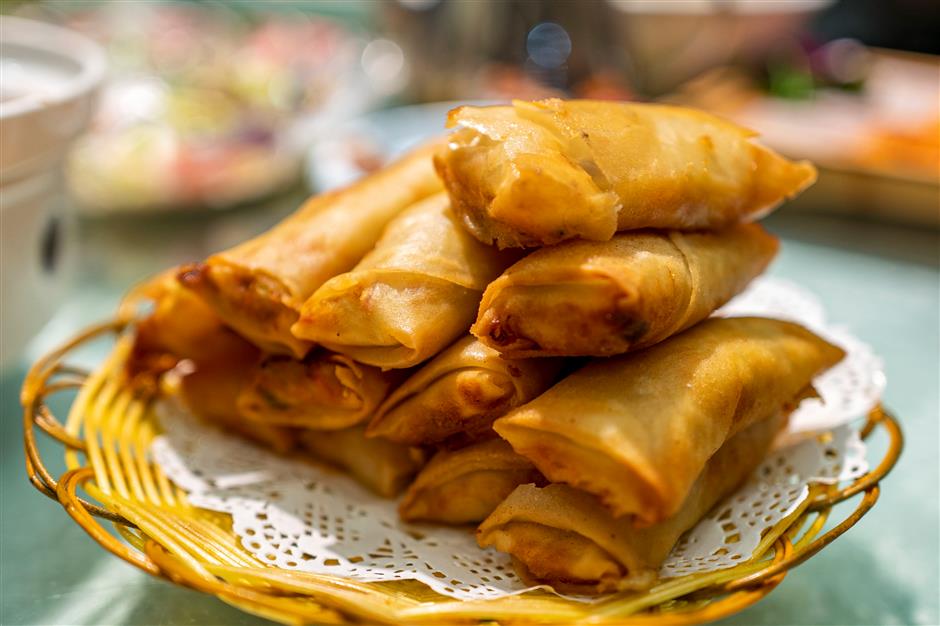
Dumplings (jiaozi, 饺子) appear in many households, especially in northern China. Their shape resembles ancient silver ingots, tying them to wealth and good fortune. Some families tuck a well-washed coin inside one dumpling; whoever finds it is said to have extra luck in the coming year. Southwestern families tend to make danjiao (蛋饺), egg dumplings whose golden wrappers make the ingot symbolism unmistakable.
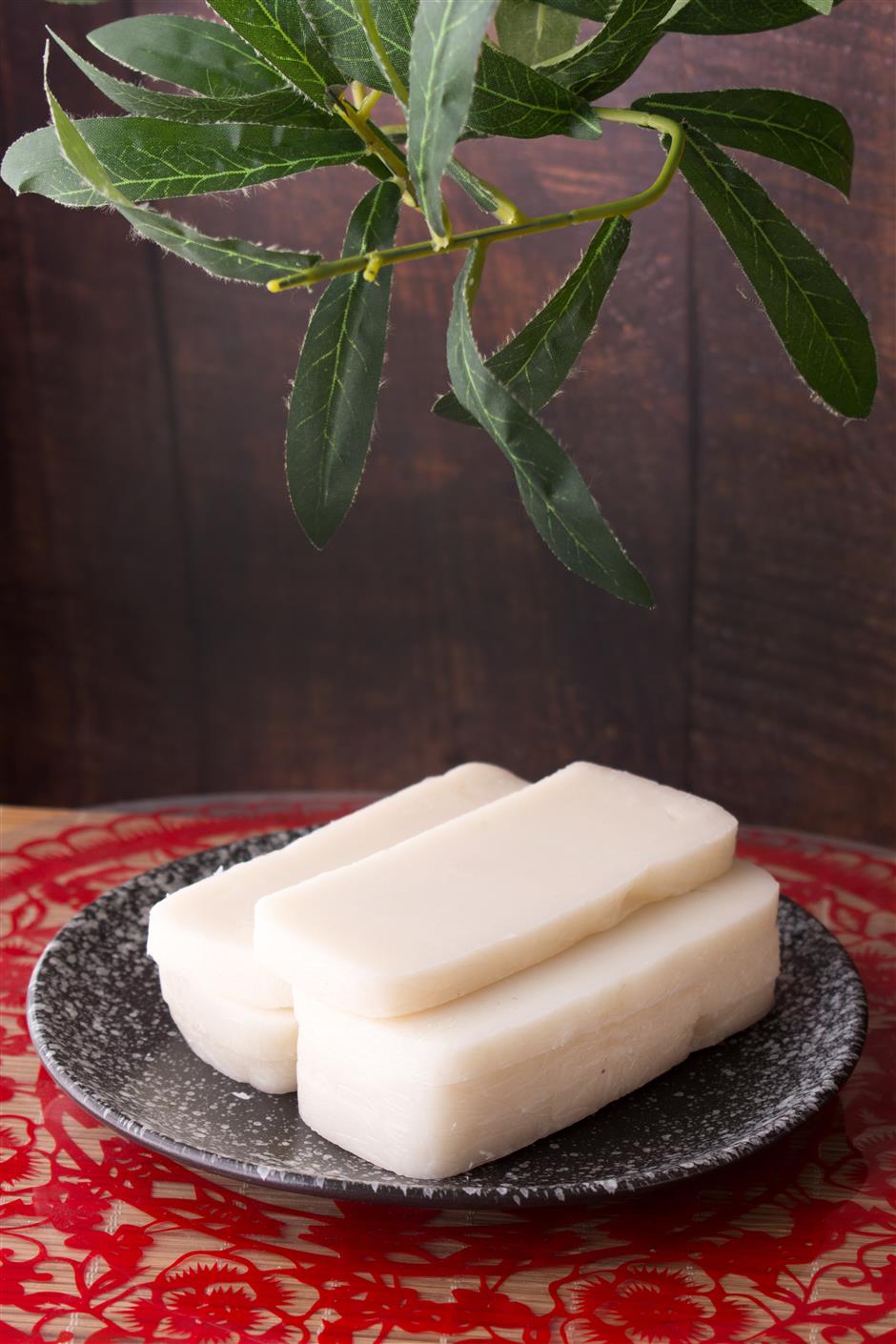
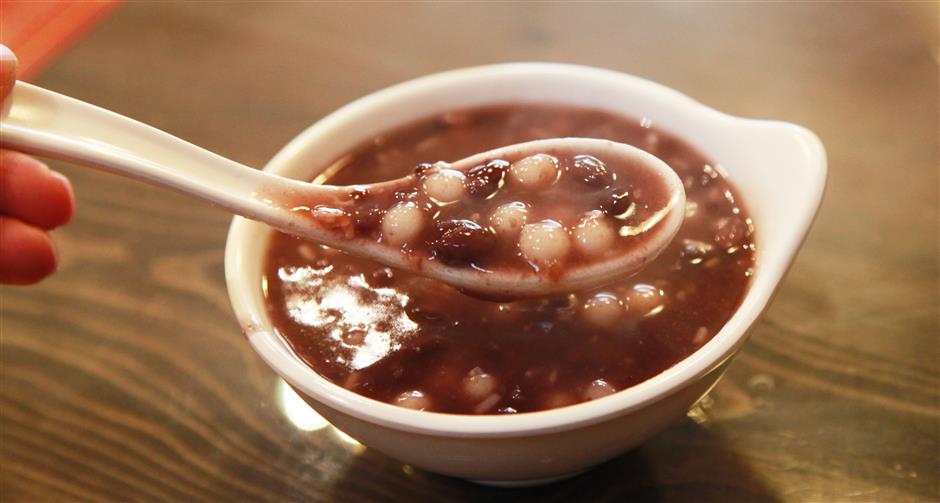
Long noodles (changmian, 长面), never cut, stand for longevity. Chicken (ji, 鸡) appears whole to symbolize unity and completeness. Sticky rice cakes (niangao, 年糕) suggest progress and growth, as the name sounds like "year after year, higher." And always, tangyuan (汤圆) for dessert: glutinous rice balls floating in sweet soup, their roundness and name both evoking reunion.
Shanghai's Table, Specifically
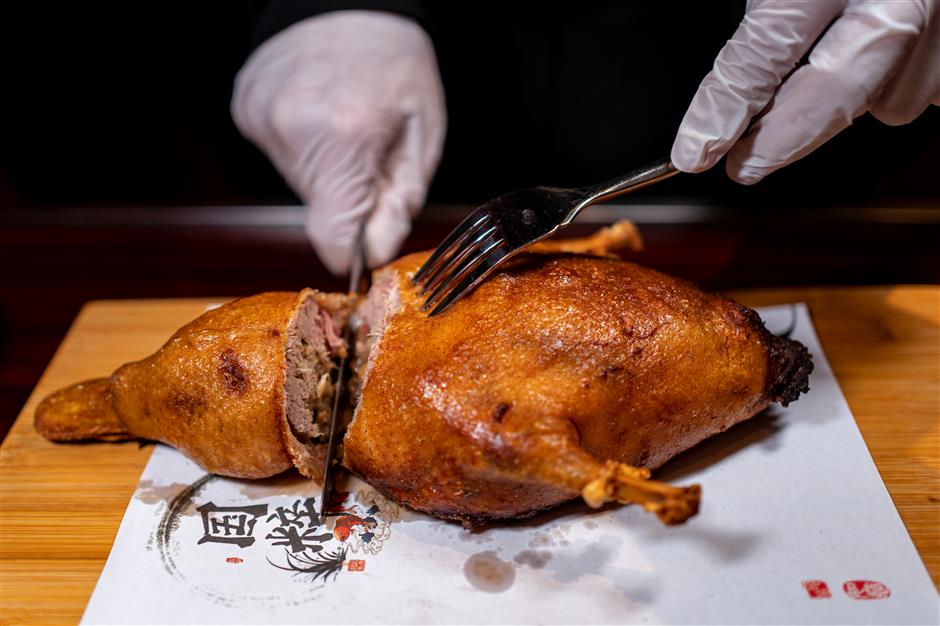
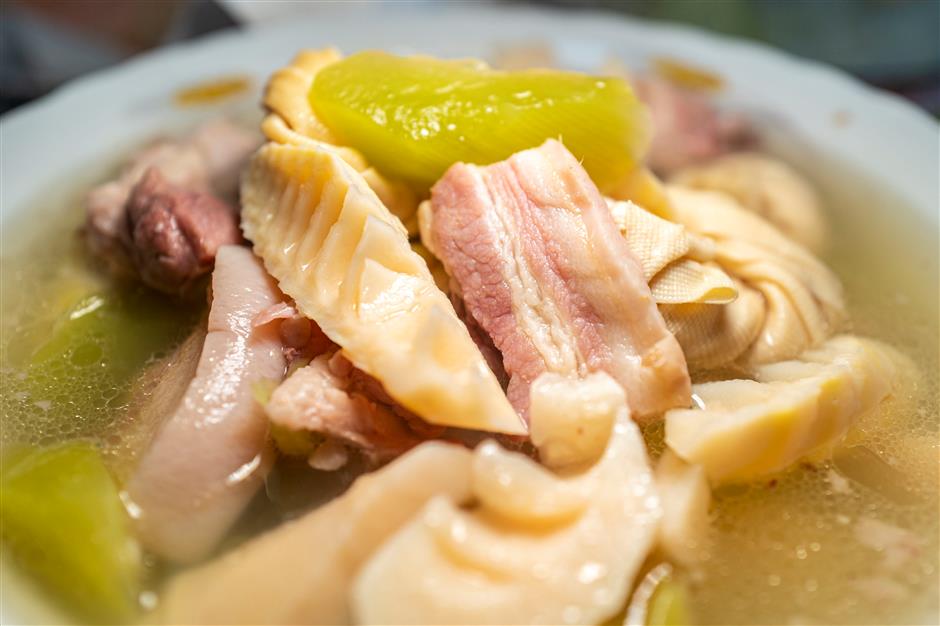
Regional variations matter. Here in the Yangtze River Delta region, the palate leans sweet. Cold appetizers arrive first: drunken chicken (zuiji, 醉鸡) marinated in Shaoxing wine, pressed tofu (dougan, 豆干), marinated vegetables (liangbancai, 凉拌菜). Then comes the procession of warm dishes: "lion's head" meatballs (shizitou, 狮子头, named for their resemblance to a lion's mane, when resting atop a bed of braised cabbage), eight-treasure duck (babaoya, 八宝鸭) stuffed with glutinous rice, braised bamboo shoots with preserved greens (yanduxian, 腌笃鲜).
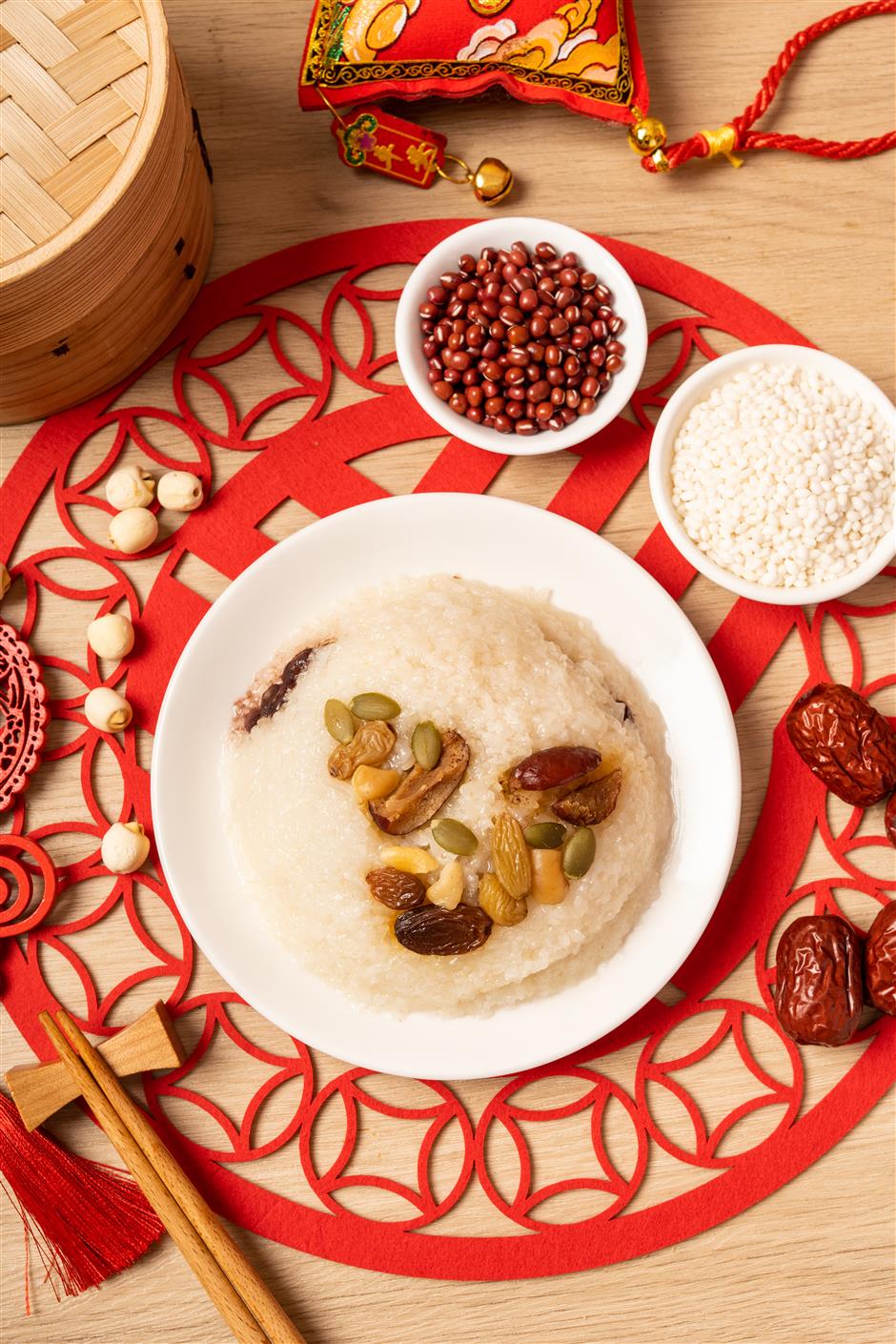
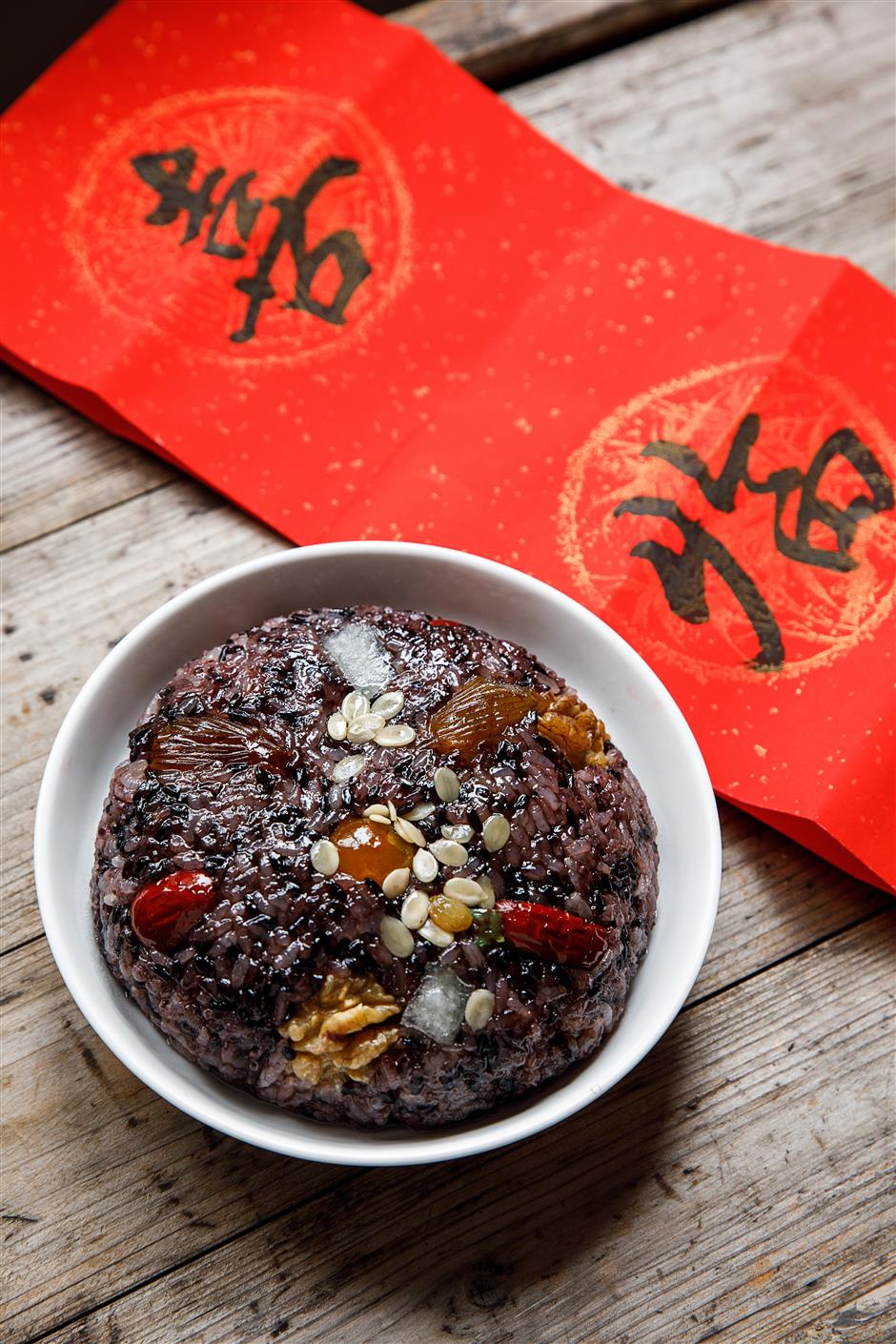
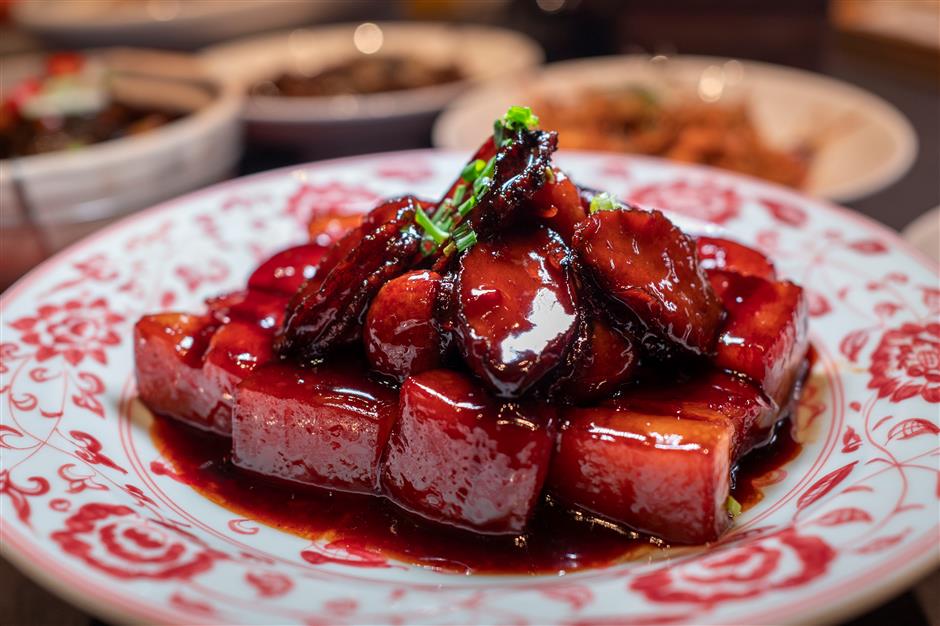
Braised pork belly (hongshaorou, 红烧肉) glistens with soy and rock sugar, its glossy richness signaling prosperity. Whole steamed fish (qingzhengyu, 清蒸鱼) arrives delicately seasoned with soy and scallion. If budgets allow, Shanghai families add dazhaxie (大闸蟹), prized hairy crabs from nearby Yangcheng Lake, their custard-like roe bright orange and rich. Eight-treasure rice (babaofan, 八宝饭), studded with dried fruits, nuts and smooth red bean paste, appears at the end.
Rituals of the Reunion
The reunion dinner has its own rules. Certain words are avoided, like those associated with loss, death or separation. Breaking dishes is considered unlucky. Elders are served first. Younger family members pour tea or drinks as a gesture of respect.
Toasts come in waves, as the phrase ganbei ("dry glass," 干杯) echoes throughout the evening. Older members of the family are more likely to nurse their baijiu (distilled Chinese spirit, 白酒) while younger relatives negotiate with beer. When glasses clink, the younger person lowers theirs slightly, a small, practiced gesture of deference. Between toasts, someone's uncle grows philosophical about property values. Someone's aunt interrogates the unmarried. Someone's grandmother, hard of hearing, smiles at everything.
The television murmurs in the background. The Spring Festival Gala, the four-hour holiday variety show the entire nation half-watches and fully references, acts as the evening's cultural wallpaper.
Before Anyone Sits Down
The preparation starts days, sometimes a full week, in advance. Markets surge with bodies and noise, vendors hawking everything from live fish to chunlian (lucky couplets, 春联) with calligraphy brushed in gold ink. Home kitchens transform into production lines: dumplings folded by the hundred, pork belly braised low and slow, glutinous rice soaked overnight.
On the day itself, the kitchen becomes the heart of the home: steamers stacked three high, woks firing, one auntie commandeering the stove while another oversees quality control. The air fills with the scent of ginger, Shaoxing wine and the sweet sense of orchestrated chaos.
When the Kitchen Stays Cold
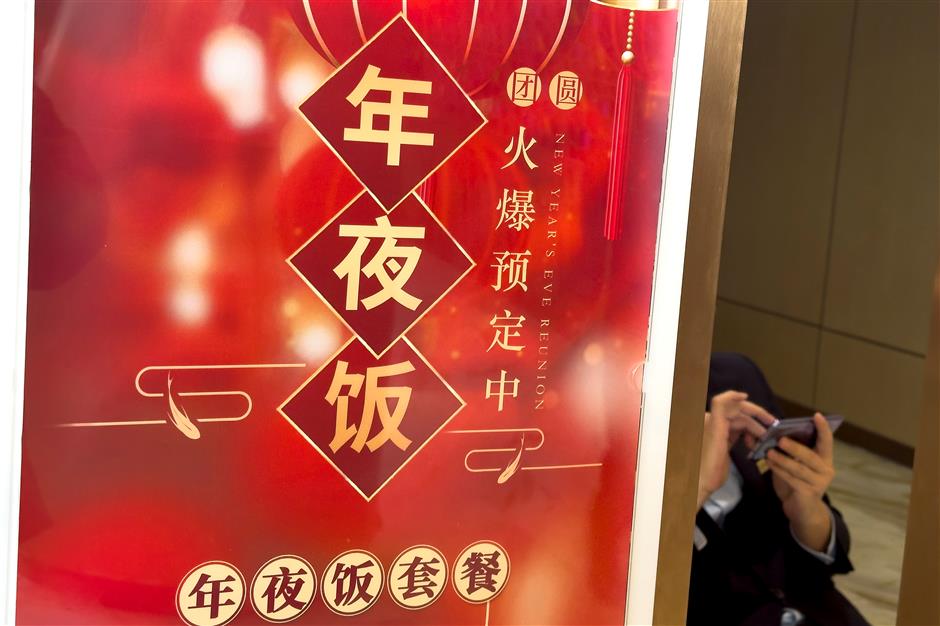
Not every family cooks anymore. Shanghai's five-star hotels book their banquet halls six months ahead, offering private rooms with lazy Susans the size of tractor tires, and 10-course set menus executed by chefs who have mastered both tradition and theater.
The fundamentals remain: whole fish, long noodles, symbolic abundance. Execution shifts to something more upmarket. Hairy crab arrives dressed in XO sauce. Braised abalone (hongshao baoyu, 红烧鲍鱼) appears alongside Hokkaido scallops. Black truffle shavings crown niangao. An auntie clucks about the cost. The younger generation, meanwhile, appreciates the convenience.
Everyone still toasts with baijiu. The fish still goes unfinished.
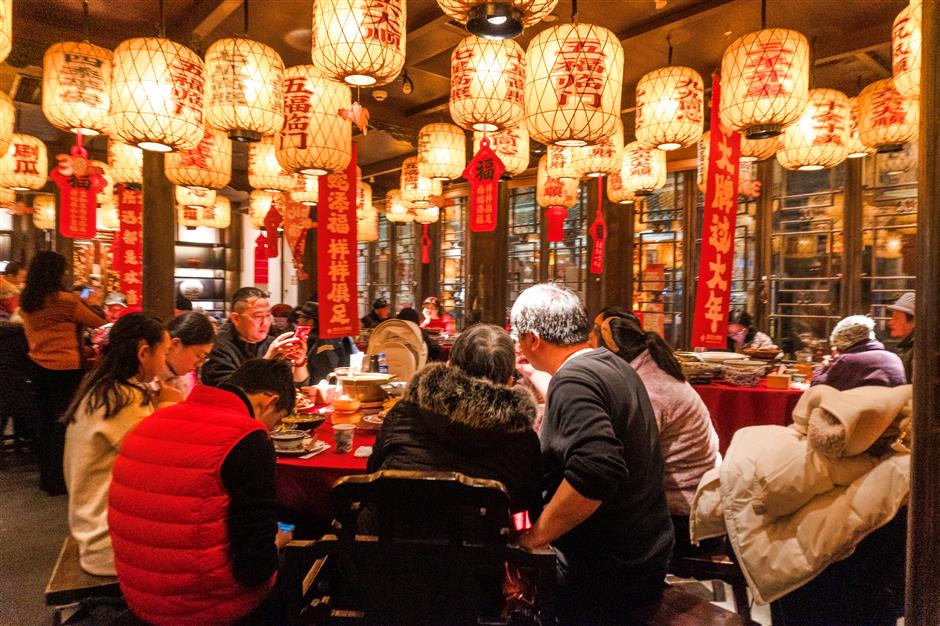
The Table Holds
As Chinese New Year approaches, trains and flights converge in a logistical miracle repeated across a country of 1.4 billion people trying to go home at once. As people arrive one by one, the table fills, the first toast rises, and red envelopes pass from hand to hand.
In a city like Shanghai, where skylines shift and habits change at dizzying speed, the nianyefan remains. The details might change. The gathering doesn't. Whether held at a home kitchen or hotel banquet room, the meaning stays the same: to come together, eat well, and begin the year with intention.
Editor: Xu Qing
In Case You Missed It...
![[Movers & Shakers] Nick Brown of FlowCycle Is Creating Bali in SH](https://obj.shine.cn/files/2026/09/11/34d53c76-ca94-417b-8777-83f87610b85d_0.jpg)
 Sep 11, 2026