Duanju: The Word That Conquered the World Before the Dramas Did
In November 2024, a feature appeared in The Daily Telegraph of London under a breathless headline: "This will be the next film industry." The article explored the rise of one-minute dramas and their enormous potential for profit. But for anyone tracking the movement of language, something quieter and more consequential was happening deeper in the text. A Chinese word, written in pinyin, had entered the pages of one of Britain's oldest newspapers, glossed once as "a form of storytelling known as duanju" and then used again and again without translation. It did not ask for permission.
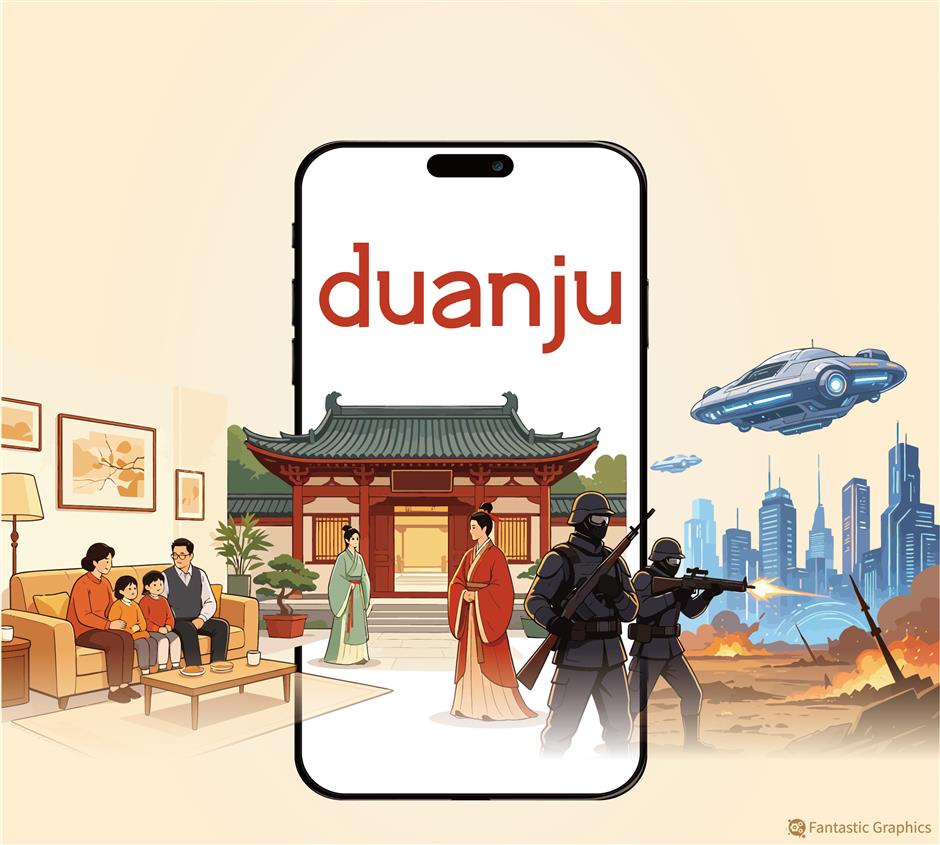
The evidence is verifiable, and it is precise. The News on the Web Corpus, the largest publicly available corpus of English-language news media in existence, currently holds 26.4 billion words drawn from web-based news media across the English-speaking world. A search of that vast database shows that the earliest recorded use of "duanju" in English-language journalism is the Telegraph's feature of November 11, 2024. Virtually every English mention of the word in the news media can be traced back to that single dateline. From there, the word traveled quickly.
By April 2025, Variety, the leading American entertainment trade paper, was introducing the genre to its readers as "microdramas (aka 'short dramas,' 'vertical series' or 'Duanju' in Chinese)," citing Appfigures data showing global revenue for the form jump from US$23 million in January 2024 to over US$122 million that same month a year later. English Wikipedia built a full entry around the word, noting that it is used in English-language contexts "particularly in academic and industry discourse." Wiktionary followed, classifying it as a countable and uncountable noun borrowed from the Mandarin "duǎnjù," complete with an English plural, "duanjus." CNBC began using the spelling directly in its reports. And in Paris, at a 2026 summit on the format, the French producer Guillaume Sandjour, who had named his own microdrama app "Duanju," put it plainly: "If film was invented by the French, microdramas were invented by the Chinese."
This is how words have always crossed borders. And it is why the debate over what to call China's short dramas in English, "micro-drama" or "duanju," is not really a translation question at all. It is a question about who gets to name a thing that China created.
The translations tell the truth imperfectly
The English renderings now circulating - "micro-drama," "short drama," "vertical drama," are not wrong. Each captures a fragment of the phenomenon. "Micro-drama" conveys scale. "Vertical drama" describes the screen. "Short drama" states the obvious.
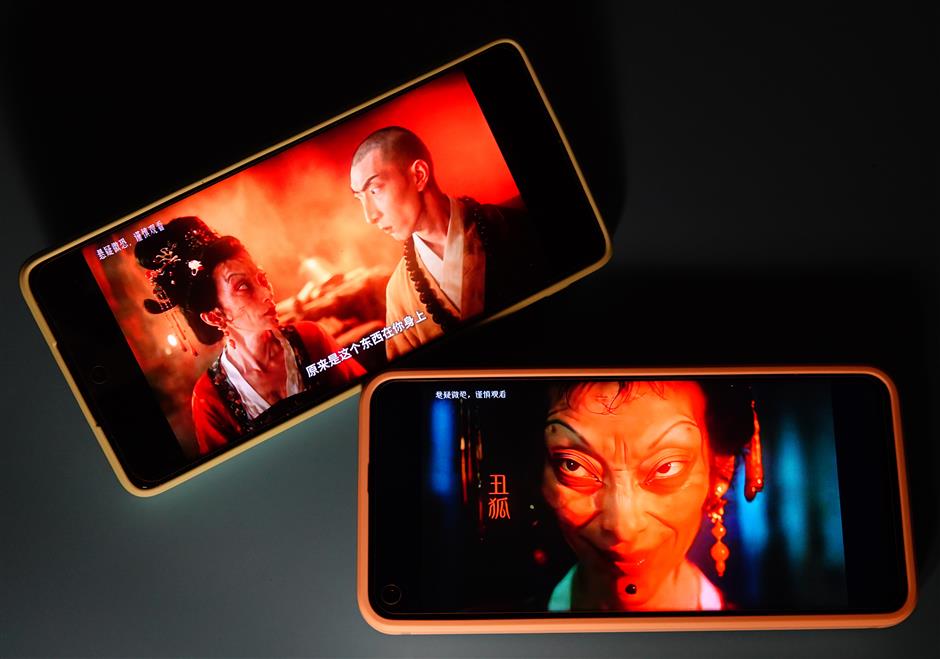
Yet anyone who has watched a duanju knows these terms miss the essence. A duanju is not simply a short drama. It is a serial form born of Chinese web fiction, engineered for the smartphone's vertical frame, structured around reversals that arrive every thirty seconds, delivered in episodes of one to two minutes that stack into stories of sixty, eighty, a hundred chapters. It carries the commercial logic of the Qidian web novel, the algorithmic temperament of Douyin, TikTok's Chinese counterpart, and an industrial production system that can shoot a complete series in Hengdian in under two weeks.
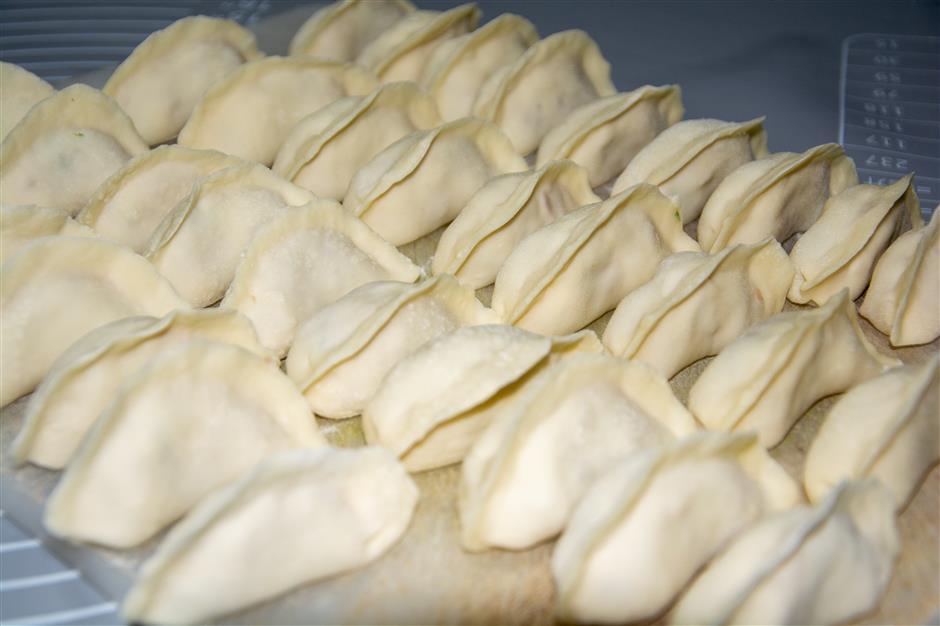
"Micro-drama" tells an English reader what the thing is, approximately. "Duanju" tells them what it is exactly, and where it comes from. The difference is the difference between calling jiaozi "dumplings" and calling it by its name. One translation gestures. The other names.
The history of English is, in large part, the history of admitting that some things do not translate. English did not render "kung fu" as "Chinese boxing" and leave it there. It called bao "steamed buns" for years before the borrowed word took over. "Feng shui" survived its gloss "geomancy." "Guanxi" outlived "connections." "Cheongsam" yielded to "qipao" once pinyin became the standard way to write Chinese. "Tai chi" was long known as "shadow boxing," yet the borrowed name won. In each case, the Chinese form prevailed because it carried what the translation could not: the specific cultural texture of the thing itself. A dictionary records not just what words mean but what societies have decided to notice. When the Oxford English Dictionary admitted "add oil" in 2018, it was recording a fact about the world: that enough English speakers were using a Chinglish exclamation that it had become English. The dictionary did not confer legitimacy. It acknowledged it.
There is every reason to expect duanju to follow the same path. The industry behind the word is enormous, and the numbers are public. The Telegraph's own reporting valued China's short-form video industry at 37.4 billion yuan, roughly four billion pounds, in 2023, and quoted the CEO of Crazy Maple Studio, Joey Jia, saying that his ReelShort app alone was generating more than ten million dollars a month and that "sooner or later, this will become the next film industry."
Variety, citing data from analytics firm Appfigures, reported that global revenue from microdrama apps jumped from US$23 million in January 2024 to over US$120 million a year later. According to figures cited by China's state news agency Xinhua, the global market approached eighteen billion dollars in 2025. Variety also reported that Fox Entertainment, through an investment in the app company Holywater, plans to produce more than two hundred vertical video series, including microdramas. And The Hollywood Reporter noted that the format is drawing Hollywood capital of its own: GammaTime, a microdrama app that has raised fourteen million dollars from investors including Kim Kardashian, and MicroCo, a startup founded by Lloyd Braun, the executive who greenlit "The Sopranos." When the object itself becomes a global fixture, the word for it tends to follow, and dictionaries tend to notice.
A word's journey mirrors an industry's
The timeline of the word's adoption tracks precisely with the industry's global expansion. The Telegraph's November 2024 feature appeared just as Western media were waking up to the fact that the most addictive new entertainment format was not coming out of Hollywood. Its reporting was candid about the mechanics: Chinese companies collaborating with British and American producers, casting Western actors, building sets that looked American, and routing revenue through subscription apps rather than TikTok itself.
By the time The New Yorker published "Inside the World-Conquering Rise of the Micro-Drama" on April 25, 2026, its reporter was on a set in Hengdian watching a crew shoot roughly sixty episodes' worth of content in a week of filming. Tellingly, even that piece, headlined with the English coinage, reached for the pinyin within its opening pages: "The micro-drama, or duanju." The vocabulary is still contested, and the contest itself is revealing. An English coinage frames duanju as a format anyone can own. The pinyin frames it as something with an origin, a lineage and a home.
From Shanghai, where much of this industry's commercial logic was refined, the stakes of naming feel less abstract than they might from London or New York. This city has watched the short-drama business mature from Douyin experiments into a billion-dollar export sector, and it has seen how Chinese cultural products travel best when they stop apologizing for their origins. The web novels did it first: "qidian" and "xianxia" now circulate in English-language fandom without translation. Duanju is riding the same current.
There will be those who consider linguistic advocacy a small thing beside the industrial realities. It is not small. Names shape perception. A form called "micro-drama" sounds like a subset of someone else's television tradition, a diminished thing. A form called "duanju" sounds like what it is: a category with Chinese roots that the rest of the world is learning to consume on Chinese terms. The word does work that no export figure can.
The past, as Shakespeare reminded us, is prologue. The pattern is unbroken: kung fu, yin and yang, jiaozi, wonton, tai chi, hongbao. Every one of these entered English as a Chinese loanword, carrying the sound of the original rather than a translation. Duanju belongs on that list. It may already be on it, in everything but the OED's typesetting.
What dictionaries will say, and what that will mean
The likely future is not difficult to sketch, because the documentation already exists. Duanju satisfies the informal tests lexicographers apply, and it satisfies them with unusual clarity. Its first appearance in English journalism can be dated to a specific day, November 11, 2024, in a specific publication, The Daily Telegraph, within the 26.4 billion words of the News on the Web Corpus. It appears across multiple independent publications since. It is used without gloss by some writers. It has a stable spelling, a stable pronunciation and a stable referent. Its usage is growing, not fading. OED editors have shown in recent years that they track popular culture aggressively and pinyin borrowings favorably.
When the entry comes, it will read something like the Wiktionary version that already exists: a noun, borrowed from Mandarin, denoting a Chinese short-form serial drama, typically vertical and episodic. And tucked inside that dry definition will be a larger story, the story of how a narrative form incubated in Chinese web fiction and mobile platforms became a global habit, and how English, as it always has, reached for the source word rather than an approximation.
The lesson for Chinese cultural export is worth stating plainly. We should not settle for translations that let foreign audiences understand our creations roughly when transliteration lets them know them precisely. History teaches the same lesson over and over: the words that endure are the ones that travel intact. Duanju has already shown the way. The rest of our vocabulary should follow it with confidence.
The word appeared in a British newspaper for the first time on November 11, 2024. Within two years, it had a Wikipedia entry, a Wiktionary entry, and a growing body of usage in the press that matters. The dramas have conquered screens on every continent. The word is conquering something subtler: the way the world talks about what it watches. Dictionaries, patient as ever, are simply waiting to write it down.
When they do, they will be recording more than a borrowing. They will be recording the moment English speakers stopped translating a Chinese invention and started naming it. That is what cultural confidence sounds like, one syllable at a time: duanju.
(The author, who holds a PhD in linguistics at the University of Illinois, Urbana-Champaign, is a Shanghai-based professor of English, a lexicographer, and a popular writer on Chinese language and culture.)
Editor: Fu Rong
In Case You Missed It...

 Nov 27, 2026