From Despair to a Second Chance: One Man's 33.5kg Journey Out of Severe Obesity
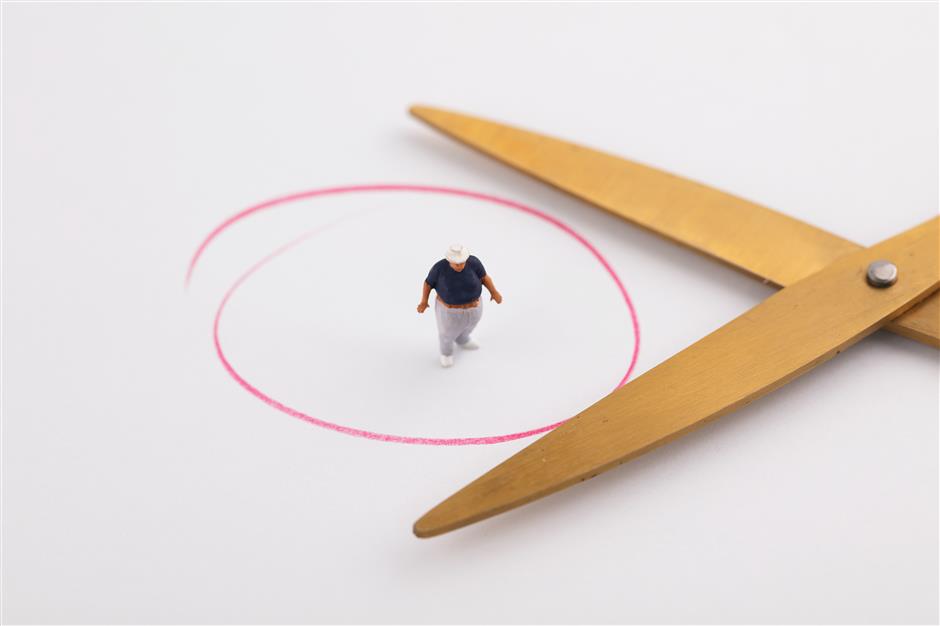
At just 29, Lin Nan weighed 258.5 kilograms – a number that had come to define the boundaries of his world. With a body mass index of 78.9, he fell into a category of extreme obesity so severe it reshaped every aspect of his life. Friends drifted away. Invitations stopped coming. Even the simplest movements became exhausting ordeals. The future felt smaller each day.
"I was completely desperate," Lin recalled.
For years, he chased hope through a revolving door of weight-loss programs. Each new plan promised a turning point: strict diets, punishing workout regimens, unwavering discipline. And each time, the pattern repeated. The weight would drop – briefly – only to return in greater force.
The setbacks cut deeper than the numbers on the scale. With every rebound came sharper isolation and a growing reliance on food for comfort. "I'd fail, feel worse, eat more, and gain more," he said. "It was a vicious spiral."
By his late twenties, Lin was no longer just battling weight. He was fighting a cycle that had consumed his confidence, his social life, and nearly his hope.
In July 2025, Lin learned that Xinhua Hospital in Shanghai was recruiting candidates for a comprehensive, three-year charitable weight-loss program. Unlike commercial boot camps or crash diets, this initiative – run by the hospital's Center for Obesity and Metabolic Diseases – offered individualized, multidisciplinary care at no cost. After a thorough evaluation, Lin was selected.
The program began in September. What set it apart was not intensity, but restraint.
"Previous programs starved me and ran me into the ground," Lin said. "I could never keep up." This time, his medical team took a different approach. There was no rigid meal plan, no mandate to run miles. Instead, doctors guided him to rebuild his relationship with food gradually. From greasy takeout, he shifted to reading nutrition labels, then to preparing simple meals at home. From a sedentary existence, he started walking 20 minutes a day.
A hospital-run WeChat group became his lifeline. Every day, Lin reported his weight, shared photos of his meals, and logged his activity. Doctors responded with feedback and encouragement. "Before, I couldn't bear to show my body to anyone," he said. "Now I send those images every day. Someone is watching, and someone believes in me."
Results That Speak for Themselves
Now, Lin's weight had dropped from 258.5 kg to 225 kg – a loss of 33.5 kg in just five months. His BMI fell from 78.9 to 68.7. For most people, 33.5 kg is the weight of half an adult. For Lin, it is the first sustained progress he has made since adolescence. He was already 110 kg at the age of 15.
"I'm starting to feel confident again," he said. "I can touch my back when having a bath now. I want to walk out of my home and have social events with others now."
In March, Lin is scheduled to undergo bariatric surgery – a milestone made safer by his preoperative weight loss. The program will continue to support him through recovery and long-term weight management over the next two years.
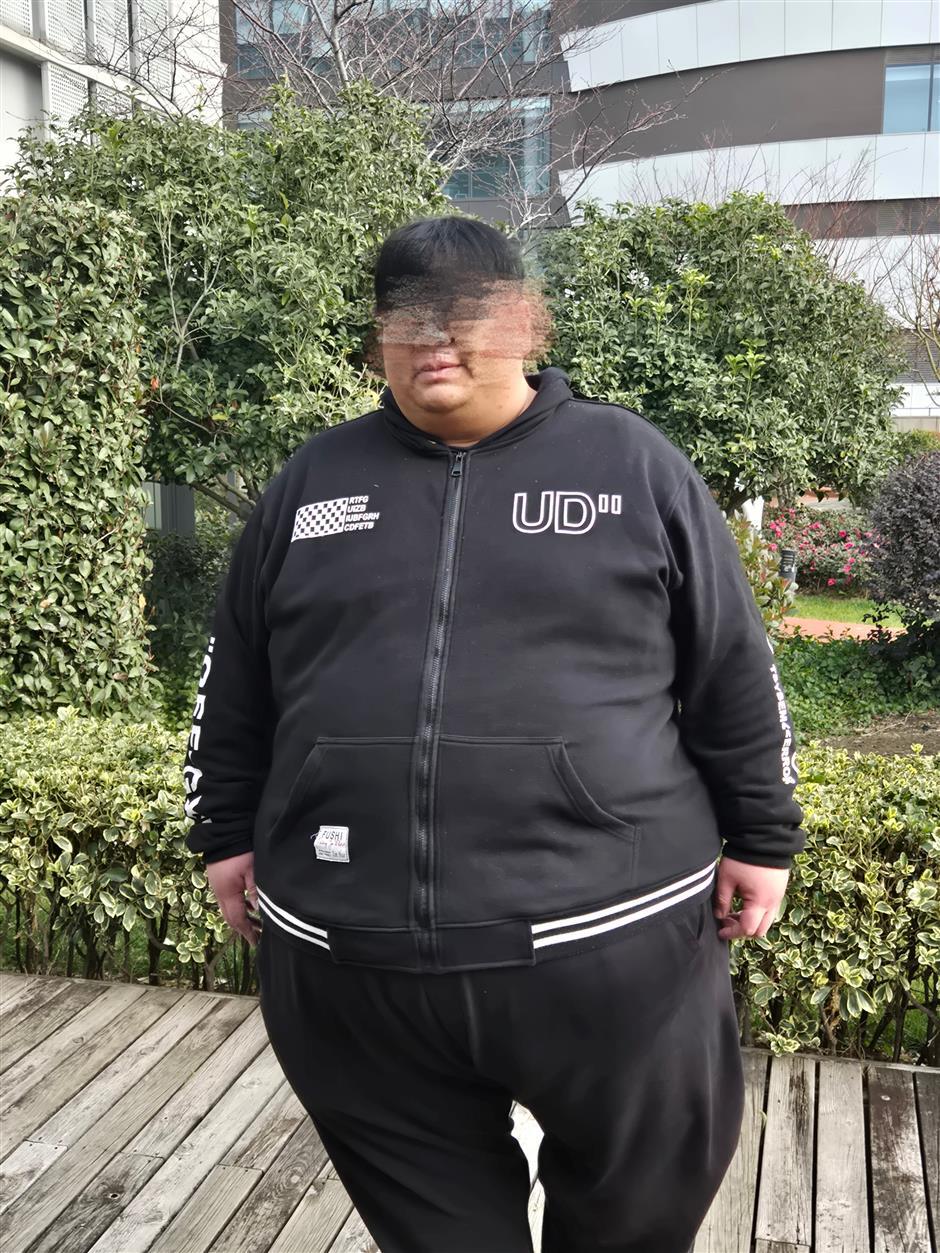
A New Philosophy: Weight Loss Without Suffering
Dr Li Bo, a physician at Xinhua's weight and metabolism center, emphasizes that sustainable weight management requires more than willpower.
"For a long time, weight loss was oversimplified as 'eat less, move more,'" Li said. "But if we ignore a patient's psychology and quality of life, even the best advice won't stick. You can't live like an ascetic forever."
The center's model integrates nutrition, exercise psychology, pharmacotherapy, psychology and metabolic surgery into a personalized, long-term plan.
"We don't chase dramatic, unsustainable drops on the scale," she explained. "We teach people to eat smart – to enjoy food without losing control, to move without punishing their bodies. Weight loss shouldn't mean suffering. It's about learning to live well."
Beyond the Individual: A Call for Better Obesity Care
Lin's story highlights a systemic gap. Although obesity affects more than 16 percent of Chinese adults, standardized, evidence-based weight management remains inaccessible to most. Many cycle through unregulated camps, meal replacements, and fad diets – often at great cost, physical and emotional.
"Every time a patient fails, it's not their fault. It's the method that failed," Li said. She wants hospitals to establish integrated weight-management centers that offer affordable, humane, and sustainable care.
Lin is far from his goal. He still weighs 225kg, and the road ahead is long. But for the first time, he believes the destination is reachable.
"I no longer dream of waking up thin within one day. But I do hope I can get a healthy weight after the program ends," he said. "I keep my steady efforts every day. I know that if I report my weight every day, eat properly, and take a walk – one day at a time – I will keep getting better. This time, weight loss is not a painful suffering but a progressive and sustainable development."
If you go:
Expatriates can contact Xinhua Hospital's Memorial Jinglang International Medical Center
Address: 1665 Kongjiang Rd|控江路1665号
E-mail: memorial.jl@xinhuamed.com.cn
Tel: 136-5171-1778 (Dr Ma Fei), 158-2191-9784 (Dr Li Yueyan), both can offer bilingual service
The hospital is covered by commercial insurance.
Editor: Fu Rong
In Case You Missed It...

 Jul 25, 2026

![[Explainer] Leaving China? That Cute Souvenir Could Become Your Biggest Travel Mistake](https://obj.shine.cn/files/2026/07/24/87994023-7ba2-4c8e-b552-bff505357ffe_0.jpg)