Shanghai Hospital Sets Global Benchmark in Heavy Ion Cancer Therapy
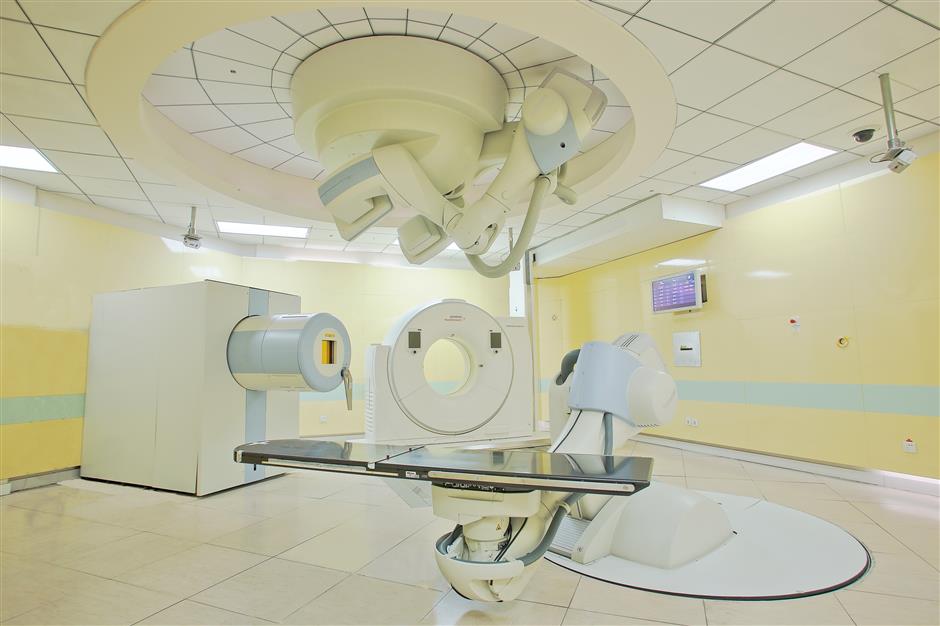
Shanghai Proton and Heavy Ion Hospital, China's first facility equipped with both proton and heavy ion radiotherapy technologies, has grown into a pioneer and benchmark in domestic particle radiotherapy.
Evolving from parallel use of proton and heavy ion techniques to a heavy ion-dominated clinical model, the hospital has become a global leader in innovative clinical application of heavy ion radiotherapy, its officials said on Friday while celebrating the hospital's 11th anniversary.
The hospital has greatly upgraded its treatment capacity and accessibility. To ease the long waiting time for cancer patients, it has optimized clinical protocols, treatment procedures and operational management. It is the world's first heavy ion center with annual treatment volume exceeding 1,000 cases. Its single particle equipment has maintained an annual volume above 1,000 cases for five consecutive years, surpassing 1,200 cases in the past two years with an average annual growth rate of 16.2 percent.
In 2025, a record high of 1,267 patients completed treatment. It also hit a daily peak of 106 treatments and a monthly discharge record of 114 patients, leading global peers in clinical efficiency.
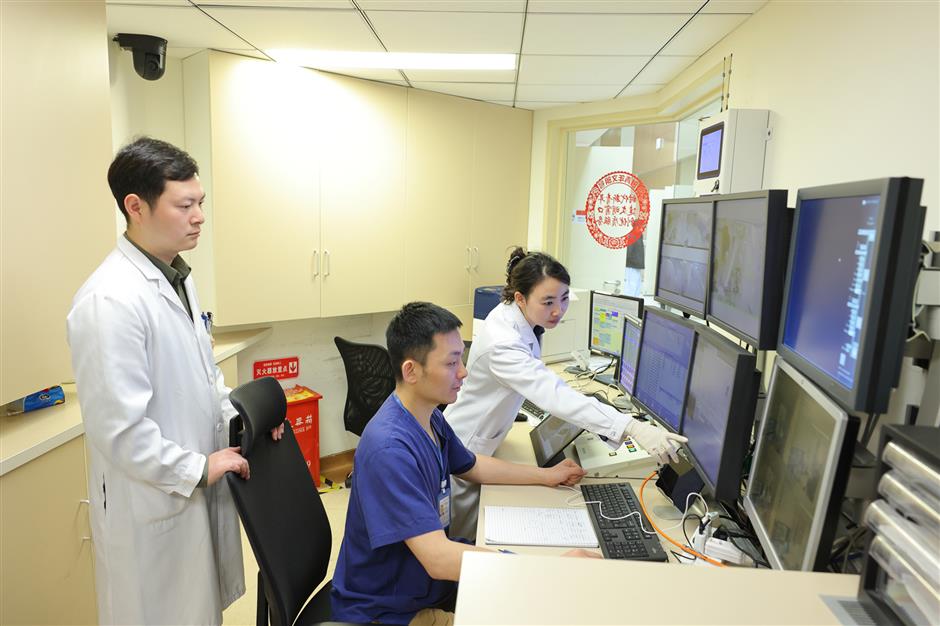
So far, the hospital has treated and discharged a total of 9,317 patients, covering more than 50 common malignant tumors nationwide. Key diseases including nasopharyngeal cancer, intracranial and skull base tumors, lung cancer, prostate cancer, breast cancer and pancreatic cancer account for three-quarters of all cases.
Patients come from all 31 provincial-level regions across the mainland as well as Hong Kong, Macao and Taiwan, with 50.7 percent from the Yangtze River Delta. It has also treated over 100 overseas patients. Its overall 5-year survival rate stands at 70.4 percent.
The hospital ranks the world's top center in heavy ion radiotherapy for nasopharyngeal cancer. The 5-year survival rate for newly diagnosed patients is 93.8 percent. Its globally pioneering pure heavy ion therapy for recurrent nasopharyngeal cancer lifts the overall 5-year survival rate to 45.3 percent.
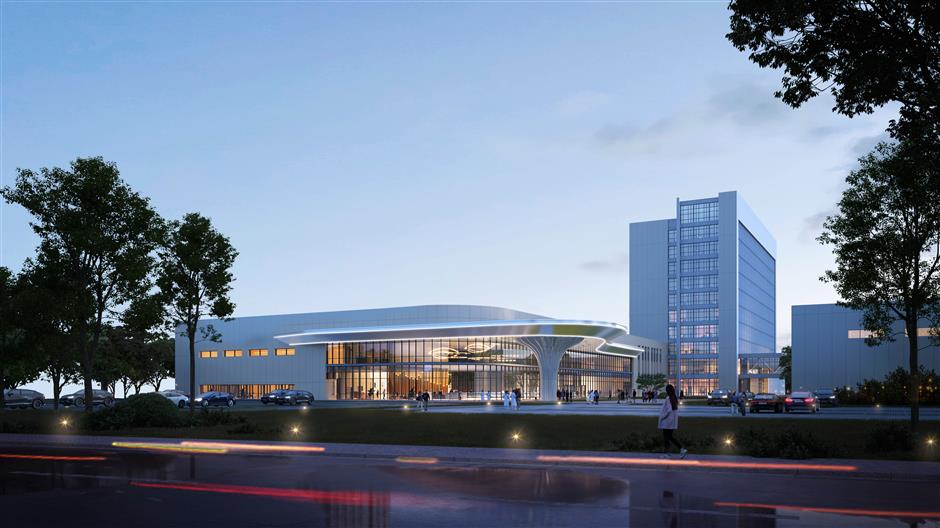
Meanwhile, the hospital's phase-II expansion project is steadily advancing. Construction started last September, with a new medical complex integrating medical treatment, scientific research and education scheduled for completion by the end of 2028.
The project will add one new heavy ion system and one proton system. Upon full completion, the hospital is expected to become the world's largest tumor particle radiotherapy center, supporting Shanghai's development into a top-tier global medical hub.
Editor: Fu Rong
In Case You Missed It...
![[Current Trends] The Rise of China's Medical Prowess is Hard to Ignore](https://obj.shine.cn/files/2026/09/15/b09b29d4-14d6-4532-a2e2-6b18c348c419_0.png)
 Sep 17, 2026
![[SH Health Guide] Shanghai Proton and Heavy Ion Center](https://obj.shine.cn/files/2026/08/12/17506b8f-5d4d-4a5b-9abf-47f86352735e_0.jpg)
![[SH Health Guide] EYE & ENT Hospital of Fudan University](https://obj.shine.cn/files/2026/08/26/b0e8ee2e-dcfd-41d7-8759-8eed0889d64b_0.jpg)