[Health Byte] TCM Gets a Tech Makeover – and Herbal Coffee Too
Editor's Note
[Health Byte] is your insider guide to navigating Shanghai's health maze. From the labyrinth of public and private healthcare options to the pulse of cutting-edge medical services, we've got you covered. Each bite-sized article ends with a health tip, making wellness in the city more accessible than ever. Wondering about hospital features, where to find bilingual medics, or the scoop on insurance coverage? "Health Byte" breaks it down, offering clear, actionable insights.
![[Health Byte] TCM Gets a Tech Makeover – and Herbal Coffee Too](https://obj.shine.cn/files/2025/09/17/659234c0-3611-4578-bb4c-db5f5e4eb402_0.jpg)
Shanghai's TCM Moment: Ancient Prescriptions, Modern Appeal
September is National Health Education Month, and in Shanghai, that means public hospitals are doing a bit of self-promotion – hosting events, offering free checkups, and encouraging people to take their health (and their diets) a little more seriously.
One unexpected star of the campaign? Traditional Chinese Medicine (TCM) – not just the bitter brews and cupping you might know, but an entire ecosystem of self-developed herbal remedies, rehab tech, and even skincare solutions. Long embraced by locals, TCM is now piquing the interest of Shanghai's international crowd, who are increasingly curious about what thousands of years of Eastern medical theory might have to offer beyond the pharmacy aisle at Watsons.
![[Health Byte] TCM Gets a Tech Makeover – and Herbal Coffee Too](https://obj.shine.cn/files/2025/09/13/d8d9923a-55ae-4283-b67a-8448ccd1b15f_0.jpg?x-image-process=style/style-watermark)
Secret Formulas and Itchy Skin: The Allure of In-House TCM Remedies
If you've ever wandered into a TCM hospital in Shanghai – the ones with the faint medicinal smell and perpetually full waiting rooms – you might've seen a separate line for "hospital-developed" prescriptions. These aren't the over-the-counter herbs you buy in jars on Huaihai Road. These are custom, in-house formulations, developed by hospital doctors based on a mix of ancient recipes and years of clinical trial-and-error.
Known as "self-developed medicines," these internal and external treatments (think herbal pills, powders, creams) are beloved by patients for being effective, affordable, and – in many cases – time-tested. Some are even considered secret recipes, passed down and continuously tweaked by doctors over the years. You won't find them in retail pharmacies, and you can't just order them online. These are made and dispensed exclusively at the hospital that developed them, after receiving production approval from local health authorities.
One of the leaders in this space is Shanghai Yueyang Hospital, a big name in the local TCM world. According to Dr Nian Hua, the hospital's deputy pharmacy director, they currently offer 104 hospital-developed medicines – 84 of them based on TCM, and 20 from Western medicine – across 17 different dosage forms. The scope is wide: everything from heart disease and eczema to digestive issues and respiratory conditions.
And yes, expats are part of the crowd. "Some foreign patients come to us after trying Western treatments that didn't work," says Dr Nian. "They become loyal fans – not just of the doctors, but of our specific formulations."
One such example is the newly introduced Qingfu Anti-Itch Granule, designed to treat eczema and atopic dermatitis (those stubborn, itchy, inflammation-driven skin conditions). It's a modern take on the hospital's older "Red Spot Formula," and according to patients, it not only reduces inflammation but also "clears heart fire" (a TCM concept loosely related to calming internal heat or stress), manages infection, and helps repair the skin barrier.
![[Health Byte] TCM Gets a Tech Makeover – and Herbal Coffee Too](https://obj.shine.cn/files/2025/09/13/da0f7513-bd38-4ee9-b614-4494e693aba4_0.jpg?x-image-process=style/style-watermark)
Herbal Coffee, Medicinal Bread, and the Rise of the TCM Bazaar
The Shanghai Hospital Management Center recently asked all 37 city-level hospitals to do something a little different: get people excited about health, not with pamphlets or PSA posters, but with events. And when it comes to putting on a show, Shanghai's Traditional Chinese Medicine hospitals came prepared.
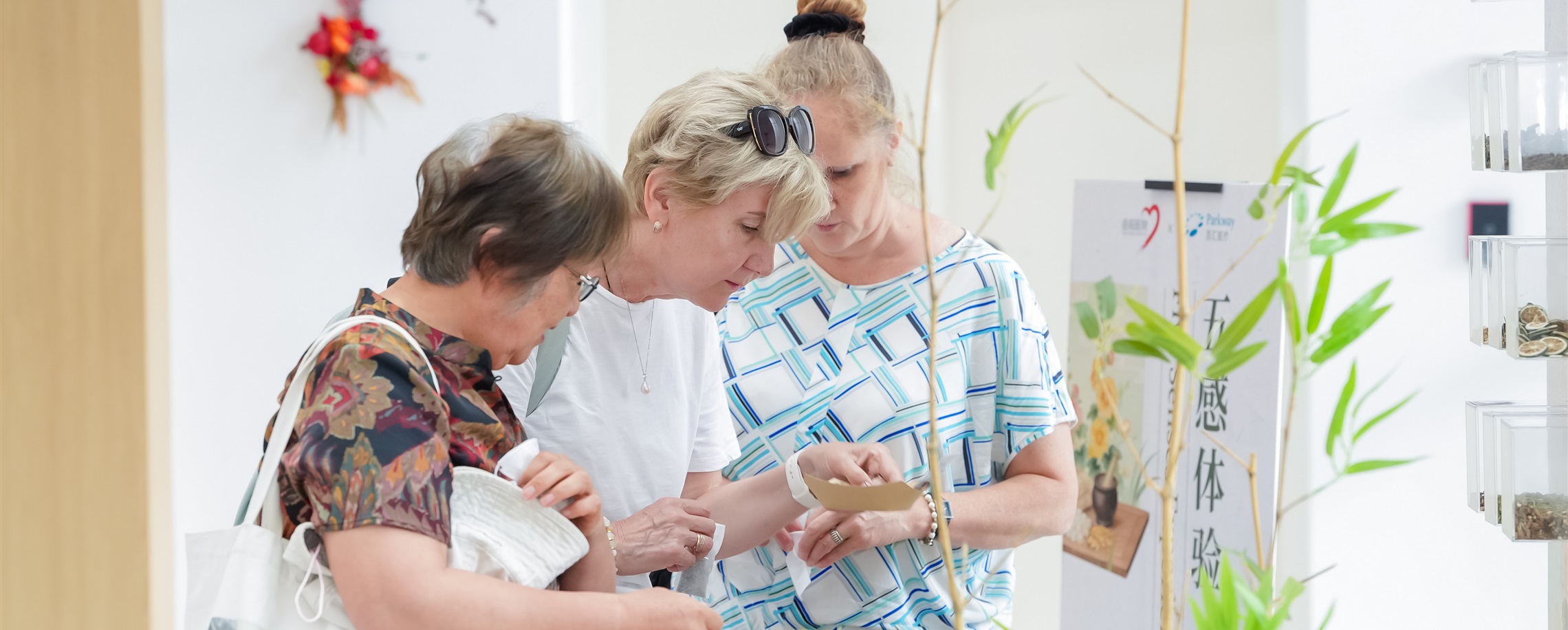
At a recent health fair, the Shanghai Traditional Chinese Medicine Hospital unveiled what can only be described as a TCM lifestyle market – complete with herbal bread, medicinal pillows, and, yes, coffee infused with Chinese herbs. The slogan plastered around the venue? "Health Management, TCM Helps."
By far the biggest crowd formed around a humble-looking stall serving up herbal coffee, a mashup that feels tailor-made for a WeChat feed. One woman, surnamed Chen, took a sip and described it like a wellness revelation: "It tastes better than I expected – sweet, herbal, warm all the way down. I feel… very comfortable."
If that sounds vague, here's what's actually in it: the hospital developed four blends of herbal coffee, each with a specific therapeutic goal. There's red ginseng and licorice (to "tonify Qi," or boost energy), angelica and safflower (to regulate menstruation), cinnamon and star anise (to warm the stomach – useful if you're prone to digestive issues), and mint with lemon (a refreshing option meant to perk you up without a sugar crash).
Hospital reps say it's all about making TCM feel less intimidating – and more appealing to younger people, especially those with a few unhealthy lifestyle habits they'd rather not talk about. (Takeout addiction, anyone?)
Other booths at the fair sold out of scented sachets and herbal pillows, which are said to promote sleep or ward off "dampness" (a TCM catch-all for sluggishness, swelling, or that gross heavy feeling in humid weather). Even the TCM-infused bread – no clear verdict on flavor – got snapped up quickly.
![[Health Byte] TCM Gets a Tech Makeover – and Herbal Coffee Too](https://obj.shine.cn/files/2025/09/15/7057cba2-ad3e-4106-9fe9-adb5bd911463_0.jpg)
![[Health Byte] TCM Gets a Tech Makeover – and Herbal Coffee Too](https://obj.shine.cn/files/2025/09/09/572c15be-3164-4e13-81fc-85cd7db0dfae_0.jpg)
Smart TCM in Rehabilitation
Though TCM means traditional Chinese medicine, it is not conservative. On the contrary, it is fashionable, smart and innovative. Local TCM hospitals and specialists are actively integrating TCM with advanced technology, especially in the field of rehabilitation.
TCM has been playing an important role in rehabilitation and is closely integrated with smart technology and AI. Dr Li Yi, president of Shanghai Yueyang Hospital, is elected the first director of Shanghai TCM and Western Medicine Integrated Association's Intelligent Medicine Commission, which will explore the application and theory research of smart medicine, technical innovation and clinical transfer.
![[Health Byte] TCM Gets a Tech Makeover – and Herbal Coffee Too](https://obj.shine.cn/files/2025/09/13/65262929-c0ff-485a-9b6a-0e5d64e8db27_0.jpg)
Metaverse Medicine and AI Rehab: TCM Goes Virtual
What happens when you take TCM's body-first philosophy and plug it into the cloud? You get something like Shanghai's new smart rehab model, a project that sounds like science fiction but is already quietly reshaping how people recover from illness – from the comfort of their living rooms.
Led by Shanghai University of Traditional Chinese Medicine and Shanghai University, the initiative links a four-level network of city hospitals, district hospitals, community health centers, and individual households, using a combination of AI, app-based tracking, and even metaverse tools (yes, metaverse) to bridge the gap between limited medical resources and rising healthcare demand.
At Shanghai Yueyang Hospital, the system is already up and running. Patients can access a digital consultation center, undergo virtual evaluations, participate in rehab training via guided platforms, and have their progress tracked in real time by a centralized data hub.
The next phase will scale up to 10 more hospitals, reaching over 500 families and providing 10,000+ remote services – all aimed at giving patients high-quality, tech-enabled TCM rehabilitation without ever leaving their neighborhood.
It's TCM – but make it WiFi-enabled.
![[Health Byte] TCM Gets a Tech Makeover – and Herbal Coffee Too](https://obj.shine.cn/files/2025/09/13/3168d232-13fa-4203-9b8c-91c65350fbdc_0.jpg)
Health Byte Tips
Between Meituan dinners, convenience store lattes, and bubble tea pit stops, Shanghai's sugar problem is no longer just a kids' issue. That's the message from a recent health talk organized by the Shanghai Health Promotion Center, which aimed at everyday lifestyle habits – specifically, our collective reliance on takeout, sugary drinks, and anything labeled "extra flavor."
Dr Wu Jiang, a physician at Huadong Hospital, broke it down simply: anything with more than 5% sugar content counts as a sweetened beverage. That includes most bottled teas, juices, sodas, and yes – your go-to milk tea. For reference, China's national dietary guidelines recommend a maximum of 25 grams of sugar per day. A single 500ml bottle of the most popular drinks blows past that in a couple of gulps.
Why does it matter? "Sugar hits the brain quickly," Dr Wu said. "It boosts dopamine – the feel-good chemical – and that makes people feel temporarily energized. But it's short-lived and habit-forming." Over time, this cycle can lead to metabolic issues like diabetes, fatty liver, and dental decay, she warned.
Her advice? Start small: cut back the frequency, swap in tea or plain water, and try other sources of refreshment – like a walk, a playlist, or even a stretch break – when fatigue hits. Basically: don't try to fix burnout with a Coke.
Upcoming Topics
Many people with chronic diseases like hypertension, fatty liver and atopic dermatitis fail to control their condition. Let's check what local medical specialists can do to help them.
About the Author
Cai Wenjun is a seasoned health reporter with Shanghai Daily. With extensive experience covering the local medical system, hospitals, health officials and leading medical experts, Cai has reported on major pandemics including SARS, swine flu and COVID-19, as well as developments in the local health industry.
In Case You Missed It...

 Sep 29, 2025
![[Expats & Ailments] Clinic Brings New Hope to Pancreatic Cancer Patients with Liver Metastases](https://obj.shine.cn/files/2025/09/23/b2281e8f-be6e-4465-8c70-535ce11ee1c3_0.jpg)
![[China Tech] Shanghai researchers deploy robot to make nuclear medicine safer and precise](https://obj.shine.cn/files/2025/09/22/cc6892d1-9047-424b-890b-8c0abca656c2_0.jpg)
![[Expat & Aliments] Canadian treated for rare intestinal disorder in Shanghai](https://obj.shine.cn/files/2025/09/21/80b28195-717e-46f3-ae19-11a342e1c65f_0.jpg)