Beyond the Display Case: London's Natural History Museum Deepens Shanghai Ties
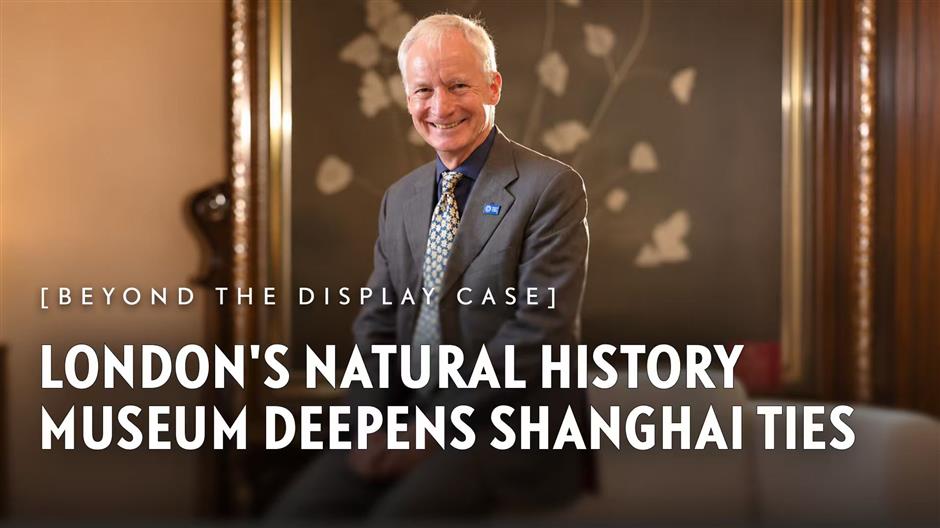
The former Amazon China president, now director of London's Natural History Museum, on a new Shanghai partnership and the science of bringing ancient worlds to life.
The sponge that makes glass
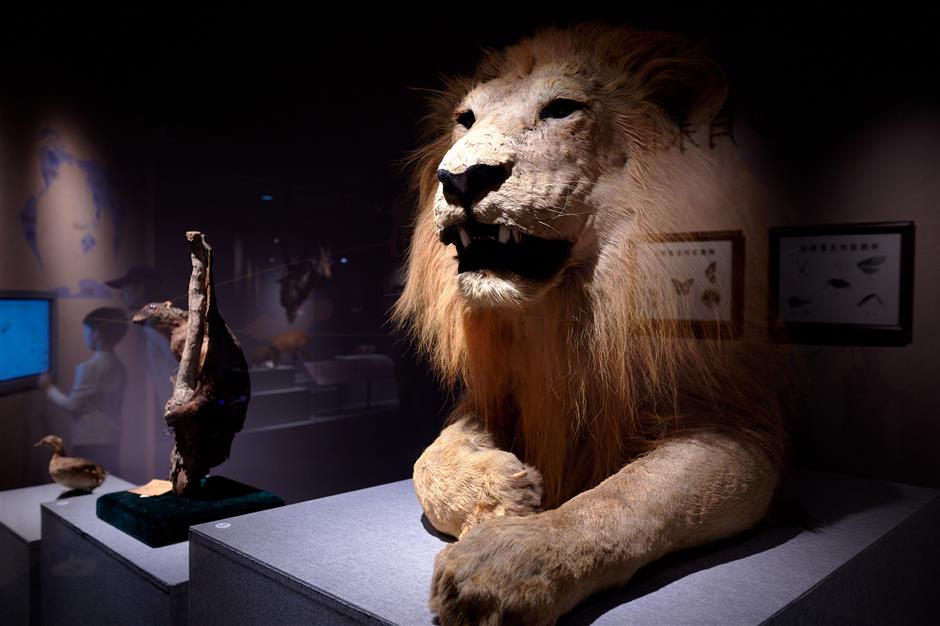
Asked to name a favorite among the more than 80 million specimens in London's Natural History Museum, Dr Doug Gurr could have chosen something Charles Darwin brought back from his voyage aboard the Beagle, a piece of Mars, or a find from the great polar expeditions. Instead, he tells a story about a sponge.
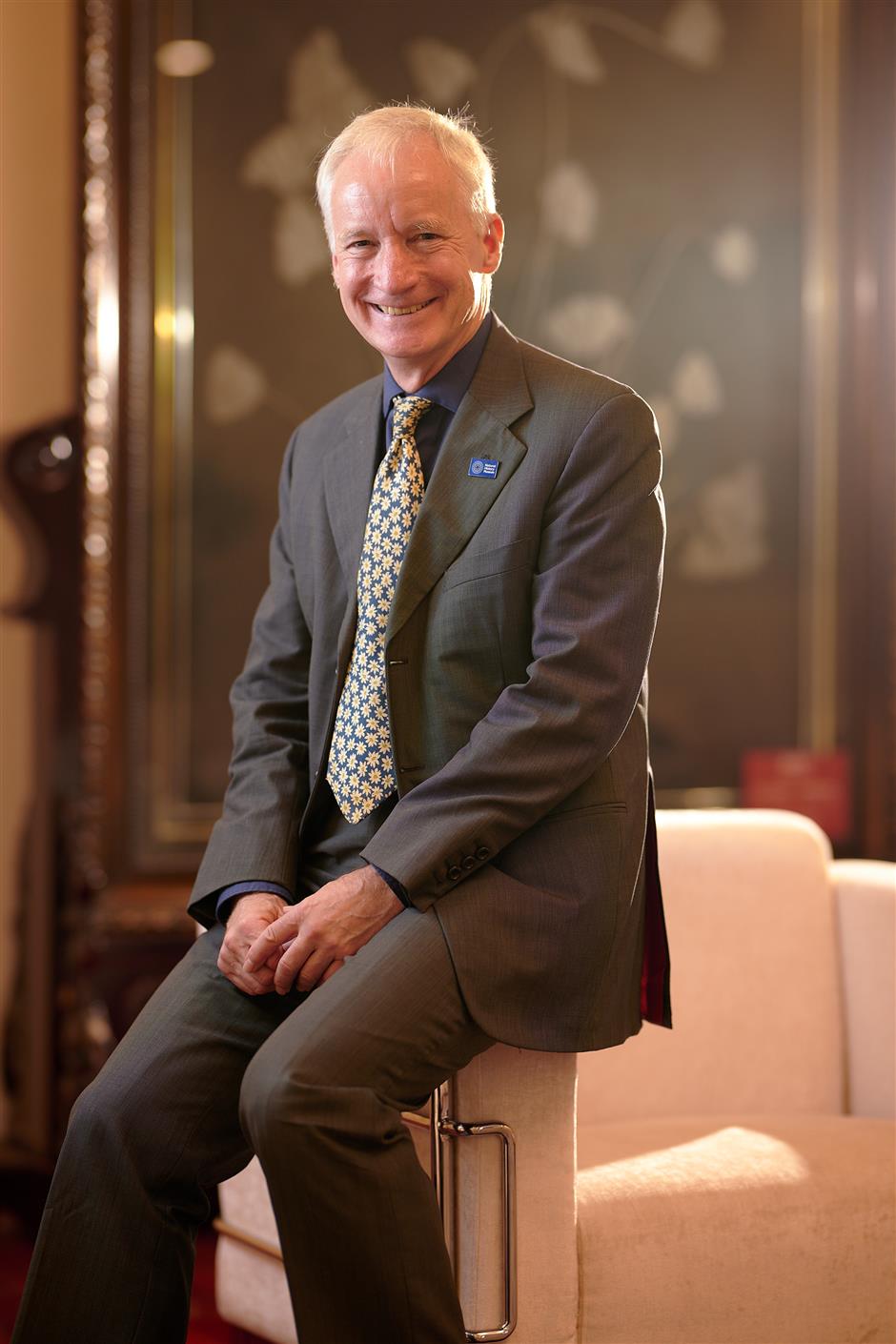
"It doesn't sound very exciting," admits Gurr, the museum's director. This sponge lives about four kilometers down, in pitch-black water at two degrees Celsius, and under 400 atmospheres of pressure. And it makes glass.
"It looks like a pin cushion with literally glass spines growing out of it. And we have no technology to make glass at two degrees centigrade."
"But that's how remarkable life can be sometimes," he adds. The rest of the collection, he says, is no different: "There is magic around every corner and in every cupboard."
A new Shanghai partnership
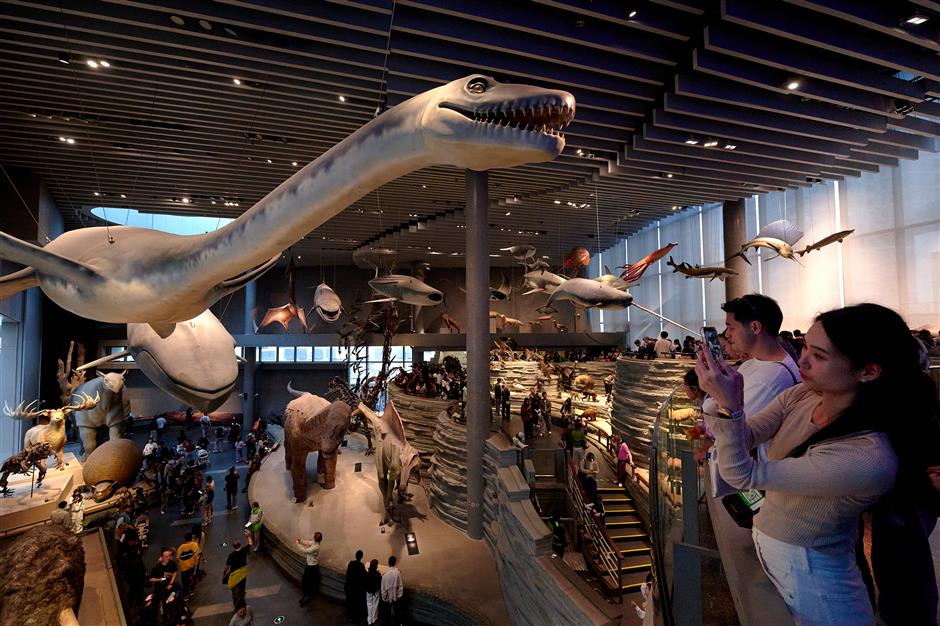
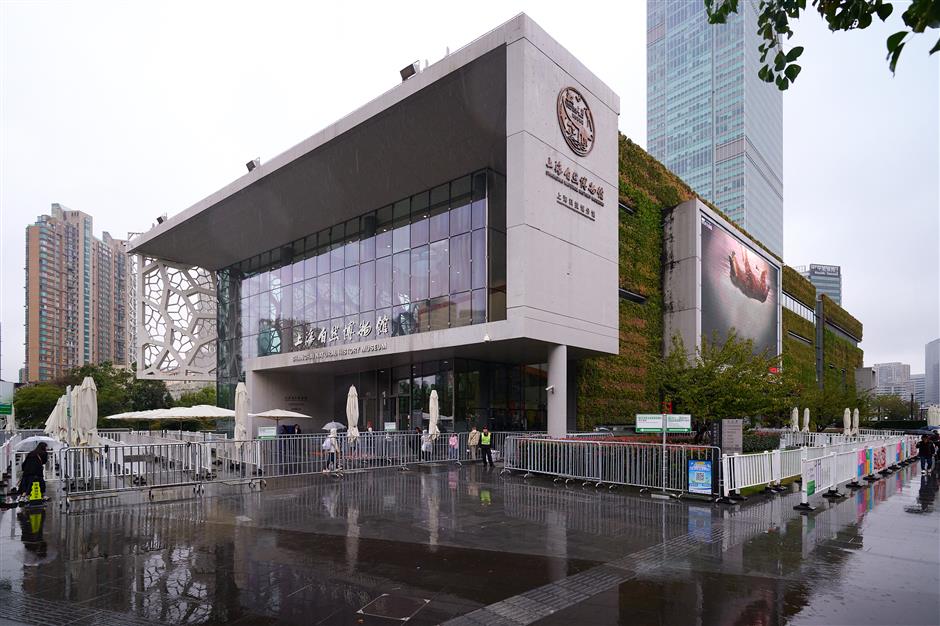
Studying these collections, uncovering their secrets, and sharing them with the public are all part of what London's Natural History Museum hopes to pursue through a new partnership with Shanghai Science and Technology Museum.
Gurr was in Shanghai on Sunday to sign a memorandum of understanding with the institution, which oversees Shanghai Natural History Museum and Shanghai Astronomy Museum. The two sides are exploring cooperation on exhibitions, research, collections care and digitization, aiming to share expertise across what Gurr calls "all aspects of museums' operations."
From Amazon to the museum
Gurr's own background is unusually varied for a museum director. He holds a PhD in computing and spent much of his career in business and technology, running Amazon China from 2014 to 2016 and then Amazon's UK operation. He became director of the Natural History Museum in December 2020, after chairing Britain's Science Museum Group. He also chairs the UK's Competition and Markets Authority.
Gurr lived mostly in Beijing when he worked in China and says he "absolutely adored" it. The best advice he got there: "take a bit of time and go out and have lunch with people."
Business, he says, is highly competitive but in some respects "relatively simple": the objective is usually clear, whether shareholder value or free cash flow. A museum, by contrast, is "balancing so many different things."
"We're a research institute. We're a historic building. We're a public engagement institute."
"You have to bring people with you," he says. It's a skill, he suggests, that business executives don't always develop as readily as museum leaders must.
Taking collaboration further
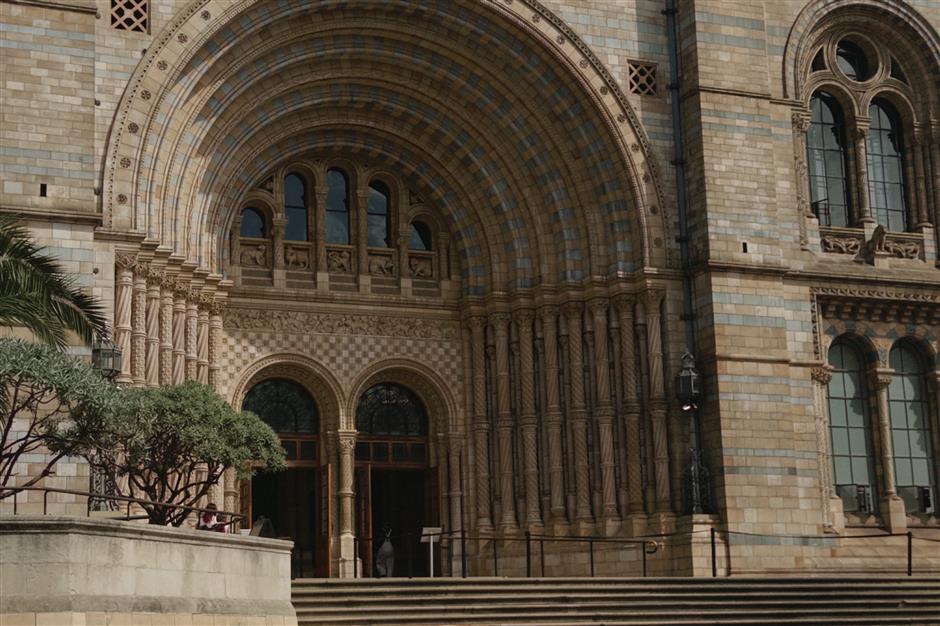
The London museum has collaborated with Chinese institutions for "probably 15 or 20 years," Gurr says, on scientific research and touring exhibitions, but the new agreement offers a chance to go "much, much deeper." The partnership began, he says, when he accompanied the British prime minister on a trip to China earlier this year.
Shortly before the interview, he had been discussing collection digitization with his Shanghai counterparts, including the need for "a common set of global standards" so that "ultimately everybody will benefit." A "slightly more transactional relationship," he says, doesn't necessarily allow for that depth of discussion.
For visitors, Gurr hopes the partnership will lead to "a two-way sharing" of exhibitions, with shows developed in Shanghai traveling to Britain and those created in London coming here. No specific exhibitions or dates have been announced.
Dinosaurs without borders
Dinosaurs are one example of what collaboration can produce, Gurr says. Over the past two or three decades, new scientific techniques and discoveries have set off "an absolute explosion" in what is known about them. Tyrannosaurus and Diplodocus are the famous names in the West, but China has yielded creatures "equally, if not more, remarkable."
Such discoveries draw on different kinds of expertise: scientific techniques shared across borders and Chinese researchers' "enormous understanding of the local environment." Finding fossils requires intimate knowledge of the landscape, Gurr explains. They "don't show up with any technology," so "you need expertise locally to go out there and hunt them."
Bringing ancient worlds to life
Finding them is one thing. Making sense of them for the public is another. At Shanghai Natural History Museum's From Fish to Human exhibition, Gurr was struck by how the team had transformed small fossils into enormous three-dimensional visualizations, giving visitors a sense of what the prehistoric creatures might have looked like. He recommends the exhibition to anyone in Shanghai: "it's amazing."
"Back in the UK, we've tended to be almost so respectful of the actual fossil itself that we just put it there," he says. "We should certainly be taking those ideas back, shamelessly copying as we like to when we see good ideas."
Advocates for the planet
The museum redefined its mission five or six years ago, Gurr says, and now sometimes describes it as creating "advocates for the planet." A family day out is welcome, but the hope is that visitors also leave more aware of nature's fragility: "if people become connected, they're a little bit more likely to want to protect it." The challenges are global, he adds, and the task is "too big a problem for any one institution to try and solve, so it has to be solved through partnerships."
A trip for Dippy?
Asked which specimen he'd personally choose to bring to Shanghai, Gurr picks Dippy, the museum's famous Diplodocus skeleton cast, first unveiled in 1905 and, in his words, "arguably the most famous dinosaur in the world." The plaster replica is also "super, super fragile."
"It's not a promise, unfortunately, because my conservation teams will probably tell me it can't be done."
"But I think if we did bring it here, it would be quite special."
Editor: Fu Rong
In Case You Missed It...
 Nov 23, 2026

Popular Reads

[Shanghai Transit] Shanghai Revises Metro Fares, Shortens Base-fare Distance to 4km

Global Tech Selloff Snares Chinese Stocks Amid Doubts About the AI Boom
Shanghai, Singapore Ink 16 Deals, Advancing Cross-border Finance, Innovation and Cultural Ties