[Hai Streets] A Walk on Fuxing Island, From Shipyard Cranes to a Riverside Garden
Hai Streets is our semi-regular column on Shanghai's great commercial arteries. From Nanjing Road East's blend of heritage storefronts and pop-culture malls to Huaihai Road's luxe lanes and Hongqiao area's international cultural diversity hubs, we explore how Shanghai's commercial hubs drive billions in sales and shape the city's identity – where commerce, culture and history collide in neon, nostalgia and non-stop foot traffic.
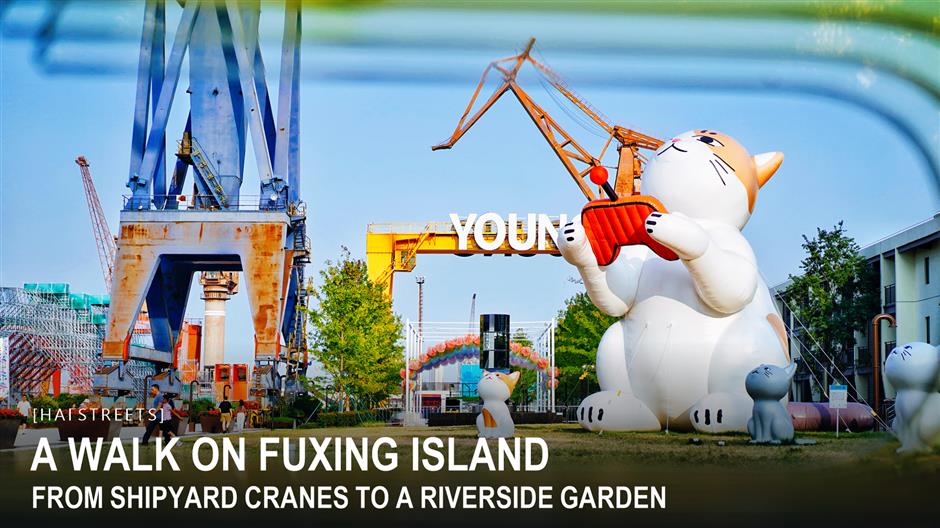
On the Huangpu River's only island, a walk along Gongqing Road takes you past the slipways where ships once launched, a lane where robots learned to deliver coffee and a white clubhouse with a place in Shanghai history.
Take Metro Line 12 to Fuxing Island and come up through Exit 2. You're already on the island.
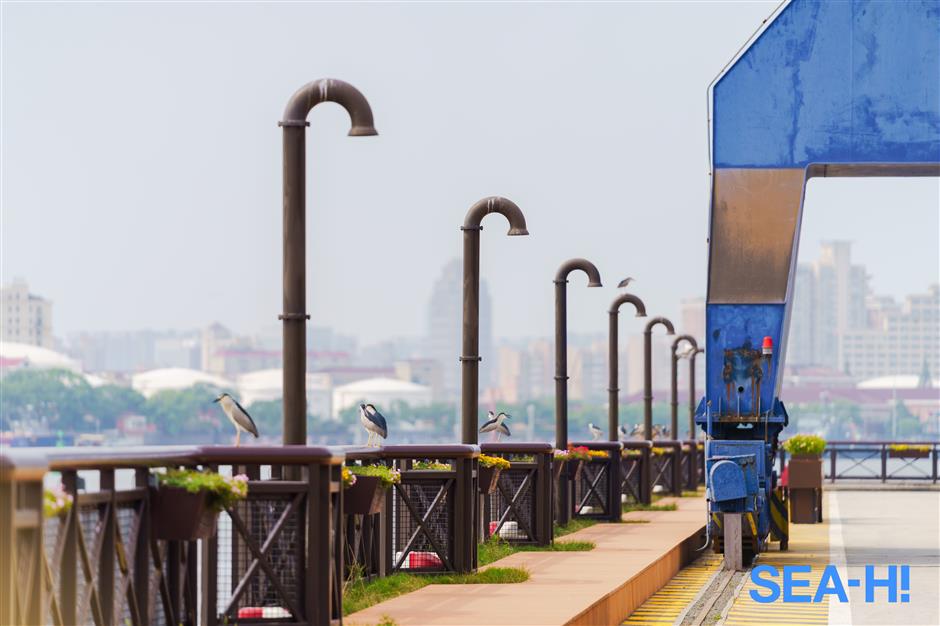
Across Gongqing Road is the entrance to Chuantai Park, where the cranes of the old Zhonghua Shipyard still stand over the water.
Start here, then follow Gongqing Road north to Fuxing Island Park. If the northern waterfront is open that day, bring binoculars for the last stretch.
Start at the slipways: Chuantai Park 船台PARK
Down by the river, look for two broad ramps sloping into the Huangpu River. Ships once slid down those slipways into the water.
The island itself owes its existence to work on the river. Crews dredging the shipping channel used the mud they dug up to build up a shoal. By 1934, it was an island. A fish market opened here two years later, and in 1945 the island took the name Fuxing, meaning "revival."
For decades, people came here to build ships, repair fishing vessels and handle cargoes of timber and fuel. The long workshop beside Gongqing Road gives you a sense of what happened next.
In early 2025, planners invited companies and other organizations to walk through the old buildings and suggest uses for them.
By September, four workshops covering 20,000 square meters had become exhibition and event halls for the Shanghai Urban Space Art Season. The long, narrow workshop by the road became a gallery.
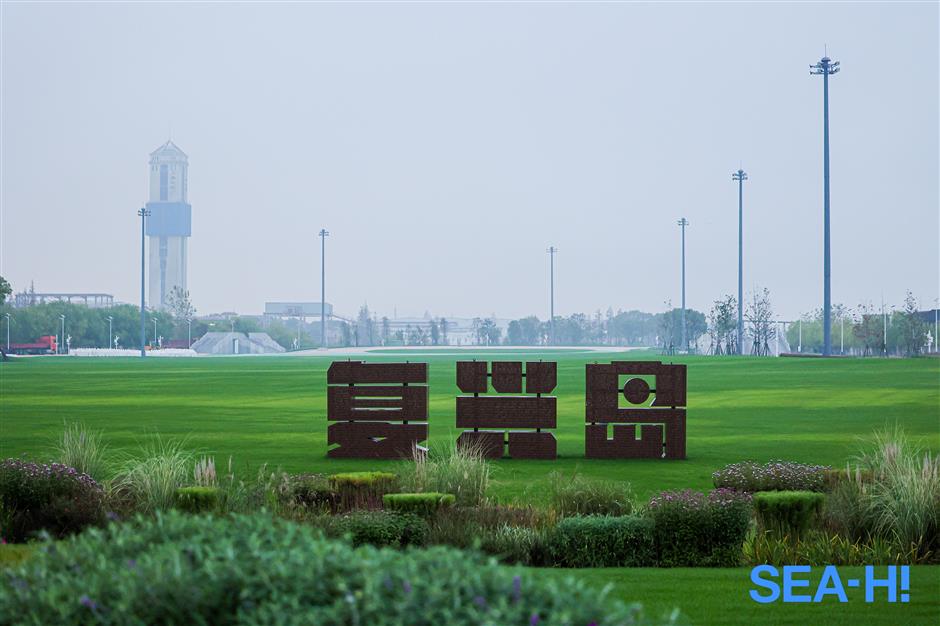
Wang Mingying, deputy director of the public space division at the Shanghai Urban Planning and Design Research Institute, said the broader plan calls for bringing 300,000 square meters of industrial buildings back into use, with room for young entrepreneurs.
Her team kept the first conversions inexpensive so the halls could change as new users arrived. One smaller intervention is particularly handy for walkers. The art installation Hangduo steps take you over the flood wall and give you somewhere to sit and watch the river.
During the art season, one of the cranes acquired an unlikely operator. A giant inflatable calico cat sat on the lawn facing the crane, a remote control in its paws. It stayed long after the exhibition closed, until a gale damaged it and left the lawn empty.
"Where did it go? Is it coming back?" Wang recalled people asking. It now comes back ginger.
If you go:
Site: Chuantai Park
Address: 130 Gongqing Rd 共青路130号
Hours: 10am–7pm Tuesday to Friday and 9am–8pm on weekends and public holidays
Admission: Free

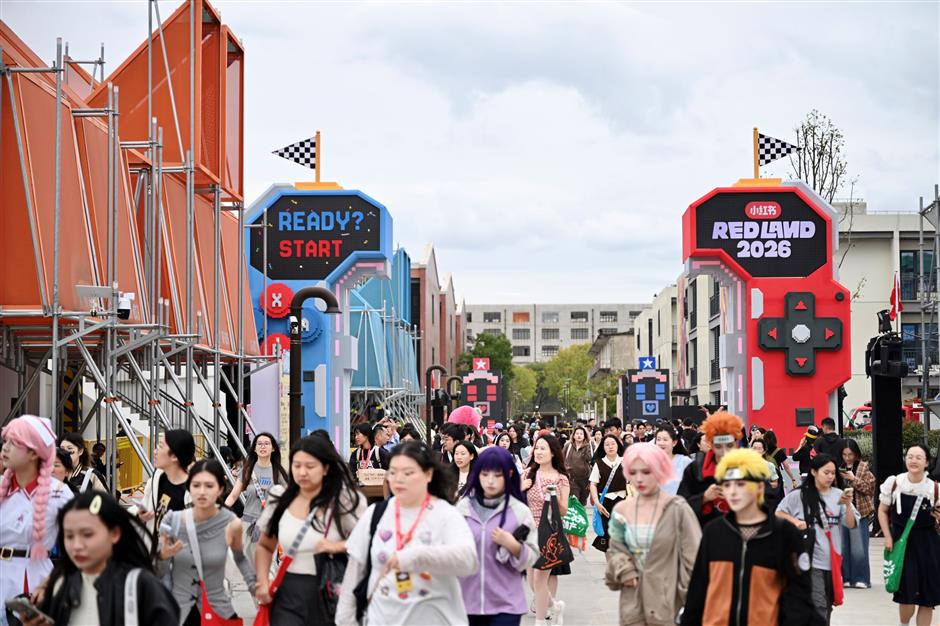
When anime fans took over the yards
The Chinese social platform Xiaohongshu, also known as the Red Note, found a use for those roomy halls. During its RED LAND gaming and anime festival in October, fans rolled homemade floats past the shipyard cranes while spectators lined the parade route with their phones.
In its second year on the island, the festival spread across 150,000 square meters, up from 80,000 the year before.
Liu Shuang, Xiaohongshu's public affairs director, said it drew more than 200,000 visits from October 2 to 6, double the previous year's tally.
Four in five visitors came from outside Shanghai. Some fans called it "a utopia for anime fans" in their online posts, she said.
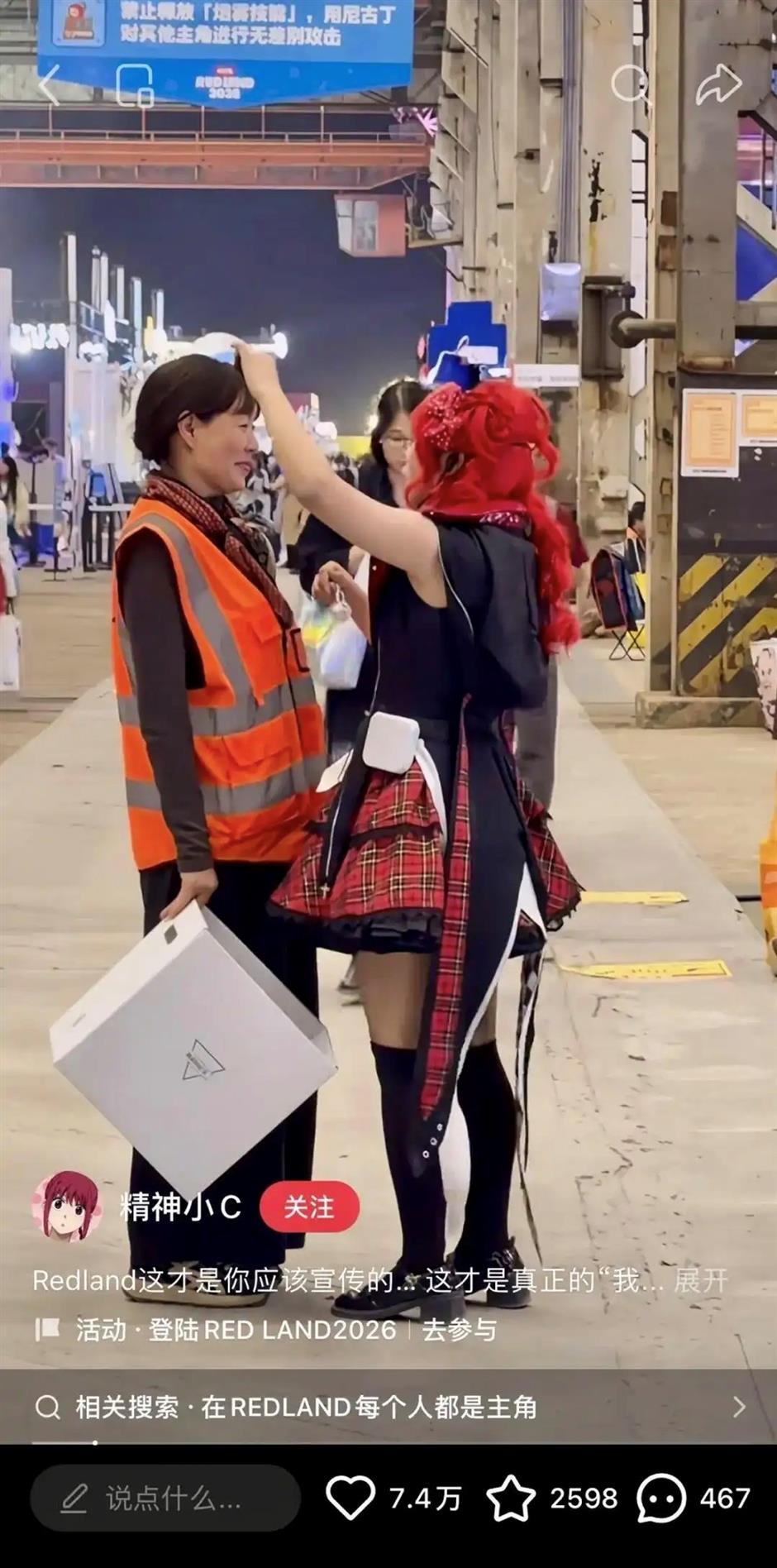
Part of the appeal was who you might meet. Among the people playing island residents was an 18-year-old stylist doing visitors' hair.
Liu recalled a cleaner working beside the booth. The stylist stopped to tidy her fringe, and someone in the crowd caught the moment on camera. The photo later became an online sensation that drew over 100,000 likes on Xiaohongshu.

Follow the orange lane: Yinhe Street E. 银河东街
Between the workshops, look for an orange lane. After a robotics trial in June, crews turned high steps into gentle ramps and filled gaps between the paving stones. A jolt you'd barely feel underfoot could throw a delivery robot off balance.
Getting a coffee to an outdoor table posed another problem. The first robot sent on the errand was a 1.3-meter-tall humanoid.
People had to step aside to let it pass on the pavement, and the robot slowed down each time it steered around a pedestrian. Even that short trip took too long, recalled Du Jing, an instructor on the trial.
For November's eight-day training camp, the team at Qingyixuan Café split the job. A humanoid handled drinks indoors. Outside, a tracked robot less than half a meter tall carried an iced Americano along the marked lane to a table without spilling it.
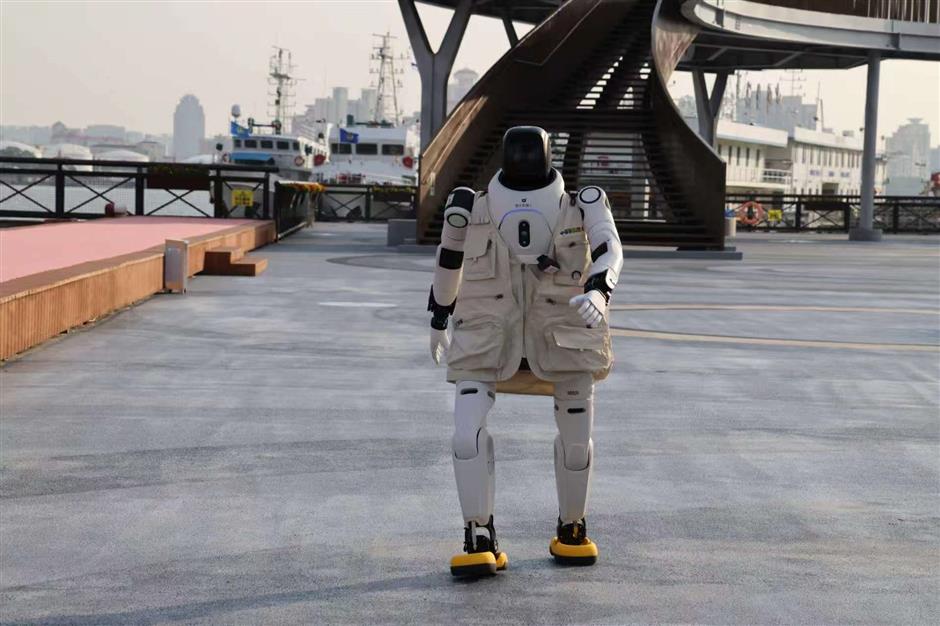
A trainee robot guide in a light-brown vest had a different assignment. It spent its first day learning where to stop between the slipways and the waterfront. The robots were here for the trials. On an ordinary visit, you can still trace the coffee run by following the markings on the ground.
The engineers had some new neighbors that November. Nearly 60 founders and developers from China and overseas joined The Arch, a three-week residency on Fuxing Island.
They paired up to write code and showed projects during Global Entrepreneurship Week. Some encounters were more casual.
On their way past the café or convenience store, participants would stop to talk to developers teaching a robot to carry a drink or pick something off a shelf.
Liu Haifeng of ACE Robotics said his company's four-legged robots had been learning to guide people and patrol the island. His team also developed a system for hotel laundry.
During development, a robot took nearly an hour on its first attempt to load clothes into a washing machine. After the team fed the results back into the system, it did the same job in two minutes, Liu said.
Walk north to Bai Lu: Fuxing Island Park 复兴岛公园
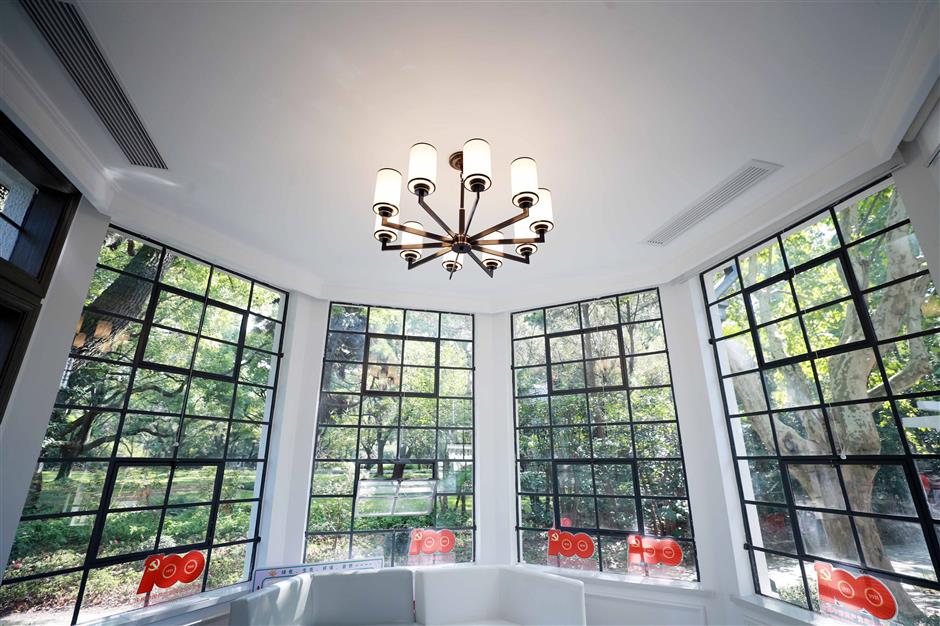
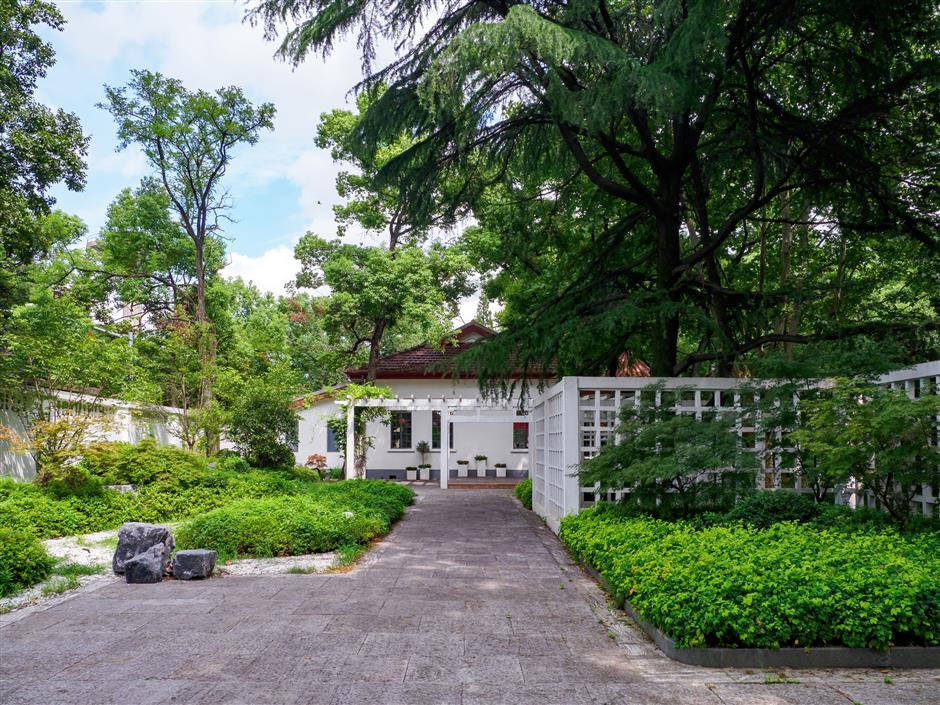
Back on Gongqing Road, head north to No. 386. Beyond the park entrance are cherry trees, wisteria and a camphor tree more than a century old. Among the trees stands Bai Lu, a white clubhouse with an octagonal pavilion.
It once belonged to employees of the river conservancy bureau whose dredging work helped create the island. Inside, you can see the plans used to build the clubhouse itself.
The former clubhouse now serves as the park's community service station, where visitors can see the building's history.
In April 1949, Kuomintang leader Chiang Kai-shek used Bai Lu as a temporary residence. On May 7, he left the island by ship for the Zhoushan archipelago. Two years later, in May 1951, the former staff garden opened to the public.
If you'd like to look inside Bai Lu, get here before 3:30pm. The garden makes a good place to finish the walk before heading back down Gongqing Road to the Metro.
If you go:
Site: Bai Lu (Fuxing Island Community Service Station)
Address: 386 Gongqing Rd 共青路386号
Hours: 9am–3:30pm
Admission: Free

On open days, bring binoculars: Northern waterfront 岛北公共空间
For a longer walk, check access to the northern grounds before leaving the park. Work on this part of the island is continuing, and several stretches of waterfront have yet to open. When the grounds are accessible, continue north on Gongqing Road to No. 486.
The landscape helped decide where the crowds would go. The wide lawn to the south suits large events, while the quieter ground farther north offers room to watch wildlife.
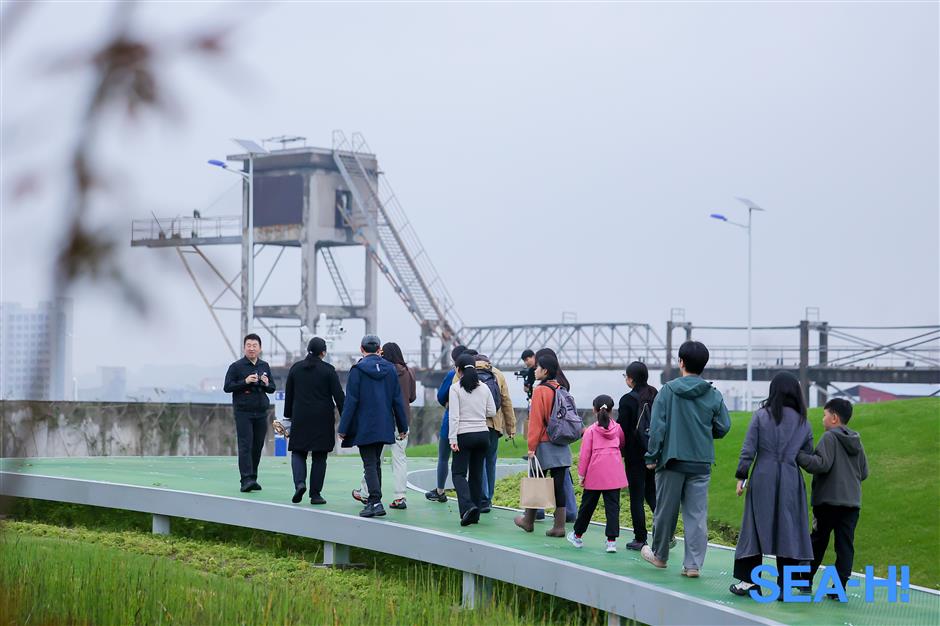
On a rainy November outing, conservationist Yao Wang led a group through Zai Shui Yi Fang, a public plaza beside the Huangpu, and the northern grounds.
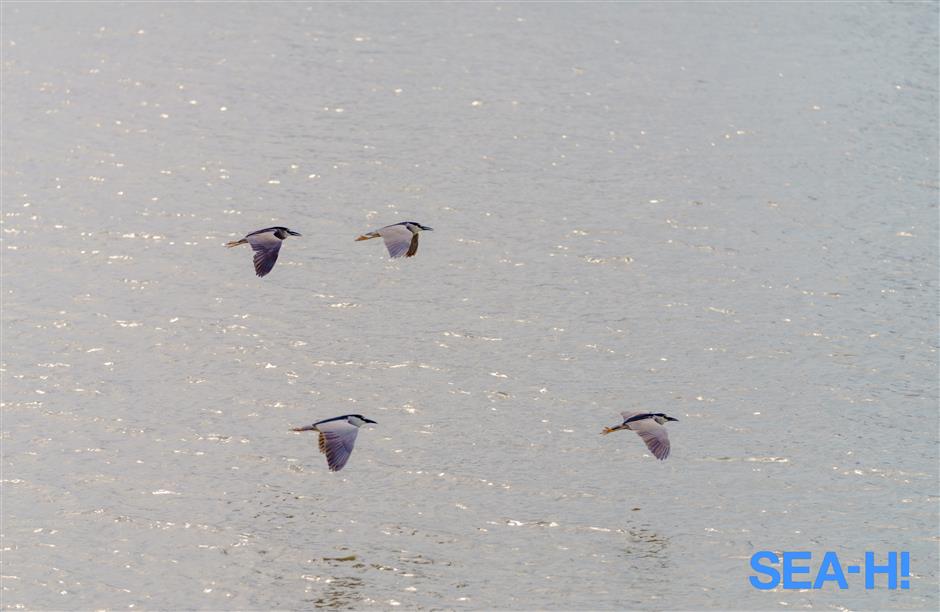
According to the organizers, the walkers raised their binoculars to look for resident birds and others that arrive in late autumn and early winter.
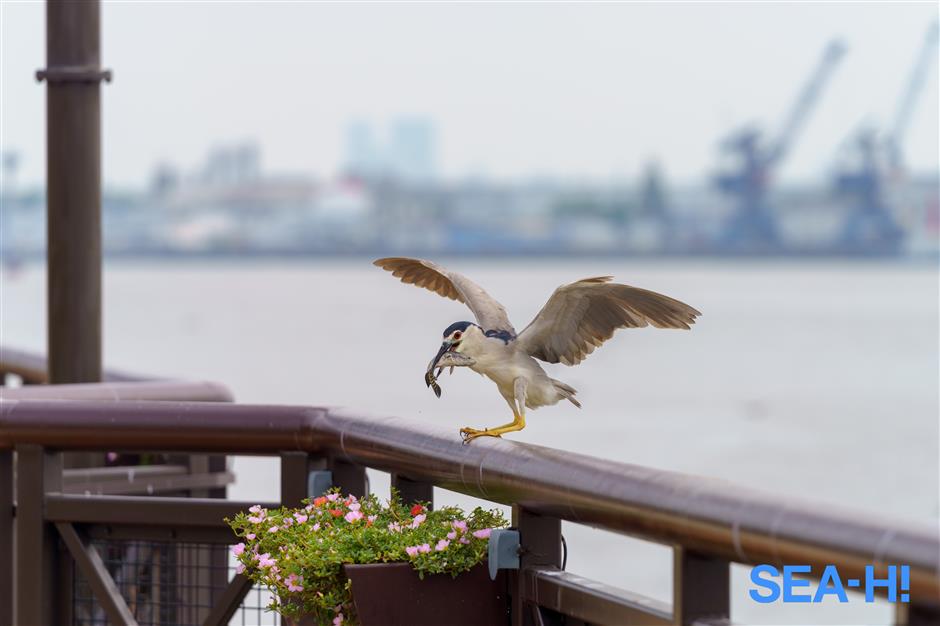
One photograph from the outing suggests where to point yours. A bird spreads its wings on the river rail, with shipyard cranes across the water.
The direct walk back is about 1.4 kilometers, or 15 to 20 minutes, to the Fuxing Island Station.
Editor: Fu Rong
In Case You Missed It...

 Nov 21, 2026



Popular Reads

Global Tech Selloff Snares Chinese Stocks Amid Doubts About the AI Boom

Shanghai, Singapore Ink 16 Deals, Advancing Cross-border Finance, Innovation and Cultural Ties

Viral Beijing Photo Brings Couple Back to Tie the Knot