[Only in SH] The Vanishing Trades of Old Shanghai
Before online shopping, delivery apps and disposable household goods, Shanghai had another kind of convenience.
It came with a shoulder pole, a wooden toolbox, a street call, a small stool, a pair of skillful hands, and sometimes a sudden loud bang that sent children running with their hands over their ears.
In the old lane neighborhoods of Shanghai, everyday life was closely tied to these traveling craftsmen and vendors. They repaired what was broken, refreshed what had grown old, fed children's sweet cravings and helped residents keep a decent appearance. They were not simply service providers. They were part of the daily sounds, smells and memories of the city.
Many of these trades have almost disappeared today. But ask older Shanghainese about them, and a whole street scene may return at once.
![[Only in SH] The Vanishing Trades of Old Shanghai](https://obj.shine.cn/files/2026/07/02/df082e1e-e6ee-44fc-87af-e71642b3db2d_0.jpg)
Palm-Fiber Bed Repairers 修棕绷
Many old Shanghai families once slept on palm-fiber beds, known locally as "Zongbeng."
A Zongbeng was made with a wooden frame and tightly woven palm-fiber cords. It was springy, breathable and practical in Shanghai's humid climate. But after years of use, the bed would begin to sag in the middle. When it became difficult to sleep on, the repairer had to be called.
Repairing a Zongbeng was not a small job. The bed frame was large, and many Shikumen homes had little space indoors. If a family lived upstairs, carrying the frame down was already hard work. The repair usually took place in the lane, with the frame placed across benches while the craftsman and his helper worked on opposite sides, pulling and weaving the cords back into shape.
The familiar street call asked whether anyone had a broken palm-fiber or rattan bed to repair. For families who could not afford to replace things easily, this trade helped make old furniture last for many more years.
![[Only in SH] The Vanishing Trades of Old Shanghai](https://obj.shine.cn/files/2026/07/02/1600ec06-8600-422b-bcc2-63bcf866a9a9_0.jpg)
![[Only in SH] The Vanishing Trades of Old Shanghai](https://obj.shine.cn/files/2026/07/02/8349f2f8-59a6-42cc-873f-4f08857582f6_0.jpg)
Cotton Fluffers 弹棉花
A cotton quilt was once a serious household item.
In old Shanghai, newly made cotton quilts were often part of a daughter's wedding dowry. The number and quality of the quilts could even reflect the family's preparation for the marriage. But after years of use, cotton padding would become hard, flat and less warm. That was when families needed a cotton fluffer.
The work looked simple, but it required real strength. The craftsman used a long bow, a cord and a wooden mallet. As the cord was struck again and again, the cotton slowly became loose and soft. The sound was deep and steady, and when the work was done, an old quilt could feel almost new again.
Today, factory-made bedding has replaced most handmade cotton quilts. The sound of cotton fluffing has largely disappeared from Shanghai's streets, but for many older residents, it still belongs to the memory of winter beds, wedding preparations and careful family living.
![[Only in SH] The Vanishing Trades of Old Shanghai](https://obj.shine.cn/files/2026/07/02/5865217c-1152-4b32-b844-144d5798261b_0.jpg)
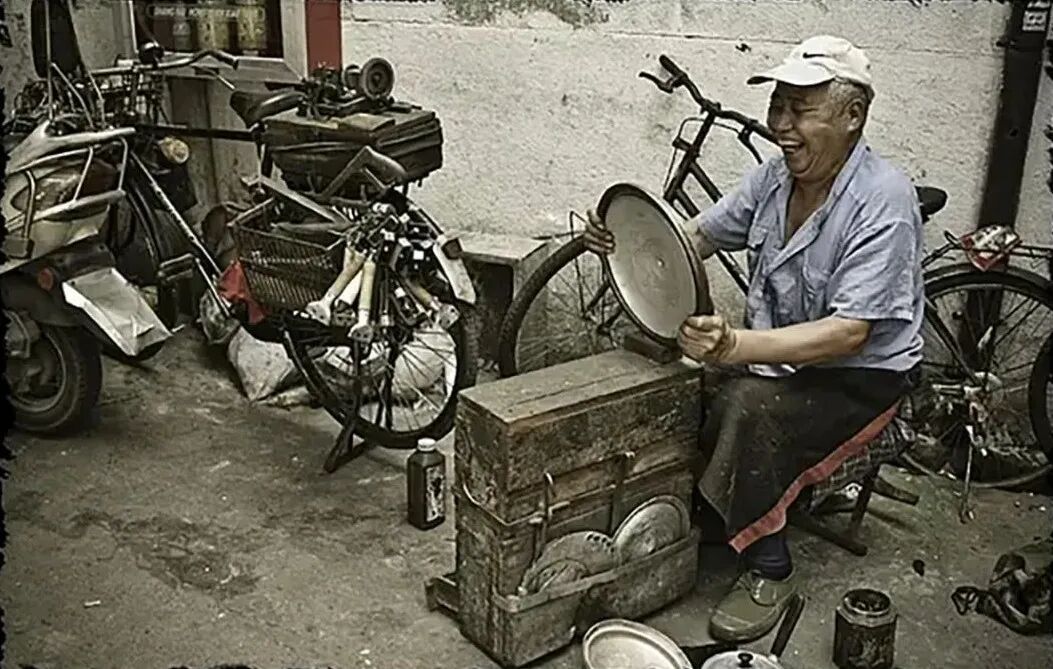
Knife Sharpeners 戗菜刀磨剪刀
"Sharpen scissors, repair kitchen knives."
That call was once one of the most recognizable sounds in Shanghai's lanes.
In the past, people believed in repairing before replacing. If a kitchen knife became blunt or a pair of scissors could no longer cut cleanly, the knife sharpener would bring it back to life.
A typical knife sharpener carried a long bench on his shoulder. Attached to it were sharpening stones, tools, a small hammer, brushes and cloths. When someone brought out a knife or scissors, he would sit astride the bench, wet the stone and begin working.
The scraping sound was sharp and clear. After a few careful passes across coarse and fine stones, the blade would regain its edge. A tool that had seemed useless could return to the kitchen as if it had been given a second life.
Today, knives are cheaper to replace and many homes use modern sharpeners. But the old call still has a way of pulling people back to the lanes of their childhood.
![[Only in SH] The Vanishing Trades of Old Shanghai](https://obj.shine.cn/files/2026/07/02/119cd44f-d7ae-4978-aef9-4d5505da5867_0.png)
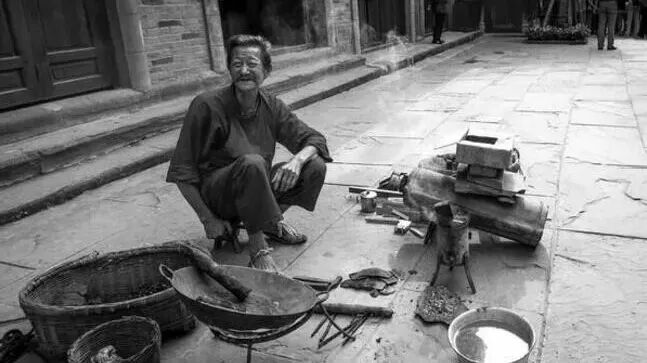
Bowl Menders and Pot Repairers 钉碗补锅
There was an old saying in Chinese: "Without a diamond drill, don't take on porcelain work."
It might come from the craft of mending broken bowls.
Decades ago, a cracked bowl was not always thrown away. If the pieces were still mostly intact, a bowl mender could repair it with tiny metal staples. The craftsman would clean the broken edges, match the pieces carefully, drill small holes along the crack, insert metal clamps and seal the gap. If the bowl could hold water afterward, the job was done.
The work required patience and a very steady hand. A good mender did more than fix an object. He made the crack part of the object's new life.
Pot repairers worked with the same spirit of saving and reusing. A broken iron pot could be patched, filed and smoothed until it was ready for the stove again. In a time when household goods were not casually discarded, these trades reflected a practical way of living: use things fully, repair them carefully, and waste as little as possible.
![[Only in SH] The Vanishing Trades of Old Shanghai](https://obj.shine.cn/files/2026/07/02/b6f1566f-a2f5-4659-9a5a-6a63bc80e185_0.jpg)
Rice Popcorn Makers 爆炒米花
Children in old Shanghai knew the sound before they saw the snack.
A rice popcorn maker would arrive with a shoulder pole. On one side was a black metal popping machine, shaped almost like a small cannon. On the other side were the stove and tools. Families brought rice, corn kernels or dried rice cake slices, then waited as the machine was heated and turned.
The most exciting moment came at the end.
The popcorn maker would warn everyone, and children would cover their ears. Then came a loud bang, followed by a cloud of steam and the warm smell of freshly popped grains.
The snack was simple, sweet and soft, but the experience was half the joy. The waiting, the noise, the scare, the laughter and the smell all belonged together. For many children, the popcorn maker was less like a vendor and more like a street performer who could turn ordinary rice into a small celebration.
![[Only in SH] The Vanishing Trades of Old Shanghai](https://obj.shine.cn/files/2026/07/02/7f7ee65d-bb23-4512-9ac9-a6ad43b9a03a_0.jpg)
Malt Sugar Makers 画糖画
If the popcorn maker brought sound, the malt sugar maker brought color.
Malt sugar vendors often carried small figures made from syrup, or made them on the spot for watching children. Birds, animals and little characters appeared in their hands with surprising speed. Some craftsmen shaped the sugar by hand, while others used a small spoon to "draw" forms onto a surface before fixing them to a bamboo stick.
Children gathered around even when they had no money to buy. Watching was already a pleasure. The sugar was shiny, golden and tempting, but many children were reluctant to eat it right away. It was a sweet, a toy and a little piece of craftsmanship all at once.
Today, malt sugar figures are more often seen at fairs or cultural events. In the past, they were part of the everyday excitement of the lane.
![[Only in SH] The Vanishing Trades of Old Shanghai](https://obj.shine.cn/files/2026/07/02/e14adcad-2495-4f79-b9c3-a3ae5231ab32_0.jpg)
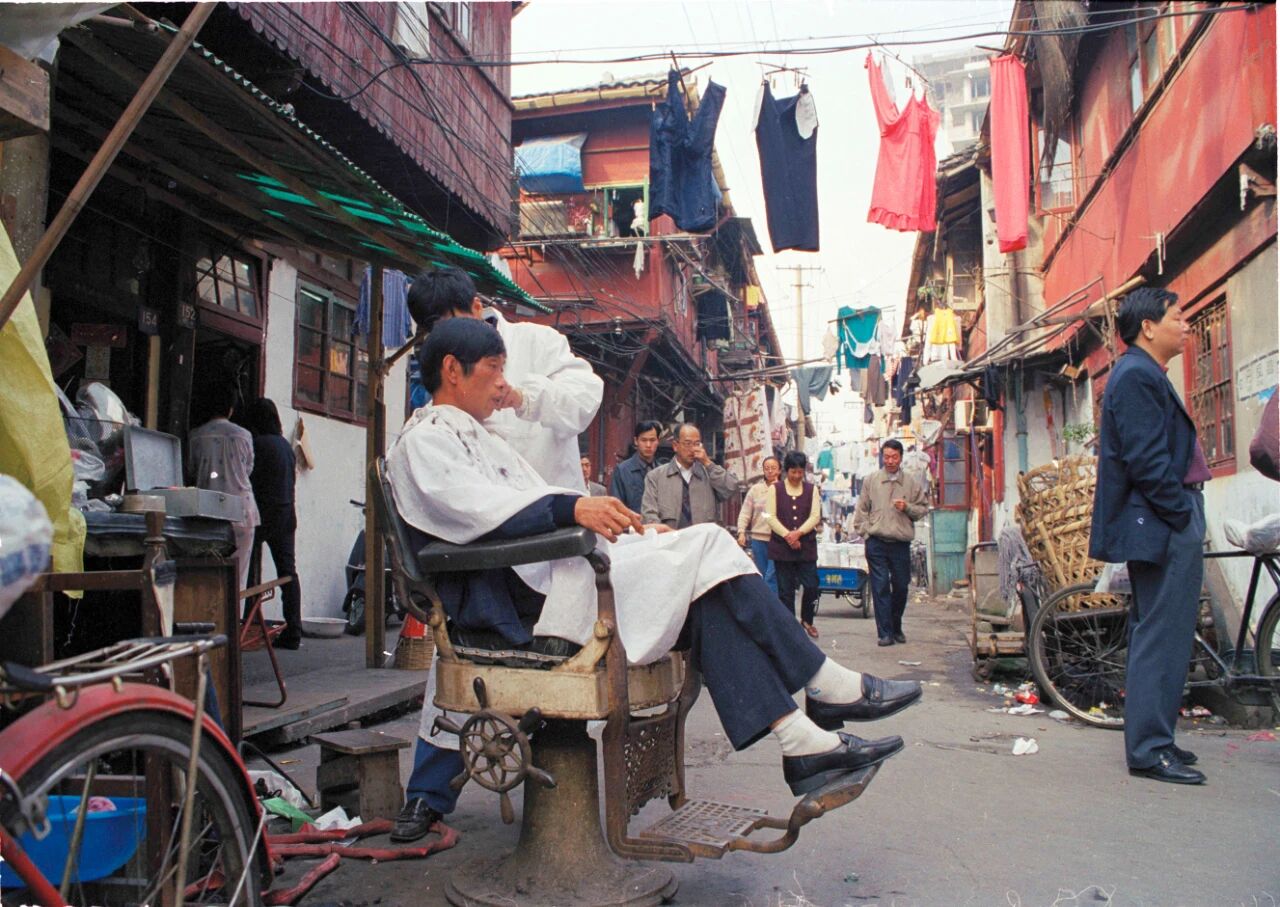
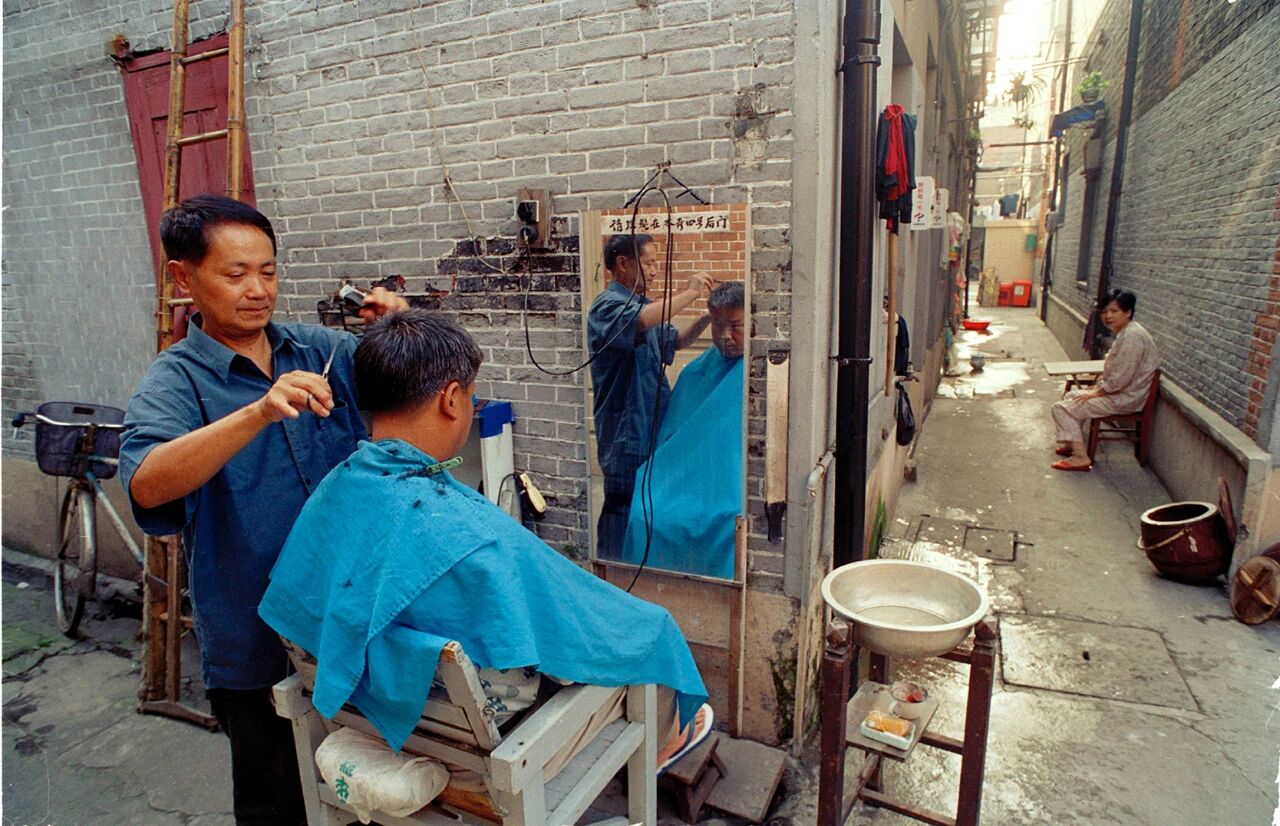
Street Barbers 剃头
Shanghai people traditionally called getting a haircut "Titou."
In old Shanghai, barbers worked in different ways. Some had proper shops, some set up simple street stalls, and some carried tools to customers' homes. The street barber was easy to recognize: a shoulder pole, a stool, a toolbox, razors, scissors, towels, a basin and sometimes a small stove for heating water.
For working people and children, a street haircut was cheap and practical. Popular styles were simple, often very short, because a shorter haircut meant it would last longer before the next visit.
As Shanghai's streets changed and modern hair salons became common, the old barber stalls gradually disappeared. Haircutting also changed from a basic need into a beauty service. But the memory of the lane-side barber remains clear: a stool at the entrance of a lane, a white cloth around the neck, the sound of scissors, and a child being told by his mother to have his hair cut shorter.
![[Only in SH] The Vanishing Trades of Old Shanghai](https://obj.shine.cn/files/2026/07/02/1058688f-d9a4-40dd-bc7a-95dca801bad7_0.jpg)
Women Hairdressers 梳头娘姨
Among old Shanghai's most distinctive trades was the "Shutou Niangyi," a woman who visited homes to dress women's hair.
In the first half of the 20th century, many Shanghai women wore long hair. Unmarried girls often kept braids, while married women wore their hair in buns. Wealthier households and women who cared about appearance needed someone skilled to help with daily hairdressing.
The women hairdressers usually carried a wooden box filled with combs, brushes, hairpins and styling tools. One important item was "Bao Hua Shui (刨花水)," a natural setting liquid made by soaking elm wood shavings. With practiced hands, she could comb, smooth and pin a hairstyle in a short time.
Her work was not only about beauty. She entered homes, heard family news, knew social relationships and sometimes became a quiet messenger between households. In weddings, she also played an important role in preparing the bride, including the traditional face-threading process before marriage.
By the 1950s and after, as more women joined the workforce and short hair became common, the need for home hairdressers declined quickly. By the 1980s, the trade had largely vanished. What remains is a glimpse of old Shanghai women's daily elegance and the private world behind lane-house doors.
![[Only in SH] The Vanishing Trades of Old Shanghai](https://obj.shine.cn/files/2026/07/02/57e66216-bcfe-4900-90a5-12b904751618_0.jpg)
Small Trades, Big Memories
These old trades may seem far away now.
A broken bowl is usually thrown away. A sagging bed is replaced. Quilts come from factories. Haircuts happen in salons. Popcorn comes in bags. Most people no longer wait in a lane for a craftsman's call.
But these trades tell us something important about old Shanghai.
It was a city that knew how to repair, reuse and make do. It was also a city where service happened face to face, in the lane, at the doorway, under the eyes of neighbors and children. Every trade came with its own sound: the twang of cotton fluffing, the scrape of a sharpening stone, the crack of popcorn, the call of a vendor, the snip of scissors.
They were small jobs, but they helped hold daily life together.
And in the memory of old Shanghai, they have not fully disappeared.
Editor: Fu Rong
In Case You Missed It...

 Sep 19, 2026

![[See & Be Seen] Spot Your Friends @ The BritCham/NZ Weekend BBQ](https://obj.shine.cn/files/2026/09/15/214ad5f7-5692-499d-9bd4-478e60c2c833_0.jpg)