The Chill in China's Domestic Car Sales May Start to Warm Up
With new technologies installed and new car models landing in the market in rapid succession, 4S shops that integrate automobile sales, maintenance, spare parts and information services have been busier than usual this year, especially in February.
Leading the charge, BYD's 4S shops are now fielding more inquiries following the release of the new "flash charging system" that is free for a year. BYD says the system can deliver up to 1,500 kilowatts of charging power, making it possible to charge a Blade battery from 10 percent to 70 percent in just five minutes.
"The charging covers three models, the Song Ultra that will be released on March 26, and the Han L EV and Tang L EV," said Liu Yao, a BYD salesperson in Shanghai. "Many customers have locked in orders. The market feels much warmer than last month."
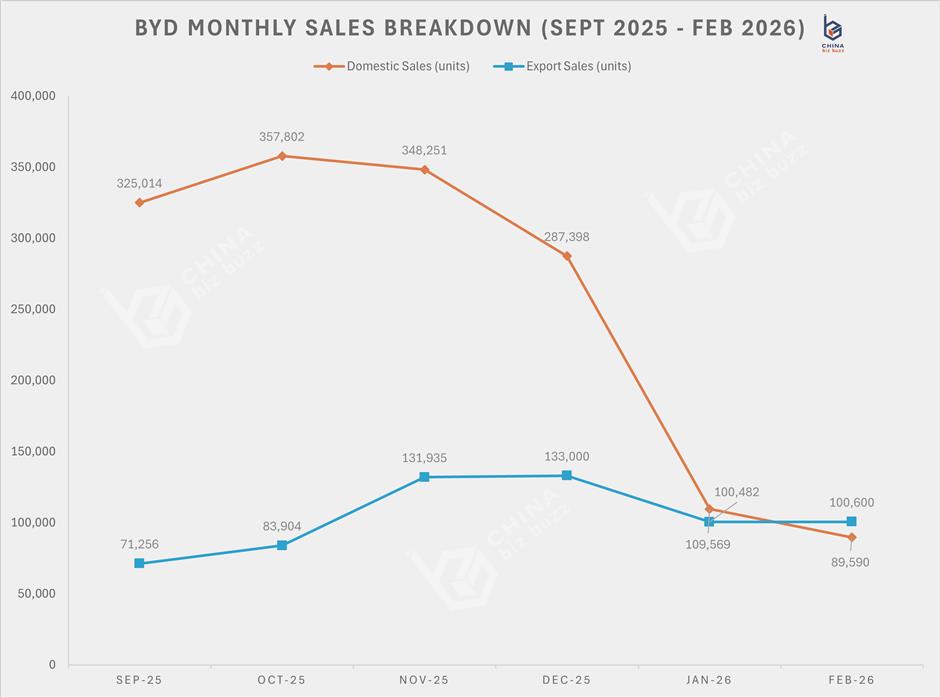
BYD said global sales in February fell to 190,190 vehicles, with domestic deliveries dropping to about 89,600 units – a record low for the company in recent years. By contrast, rival Geely said it sold 206,160 vehicles worldwide in the month to take top spot, buoyed by strong exports.
For carmakers, the domestic market is the most troublesome. According to the China Association of Automobile Manufacturers, mainland automobile sales in February reached about 1.8 million, a 15 percent decline from a year earlier and a 23 percent drop from January.
"With this year's extended Spring Festival holiday falling in mid-February, the month saw only 16 effective working days," said Chen Shihua, deputy secretary general of the association. "This disrupted corporate operations and drove down overall market activity."
Chen also noted the 50 percent decrease in the government tax exemption on purchases of new energy vehicles as a factor in sagging sales.
"In addition, the standards for automobile trade-in subsidies underwent a major adjustment this year," he said. "They shifted from a fixed-sum subsidy in 2025 to one calculated as a percentage of the new vehicle's purchase price this year."
March may be a turning point.
Last week BYD unveil its second-generation Blade battery and accompanying flash-charging technology, aimed at widening its competitive moat in energy density and charging efficiency.
"The battery matches the speed of refueling a petrol car," said Wang Chuanfu, chairman of BYD. "This marks the fastest charging speed for mass-production vehicles globally."
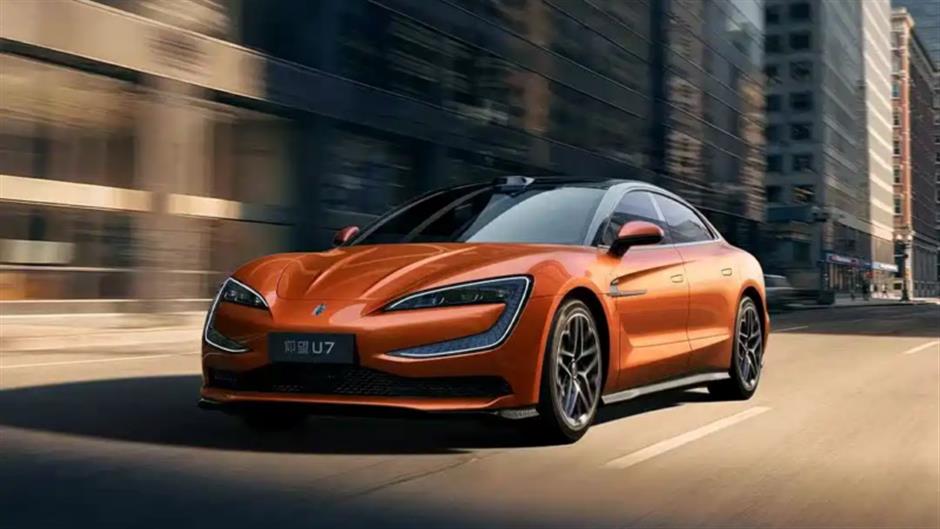
This technology update is expected to be roll into higher profits soon. The company's Yangwang U7, released along with the Blade, is the first model to feature an ultra-long driving range of 1,006 kilometers. That model, alongside the Ultra, is expected to give BYD revenue a boost this month.
The company's shares in Hong Kong have risen about 8 percent this week.
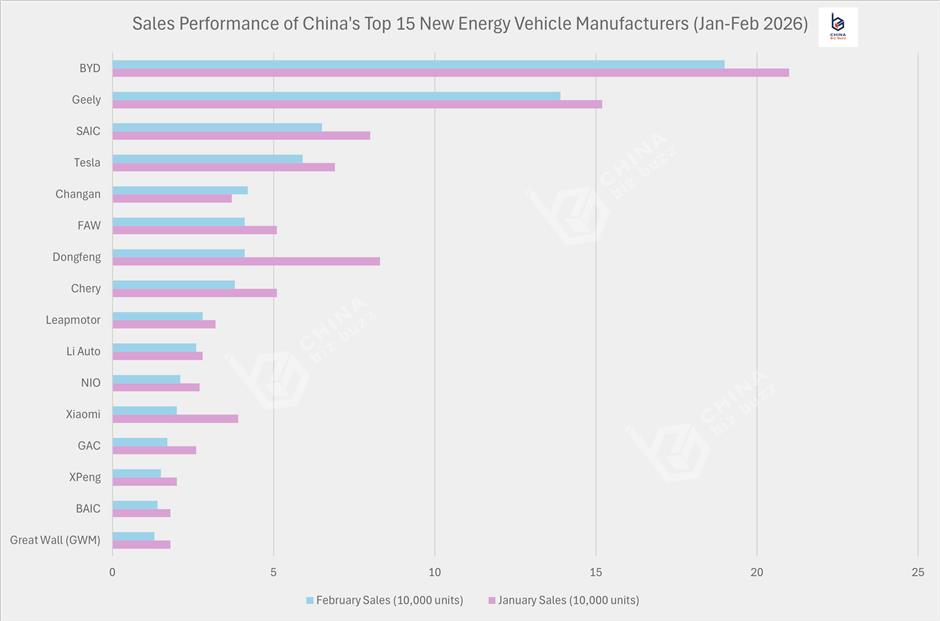
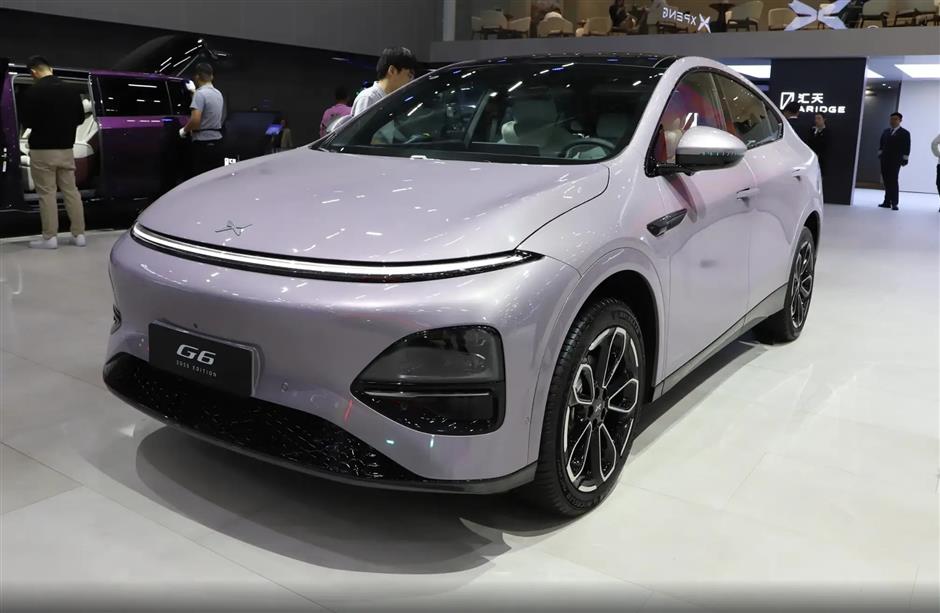
One brand desperately seeking to break through the domestic sales slump is XPeng Motors, which found itself near the bottom of domestic rankings in February for the third consecutive month, with sales plunging 50 percent from a year earlier and 24 percent from January to about 15,250 vehicles. At the same time, rivals Leapmotor, Li Auto, and Nio had reported deliveries of about 20,000 units each,
XPeng is preparing to launch a dual strategy of pure electric and extended range models, including the 2026 P7+, G6, G9 and G7 Super Extended Range. It's also trying to accelerating its global footprint, with the G6 due in UK markets this month and overseas shipments of the P7+ expanding.
"We aim for XPeng to become the world's first company to achieve mass production in AI-driven robots, flying cars and robotaxis this year," company President He Xiaopeng said in a letter to employees last month.
The company's shares in Hong Kong have surged 19 percent this week.
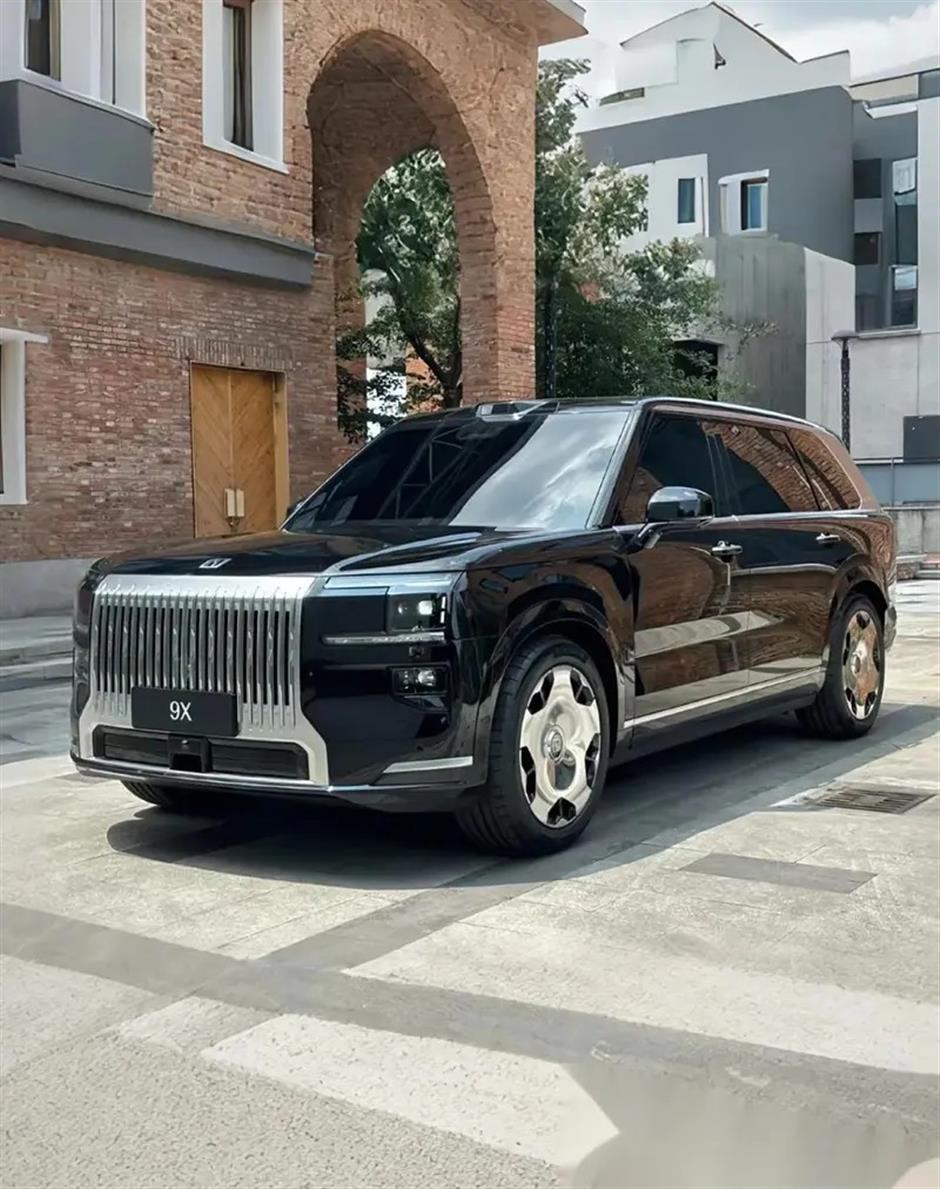
A big winner in February's domestic auto sales was Geely, or more specifically, its premium Zeekr brand. Deliveries of Zeekr models eked out a 0.1 percent rise from a month earlier to 23,867 units. Momentum was largely driven by the Zeekr 9X, a market leader in the segment priced above 500,000 yuan (US$72,820).
The Zeekr 9X has redefined consumer expectations for domestic luxury SUVs, maintaining an average transaction price exceeding 530,000 yuan. Industry data indicate that over 80 percent of the model's buyers were previous owners of traditional luxury brands such as Mercedes-Benz, BMW and Audi.
Meanwhile, exports of China-made new energy vehicles remain resilient despite a 6.6 percent drop in February from January to 282,000 units. However, the shipments were more than double a year earlier.
Companies like Chery Automobile and Geely Auto delivered standout export performances. Chery's exports totaled 243,000 units over January and February, a 46 percent rise. Geely's jumped 150 percent from a year earlier to 156,000.
However, the export market is not without its pressures. Chen said the war in the Middle East, a major market for Chinese carmakers, has introduced marketing uncertainty.
"In 2025, the volume of Chinese auto exports to the Middle East was substantial, with Iran ranking as the third-largest destination," he said. "Exports are now stalling."
Editor: Yao Minji
In Case You Missed It...

 Mar 13, 2026
![[Big News] SH Just Made Medical History w/Brain-Chip Interface](https://obj.shine.cn/files/2026/03/13/9df3ad1e-ab0c-42f3-9611-7db7cc2fd591_0.jpg)