When Shanghai Stopped Being a Spectacle and Became a Life: A German Visitor's Viewpoint
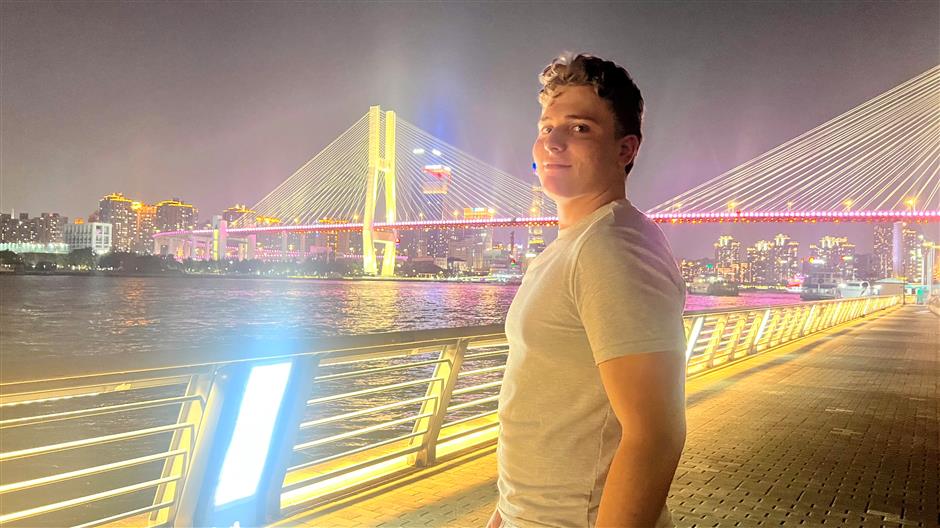
The first thing I remember about Shanghai is a taxi ride that would not end.
It was early July 2019. I had just turned 16, and I was traveling alone for the first time. I was on my way from the airport to a host family in Songjiang (District), an hour and a half outside the city center. I had come for a language course near People's Square: six weeks of Chinese as preparation for a school year I planned to spend at a local Shanghai high school. Not an international school. I wanted the real thing.
I could not take my eyes off the window. Buildings rose on both sides of the expressway, higher than anything I had seen in Europe, where a city might have one or two towers like that. Here there were hundreds, and the strange thing was that they all looked the same: endless identical residential towers, as far as I could see, in every direction.
At some point I thought: This must be the center. It was not even close. The Bund, the Oriental Pearl Tower, the Shanghai World Financial Center, the lights: all of that came later, piece by piece, and each time I thought the city could not get any bigger, it did.
A European brain has no category for this. It was the first time I understood that the center of the world is not necessarily where you grew up thinking it was. Something in my picture of the world moved that day, and it never quite moved back.
2019: A city that does not stop
That summer everything was new. My commute alone was an education: a car or a Didi to the nearest Metro, a change at Hongqiao, then on to People's Square. Ninety minutes each way, in a Metro so full that you did not so much board it as get pressed into it. I come from Berlin, which by European standards is a large city. Shanghai made it feel like a small town.
It was not only the big things that struck me. It was the small, apparently everyday things that were so completely different from home, like the bamboo scaffolding on a building next to my school, wrapped from top to bottom in bamboo poles, and it worked. Or the speed with which things got done: In Berlin a roadworks site lasts three months and you never see a worker; in Shanghai something was planned and then simply happened, whether it was a road repair or an entire event village that a football club built in a few days. The wealth on the streets: a Rolls-Royce, a Maybach or a Ferrari on every corner, it seemed. And the safety. I have never felt so safe in any city, at any hour, in any neighbourhood.
But what I admired most was the energy of the people. Early in the morning the parks were full of people exercising; in the evening, near People's Square, groups danced, sang, did karaoke. Older people, mostly, out in the open, taking part in the life of the city. And all of this in the middle of skyscrapers and lights that a European had never seen. That contrast, the singing and dancing between the towers, told me more about Shanghai than any skyline.
The other contrast was the one you had to look for. Down side streets, behind the high-tech, were the restaurants with plastic stools and plastic tablecloths, the lilong (lanes) that felt like small worlds of their own, the traditional gardens where you could suddenly breathe again. And the hidden places: a fifth-floor room in an ordinary office building, no windows, 80 people eating dinner, invisible from the street. In Shanghai you never know what is behind a door. Exploring the city felt like a treasure hunt without a map, and I kept stumbling over treasure.
Shanghai reminded me of Berlin in one way: Both are cities made of many smaller cities that grew together, each with its own center. You can never see all of them. That is part of the appeal.
In 2019 cash was still normal, in Shanghai and in Europe. I had set up WeChat Pay but hardly used it; my Visa worked, my Mastercard usually did not. Communication ran on broken English, broken Chinese, Google Translate on a phone screen, and hands. It worked, most of the time.
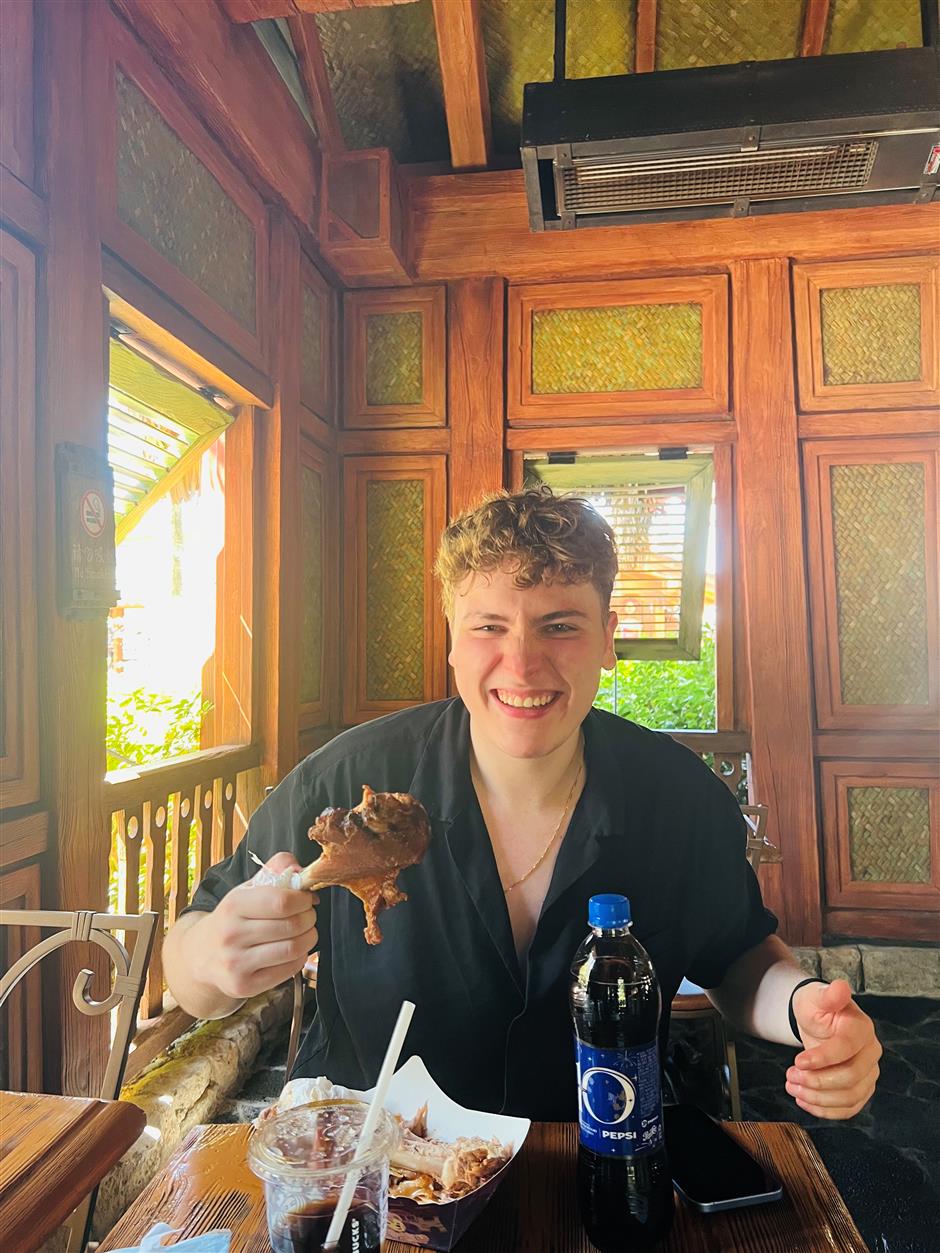
One thing I noticed about myself: As a blond, blue-eyed 16-year-old, I was an attraction before I was a person. People were curious, warm, generous. But the curiosity was about what I was, not who. I never held it against anyone; I was just as curious about them. But it was one of the reasons I wanted to stay, go to a local school and meet Shanghai as a person, not a visitor.
When I left, I could hold a basic conversation in Chinese and I was certain of two things: I would be back within months, and the city could not possibly change much more. In terms of buildings, it looked finished. Maxed out. What more could anyone build?
I was wrong on both counts.
The phone call and the pause
Everything for my school year was arranged and paid for. Two weeks before my flight, in early 2020, I got a call: The departure was postponed. Just two weeks, they said.
Those two weeks became four years.
When I finally came back, in the summer of 2023, I was 20 and the visit was mostly for work: factories, suppliers, a look at Tongji University, where I was considering a degree. The flight from Berlin to Beijing was nearly empty; I took the train on to Shanghai. Two weeks in the city, then on to Ningbo and elsewhere.
The strangest thing was how little had changed. The skyline was exactly as I had left it. No new towers, no scaffolding, not a single bamboo pole. It felt as if someone had put the city down in 2019 and only now picked it up again. One difference I did notice: The air was a bit better, and for the first time I could see the sky over the city.
The people, too, were finding their way back. The parks and the nightlife were just beginning to fill up again. The Metro had room to breathe. The supercars had grown rarer. The city's famous energy was there, but quieter, more inward: a city catching its breath rather than sprinting.
And yet, in the middle of that pause, Shanghai had quietly leapt ahead in the things that matter day to day. Cash was gone. I set up Alipay and WeChat Pay because there was no alternative, and suddenly everything, from taxis and food to maps and ordering, ran through one app.
Taking a taxi as a foreigner, which in 2019 could still mean an "adjusted" price on a Thursday afternoon, had become transparent and fair; Didi had settled that for good. The streets had changed too: Teslas everywhere, and next to them Chinese electric cars that I had never heard of and that looked better than anything I expected. BYD, which in 2019 I had associated with plain taxis, was now sleek. The petrol cars were still in the majority, but the direction was obvious.
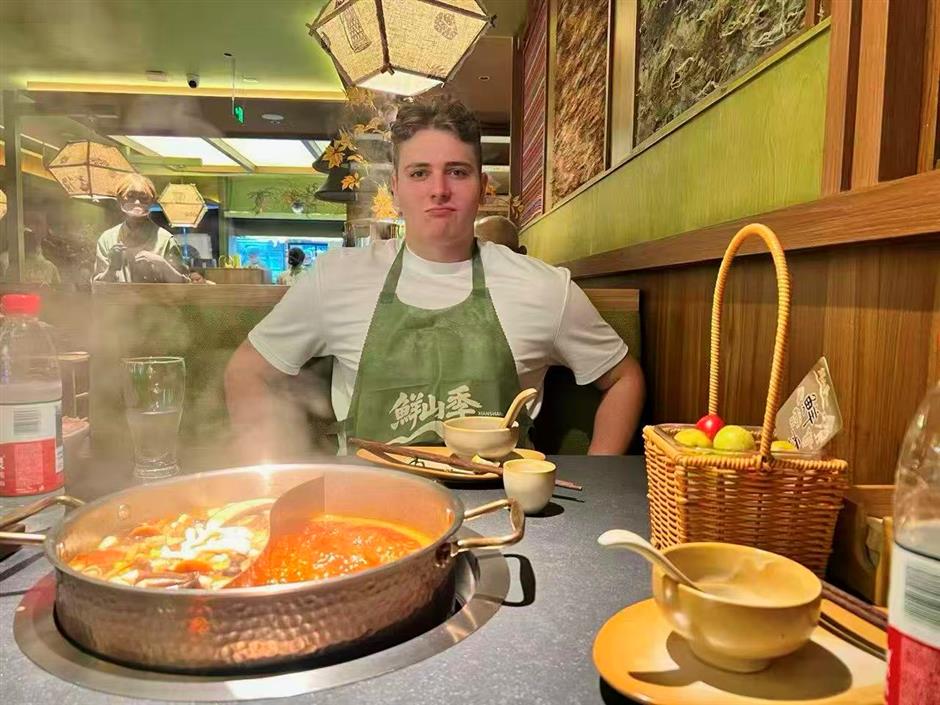
And I was noticed less. People still looked, but the curiosity of 2019 had given way to something calmer. When I asked someone for help, they were often startled, because they had not expected a foreigner to speak to them, and then genuinely pleased.
The real reason I came, though, was my host family. Four years after that summer, I spent a few days with them in Songjiang before moving to a hotel in Lujiazui for work. We played Chinese chess, ate well, talked about what had changed. Some things had not changed at all.
2026: The world comes to Shanghai
This summer I stayed nearly six weeks, and Shanghai was my base: in the city during the week, other cities on weekends. My host family gave me an apartment in Pudong, 27th floor, with the towers filling the window. I had assumed in 2019 that you could not live calmly in the middle of this city. From up there, hearing the city without being in it, I found the opposite. Shanghai gives you a retreat if you look for one.
The skyline still stands where it stood in 2019. That surprised me again, and I have come to read it differently: the city that once built as if there was no tomorrow has grown up. It is no longer trying to impress. Here and there a residential block looks a little tired, and in the neighbourhoods away from the center some of the small shops in the ground floors have closed. But the charm is intact, and so is the energy; it has simply changed shape.
Because the biggest change is not in the buildings. It is in who walks between them. Shanghai in 2026 is international in a way I would not have predicted even from 2019. Among young people in Europe there is a genuine China moment: Many in my generation dream of coming here, and many actually do. Friends of mine from school in Berlin are now doing their master's at Tongji. The expat community is large and varied, with many newcomers from Russia and Latin America; at Disneyland, where my host mother took me (I had wanted to go since I was 16), I heard a surprising amount of Spanish.
The consequence is that I am no longer an attraction. Foreigners are part of the street scene now; nobody stares. Far more people speak English than in most other Chinese cities: young people above all, and most people I dealt with, though rarely the very old. I suspect that some of those who do not answer in English are simply too shy to try. Where words fail, real-time AI translation now does in seconds what Google Translate and hand gestures did in minutes in 2019. It is easier than ever to arrive here, and easier than ever to be simply a person. That was what I had wished for at 16. It came, just not the way I imagined.
Daily life has a smoothness I miss in Berlin. Ordering something means it arrives within the hour, brought by a courier who is visibly sprinting. In every hotel a robot rolls to the lift, presses the button, rides up with you and delivers to the door; people told me this is normal now, and I laughed every time. The streets are full of Chinese electric cars, quiet and well designed, and the pavements are lined, sometimes buried, with parked electric scooters and shared bikes, in numbers I could not begin to count. Safety is as absolute as it was in 2019. Efficiency is everywhere, and behind it a kind of service culture that simply expects things to work.
And the sky I had missed in 2019 is back. This summer the air was clearer, the skyline sharp, and there were birds. It is a small thing, and it is not.
Something else was new this time: Shanghai stopped being a spectacle and became a life. Gym in the morning with friends, work, dinner, sometimes a bar. Ordinary things, and that was exactly the point. What I discovered is that the city is not only exciting as an exception, on a trip; it is smooth and pleasant as an everyday, too.
In 2019 the city overwhelmed me; in 2026 it let me settle in, and it was still never dull, because there is always something to do and always something left to discover. That, I think, is why people of my generation come and stay: Shanghai is exciting, it is a gateway to the rest of China, it offers opportunity, and yet it is international enough that you can arrive gently and learn the culture at your own pace.
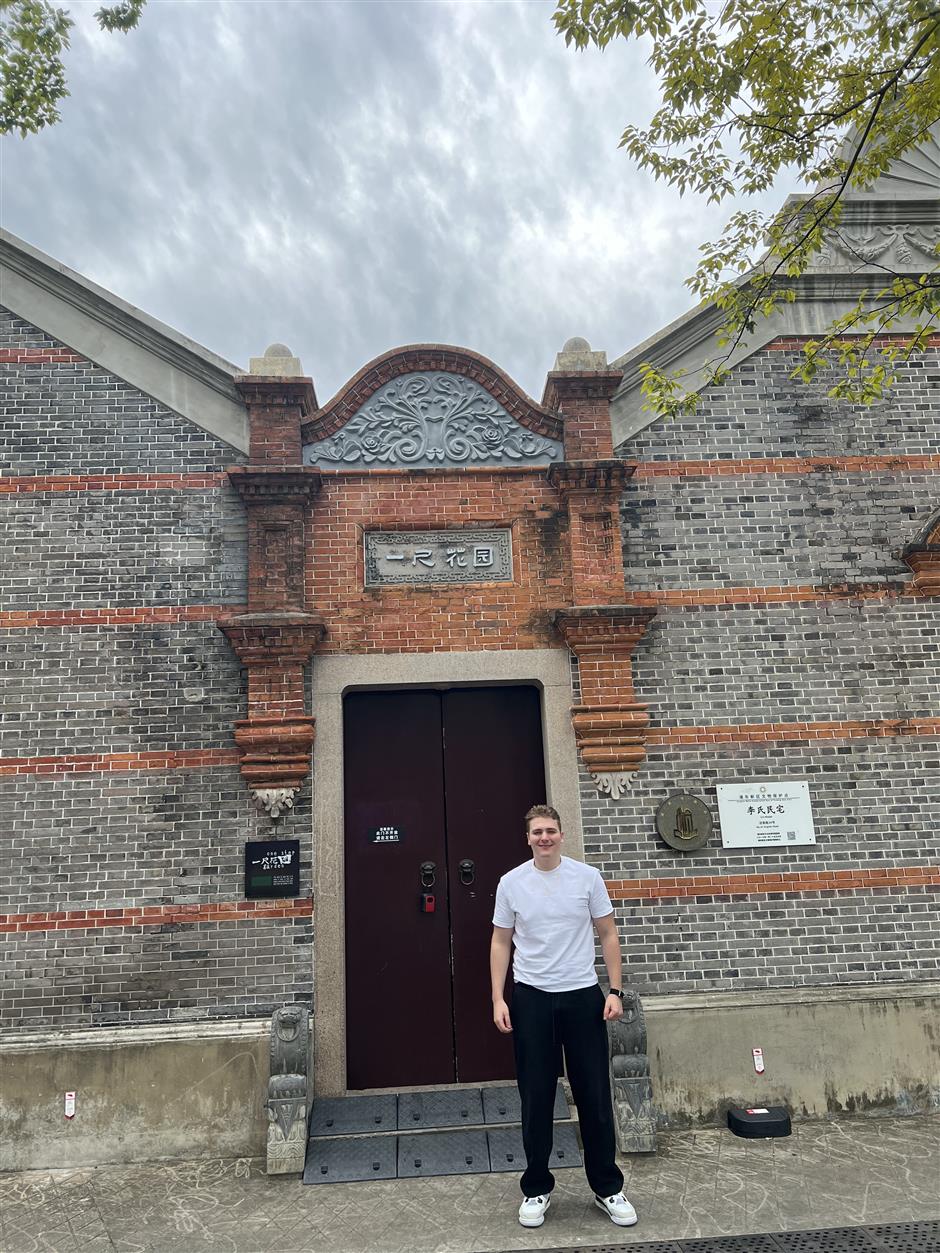
The most memorable moments, though, were the quiet ones with my host family. My host mother walked me through the old shikumen (stone-gate) houses, which looked exactly as I had imagined old Shanghai should look. When I mentioned I was curious about the city's old churches, she took me to one and, without telling me, to a service, entirely in Chinese. I sat there listening to a language I had first tried to learn seven years earlier, and thought how far the whole story had come. My host father and I went to the same Japanese barbecue place again and again and just talked. Seven years, three visits, and a family that visited me in Berlin in between: that is the Shanghai I keep coming back to.
What actually changed
If I am honest, the city has changed less than I have. The buildings are the same; the boy who could not look away from the taxi window is not. What has changed in Shanghai is more subtle: It has stopped trying to impress and started simply working. It has become a place where the world shows up, settles in and is no longer remarkable for doing so.
In 2019 I thought I was looking at a finished city. Now I think I was looking at a city that had finished one chapter. I am still not sure what the next one is, and that is exactly why I will be back.
(The author, 23, is from Berlin. He likes the city of Shanghai and is a frequent visitor.)
Editor: Liu Qi
In Case You Missed It...
 Oct 1, 2026