Climate Crisis in a Rice Bowl: The Quest for a Resilient Crop
As unpredictable rains and heatwaves reshape agricultural landscapes, farmers race against time to adapt. Can this Shanghai-born rice help, and is it enough?
At the mercy of nature
Pan Wei just wrapped up a brutal harvest season. In Lixin County, Anhui Province – where he farms – rain hit in early September and lingered until late October, delaying the rice harvest (originally set for early October) by roughly 20 days.
The continuous rain stretched the rice's growing period. Once ripe, the crop couldn't be picked due to soggy conditions; heavy grains bent stalks, causing widespread lodging that left harvesters unable to collect all the rice.
"The best rice fell first," Pan told Shanghai Daily.
In the end, his yield dropped about 20 percent to 500-600 kilograms per mu (0.067 hectares) – still respectable given this year's extreme weather. July and August, usually rainy, were scorching and dry, while September and October, typically arid, saw relentless downpours.
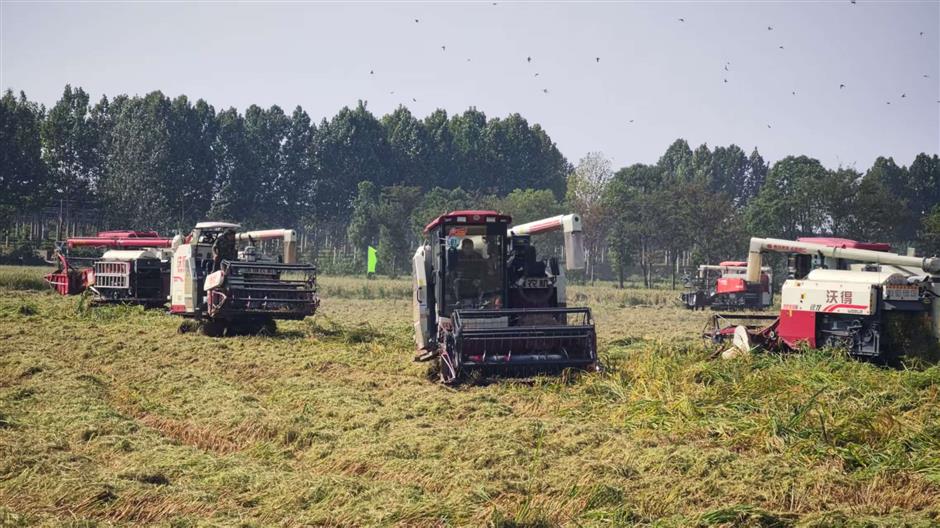
Pan learned that several local rice farmers' yields were 20 to 50 percent lower than his own. One grower had hundreds of mu of rice that still hadn't matured by early November, due to the unusual weather conditions. With temperatures plummeting, there was a risk the crop wouldn't fully ripen by year's end. The delay also disrupted winter wheat planting – a key local crop that usually follows rice by late October.
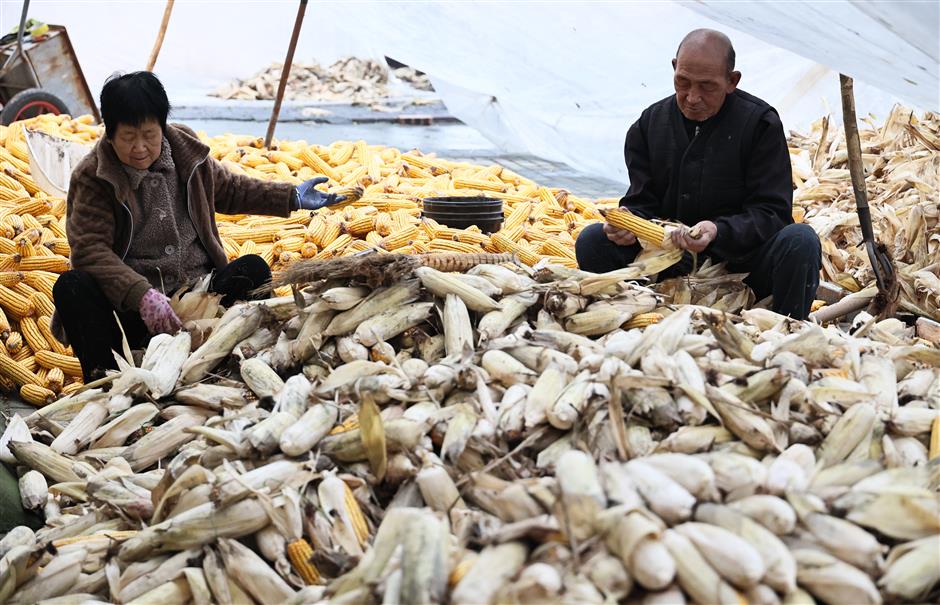
Corn farmers faced equally tough odds. Torrential rain rotted and moldered the corn, making it unfit even for livestock feed. Farmers were forced to sell it cheap for industrial alcohol, but the earnings didn't cover harvest labor costs. Some simply abandoned their crops, planning to destroy them later.
"We have a saying here: You sow with your hands, but reap by nature's grace," Pan said.
He noted that, although harvest weather is out of farmers' control, they can still manage their outcomes by selecting resilient seed varieties.
A rice built for hard times
The Shanghai Agrobiological Gene Center (SAGC) has developed water-saving and drought-resistant rice (WDR), which Pan has been cultivating. It uses 50 percent less water than traditional rice and is far more lodging-resistant.
Eight years back, Pan brought WDR from Shanghai to his hometown Lixin, He was drawn not only by its resilience, but also its easy cultivation and management.
Lixin, a county under Bozhou city in northwest Anhui, grew rice extensively during the 1990s. Yet, rice farming requires careful management of water and fertilizers, as well as labor-intensive transplanting. As hordes of young rural workers flocked to cities, many elderly farmers switched from rice to corn, which is easier to cultivate but less profitable.
In 2016, Pan, who was running a building materials business in Shanghai, learned about WDR. Motivated in part by a sense of mission, he returned home the next year to promote it.
Local experts estimated WDR's profit was four times that of corn. What's more, it cuts planting costs by 120-150 yuan (US$17-21) per mu versus traditional rice. That's because it can be direct-seeded, no flooding or transplanting required.
This year, Pan has helped promote some 20,000 mu of WDR in Lixin, with approximately 15,000 mu under his direct management and another 5,000 mu cultivated by individual farmers. During the hot, dry July, traditional rice varieties needed watering every day, while WDR only required irrigation every few days. "That's more persuasive than any ad," Pan said.
The drought tolerance of WDR is not entirely new. Luo Lijun, chief scientist at SAGC and leader of the WDR research team, explained that drought-tolerant rice has a long history in China and is still cultivated on hillsides in the southwestern regions. However, since the 1940s, breeding efforts have shifted toward increasing yields under flooded conditions. Over time, this made rice much less able to handle environmental stress.
"WDR restores the genes for drought resistance and easy cultivation that were lost during that process," Luo told Shanghai Daily.
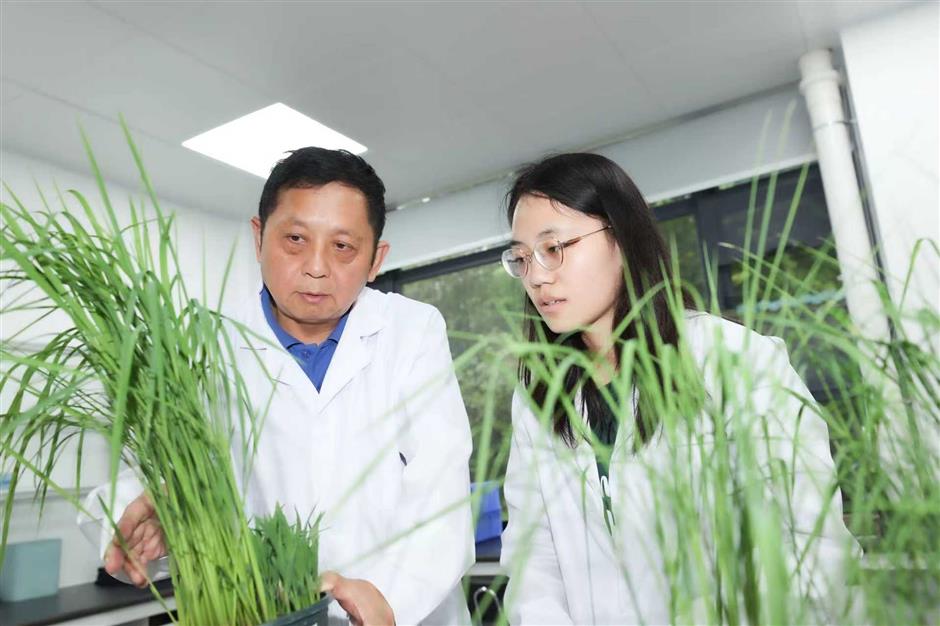
Once a supergrain researcher, Luo shifted his focus in 1998 after learning rice accounts for half of China's total water use. "I was shocked," he recalled. "We had to find a way to cut water consumption by 50 percent."
Luo formally proposed the "water-saving and drought-resistant rice" concept in 2009. Beyond slashing water use by half, WDR needs 30 percent less fertilizer than conventional rice – slashing pollution significantly. What's more, since it doesn't require continuously flooded fields, it emits 90 percent less methane, a potent greenhouse gas.
The WDR research won the first prize of China's 2020 National Science and Technology Progress Award. It has also garnered support from the Rockefeller and Bill & Melinda Gates Foundations.
So far, 58 WDR varieties have been developed, with 5 million mu planted annually in China and 30 million mu cumulatively. It's also been adopted overseas on 200,000 mu, including in several Belt and Road countries.
In Uganda, seed entrepreneur Shu Xiaoli told Shanghai Daily, African agriculture relies heavily on extensive farming, with low yields on uneven land. When there are 7 to 10 consecutive dry days, conventional rice growing on higher spots within the same field struggles, but WDR keeps thriving. "That's its biggest advantage so far," she said.
Luo and his team aim to expand WDR rice fields in China to 100 million mu.
"Climate change is making things tougher – droughts are more severe and water is scarcer. We must develop drought-resistant rice," he said.
Challenges in the face of climate change
Reaching that goal won't be easy – promotion and adoption pose major hurdles. Zhang Fengwei, an Anhui seed merchant who's been pushing WDR for a decade, notes farmers are cautious of unfamiliar planting methods that don't deliver consistent results right away.
Winning over consumers is another critical challenge. Back in 2018, Pan set up a rice mill to process WDR, aiming to protect farmers from low middleman prices and boost wider adoption. Today, it's one of Bozhou's top mills.
"At first, the elders mocked me: 'We've farmed all our lives, and you, a young guy, know more?' Now they watch and follow my lead," Pan said.
Still, market pressures and inventory worries have led him to slow expansion in recent years. China's rice market is already saturated with well-known brands and production regions, leaving his brand with a long path to consumer recognition.
"We're figuring out branding step by step," he explained.
Branding is even harder amid extreme weather. Pan pointed out that last year, heatwaves across China damaged rice quality nationwide – many varieties lost their aroma.
According to the China Meteorological Administration, last year saw the highest average temperature since 1951 and the second-most extreme hot days on record since 1961.
Despite WDR's stable yields during the widespread heat and drought, its grain quality and prices dropped, just like other rice varieties.
"Last year's rice prices were the worst in years," Pan said.
This year's unusual national climate has only complicated things. After a long, scorching dry summer followed by relentless autumn rains, harvesting in southern Anhui's Lu'an City was delayed. Harvesters typically move north after finishing in the south, but this year, Pan struggled to relocate the machines to northern fields.
The World Meteorological Organization's "State of the Climate Update for COP30," released earlier this month, confirms 2015–2025 will be the hottest 11-year stretch on record – each year ranking among the planet's warmest since observations began 176 years ago.
Extreme weather events have triggered cascading impacts on global lives, livelihoods and food systems, undermining sustainable development and economic progress.
Agriculture remains vulnerable despite technological advances. Only by integrating science, infrastructure, institutions, and farmer support can farming stay resilient amid climate change, said a report by Southern People Weekly focused on rain-affected autumn harvests in North China's Huang (Yellow River)-Huai (Huaihe River)-Hai (Haihe River) region, a major agricultural heartland in China.
Facing increasingly frequent extreme weather, Pan argues that beyond choosing hardy seeds, strengthening agricultural equipment and farmland infrastructure is vital – to "ensure irrigation in droughts and drainage in floods."
By the end of 2022, China had built 1 billion mu of high-standard farmland. The national initiative aims to create well-equipped cropland that can maintain stable yields through both drought and flood.
A central government plan unveiled in March sets a new goal: 1.35 billion mu by 2030.
The plan tailors priorities to different regions. In the northwest, for example, the focus is on boosting agricultural water efficiency to fight drought. In the middle and lower reaches of the Yangtze River, including Anhui, the focus shifts to modernizing field infrastructure and reinforcing systems to manage drought, flood, and waterlogging.
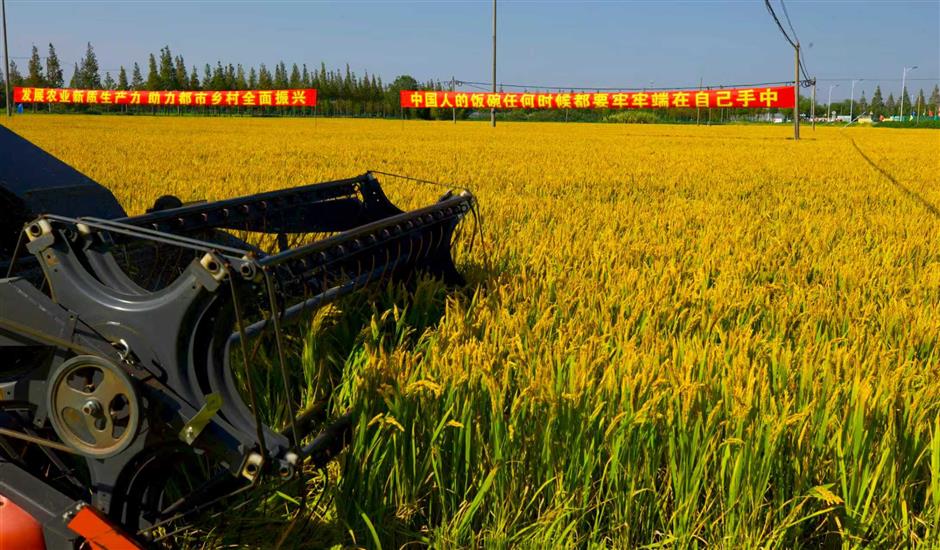
For Pan, this year's drought luckily only hit during the seedling stage. But ample rainfall during the grain-filling period boosted the quality of the harvest. Local farmers growing WDR achieved a net profit of approximately 500 yuan per mu, roughly two-thirds higher than that of other rice varieties.
Pan revealed that the local government plans to invest 50 million yuan to build a WDR industrial park.
Farmers growing other rice and corn varieties, having suffered recent extreme weather, have also approached Pan to learn about WDR. A company, which currently manages 5,000 mu of WDR land through Pan, plans to expand to over 9,000 mu next year.
"They have now realized the issue: how to reduce risks in years of frequent extreme weather," Pan said.
Editor: Yang Meiping
In Case You Missed It...
 Sep 22, 2026