Nine Writers; One City, And Many Ways of Seeing
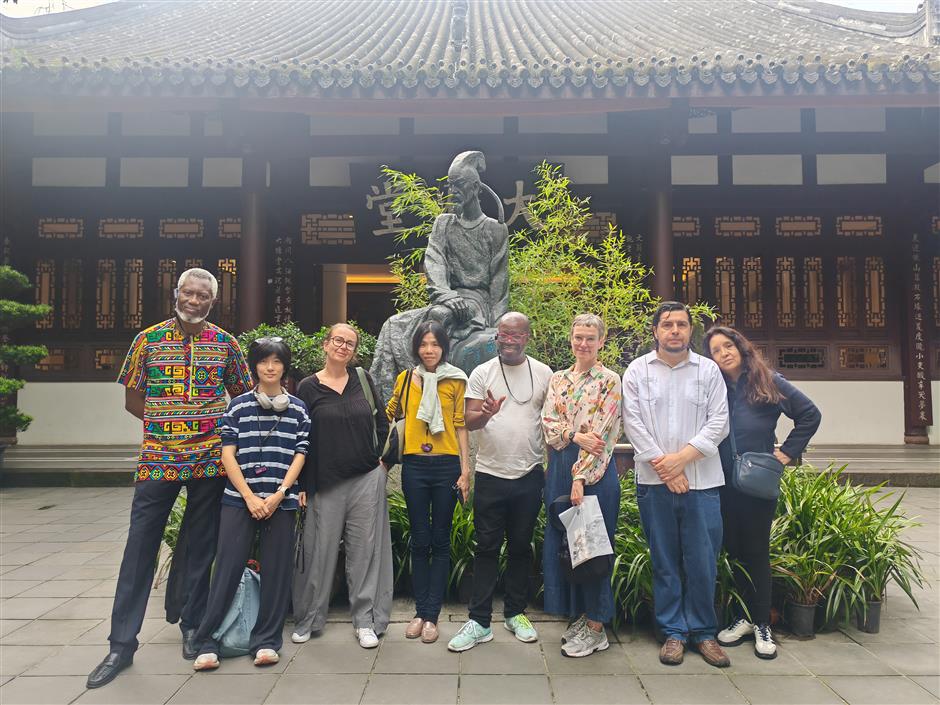
Shanghai can surprise even those who have known it since childhood with its different facades, and it can also become familiar for first-time visitors through its streets, its stories or the people who help a newcomer feel at home.
That experience of looking afresh runs through the encounters of nine writers taking part in the 2026 Shanghai Writing Program. Hosted by the Shanghai Writers' Association under the theme "Earth as Home," the two-month residency gives them time to move beyond stereotypical images of China and form their own connections through its people, streets and cultural life.
Some are discovering China for the first time; others are returning to places connected to family, research or years of work. Together, their observations offer nine distinct perspectives on Shanghai – and on the experiences that become literature.

A second life for forgotten books
Albert C. Eibl's publishing house, Das Vergessene Buch, or "The Forgotten Book," aims to return overlooked writers into circulation, particularly those displaced by persecution, exile and war.
The Vienna-based German publisher and author has made rediscovery a vocation. He and his publishing house received the 2024 Bruno Kreisky Prize. Among his most sustained projects is reviving the works of Austrian writer Maria Lazar.
Eibl recalls following references in literary histories and diaries, contacting Lazar's family and eventually examining manuscripts preserved in England. Her granddaughter could not read German; he would help her discover what the papers contained. The encounter captures the patient, personal work behind restoring a literary reputation.
For Eibl, these books also speak to contemporary anxieties: the threat of war, the rise of fascism and a deepening uncertainty about the future. He sees echoes of the turmoil of the 1920s and 1930s in today's geopolitical tensions and in conversations with young people who question whether they want to bring children into an unsettled world. Readers respond to these rediscovered works, he said, "because the people feel that our time faces similar challenges."
His own writing carries that concern into the digital age. In "The Aesthetics of Disobedience," co-written with philosopher Jan Juhani Steinmann, he argues for greater independence from the technologies organizing everyday life. He proposes the idea of romanticizing everyday life.
"That means making room for feeling, beauty and encounters beyond the screen," he explained, adding that he has found a romantic sensibility in Shanghai alongside the city's efficiency and technological ambition.
"There is also a great longing for romanticism in this city, I see it every day."

The storyteller's duty to hold attention
A lawyer can afford to be boring if he wins the case. A novelist has no such luxury.
"For a writer, boredom is a fatal disease," said Chuma Nwokolo, a Nigerian writer and lawyer.
He sees both professions as exercises in persuasion. Each requires structure and an understanding of the audience. Literature, however, needs room for suggestion: a few details can invite readers to imagine an entire person, while legal language must pin the meaning down.
Nwokolo is a well-published novelist and also the co-founder of African Writing, a magazine showcasing the range of African literature.
"What I would like readers to know about African writing is variety," he pointed out. "There are writers that will make you think, writers that will make you cry, writers that will make you laugh."
He questions how Africa is represented when readers encounter it mainly through foreign eyes or certain writers in the diaspora whose relationship with home is marked by negative feelings.
"This diasporic and foreign literature about Africa is not necessarily Africa," he said.
"It's about a balance that gives you a human feeling."
On his first visit to China, Nwokolo is working on a travelogue and looking beyond the metropolitan skyline. At Sanxingdui, Sichuan Province, the crowds became part of the attraction: eventually, he found himself framing photographs around the visitors as well as the exhibits.
That instinct echoes a feature he developed for African Writing: "emotional geography," in which writers described places through their attachment to them.
"When I come here and I talk to Shanghai writers, I see it in the way they talk about their town," he recalled.
Buildings and streets provide its outline; the people who know and love them supply the feeling.
Listening beneath the city's surface
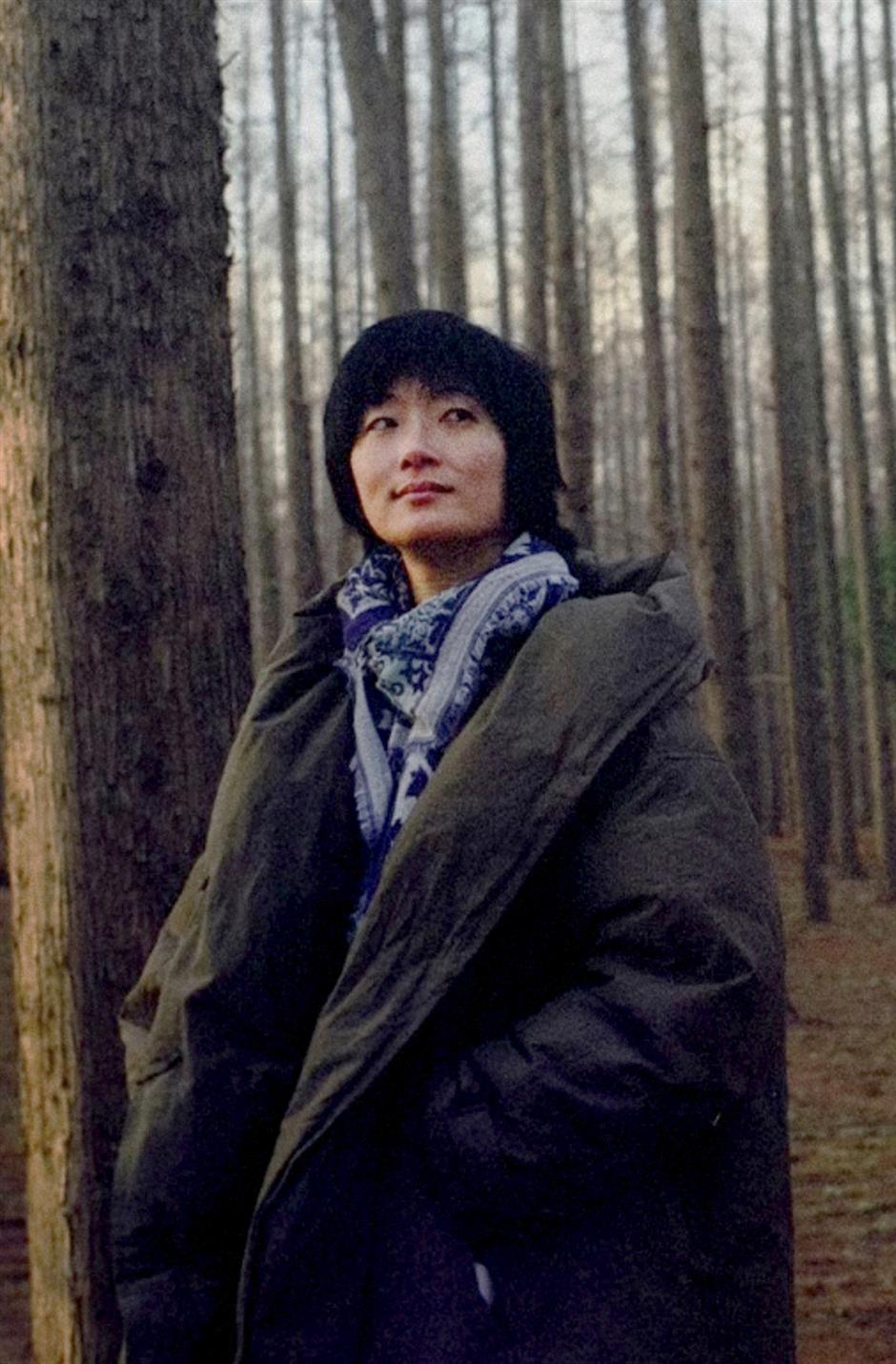
Nine unfamiliar writers, a city many have never visited, and rooms in a large, anonymous hotel: a fellow resident suggested that the Shanghai Writing Program had the makings of a murder mystery. For writer and poet Cleo Qian, the premise offered something immediately useful to fiction – people encountering unfamiliar situations and revealing themselves through their responses.
California-born Qian had visited Shanghai before to see family. Those trips largely revolved around restaurants and home. This time, bookstores, dance performances and film screenings have opened another city to her. Watching other writers discover the Bund has renewed her attention to a landmark she once took for granted.
That interest in what unsettles people runs through her debut collection "Let's Go Let's Go Let's Go." Its title grew from an encounter with Japanese conceptual artist Yutaka Matsuzawa's "Banner of Vanishing," whose invitation to humankind to disappear suggested both ecological anxiety and a longing to escape contemporary demands.
"Most of my protagonists are looking for ways to escape," Qian said.
Fiction lets her investigate why people behave as they do, complicating easy judgments. Poetry serves a different need: keeping her receptive to sensations that everyday life might otherwise blunt.
"I turn to poetry to keep myself open," she noted.
In Shanghai, she notices the contrast between the city's apparent calm and the restless energy beneath it. The same tension emerges in encounters with people: the distance between what is spoken and what remains unexpressed.
"There's a lot of tension not being expressed," she said. "I don't know how I will write about it yet."
Bringing life onto the stage
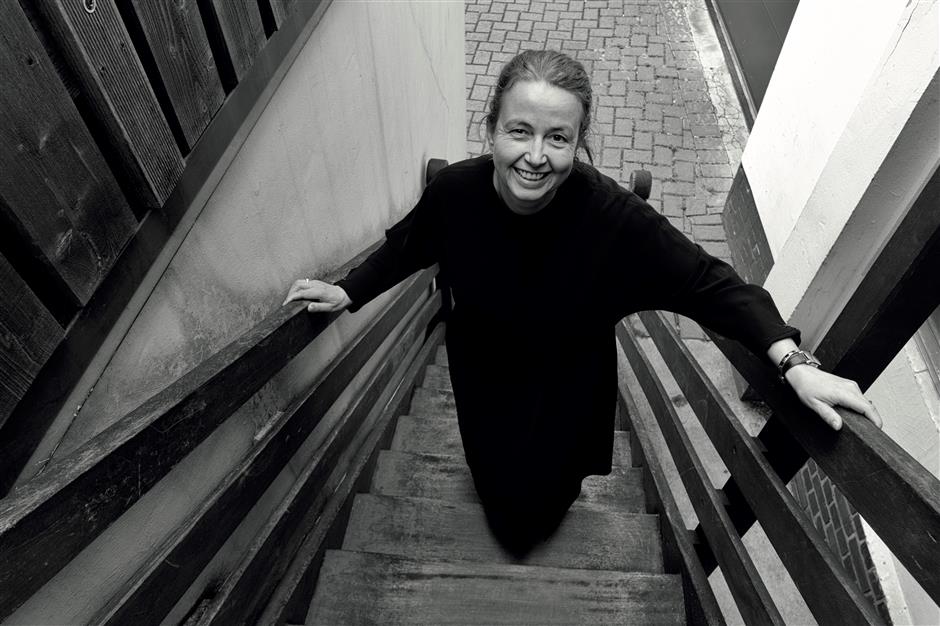
Dagrun Hintze wants a reader inside the scene from the first sentence. That preference for immediacy comes from the theater, where she worked as an assistant director and director before making writing her principal occupation around 2000.
The Hamburg-based author has published poetry, essays and short stories alongside her plays. Theater remains central to her work, though she now approaches it chiefly through the page.
Hintze's interest in documentary theater begins with listening. Research into relations between eastern and western Germany produced both a play and an essay collection: the interviews contained more material than a single production could accommodate.
"I tried to be kind of a translator between Eastern and Western part," she explained. "We have to talk, we have to experience each other, we have to tell each other what our experience in life was."
That desire to understand people through their lived experiences also shaped her approach to Shanghai, where everyday encounters began to challenge her expectations of China.
She has been watching how people inhabit public space. Parks, street encounters and small acts of assistance interest her as much as the city's infrastructure. To her, Shanghai is a city where belonging doesn't require buying something, in contrast with cities where the most charming spaces increasingly require purchases.
"I really enjoy seeing how people occupy public space," she recalled. "Who does the city belong to?"
Visits to galleries and museums have also fed her longstanding engagement with contemporary art. But her attention keeps returning to people: how they share a city, how they represent themselves and what becomes possible when someone takes the time to listen. Those questions travel easily between Shanghai's streets and her stage.
"I expected a lot more feeling of strangeness, of alienation, but I didn't. I haven't felt homesick for a second, and I just felt very close," Hintze observed.
Finding a language for silence
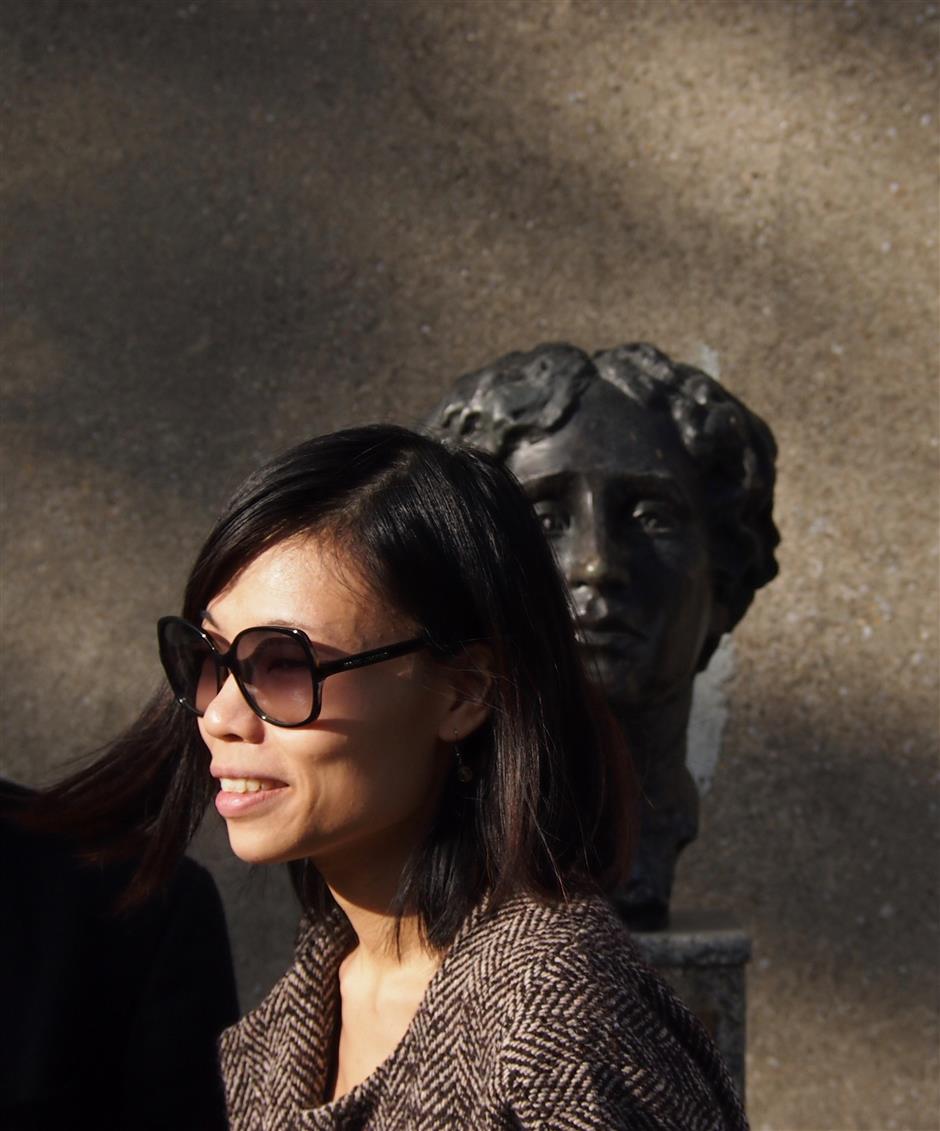
Fiona Sze-Lorrain has been exploring Shanghai with a printed map, drawn to the stories held in Art Deco buildings, Shikumen neighborhoods and the city's distinctive cultural spaces. Architecture offers one way to read a place where different eras seem to coexist. Listening offers another: she finds herself nostalgic for Shanghainese, heard less often on the streets than she had hoped.
The Paris-based writer, translator and zheng (Chinese zither) musician works across English, French and Chinese, with different roles for each. She writes fiction and poetry in English, critical prose in both English and French, and translates principally from Chinese into those two languages.
"I breathe differently in each language," she said. Moving between them opens imaginative possibilities even in simple words.
Music and writing are parallel practices, connected by flow, intuition and physical awareness. Silence belongs to both.
"Silence is a form of language that needs no words," Sze-Lorrain says.
Her novel in stories "Dear Chrysanthemums" follows Asian women across cities and decades, threading their lives through memory, coincidence and unspoken experience. Each chapter begins in a year ending in six, associated with a smooth life in Chinese divination. Her heroines experience anything but: crossing countries, they carry and reshape boundaries within themselves.
Shanghai's greenery, electric vehicles and recycling practices have prompted another question: what follows technological improvement? She wants to consider how people might inhabit cities independently of machines.
That question brings the residency's "Earth as Home" theme back to pace, attention and the possibility of restraint.
"I hope life slows down more in general," she concluded. "Our earth needs time to heal."
Giving overlooked history a human voice
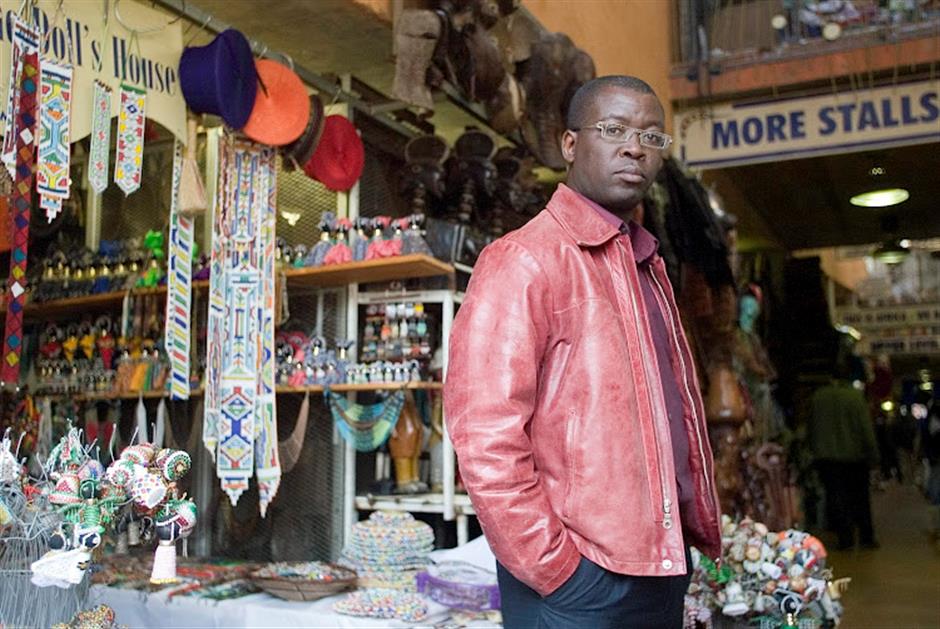
Fred Khumalo was listening to the radio when he heard a story he felt he should already have known. During the war that began in South Africa in 1899, local mineworkers stranded in Johannesburg had walked hundreds of kilometers home.
He contacted the journalist, followed the sources and turned the episode into "The Longest March." History had left people in the background; fiction could bring their experiences into view.
His novel "Dancing the Death Drill" explores black South Africans' involvement in World War I, and he was struck by readers' surprise when promoting the book in Germany. Countless books about the war had not ensured that every experience was heard.
"They had never seen that side of the war," he recalled. "These stories don't exist in our history books."
That question of whose stories circulate follows him to Shanghai. He wants Chinese readers to encounter more contemporary African writers, including the younger black authors reshaping the literary landscape.
"I was surprised at the level of interest there is for African literature in China," he recalled meeting doctoral students at Shanghai Normal University, including one who is studying a single South African author.
His residency has also offered time to explore China beyond the conference rooms of an earlier visit. Museums, cultural sites and daily metro journeys have enlarged his own frame of reference.
"It's a totally different picture from the stereotypical image in terms of technological innovation, as well as depth of the culture and history," he said.
"I'm going to come back."

Making literature travel both ways
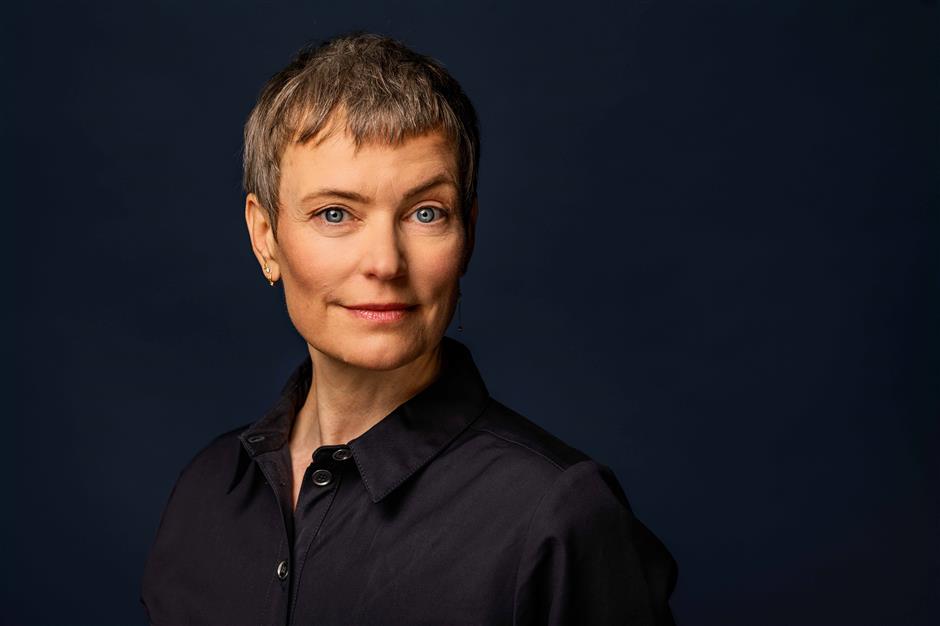
Isolda Morillo came to China as a journalist, looking for stories to tell. Learning Chinese has opened a path into its literature, and a way to bring Chinese and Spanish-speaking readers closer together.
"For me, the best way to learn about China was to be on the ground," said the Peruvian writer and translator.
Much of her work for The Associated Press circulated in English. The Peruvian journalist increasingly wanted a more direct conversation with readers whose language and literary traditions she shared. Translation became a way to extend that conversation.
Now based in France, Morillo is a writer and literary translator working across Spanish, English, French and Chinese. Her translations move in both directions.
She chooses Chinese works for their literary quality and wants to make sure that "women's voices are heard." She is particularly interested in contemporary society, women's voices, migrant workers' writing and emerging authors. These offer ways of understanding lives that broad accounts of a country can miss.
Morillo brings a reporter's working habits to the task: deadlines, accuracy and the discipline of checking. Translation demands sustained attention as well as enthusiasm.
The Shanghai residency marks a return to China after years away. It also offers distance from the Beijing settings she knows best, allowing fresh encounters with writers and their work.
She got many inquiries from Latin American friends upon learning about her return to China. For Morillo, bringing China closer to Latin American readers also means opening a conversation about what they can learn from its experience.
"I think we need to understand what China is doing," she explained, "to learn the good things and maybe from their problems. Many intellectuals are very interested in what is happening in China."
The family history that silence could not erase
Malene Ravn found the beginning of "In Your Eyes" in a friend's family silence. Her friend had grown up without knowing that her grandfather was Chinese. Her father knew, but the pain of his childhood had made the subject difficult to discuss.
For the Danish novelist, that difference between generations became the heart of a story: a father who wanted to forget, and a daughter determined to recover what had been lost.
She visited China for the first time in 2018, alongside the friend whose family inspired the story, to trace her family roots. She came looking for details for the novel, but the unexpected discovery turned out to be her own disorientation.
"We didn't find the exact village her grandfather lived, but the trip indeed gave me something essential for the book, the experience of being unable to fully understand the surroundings. That is exactly how a Chinese newcomer must have felt when they first arrived in Denmark," she recalled.
"How strange everything must have been, because you can't deeply understand where you are and what you are experiencing."
Returning for a much longer stay, she has spent much of the time in Shanghai on foot, and the city's "pale, misty atmosphere" and the frequent experiences of getting lost have offered her a different perspective and relationship with Shanghai, one that continually escapes her grasp.
It is also feeding her imagination for a new novel set in an unspecified future.
"It's like all times are present here, right? Both future and historic times," she said. "It will definitely have some impact on the novel."
A distant home unearthed by language
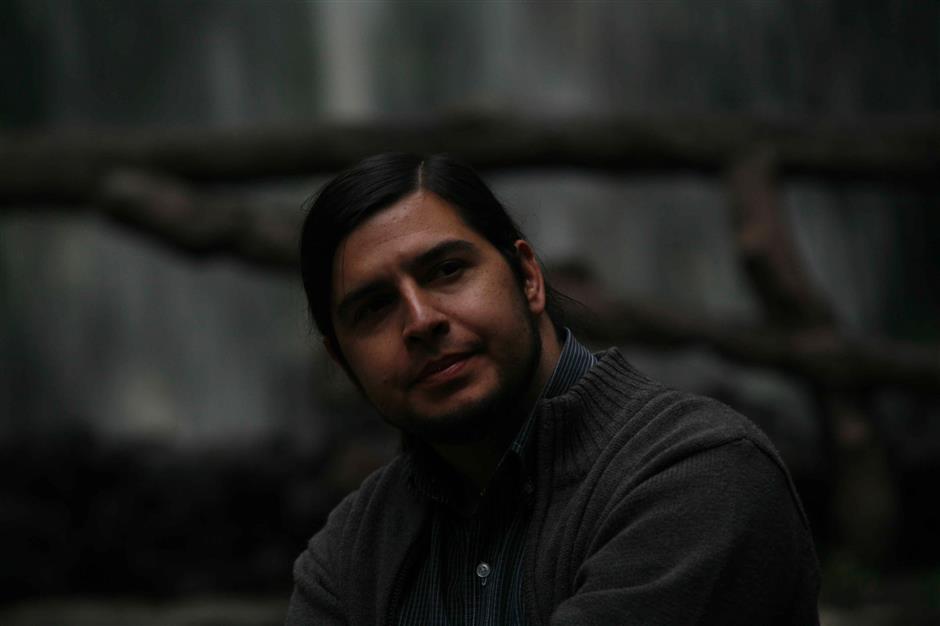
Mario Meléndez cannot choose a single Shanghai image to carry into his poetry. Faces, music, food, buildings: each seems to hold a history, and separating one from the others would diminish the whole.
For the Chilean poet, the city has stirred a peculiar nostalgia – a feeling of belonging to somewhere he cannot fully decipher. He describes Shanghai as "a distant homeland, which in another life was my everyday home."
Born in Linares in 1971, Meléndez is the author of collections including "Underground Flight," "The Paper Circus" and "Garden of Rubble." His poems have appeared in translation in Chicago's Poetry magazine, and he edits the literary journal and publishing house Tres Orillas.
The unexpected combinations in his titles reflect an enduring debt to Lewis Carroll. Carroll's verses showed him how language could create realities alongside the familiar world. An image becomes a possible poem when words seem to uncover something previously hidden.
In "Waiting for Perec," that impulse meets the influence of Georges Perec and Samuel Beckett. Short narratives move through art and cultural history, borrowing from parables, epitaphs, aphorisms and other compact forms. Their strangeness responds to a present he finds stifled by apathy and insensitivity.
Years of editing and teaching have reinforced his faith in reading.
"Without reading, there is no writing," he says. Encountering other imaginations helps a poet find something to offer where everything seems already said.
Shanghai now enters that imaginative territory.
"I hope my writing will be capable of glimpsing the beauty of its wounds."
Editor: Xu Qing
In Case You Missed It...
 Nov 20, 2026


Popular Reads

Global Tech Selloff Snares Chinese Stocks Amid Doubts About the AI Boom

Shanghai, Singapore Ink 16 Deals, Advancing Cross-border Finance, Innovation and Cultural Ties
Viral Beijing Photo Brings Couple Back to Tie the Knot