The Ancient Art of Taijiquan Finds New Meaning in the Modern World
Editor's note:
The United Nations has officially designated 44 Chinese traditions as world cultural heritage. This series examines how each of them defines what it means to be Chinese.
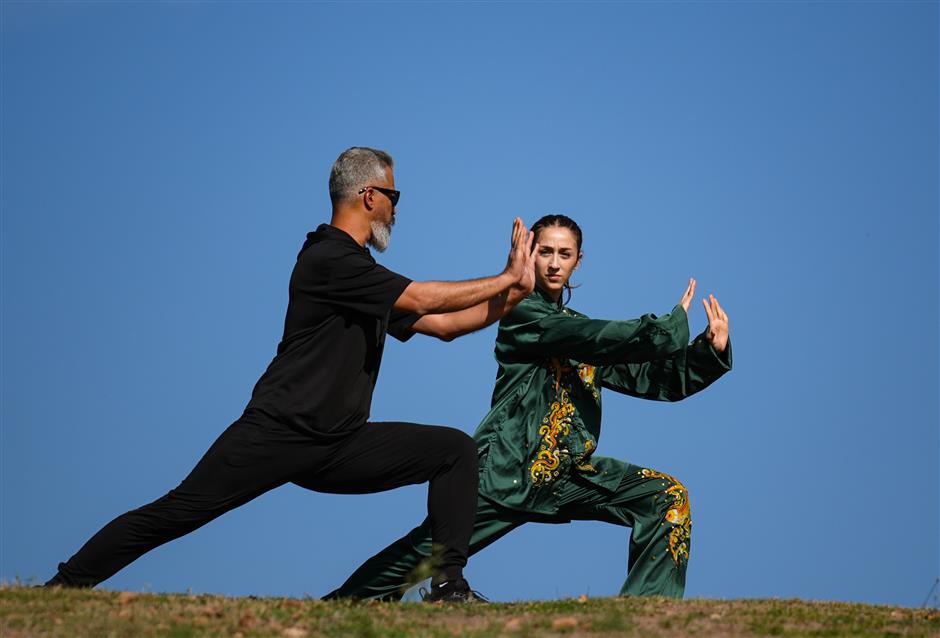
The core of the ancient Chinese martial art Taijiquan, often called tai chi, is rooted in a central philosophical idea: yin and yang. This idea represents the mutual dependence and constant interaction of opposing forces that work together.
In Taijiquan practice, yielding counters hardness, softness overcomes rigidity, and stillness transitions into responsive motion, as illustrated by the martial arts adage, "use slow to confront fast."
The United Nations Educational, Scientific and Cultural Organization (UNESCO) included Taijiquan in its Representative List of the Intangible Cultural Heritage of Humanity in 2020.
The inscription describes the tradition as "a traditional physical practice characterized by relaxed, circular movements that work in concert with breath regulation and the cultivation of a righteous and neutral mind."
It further notes that the element "builds upon the yin and yang cycle and the cultural understanding of the unity of heaven and humanity."
Historical accounts link Taijiquan's origins to Chenjiagou Village in Wenxian County, central China's Henan Province, during the mid-17th century.
The wubu (five steps) and bafa (eight techniques) formed the technical basis of early routines, later supplemented by tuishou, or partner hand-pushing drills.
In time, the art developed into several major family transmission lineages: the Chen, Yang and Wu styles.
A key figure in its dissemination is Yang Luchan (1799-1872), who studied in Chenjiagou and later taught in Beijing.
The many legends that surround him include the one where he allegedly caught a bird in flight and prevented it from taking off by withdrawing the ground from under its feet. It is a metaphor to illustrate the Taijiquan principle of rooting, yielding, and redirecting force rather than opposing it.
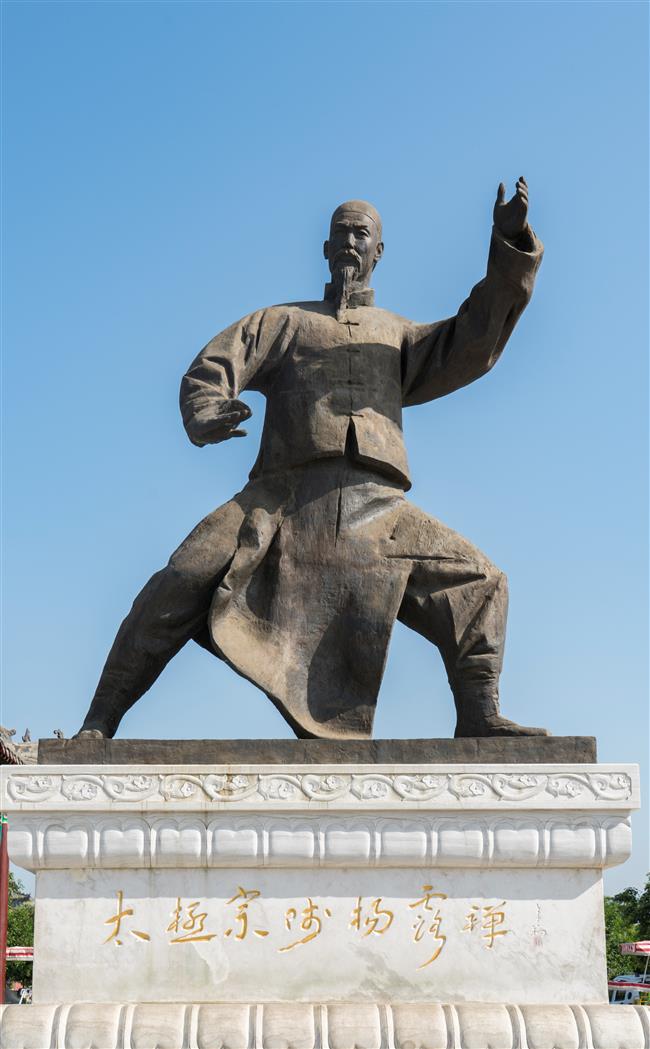
Taijiquan also draws on the semi-legendary figure Zhang Sanfeng, a Taoist ascetic associated with the Wudang Mountains whose life story and persona became intertwined with tai chi.
While historians consider Zhang's direct founding role unlikely, his mythic association with neijia (internal) martial arts and his appearance in martial arts fiction raised the art's symbolic profile.
The celebrated writer Jin Yong also depicts Zhang as the founder of the Wudang school of Taijiquan in his novel "The Heaven Sword and Dragon Saber." The popular novel and its derivative TV dramas have helped the global promotion of Taijiquan.
After the founding of the People's Republic of China in 1949, Taijiquan entered a new phase of standardization and public promotion.
The national sports authority created the simplified 24-form Taijiquan in 1956 to facilitate general public learning. It was based on the Yang style, with complex or repetitive movements removed. The form quickly became popular across China and abroad.
By 1980, more than 140 Taijiquan training centers had been established in Beijing alone, and over 800 public classes had been organized, attracting about 40,000 participants. Millions of posters and manuals of the 24-form Taijiquan were printed and distributed nationwide.
A more advanced 48-form Taijiquan was compiled in 1979, combining techniques from several traditional schools.
The spread of the art also gained support from national leaders. For fitness, Chairman Mao Zedong urged the populace to take up Taijiquan. In the 1980s, then-national leader Deng Xiaoping wrote the inscription "Taijiquan is good," reflecting its status as both exercise and cultural heritage.
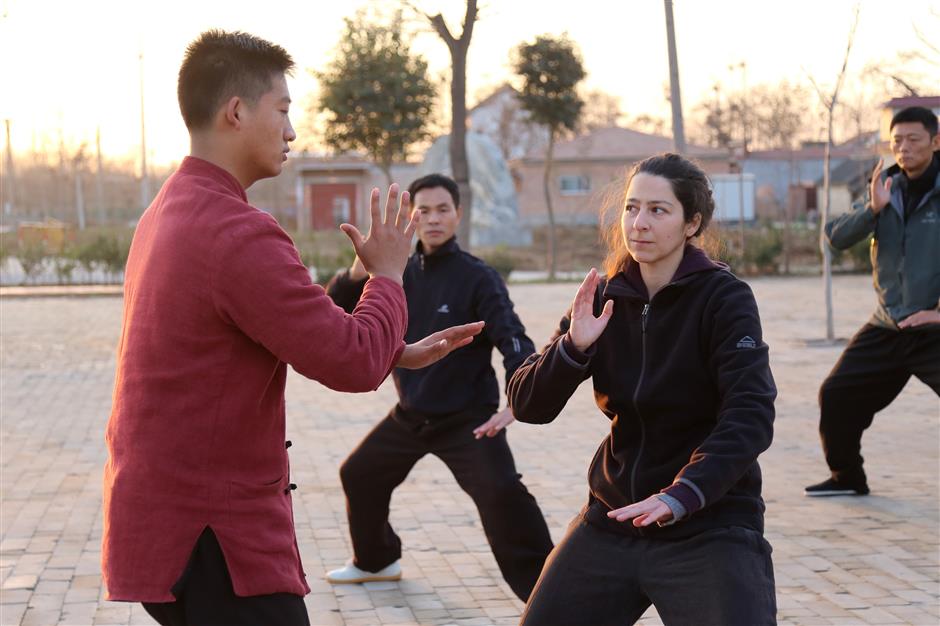
It draws heavily on Taoist and medical concepts such as daoyin (guiding and stretching) and tuna (breathing and renewal).
The emphasis of these ancient health techniques lies in breathing control, gentle body movements, and free circulation of blood and qi (vital life energy) in the body.
In traditional Chinese medicine, daoyin aspires to integrate thought with movement so that internal energy flows smoothly and the organs function in balance.
Tuna teaches the practitioner to "exhale the old and inhale the new," thereby promoting oxygen flow and vital energy.
These practices became the foundation for Taijiquan's slow, rhythmic motions and its emphasis on harmony between body and mind.
UNESCO states that Taijiquan is being practiced in over 150 countries and regions, with an estimated 300 million practitioners.
It has emerged as one of the most widely practiced martial arts and wellness disciplines globally. It is taught in universities, health centers and community programs worldwide.
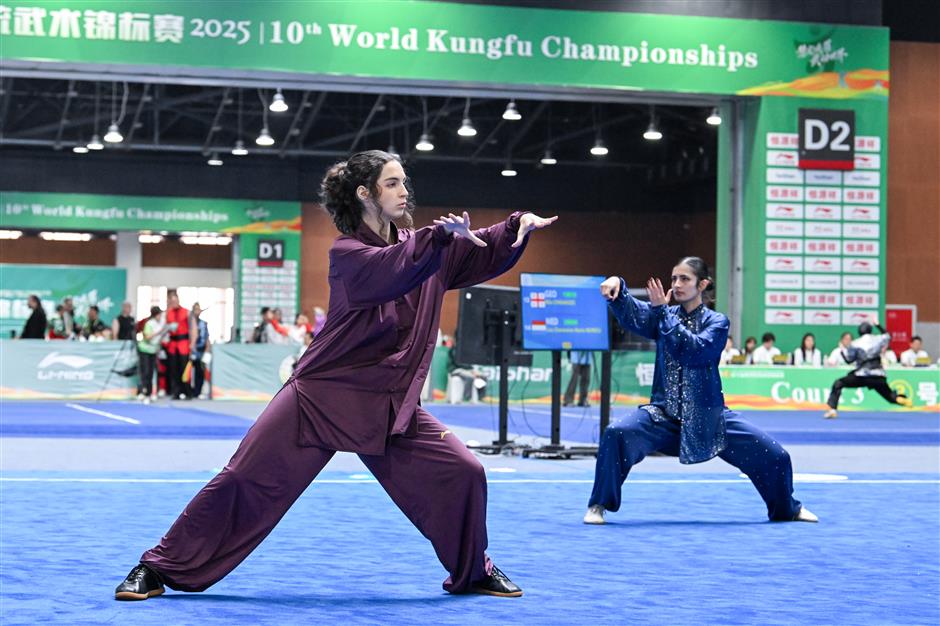
However, global growth has presented challenges. Broad participation increases visibility, but authenticity, lineage, and commercial simplification of technical and philosophical content are concerns.
The UNESCO decision specifically highlights the necessity for ongoing monitoring of transmission, style diversity and faithful teaching.
The safeguarding measures listed in the UNESCO inscription dossier include master registration, documentation, incorporation of the forms into educational curricula, and promotion of intergenerational transmission.
Taijiquan is more than slow movements. Its martial and wellness practice is based on centuries of tradition and philosophy.
The safeguarding plan states that as Taijiquan grows around the world, the main goals will be to make sure teaching is thorough, keep different styles alive, record local differences, and maintain the link between movement, breathing and body awareness.
In that way, the tradition can both live and evolve without losing its core.
Editor: Zhang Liuhao
In Case You Missed It...
 Nov 5, 2026