The Only Country So Far to Find a Way: How China Made Growth and Green Work Together
"China may be the only country so far to have found hundreds of ways to align economic and ecological goals," said British political commentator Carlos Martinez. He credits the country's long-term planning and stable governance for making growth and green work together.
As the World Conference on China Studies opens on October 13 in Shanghai, Martinez will explore how China's concept of "ecological civilization" blends traditional philosophy with Marxist thought to address modern challenges.
He spoke with Shanghai Daily ahead of the event to share his views on China's environmental strategy and its global implications.

Planning for decades, not elections
Martinez believes China's environmental progress is rooted not in short-term policy wins but in a system built to think decades ahead and stay consistent.
"China has five-year plans, a 2035 vision, and mid-century goals," he said, noting that such continuity allows the government to align policy with national priorities and mobilize all sectors, from education and business to finance and investment, around a shared long-term vision.
He cited a recent report by the energy think tank Ember that highlights how China's policy stability gives companies the confidence to invest long-term. "Enterprises know the measures the government sets out will remain in place for years, even decades," the Briton pointed out.
By contrast, he added, Western governments often prioritize short-term profit over long-term well-being, resulting in inconsistent climate policies. "Donald Trump withdrew from the Paris Agreement in 2017, Joe Biden rejoined in 2021, and now Trump's back and pulling out again in 2025. There's no consistency."
China's system also faces less pressure from fossil fuel lobbying. "Many of China's energy companies are state-owned, so they share the government's priorities. Policies can remain balanced and people-centered," he said.
In the West, meanwhile, Martinez noted, the fossil fuel industry remains one of the most powerful private interests.
"These companies have enormous influence over governments," he observed. "They often argue that investing too much in renewables will cost jobs in the fossil fuel sector, hurt the economy, and reduce tax revenue. As a result, they continue to shape policy in ways that delay real change."
When growth turns green
When asked whether environmental protection inevitably slows economic growth, Martinez shook his head. "Many Western countries still see the economy and the environment as opposites."
"Much of the debate on energy transition focuses on the cost, not the long-term benefits," he said. "Having invested so heavily in coal, oil, and gas, governments fear leaving behind stranded assets."
China, however, has shown that development and decarbonization can move forward together. "China may still be the only country so far to have found hundreds of ways to align economic and ecological goals," Martinez said, adding this alignment is visible both at the national and local levels.
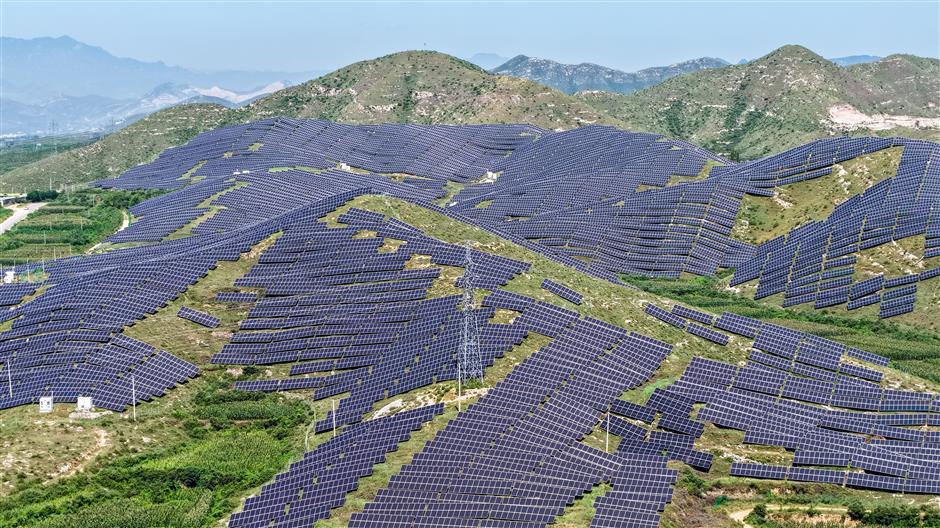
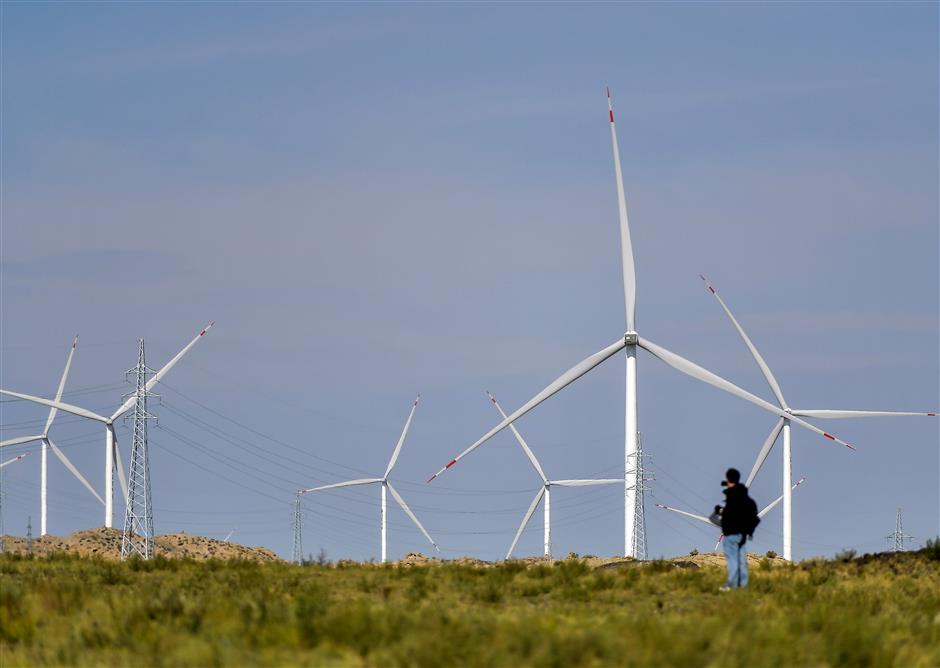
Through large-scale investment in renewables such as solar and wind, China has helped drive down global clean-tech costs by up to 90 percent. At the same time, local initiatives such as eco-tourism and green agriculture are creating new growth models that protect the environment while improving livelihoods.
"Environmental scientists often say the key to cutting fossil fuel use is to 'electrify everything'," Martinez insisted. "China is well ahead of the curve."
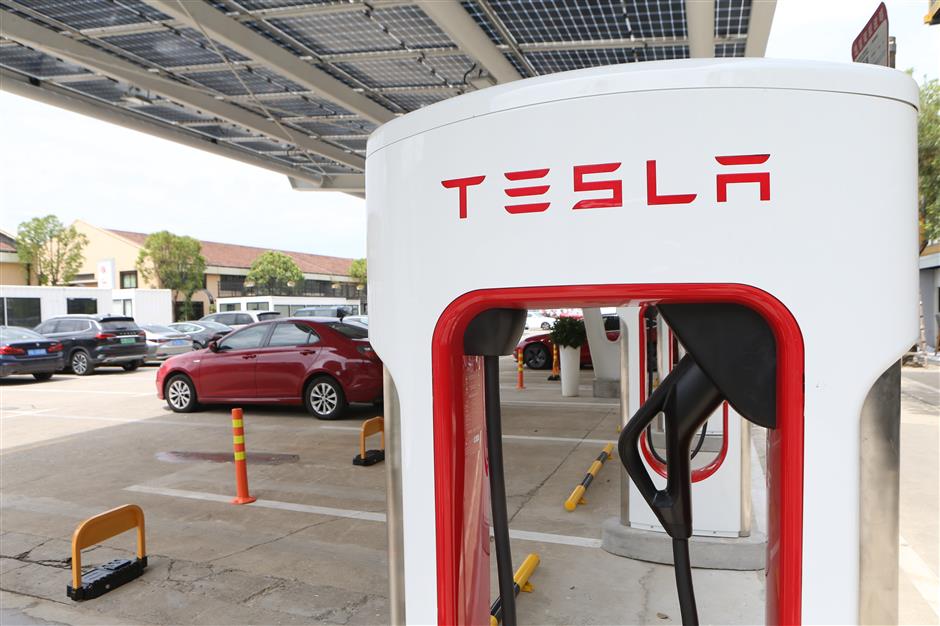
The results speak for themselves. Two-thirds of the world's electric vehicles are now sold and built in China. Electricity already makes up 32 percent of China's total energy use, up from just 10 percent 20 years ago, while the United States and the United Kingdom remain below 23 percent.
Shanghai, he added, offers a glimpse of that future. "It's become a hub for green finance, a leader in electric mobility, and one of the world's smartest cities. Artificial intelligence and big data are helping optimize traffic, energy, and waste systems. That's what 21st-century urban sustainability looks like."
China's green model goes global
Beyond its borders, Martinez said, China's experience is increasingly shaping how other nations think about sustainable growth.
"It has proved that it's possible to modernize, industrialize and grow the economy while developing sustainably and cutting emissions. It's an important lesson for the world – we don't have to sacrifice progress or people's living standards to protect the environment. We can do both."
That lesson, he added, is spreading fast. China's massive investment and production scale have slashed the global price of clean technology by 70 to 90 percent, making renewables accessible to almost every country.
In sub-Saharan Africa, where nearly half the population still lacks electricity, nations now have the chance to skip the fossil-fuel stage entirely and move straight into clean energy.
In Cuba, a Caribbean island nation of about 11 million people, Chinese companies are building nearly 100 solar power stations set to come online within a few years – a project Martinez said could "significantly ease their energy shortages."
"With China's powerful vision and systematic action, the world now stands a better chance of avoiding climate catastrophe," he concluded. Long-term thinking, Martinez believes, may be the planet's most renewable resource.
Editor: Liu Qi
In Case You Missed It...
 Nov 10, 2026