The Warmth of Shanghai: Of Cafes, Creek and Conversations
Editor's note:
British magazine Time Out released "The 50 Best Cities in the World in 2026" this March, in which Shanghai ranked second, just behind Melbourne, Australia. Abundance of cafes and affordability of coffee are cited as two of the reasons why Shanghai is such an attractive place.
A Shanghai Daily reporter has spent nearly three weeks walking along the 42-kilometer Suzhou Creek promenade to provide footnotes to the city's everyday charm through first-hand interviews with different people. It's a story not just about infrastructural convenience, seen in the cafes connected by the esplanade, but also about the warmth of the city embodied in people's readiness to share.
This is the first part of a two-piece series.
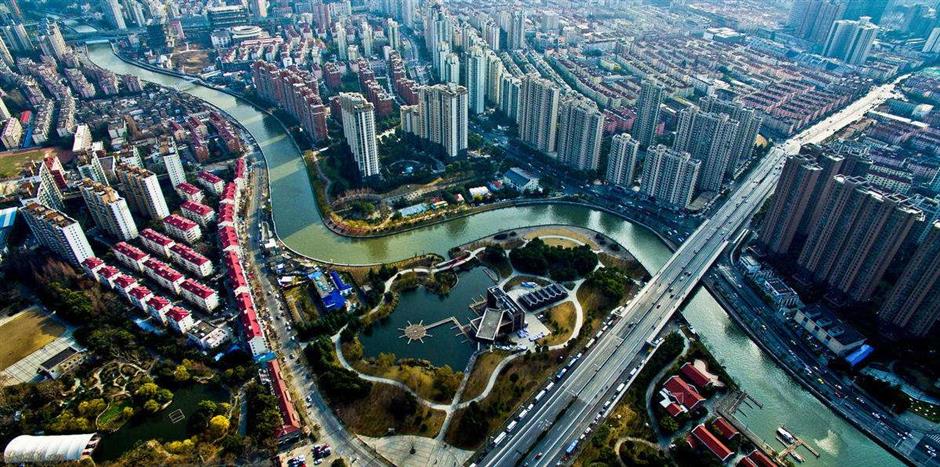
On a drizzly afternoon late last month, I strolled along one part of the Suzhou Creek in Shanghai, an umbrella in hand. There were not many people on the riverside walkway, which is close to the city's Outer Ring Road. However, a cafe and dessert shop by the river was bustling with activity.
The shop, named Shuiiiu Dessert & Cafe, was a single-story building with large glass doors and many windows. Inside, there were plants and minimalist curved walls serving as partitions, creating a space that felt both open and private. Even before entering, I could see there were quite a few customers inside – some working alone on their laptops, some chatting away in groups, and others sitting in pairs, smiling as they talked.
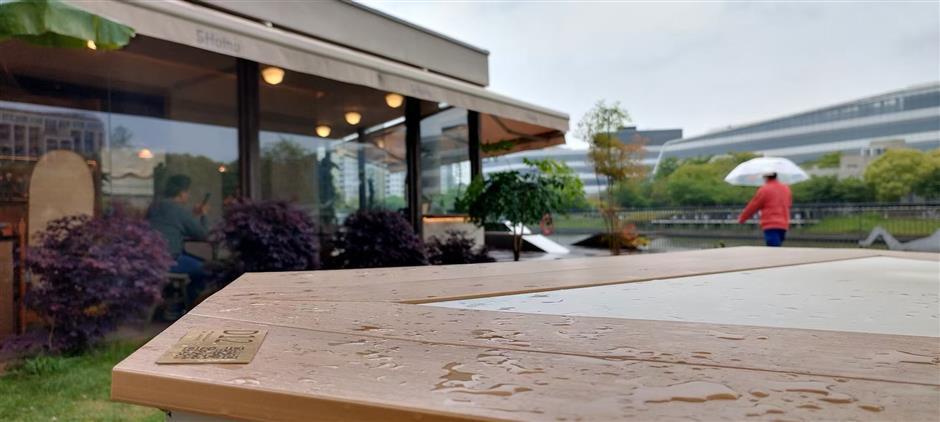
I stood for a while under the awning extending from above the entrance, breathing in the fresh, rain-soaked air, before pushing open the glass doors and walking in. Seeing that most seats had already been occupied, I told the shop assistant I would sit at the long table near the entrance by a row of folding windows, from where I could see the Suzhou Creek.
When I sat down, the folding windows facing the river were closed. Noticing that I enjoyed the view outside, the shop assistant offered to open them for me. I told her she could open the windows near my seat and leave the others closed, as other guests might not like the breeze. She did accordingly.
I quickly ordered coffee and pasta. As I waited, I enjoyed the faint fragrance of rain drifting in from the riverside. The coffee arrived soon, but the pasta took a bit longer.
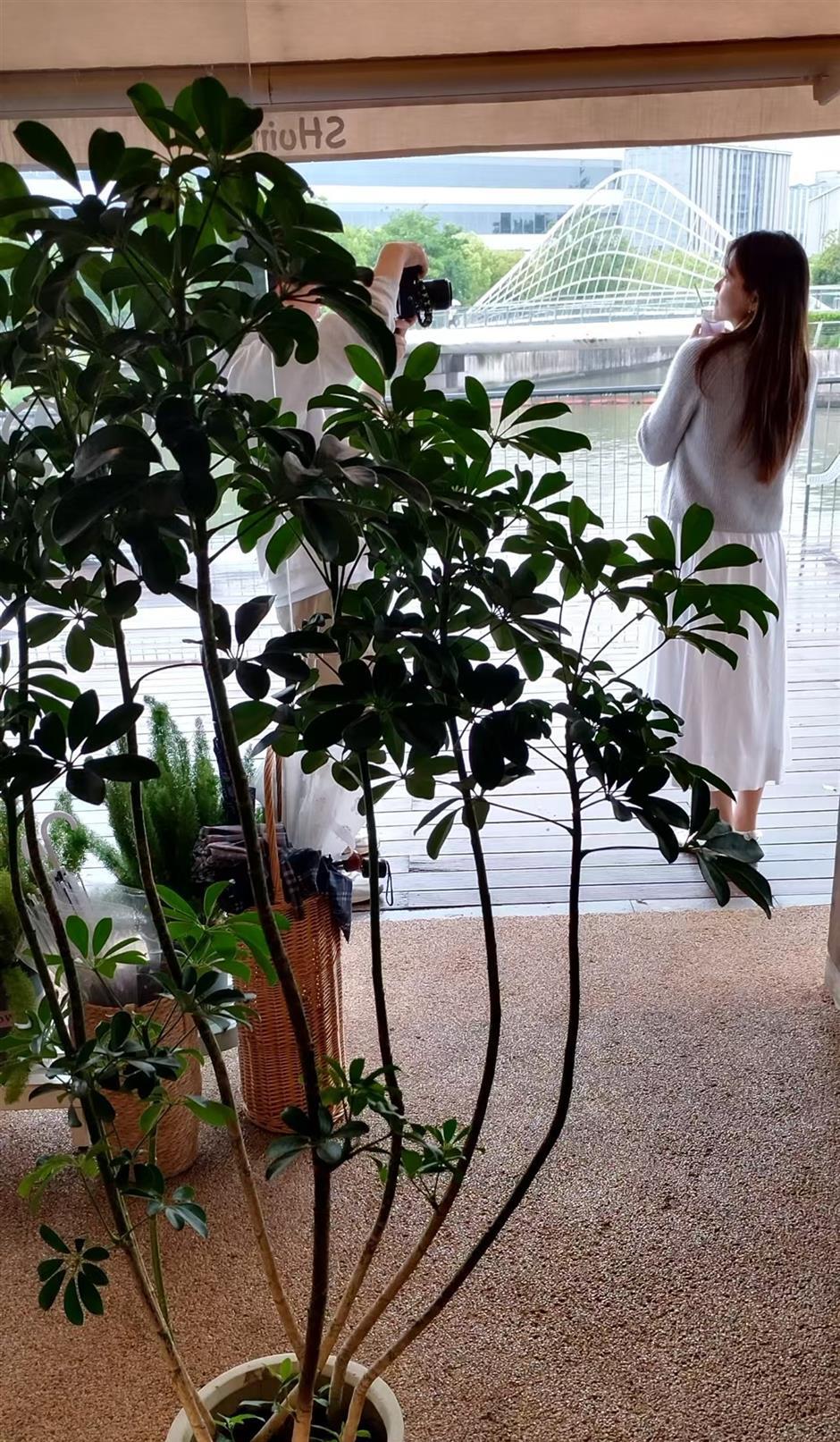
When I picked up my coffee, I noticed a young man next to me taking photos of a young woman. Sometimes they were seated, sometimes standing. They spoke softly, barely audible to others.
After I finished my pasta, I saw the young man was alone, organizing his camera bag. Apparently the young woman had already left. I went over and struck up a conversation with him.
At first, I thought they were friends, but later I learned that the girl was actually his client and specifically asked him to come to this riverside cafe to take photos of her after seeing his photography work on Xiaohongshu, or better known as RedNote, a popular social media platform.
The young man, surnamed Liu, was a 23-year-old college student who had been an intern at a major Internet firm in Shanghai, responsible for operational data analysis. He is already somewhat well-known on Xiaohongshu as a photographer, although photography is only one of his hobbies.
He said he enjoys taking portraits in Shanghai's distinctive cafes – sometimes collaborating with models, sometimes working with clients who reach out to him. If a model or a client agrees, he would share their photos on Xiaohongshu.
When I met him on that drizzly afternoon, it was his second time shooting at this cafe, which he had also discovered online.
Beyond coffee
Thinking about an AI & Communication English salon I would attend that evening, I brought up the topic with Liu and the shop owner.
Liu said he thought artificial intelligence would sooner or later surpass photographers in terms of technical aspects like lighting, but the moments captured by a photographer on-site are often unique, and the real-time interaction between the photographer and the subject is difficult to replicate.
The shop owner added that AI will only eliminate designers who lack insight. When she and her team originally designed the cafe, they repeatedly observed on-site to find inspiration – how to enhance the sense of openness so that the shop and the river scenery could blend into each other.
Shuiiiu, the artistic name of the cafe and desert shop, literally is shuimu (水母) in Chinese, which means jellyfish. It's a name implying an innate and intimate relationship with water.
The owner told me that she and her husband both work in interior design. They have two pet dogs, and previously it was inconvenient to bring them to work. Then they came to the Suzhou Creek area and rented this space that had an outdoor lawn. At first, they planned to transform an abandoned single-story building near the lawn into a design studio. Later, they realized that the building could also function as a cafe and dessert shop. Since its opening last year, she said, many customers have come to enjoy staying on the outdoor lawn on sunny days, including foreign visitors. On rainy days, she explained, the shop can more or less break even.
I never expected there would be such a lively cafe full of everyday charm near the city's Outer Ring Road along the Suzhou Creek. Even more unexpected was that, despite the increasing foray of Internet and AI into our daily life, people would still meet in such physical spaces – not only to enjoy the natural riverside scenery but also to inspire one another.
Liu said: "Big data brought us together, but offline interaction is just as important. Embodied nuances matter."
I share a similar view. The reason why I was strolling along the Suzhou Creek near the Outer Ring Road on that drizzly afternoon was that I planned to complete the 42-kilometer walking trail along the creek in stages, exploring the city's everyday life along the way.
My experience at Shuiiiu cafe reminded me of the "The 50 Best Cities in the World in 2026" ranking released in March by the British magazine Time Out, in which Shanghai ranked second, just behind Melbourne. According to Time Out, one of the reasons Shanghai ranked so highly this year is its abundance of cafes.
Speaking of coffee, Time Out noted that Shanghai's claim to having the most cafes in the world is no exaggeration: On almost any given block, you are likely to pass several specialty coffee shops, each offering increasingly creative concoctions.
Shuiiiu, located near the northwestern end of the Suzhou Creek, is a perfect example of the many distinctive cafes that Time Out referred to in its article on Shanghai. Combining modern minimalist aesthetics with the traditional Chinese concept of "borrowed scenery" (jie jing 借景), the cafe attracts not only food lovers but also large numbers of young artsy visitors eager to take photos for social media.
Further east along the Suzhou Creek stands Old Six Cabeer, another highly popular cafe-bar, though with an entirely different atmosphere. Housed in an early 20th-century industrial building that once served as a warehouse, it blends nostalgic industrial style with swings under a plant-covered pergola near its entrance. Many visitors come specifically to sit on the swings beneath the pergola while ordering a coffee or a drink from Old Six Cabeer.
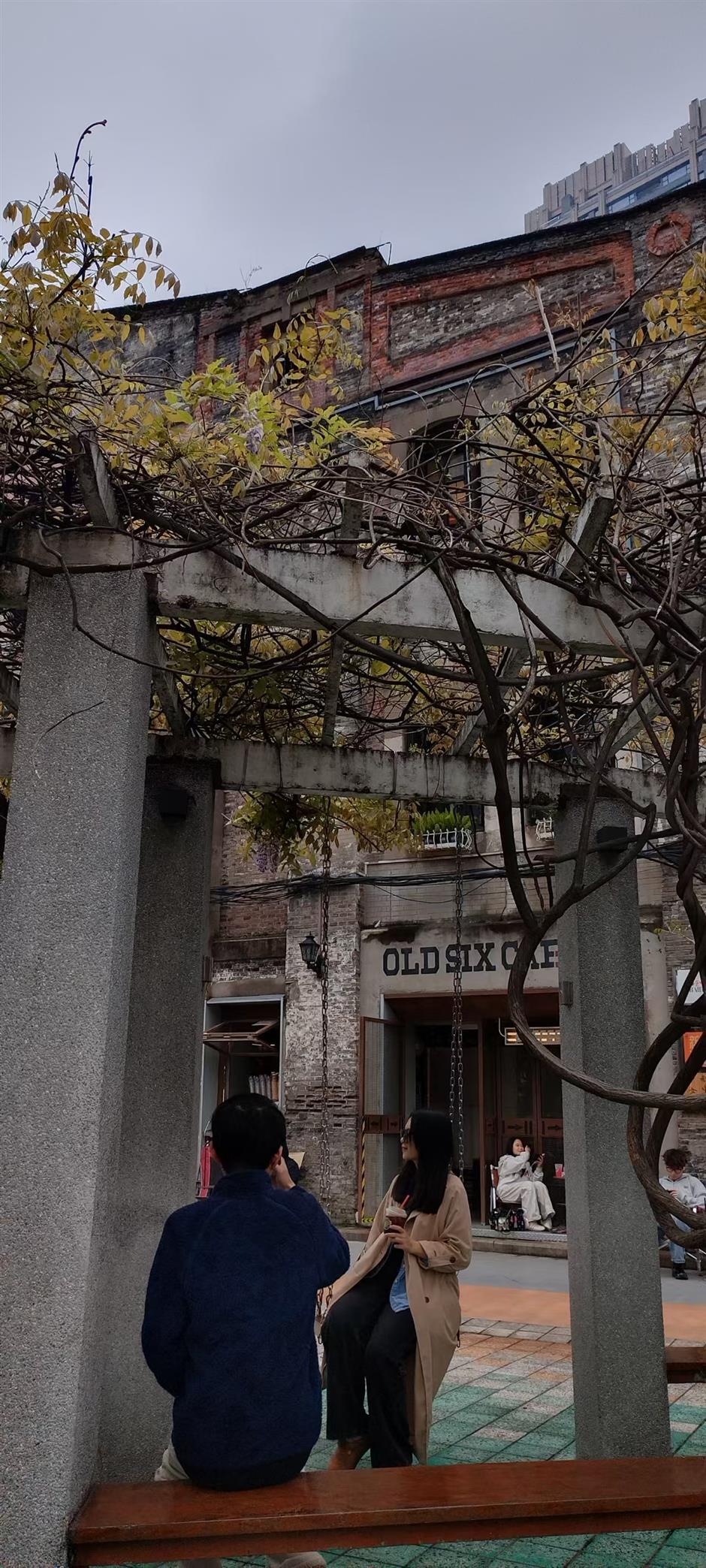
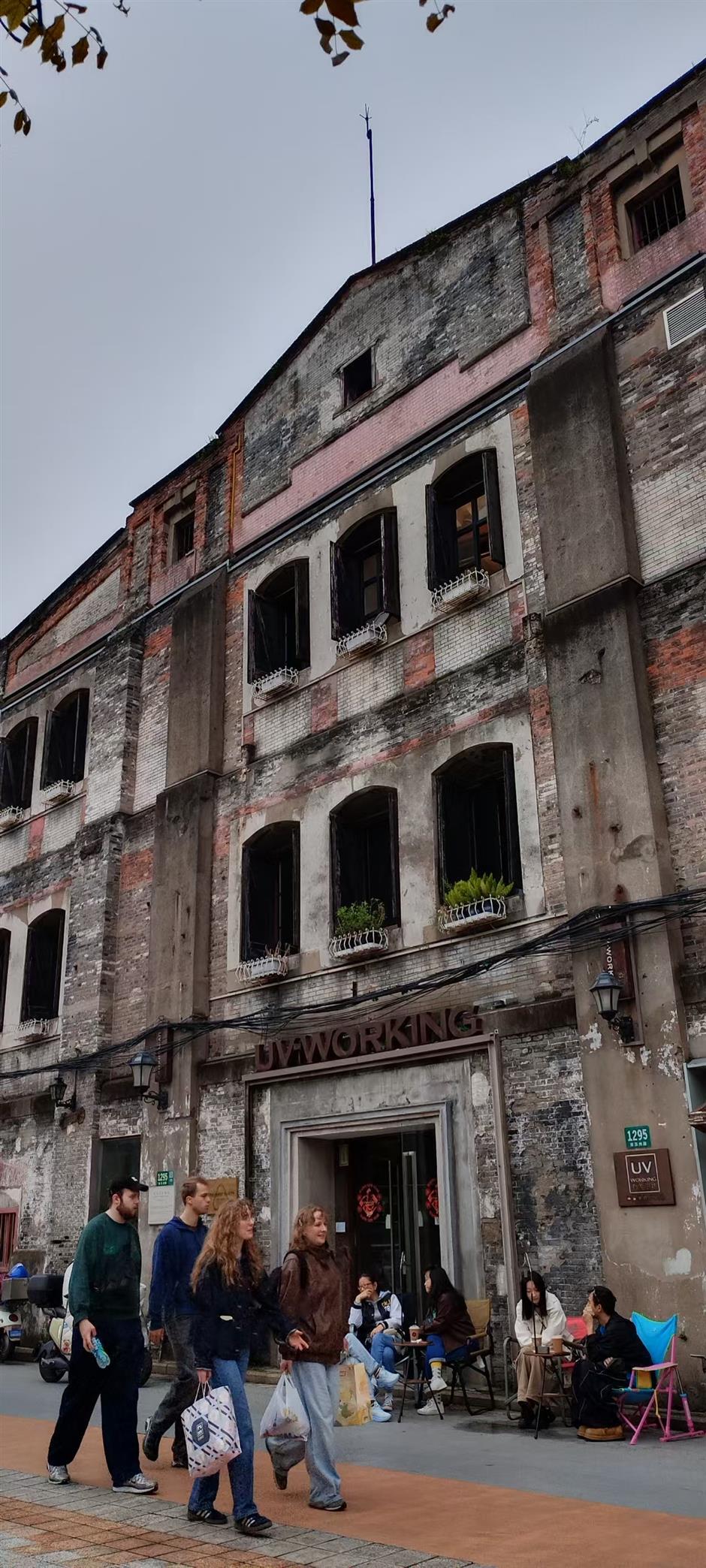
One afternoon in mid-April, I met a young couple sitting on a swing hanging in the green arbor across from Old Six Cabeer. They had come from Pudong and planned to walk eastward from the cafe, stopping at several distinctive coffee shops along the way.
The young woman told me that when taking photos on the swing, it was essential to include Old Six Cabeer in the background, because many people on social media platforms like Xiaohongshu specifically mentioned how much they loved the old building.
In Time Out's view, the coexistence of different architectural styles is also one of Shanghai's major attractions.
An employee at Old Six Cabeer told me that the business operates as a cafe by day and a bar by night. It opens at 8am and closes at 2am the following morning. Two employees work alternating shifts, but sometimes nighttime business becomes so busy – especially with foreign customers – that the night-shift worker cannot leave on time and simply continues working until 8am, seamlessly handing over to the daytime employee.
One visitor, who runs a tourism business in another city, asked the employee detailed questions about how to operate a "day cafe, night bar" model. He said he hoped to incorporate coffee culture into his own tourist destination.
Time Out noted that Shanghai's cafes are not only numerous and distinctive but also affordable for ordinary people. It wrote: "Shanghai received the highest overall affordability score, with 88 percent of locals agreeing that it's cheap to eat out at a restaurant and 90 percent saying the same for grabbing a coffee and going to the cinema."
Walking the entire 42-kilometer Suzhou Creek promenade, I indeed encountered cafes of almost every imaginable kind. To me, these cafes do more than provide tourists with places to rest and reasonably priced drinks; they also convey the warmth of the city itself. Whether at the "jellyfish" cafe or Old Six Cabeer, casual conversations between strangers carried a quiet sense of friendliness.
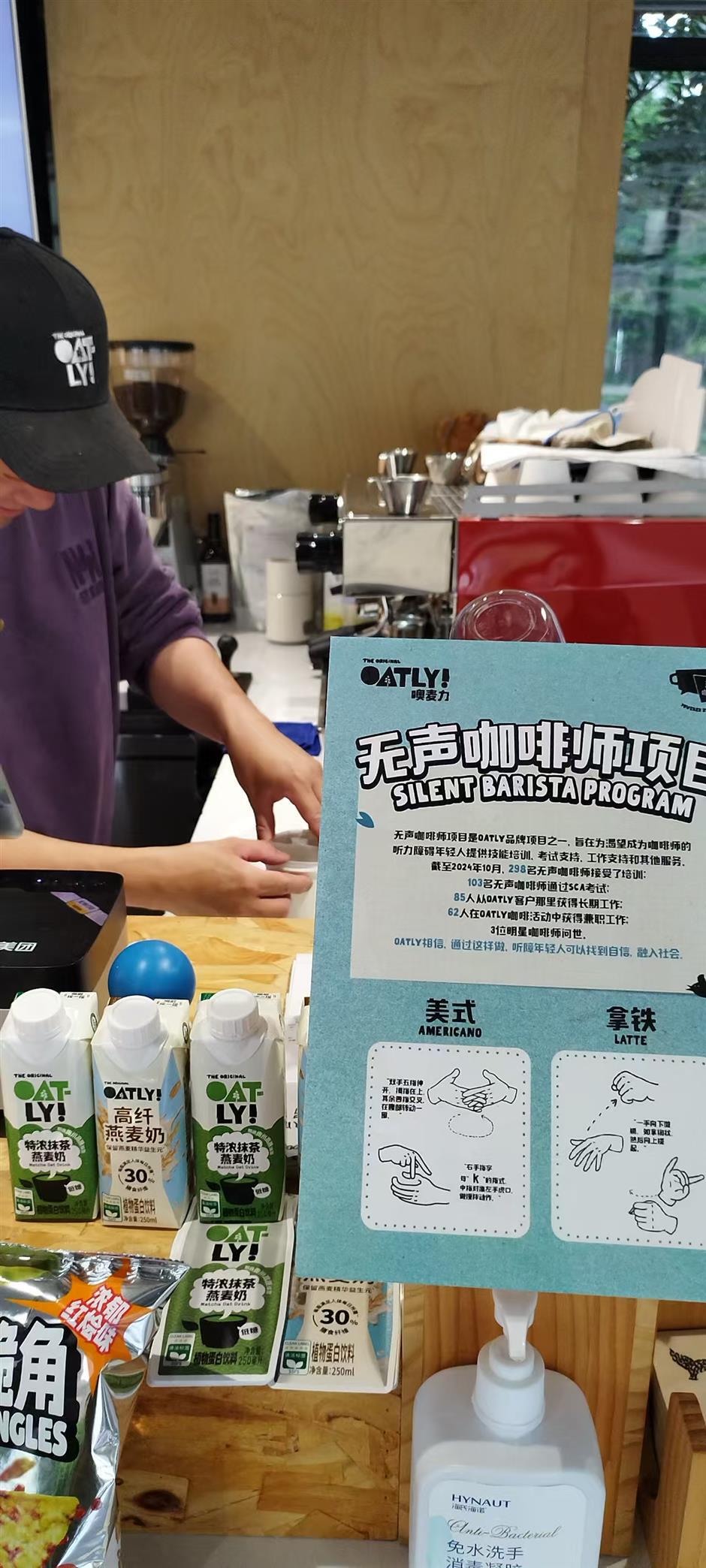
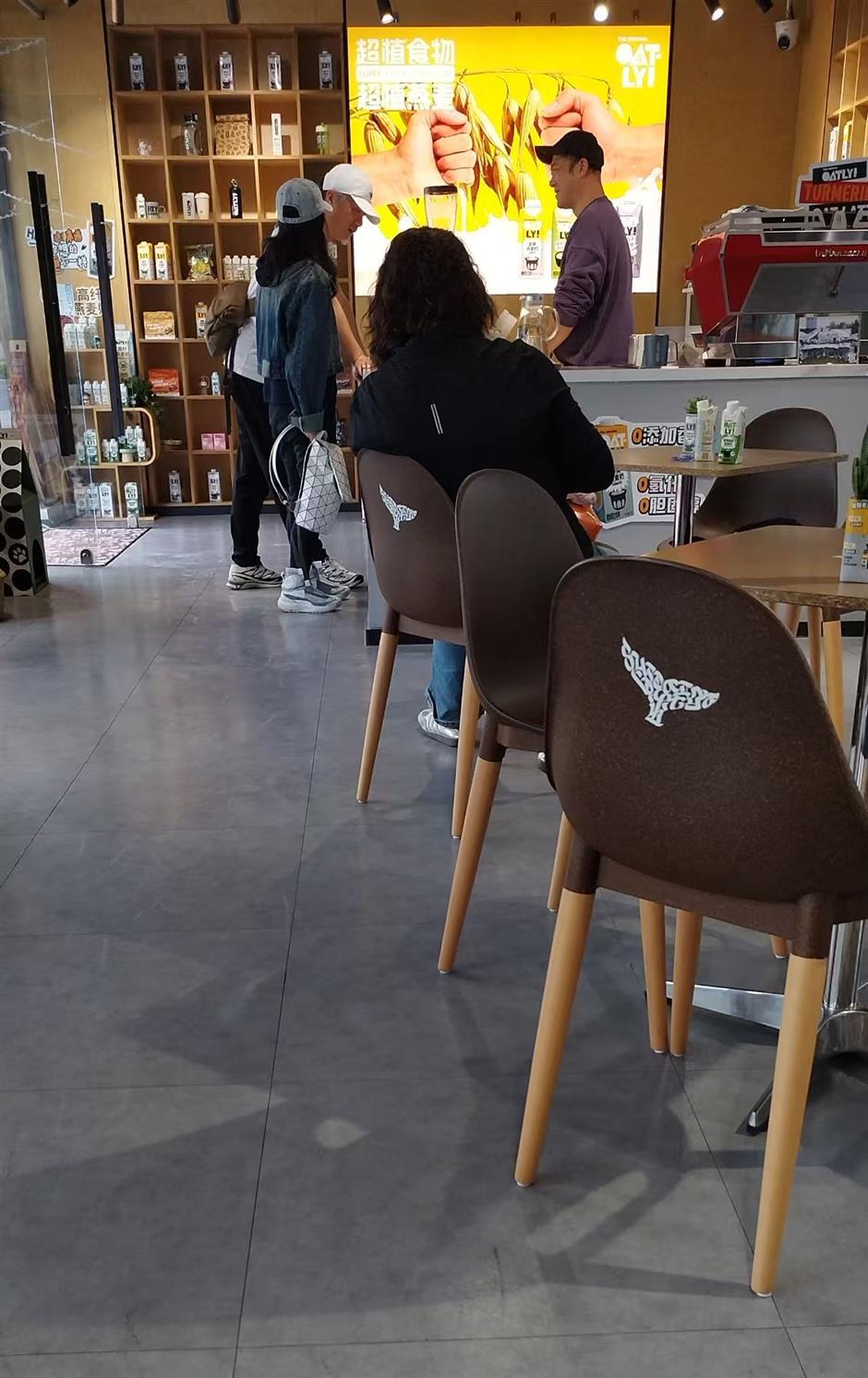
Sometimes, such communication transcends language itself.
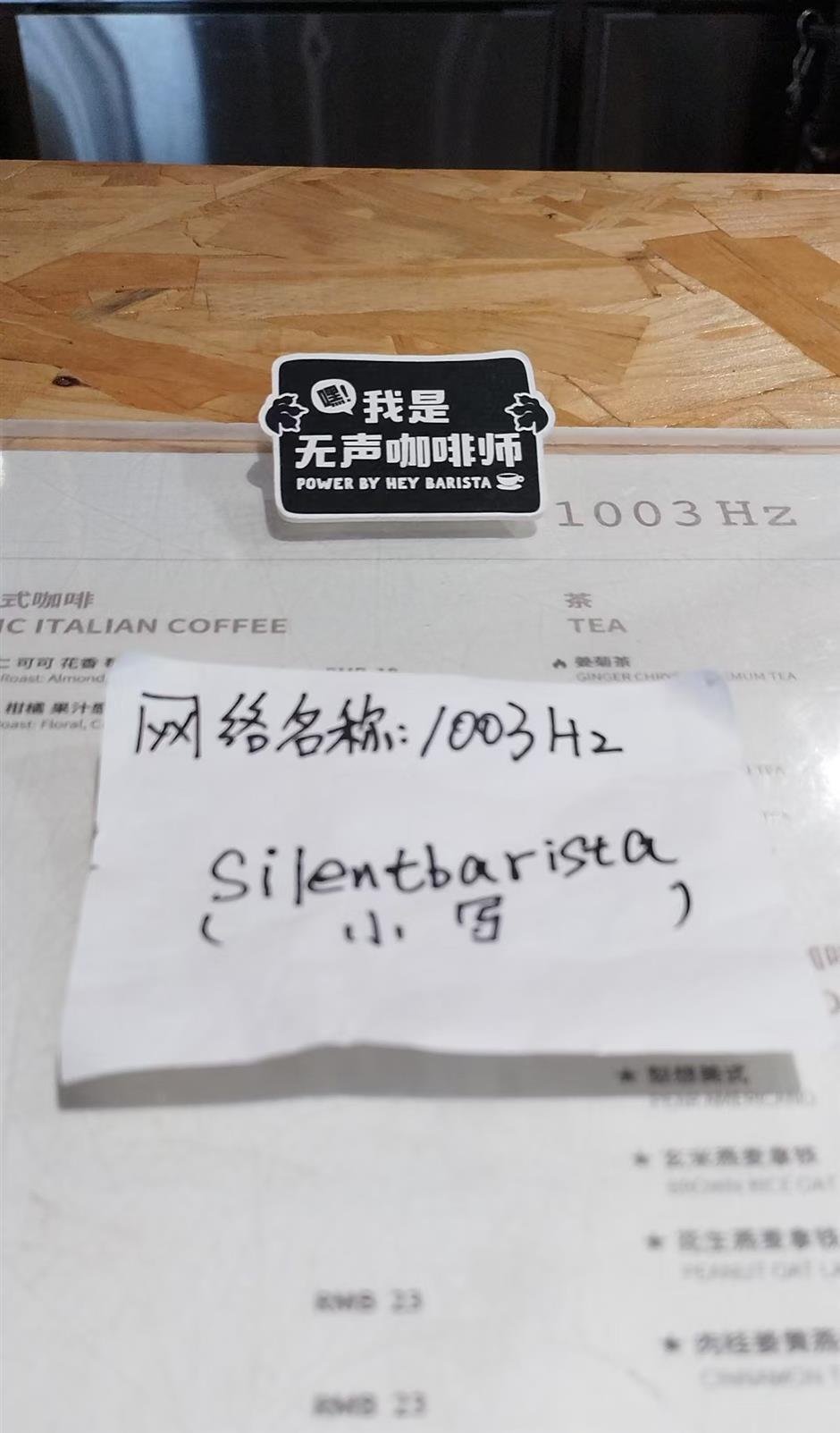
In early May, while walking along the creek, I accidentally discovered a quiet cafe called 1003hz Cafe & Bar. Only when ordering tea did I realize that the young server was a hearing-impaired barista. He smiled warmly throughout our interaction and kindly invited me to point to my choice on the menu.
I ordered a ginger chrysanthemum tea. Before leaving, I borrowed a pen and paper from him and wrote: "Thank you for your warm and professional service!"
The silent barista bent down carefully to read what I had written, then immediately straightened up, smiling as he greeted me with a traditional fist-and-palm gesture.
I then wrote: "How many hours do you work every day? Are you happy?"
He instantly picked up the pen and wrote "8" above the words "how many hours," then added "Of course" at the end of my question.
Finally, I wrote: "Business here seems pretty good, right?"
He looked at my question and nodded with a smile.
Before leaving, I turned back and waved to him. Smiling brightly, he waved back. Sometimes communication needs no words. Even silent gazes can move people deeply.
Yet it is not only chance encounters in cafes that reveal the warmth of Shanghai. During nearly three weeks of walking along the 42-kilometer Suzhou Creek promenade, I met many visitors, both Chinese and foreign, in riverside parks and beneath bridges. The spontaneous conversations I shared with these strangers made me realize that the city's warmth exists everywhere.
As Time Out observed in its comments on the 2025 world's best cities ranking, 80 percent of respondents believed that Shanghai is a place where it is easy to meet different kinds of people and make friends.
Editor: Liu Qi
In Case You Missed It...
 Oct 13, 2026