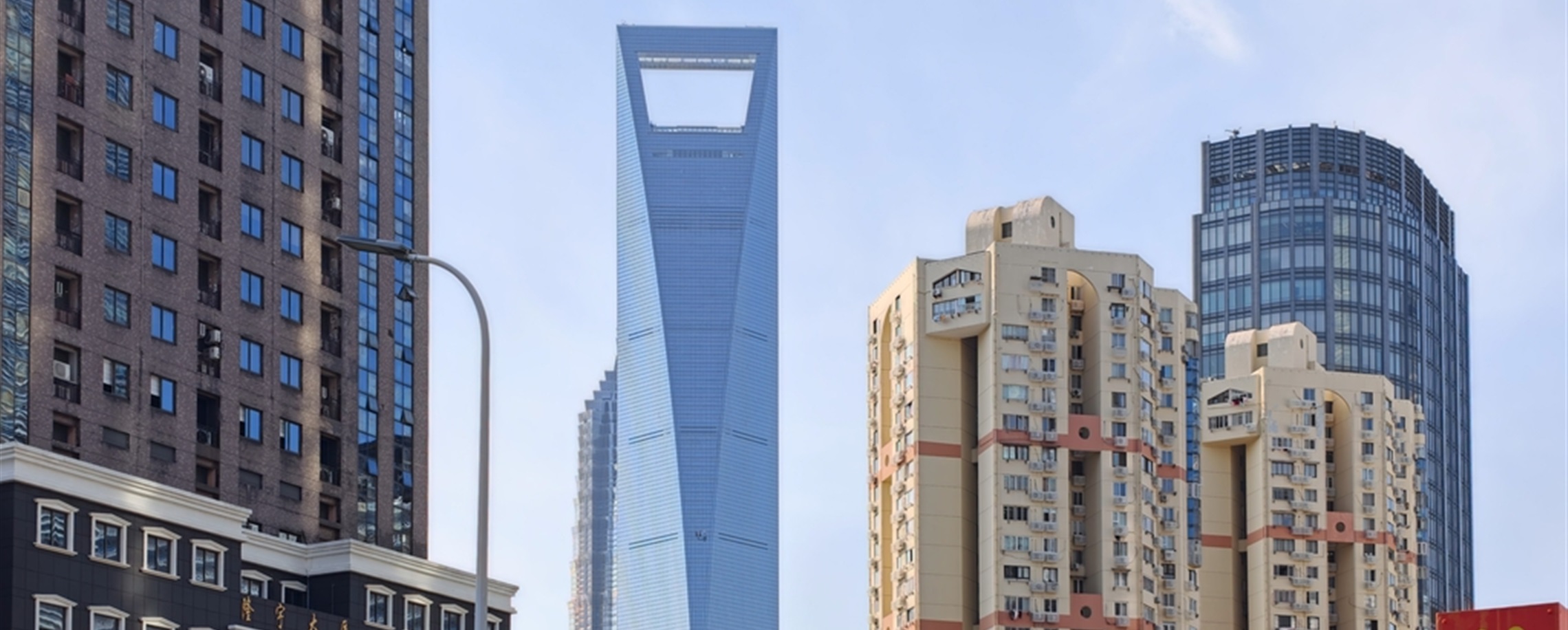
Unconventional Architecture: Where Shanghai Slows Down
Most people experience Shanghai at a fast pace. Office towers flash past taxi windows, delivery riders weave through traffic, and another shopping mall opens before the construction fence comes down.
Some of the city's most intriguing spaces invite visitors to slow down, take in their surroundings, and linger a while.
Four Shanghai projects were recently named among the 34 winners of the 2026 RIBA International Awards for Excellence. Scattered across the city, they are linked by an invisible thread: Shanghai's effort to turn overlooked, closed-off, or underused spaces into places where people can walk, gather and stay.
They form an unconventional city route. It begins beneath a bridge on Suzhou Creek, follows the water east to the historic streets around Rockbund, continues north along the Huangpu River to a garden-covered former warehouse, and ends inside the vast, sunlit Shanghai Library East.
It is not a route to attempt entirely on foot. But it traces a story familiar across Shanghai: spaces once used for traffic, storage or administration are being returned to everyday public life.
Wuning Road Bridge
A bridge is usually something to cross, not somewhere to stay.
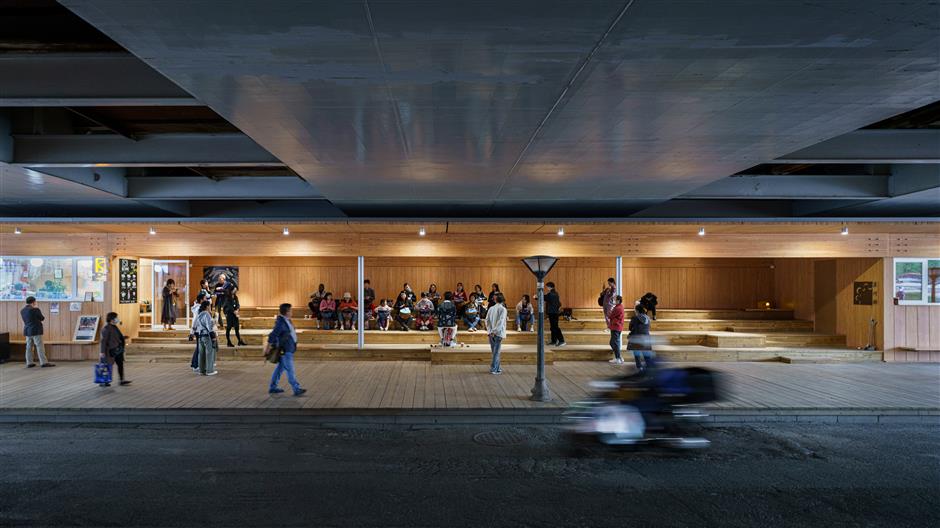
The service station under Wuning Road Bridge transforms a neglected space on the northern bank of Suzhou Creek into a neighborhood gathering place.
The bridge itself remains impossible to ignore. Traffic passes overhead and along the road, bringing noise and the occasional tremor. Beneath it, however, Atelier Z+ inserted warm timber-lined structures and stepped seating into the cool, grey surroundings.
The contrast does much of the work. Against the concrete and steel of the bridge, the wood makes the station feel almost like an urban living room.
There are public toilets, a lounge and flexible areas for small exhibitions and community activities. People can sit, talk, shelter themselves from Shanghai's summer sun, or wait out one of the city's sudden downpours.
"We made the space 'adaptable' rather than 'prescribed,'" Atelier Z+ said. "We hoped that different users could appropriate it in their own ways."
With less than 300 square meters, it's the smallest project on the route. It may be most relatable. It doesn't require tickets or architectural knowledge. Simply put, it makes an uncomfortable leftover space more useful and welcoming.
Since its opening, the station has found unexpected uses. It has been used as a gathering place for outdoor clubs, music community share-outs, saxophone users and street dance practice, the studio said. During the pandemic, delivery riders camped there to keep city logistics moving.
The station offers a gentle reminder that urban renewal does not always have to start with demolition or a major construction project. Sometimes it can begin with a seat, a light and a reason to pause.
Rockbund
From Wuning Road, the route follows Suzhou Creek to the Huangpu River.
Just before the two waterways meet, Rockbund presents a very different Shanghai streetscape. Along Yuanmingyuan Road and the surrounding lanes, restored façades, arched doorways and brick buildings preserve traces of the city from the late 19th and early 20th centuries.
Eleven historic buildings were restored as part of the wider development. They are now offices, apartments, shops, restaurants and cultural venues, including the Rockbund Art Museum.
Yet the best way to experience Rockbund is not to follow a checklist of architectural styles. It is simply to wander.
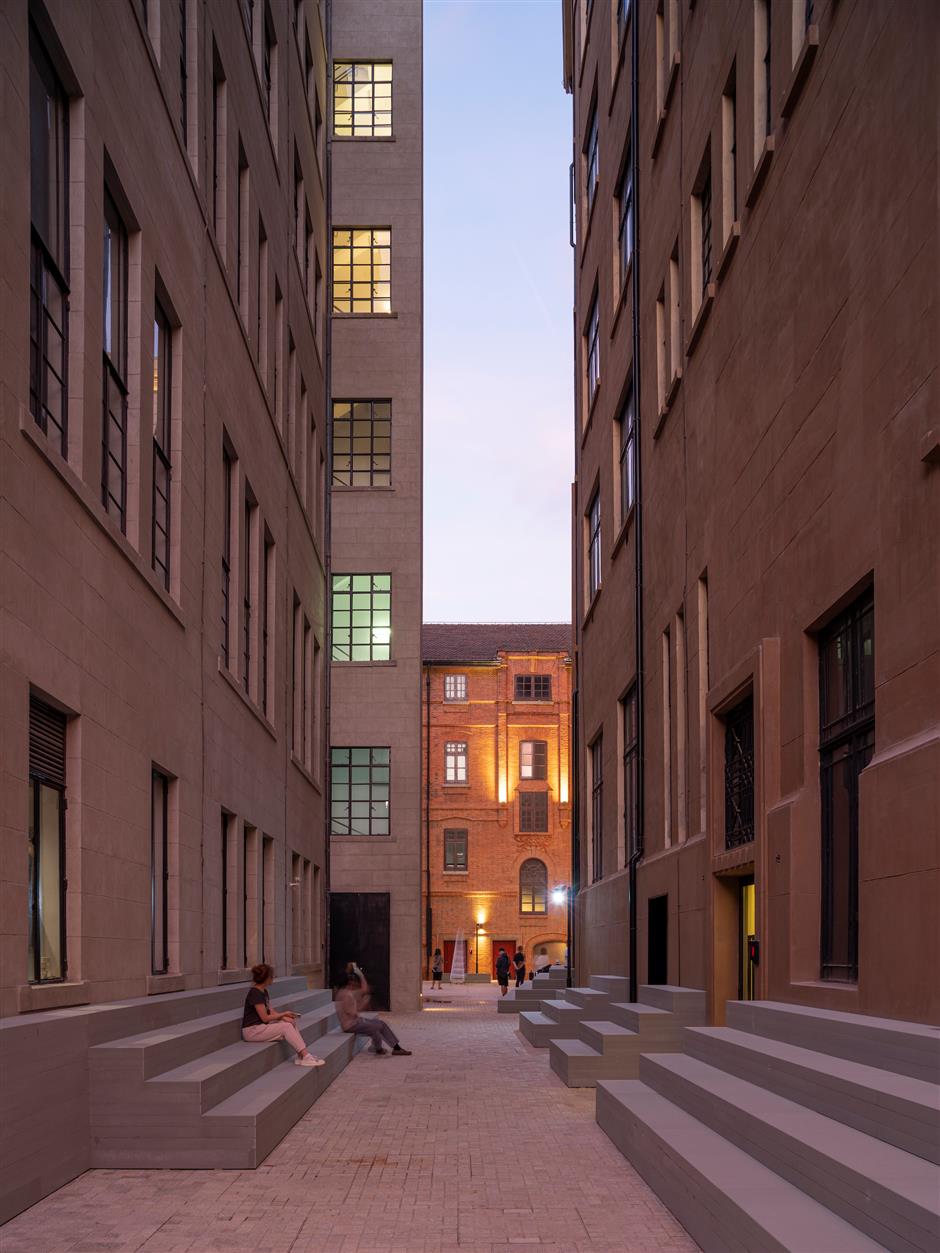
Slip into a narrow passage, look up at an old window, or sit on one of the broad steps between buildings. Courtyards and lanes create new routes through blocks that once felt closed, gradually drawing pedestrians toward the waterfront.
The neighborhood has inevitably become a favorite backdrop for fashion shoots, wedding photographs and social media posts. On a busy afternoon, there may be more cameras than coffee cups. But beyond its polished image, Rockbund shows how preservation can work at the scale of a neighborhood rather than a single landmark.
Its most memorable spaces are outside the buildings. They are the gaps between them: a quiet alley, a flight of steps, or a small square where people stop before continuing toward the Bund.
Green Hill
From the point where Suzhou Creek meets the Huangpu River, the journey continues north toward the Yangpu waterfront.
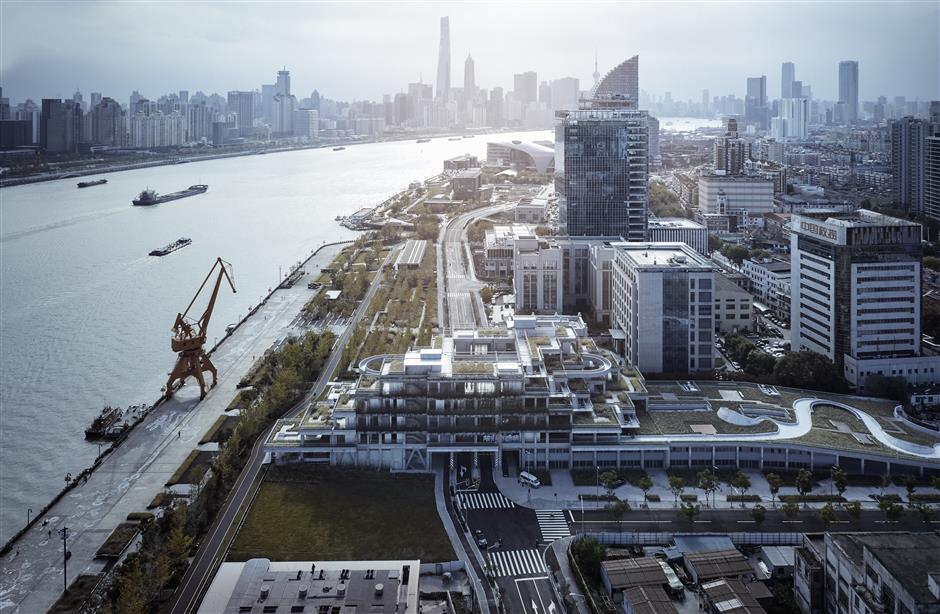
In the distance, Green Hill emerges as plants overtake a series of concrete terraces. Located at 1500 Yangshupu Road, the structure was once a warehouse for Shanghai Tobacco's machinery repair factory.
The six-story warehouse between the neighborhood and river was built in the 1990s. It had neither the age nor the decorative details of a historic landmark, so demolition seemed likely.
"Instead of asking whether the building had value, we asked what it could still carry," said Zhang Ming, Professor and Chair, Department of Landscape Architecture, College of Architecture and Urban Planning, Tongji University.
Although architecturally unremarkable, its regular column grid, generous floor heights and strong load-bearing capacity gave it considerable room to change.
"What we kept was not 'a building worth keeping,' but an opportunity for an ordinary building to re-enter urban life," Zhang said.
The building was ultimately cut back and reshaped into a series of planted platforms. Parts of its original concrete frame remain exposed, while staircases, ramps and walkways lead visitors upward through layers of trees, vines and tall grasses.
The pleasure of Green Hill lies in this climb. The Huangpu River disappears and reappears between concrete walls and greenery. A road passes through the lower part of the structure, while gardens and public facilities occupy the floors above.
"People treat it as terrain, not as a building," Zhang said. "Many visitors don't 'enter' it – they climb it."
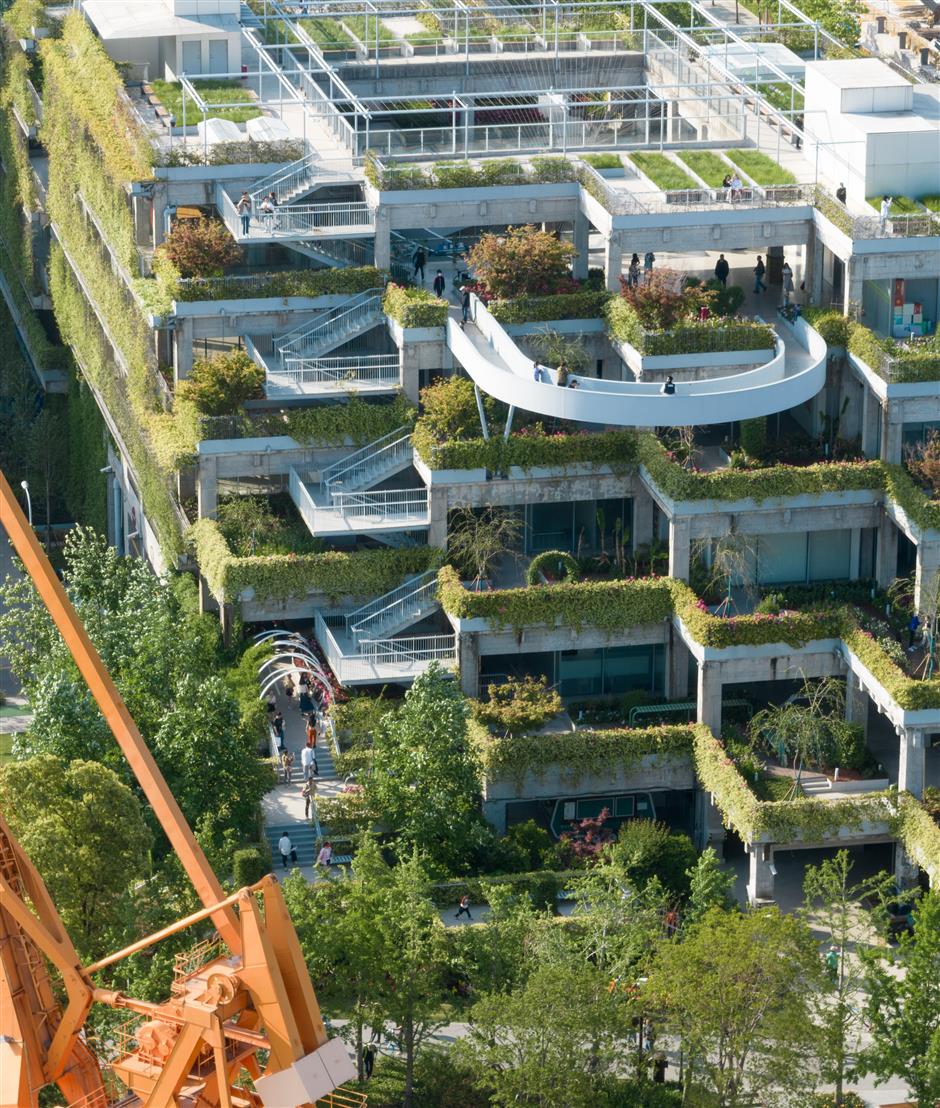
Children run along its ramps, young people circle the spiral atrium, while older residents practice tai chi or play chess on the terraces. Even the municipal road passing through the ground floor has taken on an unexpected life: cyclists deliberately ride through it, and neighbors and delivery riders rest there on rainy or particularly hot days.
The renovation does not attempt to make the former warehouse look delicate or nostalgic. Its rough concrete remains part of the experience, softened by plants and the changing seasons. The result is neither quite a park nor quite a building, but something in between: a piece of Shanghai's industrial history that people can walk through rather than merely look at.
Green Hill also changes the usual relationship between an industrial building and the waterfront. What once blocked access to the river has become a route toward it – and a place from which to look back at the city.
Take Line 18 to Shanghai Library East
The final stop leaves the waterfront behind.
From Danyang Road Station near Green Hill, Metro Line 18 runs directly to Yingchun Road Station, a short walk from Shanghai Library East.
The journey moves from an outdoor public landscape into one of the city's largest indoor public spaces.
Set beside Century Park, the library's angular form was inspired by Taihu stones, the weathered rocks traditionally collected and admired by Chinese scholars.
Inside, a vast central atrium opens beneath warm wooden ceilings, while a sloping glass façade draws daylight deep into the building.
With an area of around 115,000 square meters and space for 4.8 million books, Shanghai Library East is one of the world's largest new libraries. But books are only part of the attraction.
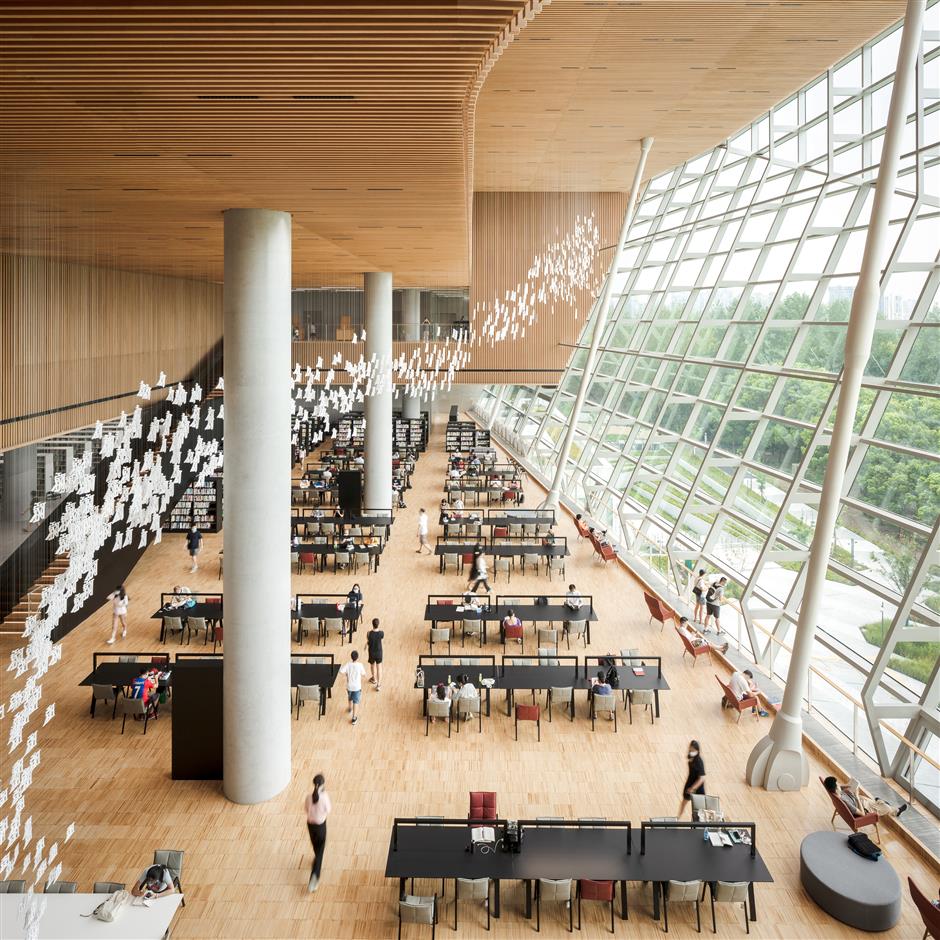
The library utilizes about 80 percent of its accessible space for open programs and public activities. Reading tables, exhibition areas, event venues and broad internal walkways make the building feel less like a storehouse for books and more like a cultural living room.
Visitors come to study, see an exhibition or attend a talk. Others come to browse, meet friends or find a quiet seat beside the windows. Children move between shelves, readers search for sunny corners, and people pause on the upper levels to watch the activity below.
Its scale is monumental, but daily life softens it.
And that is what connects all four stops. None of them requires visitors to understand architecture before enjoying it. They simply offer more ways to walk, sit, read, meet, and experience Shanghai at a slightly slower pace.
Editor: Shi Jingyun
In Case You Missed It...
 Sep 15, 2026



![[Community] Say Bye, Say Hi: An Evening of Swapping, Sharing and Connecting](https://obj.shine.cn/files/2026/09/16/699fe833-2ba8-4118-b51a-6cee96e14a30_0.jpg)