Why Australian Firefighters Become the Stars of CIIE
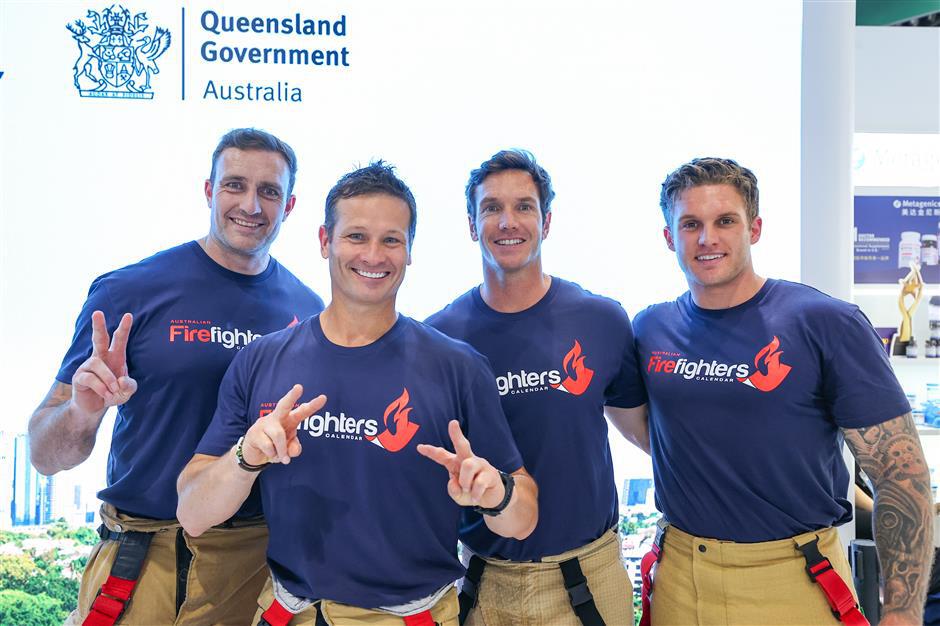
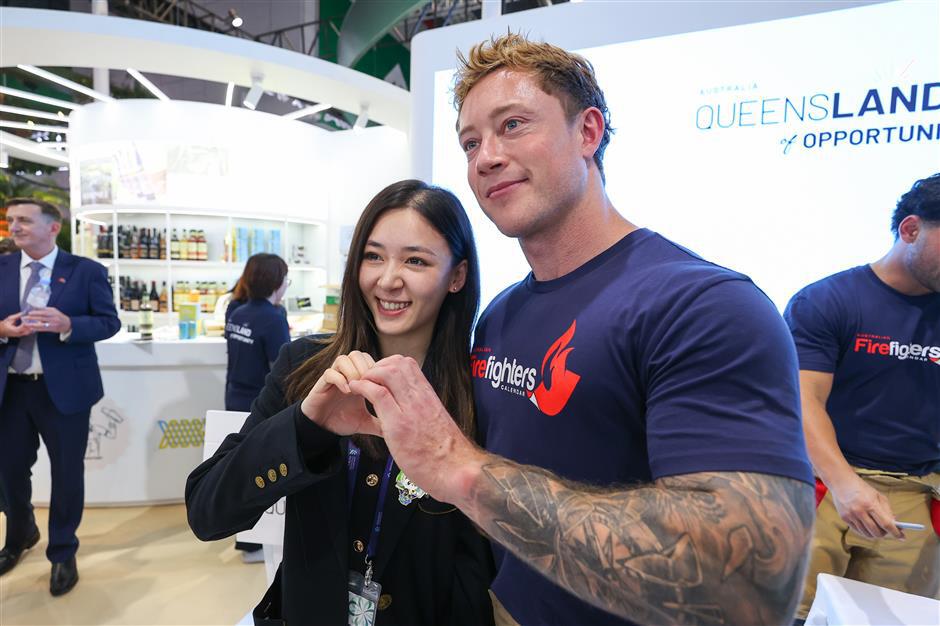
This year's China International Import Expo saw an unexpected attraction in the form of six burly Australian firefighters, rather than tech giants or luxury brands. They autographed calendars, displayed heart gestures, and playfully lifted visitors in "princess carries," transforming an ordinary booth into a lively fan meet experience.
The applause was unending, phones held high without pause, and on Xiaohongshu (RedNote), a social platform favored by China's Gen Z, users playfully remarked that they "weren't at work at all, but being pampered."
The group was advocating for the Australian Firefighters Calendar, a longstanding charity initiative that supports burn-research programs via the Children's Hospital Foundation.
"This is our first time at the expo, and the welcome has been incredible," said firefighter Alex. "People here are warm, friendly and genuine. We'd love to come back next year."
The scene underscored the profound significance of emotional value in today's consumer culture. In relevant research, emotional value denotes the advantage individuals derive from the feelings a product evokes, extending beyond its functional utility.
A recent report by Soul app and the Shanghai Youth Research Center reveals that young Chinese individuals currently allocate an average of 949 yuan (US$133) each month solely for "emotional value."
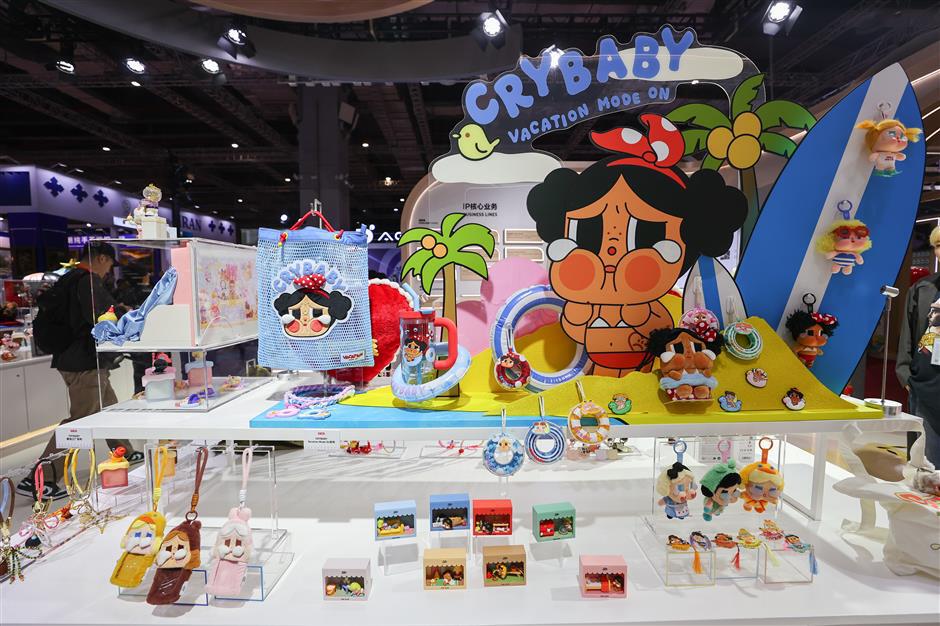
In another hall, Chinese toy giant Pop Mart leaned fully into that emotional current by decorating its booth as a 15th-anniversary celebration, complete with a towering sculpted cake and rows of limited-edition characters.
The Crybaby series, featuring a teary-eyed girl designed by Thai artist Molly Yllom, drew dense crowds, especially the Thailand-themed "tuk-tuk" edition shown in China for the first time.
To Pop Mart, the tear is not about fragility; it is about sincerity. "Crybaby represents young people exploring who they are and acknowledging their feelings," a staff member explained.
She added that the brand hopes to offer a wider range of products, from blind boxes and plush toys to everyday items such as aromatherapy diffusers and phone lanyards, giving young people small emotional touchpoints in daily life.
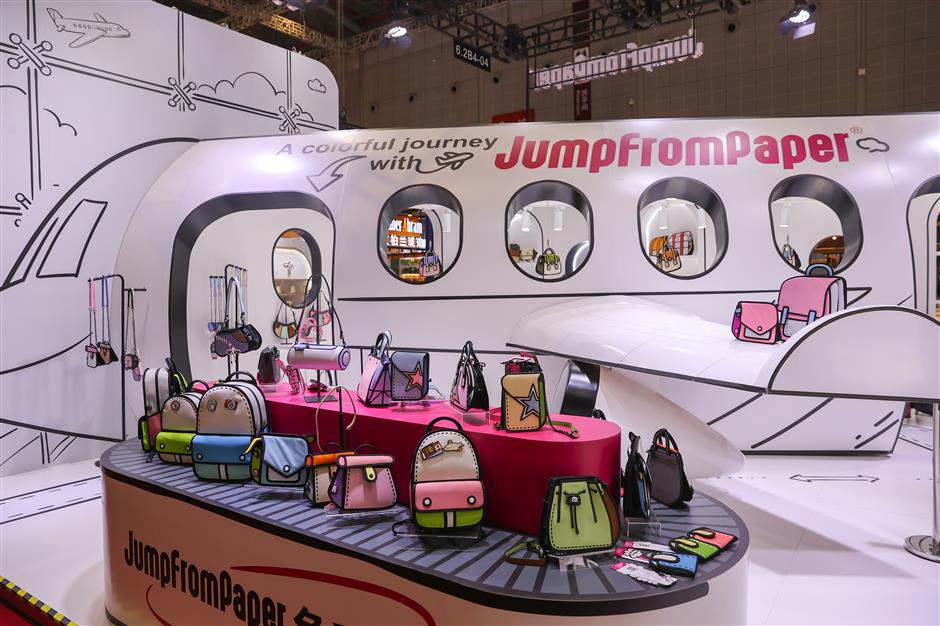
At Jump From Paper, a designer bag brand from Taiwan, emotional expression takes a different form. Here, the bags look like 2D drawings made real, as if they stepped straight out of a comic panel.
The booth kept the same playful tone, with bright color blocks and cartoon-like outlines, arranged like an airplane cabin where visitors picked up a "boarding pass" and walked through a "colorful journey."
"We don't make bags to prove anything to anyone," said head of sales and marketing for China.
"They're made to please yourself. They don't need to match every outfit or setting. You just need them when you feel most like yourself."
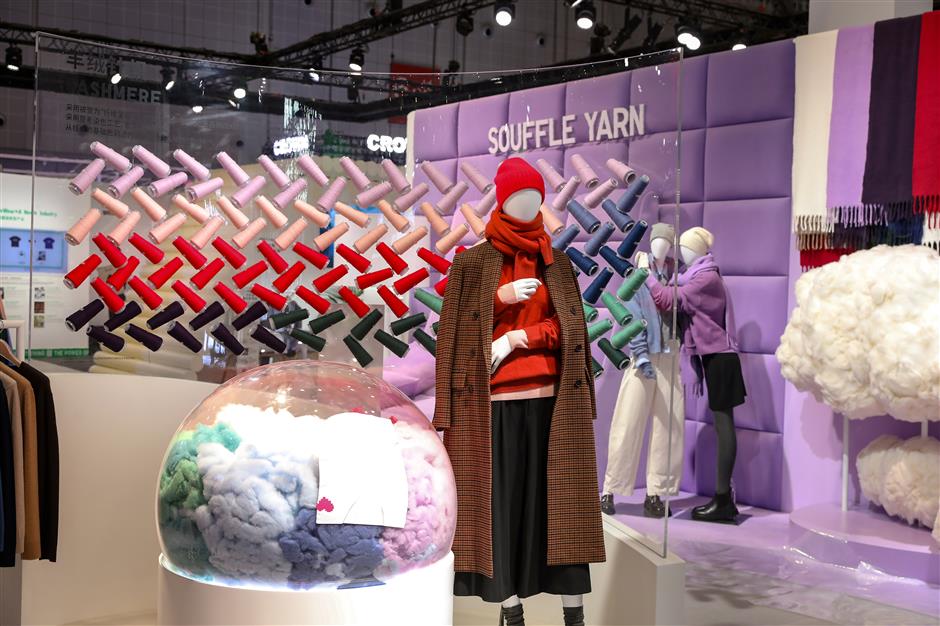
Japan's Uniqlo and Muji speak to emotional consumption in distinct ways.
Uniqlo spotlighted its Re. Uniqlo Studio, where worn pieces are repaired, reused, or remade rather than discarded. The brand also previewed its upcoming collaboration with Kaws, the New York artist behind the hit Companion figure.
"Young consumers today want pieces that feel personal," said Sai Liu, brand PR manager at Uniqlo. "Giving a piece a second life, instead of simply replacing it, is its form of self-expression."
Muji, the Japanese minimalist lifestyle brand, offers a quieter kind of emotional comfort rooted in simplicity and ease. It introduced hemp-blend clothing and a body-care line based on rice bran fermentation, focusing on textures and scents that soften the senses.
"Chinese consumers today care not just about quality but about whether a brand feels aligned with their values," said Liu Jingwen, senior brand communication director at Muji. "Muji is chosen because it brings a sense of natural ease."
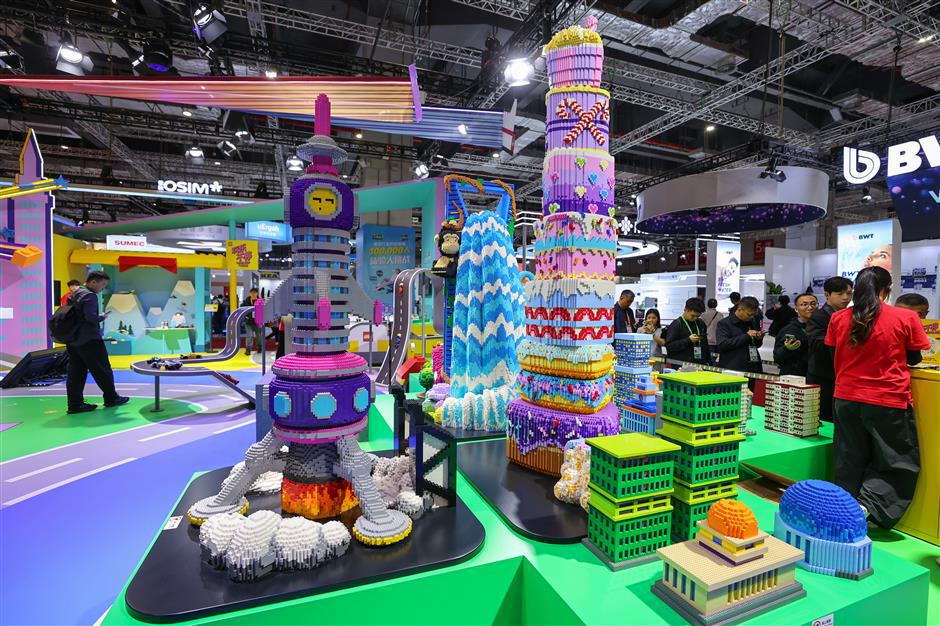
At Danish toy giant Lego's booth, towering floral, racing, and art-series builds surrounded visitors like a walk-in diorama. Several Shanghai landmark models reimagined by children, including the Oriental Pearl TV Tower as a rocket and Shanghai Tower as a cake, suggested that imagination doesn't fade with age; it is set aside.
"Adults are under enormous pressure in modern life," said brand manager Lai Hanyu. "Many haven't connected with their own interests in a long time. Building a Lego set lets them rediscover creativity, and when they finish a model, the sense of accomplishment itself is emotional relief."
From the firefighters' gentle strength, to Pop Mart's emotional avatars, to Jump From Paper's self-affirming color, to Uniqlo's creative renewal, to the quiet reassurance of Muji, and the mindful play of Lego, this year's CIIE quietly shows that young consumers are seeking not things, but feelings.
In Case You Missed It...
 Mar 30, 2026

![[Explainer] Your Guide to Applying for A 5-Star Card in Shanghai](https://obj.shine.cn/files/2026/03/25/abba9cd8-a391-4d52-89cc-78e198e96628_0.jpg)
