Robot Rentals Boom Ahead of Chinese New Year as Demand Surges Across China

As the Chinese New Year approaches, a new service is quietly taking off across China: robot rentals. Market demand has surged sharply in recent weeks, driven by festive promotions, commercial events and growing consumer curiosity, reported China Central Television on Monday.
In a newly opened smart restaurant in Beijing, service robots move back and forth across the dining floor, delivering meals while greeting customers with holiday wishes. In Shanghai, a convenience store opening recently drew crowds after a humanoid robot named “Xiaozhi” performed energetic street-dance routines outside the shop, quickly becoming a social media attraction.
Industry insiders say humanoid robots have emerged as star performers in the consumer market, thanks to their novelty, strong visual impact and ability to draw foot traffic. “They naturally create buzz and bring stable flows of customers, social attention and spending,” said Wang Yuxia, head of a Shanghai-based robot rental company.
According to Wang, demand for robot rentals for store openings, scenic-area exhibitions and even household services has risen two to three times compared with usual levels.
As demand heats up, robot rentals are evolving from simple equipment leasing into full-service solutions. Users now select application scenarios, while platforms provide robots, technical support and on-site services.
“Robots are no longer just products — they’re increasingly delivering services like people do,” said Li Kewei, chief marketing officer of a Shanghai robot rental platform.
The model has gained rapid traction. Major rental platforms have deployed more than 2,000 robots across over 200 cities nationwide. Orders are already booked through late February, with Chinese New Year demand proving so strong that companies report a shortage of available robots. To meet demand, firms are accelerating production in coordination with manufacturers, with the number of robots in service expected to exceed 4,000 by the end of February.
Beyond commercial use, private customization is emerging as a key growth driver. At a robot rental company in Beijing, founder Gao Li recently moved into an office twice the size of the previous space to accommodate expanding operations and new machines.
“One of our full-size robots can write and perform very fine movements,” Gao said. “It’s one of our hardest-working employees — sometimes completing up to eight jobs in a single day.”

With the addition of eight new robots, Gao’s fleet has grown to 23 humanoid robots, alongside 12 robot dogs and thousands of drones. Orders are fully booked through the Lantern Festival, which falls on the 15th day of the Chinese New Year.
While robot procurement costs are falling, demand is rising rapidly. Since January, customized private bookings — such as birthday parties, private gatherings and tea events — have jumped 300 percent month on month, accounting for about 60 percent of total orders.
“Closer to the holiday season, private customization actually increases,” Gao said. “I think robots will increasingly enter ordinary households.”
Strong demand for talent
Industry data show that more than 1,500 robot rental companies were established nationwide in 2025, up 48.1 percent year on year. As robot supply expands and daily rental prices decline, robots are becoming more accessible to everyday consumers.
The sector’s rapid growth is also fueling strong demand for talent. In Shanghai, engineers are working intensively at a robotics motion-development company to design movements and programs for upcoming large-scale performances.
“Robots have become highly sought after in commercial performance rentals,” said Shi Zhongwei, chief executive officer of a Shanghai technology firm. “The market is likely to grow even faster after the Chinese New Year, but the talent shortage is becoming more acute.”
According to Li, each robot rental provider typically needs five to 10 engineers per robot. “For our platform alone, we need around 5,000 engineers who are either in short supply or need to be onboarded quickly,” he said.
Platform data show that job openings in China’s robotics industry rose 66 percent year on year in 2025, while the number of job seekers increased 74 percent. Demand for roles such as robot debugging engineers and algorithm engineers grew by more than 40 percent.
To ease talent constraints, companies are partnering with art academies and performance institutions to cultivate cross-disciplinary professionals who combine technical and artistic skills.
Local governments are also stepping in. Shanghai now offers subsidies of up to 5 percent of contract value, capped at 5 million yuan (US$690,000), to companies selling or leasing embodied-intelligence robots, while accelerating the recruitment of top global talent. Beijing has introduced the country’s first professional title evaluation system dedicated to robotics, providing clearer career pathways for industry professionals.
Industry experts say 2026 will be a pivotal year as robots move from mass production to large-scale commercial application — a shift expected to generate significant talent demand and give rise to new professions.
Popular Reads

China's Automaking Juggernaut Pushes Into Europe, Shifting the Industrial Landscape

Shanghai's Smart Healthcare Practices Shared at Geneva Conference Empowered by AI
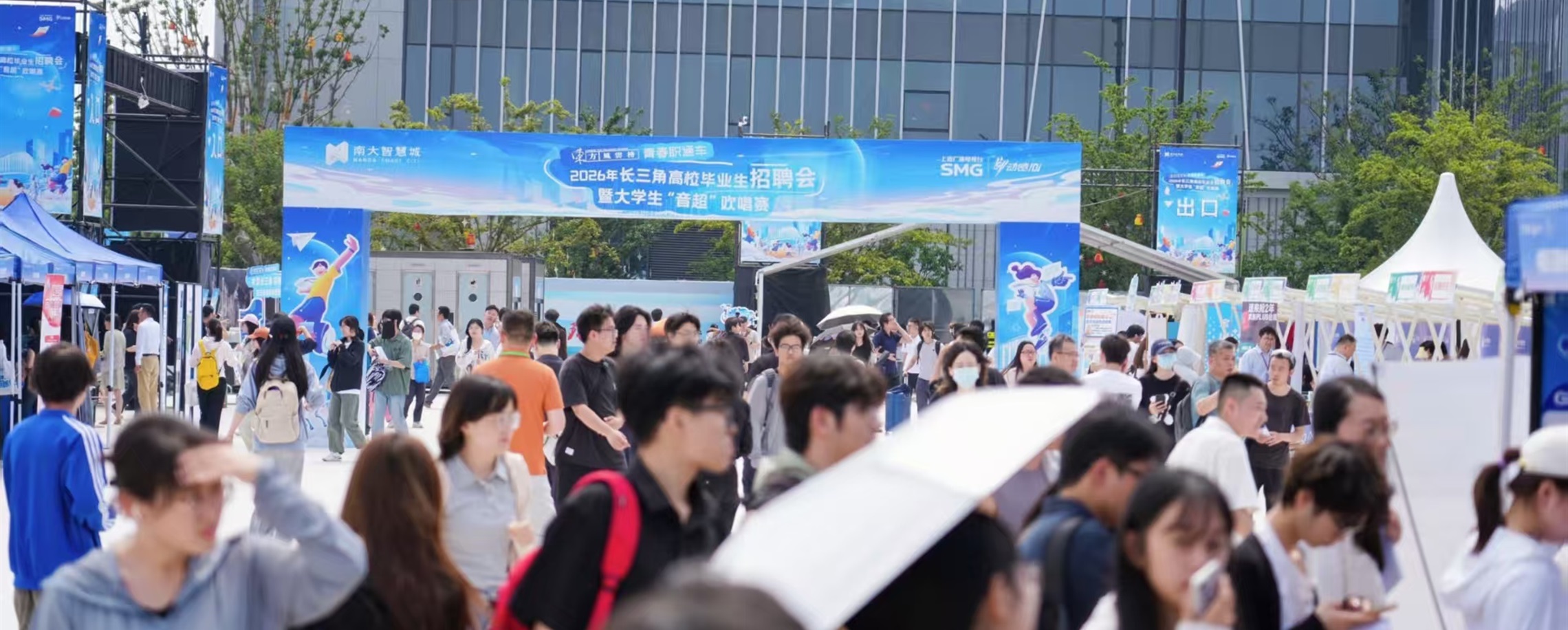
Shanghai Job Fair Merges Music And Tech To Attract Global Talent