Ciceronian Overreliance on Electronic Gadgets May Backfire
Cicerone as an honorific for a museum guide is increasingly anachronistic because in the digital age, finding a guide with eloquence and erudition that is typical of Cicero can be a challenge.
Increasingly, the only distinction that sets guides apart from their multitudes of followers is the glittering iPads in their hands.
For guides, such devices used to be confined to megaphones and laser pointers.
They now include tablets, AR glasses and more in the pipeline.
True, these ever-evolving tools have some value in enriching museum experience, for instance, by explicating the fine textures on artifacts, by reconstructing a slice of life from thousands of years ago, or by breathing life into ancient figures or antique objects.
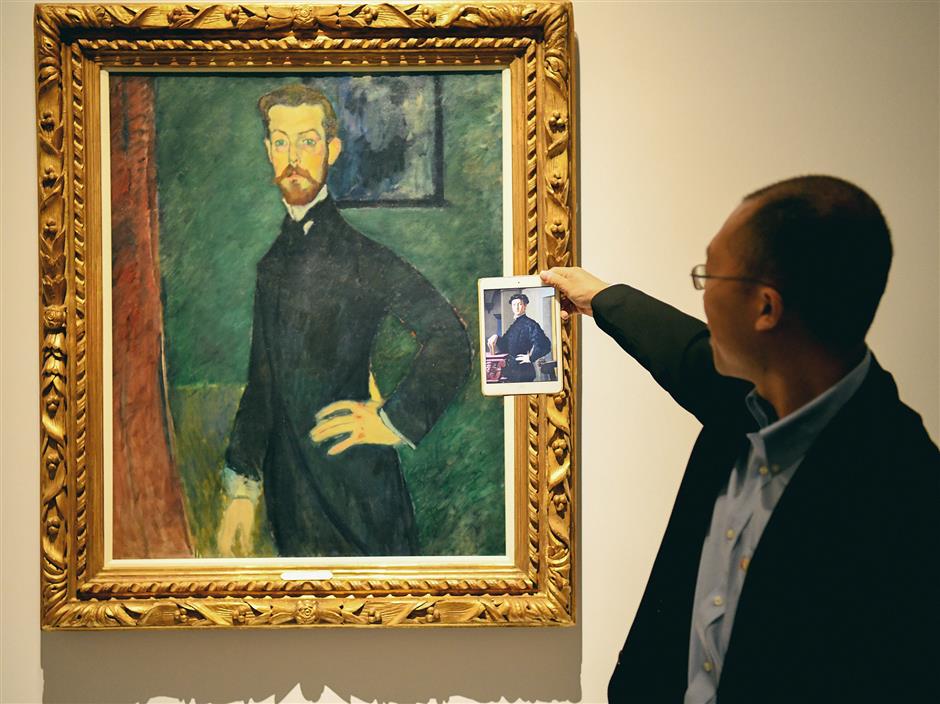
In spite of their worth in rendering relics more palpable and perceptible, let bygones be bygones, let visitors savor antiquity in its proper milieu, away from too whizzy stuff.
When I visited the Minhang Museum a year ago, I was drawn to Yan Wei, a guide, whose passionate, dramatic commentary, occasionally supplemented by swift pencil scribbles in his notebook, brought the Chu State relics to life, unlike those generic guides equipped with tablets, who are forced to split their attention between visitors and digital screens. Yan had been responsible for composing scripts for a CCTV documentary on the 800 years of the Chu State, which was toppled by the Qin Dynasty (221-201BC) in 223 BC.
However, surreptitiously, these guides glanced at the tablets, their wellspring of historical tales and knowledge, their constant need to reference them proved distracting, and debasing.
As a bridge connecting cultural relics and visitors, museum interpretation is not only part and parcel of museum education, but also critical to passing down history and culture, a function that helps cultivate the national spirit.
I have several museum-going friends whose hunger for historical knowledge far exceeds merely sharing photos on social media.
They keep track of newly opened museums and the latest exhibitions, eagerly unraveling the history and culture behind the exhibits, often through self-research, an endeavor greatly aided by knowledgeable cicerones.
This also explains why museum guides in many Western institutions are often manned by seasoned experts recognized as authorities in their own right.
For visitors like these, tour guides constantly juggling multiple digital devices inevitably undermine the museum experience.
No matter how seamlessly they can toggle between various screens and gadgets, these self-proclaimed narrators end up little more than actors, or device operators hosting a mindless session of scrolling and screen-checking.
Overreliance on technology, therefore, proves profoundly limiting and risky: a single technical malfunction, or a casual chat with a thoughtful listener, can expose the guide's lack of independent expertise. They would be unmasked for what they are.
This also throws into sharp relief the immeasurable worth of genuine knowledge, exemplified by the aforementioned Yan and his predecessors. Long before digital aids existed, these figures could enchant entire audiences through the power of their eloquence and heartfelt passion.
Bathed in the gallery's gentle glow, amid a trove of ancient relics, visitors guided by erudite commentary could embark on a journey through time, in an intimate spiritual communion with history itself.
This heartfelt power stems not from technology, but from solid expertise, devotion, and reverence.
True erudition and contemplation remain indispensable. Should digital screens overshadow our cultural heritage and technology usurp the narrative of history, museum interpretation will lose sight of its cultural bearings.
It therefore becomes imperative to put interpretation back in the context of culture in its purest form.
Museum tours must be rooted in solid academic knowledge, sustained by facts, and informed by genuine emotion and love.
Editor: Fu Rong
In Case You Missed It...

 Sep 29, 2026