CPUs and GPUs: The Shifting Focus of Technology in the AI Era
The long-standing obsession with graphics-processing units, especially Nvidia GPUs, is facing a major turning point in the AI era. The idea that GPUs entirely define artificial intelligence has dominated the industry for years, but that narrative is shifting rapidly in China and across the globe.
A surging demand for central processing units (CPUs) and memory chips is fueling a massive new wave of chip-stock growth. This transition is also being driven by innovations in liquid cooling, high-speed interconnects, and a booming token economy fueled by the latest updates from Chinese startup DeepSeek.
Let's pause for a moment to distinguish between GPUs and CPUs. The CPU is often called the "brain" of a computer. It's a collection of millions of transistors that can be manipulated to perform a variety of calculations once at a time. A GPU is a specialized type of microprocessor, essential for heavy-duty tasks like high-end gaming or AI processing, where the computer must perform millions of tiny, simple calculations all at once.
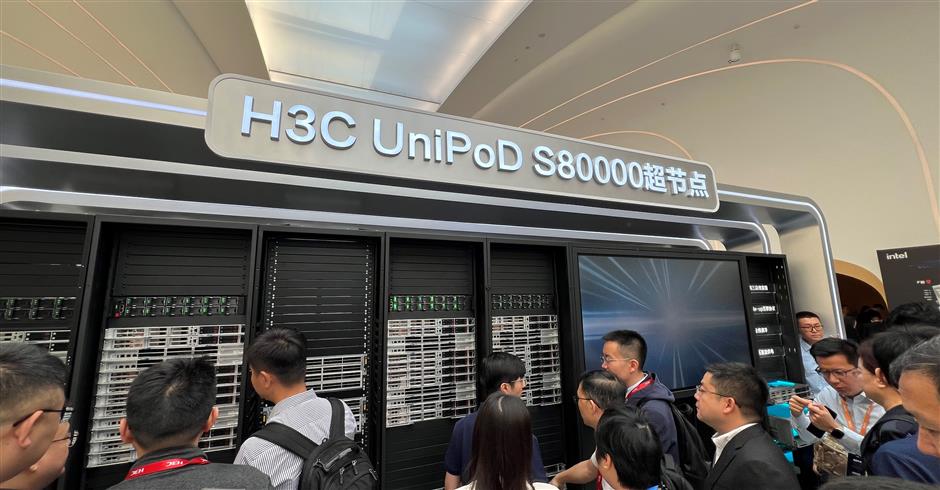
Yu Yingtao, chief executive and president of H3C Technologies Co, said AI still faces hurdles, including low GPU utilization rates that have dropped below 60 percent in some data centers, chronic chip shortages and the skyrocketing cost and unstable supplies for memory.
H3C, with annual business over US$10 billion, unveiled its latest super AI node server at its Navigate 2026 conference in Beijing recently. The system features the Kunlunxin AI chip, developed by Baidu, alongside new high-speed interconnection and liquid cooling technologies.
He Hui, a semiconductor analyst at Omdia, said the AI evolution no longer relies solely on GPUs or Nvidia's CUDA system. Both domestic and global companies involved in CPUs are contributing more to the AI wave, while Chinese companies are building independent ecosystems through chip-AI model integration, take recent DeepSeek upgrades as examples.
For years, markets focused almost exclusively on GPU makers like Nvidia for the essential engines for generative AI. CPUs became an afterthought. However, the semiconductor narrative began to shift this year, when Anthropic's latest Claude model showcased advanced agent capabilities. Since these AI agents run 24/7 and generate massive amounts of data, demand for CPUs and memory exploded, pushing share prices to new heights.
Chipmaker Intel has seen its stock price jump 250 percent to a record this year, compared with Nvidia shares jumping 18.5 percent. Other chip firms like AMD, Micron and Qualcomm also hit new highs this week, while South Korea stock market surged 4 percent led by shares in advanced chipmakers Samsung Electronics and SK Hynix.
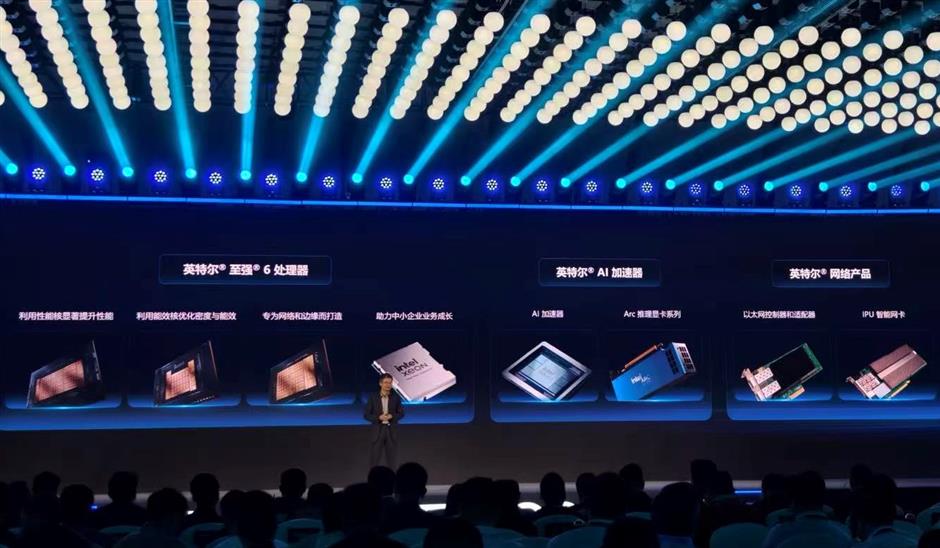
Guo Wei, general manager of Intel China, explained that the demand for central processing units will continue to grow. He noted that the ratio of CPUs to GPUs within single AI servers is shifting from 1:8 to 1:4, and is eventually expected to reach 1:1.
In China, Hygon Information reaping the benefits of the shift. The company, which supplies both AI chips and self-developed CPUs, reported a 32 percent surge in net profit last year to 2.5 billion yuan (US$370 million) on a 57 percent revenue surge, reflecting deeper penetration into the domestic market. Shanghai STAR Market-listed Hygon shares have surged 55 percent this year, turning into one of best performing stocks in China this month after a 20 percent daily increase last week.
Meanwhile, US-based Advanced Micro Devices or AMD is preparing to hold a major global event in Shanghai next week, marking the first time the chip giant has hosted a top-ranking event on the Chinese mainland.
H3C's new UniPoD S80000 Super Nodes represent a leap in high-performance computing. Designed for training and inference of models with trillions of parameters, the product line supports up to 128 cards per cabinet. This deep optimization has improved training performance by 70 percent and tripled inference speeds.
Its Beijing onsite demonstration featured the Kunlunxin chip from Baidu's AI chip unit. Kunlunxin is preparing for a listing on the STAR market and a subsequent Hong Kong initial public offering. Research firm Nomura expects Kunlunxin's revenue to hit 6.6 billion yuan this year as demand for reasoning and training chips surges.
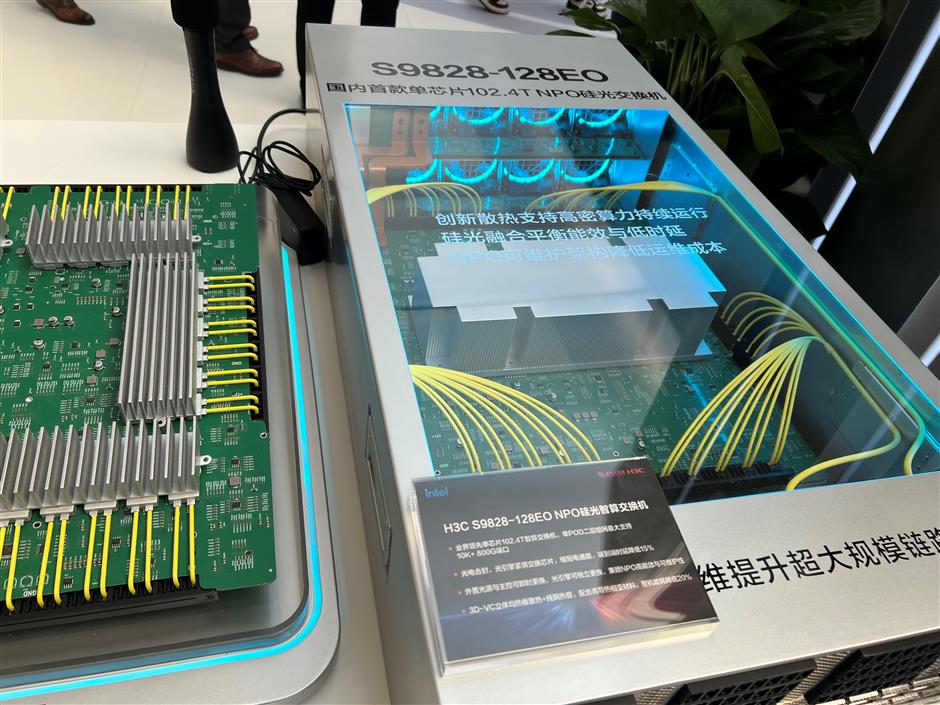
To handle the heat generated by these powerful systems, H3C launched a fully liquid-cooled design that saves space and increases power output. The company also supports CLink, an open high-speed connection standard in China. This provides the industry with a viable alternative to Nvidia's proprietary NVLink, which functions only with Nvidia devices.
AI technology is evolving with multi-dimension demands covering computing capacity, network, storage, cloud and security, offering H3C booming business opportunities, Yu said. He expected H3C's revenue to rise to 100 billion yuan this year from 76 billion yuan in 2025.
China's AI market is fostering a growing ecosystem independent of Nvidia's dominance. The National Data Administration reported that China's daily AI token usage topped 140 trillion by late March, a 1,000-fold increase since late 2024. To sustain this expansion, authorities are building national computing hubs and integrating green energy.
ByteDance has reportedly raised its 2026 capital expenditure target to over 200 billion yuan. The TikTok owner is boosting spending to expand infrastructure and offset memory costs while allocating more of its budget to domestic AI chips. ByteDance's AI growth is supported by its Doubao chatbot, which reached 345 million monthly active users in March and debuted a tiered paid subscription plan recently.
This massive spending reflects a global trend. TrendForce estimates that the combined capital expenditure of nine major cloud providers – including Google, Microsoft, Meta, Alibaba and ByteDance – could reach US$830 billion this year.
Ray Xu, senior vice president of H3C, noted that demand from tech giants has been extremely strong since May, far exceeding original projections for 2026. He added that the optimization of DeepSeek V4 on Huawei's Ascend chips is particularly impressive and likely to drive additional business. H3C set up the Internet and Customization Business Group to offer suited services for giants like Alibaba, ByteDance and Tencent and Xu lead the team.
With growing China-developed chips and AI models, and their integration, a new business format is emerging for the AI-driven token economy, said Omdia's He.
Editor: Liu Qi