The Sound of Gold at The Shanghai Museum
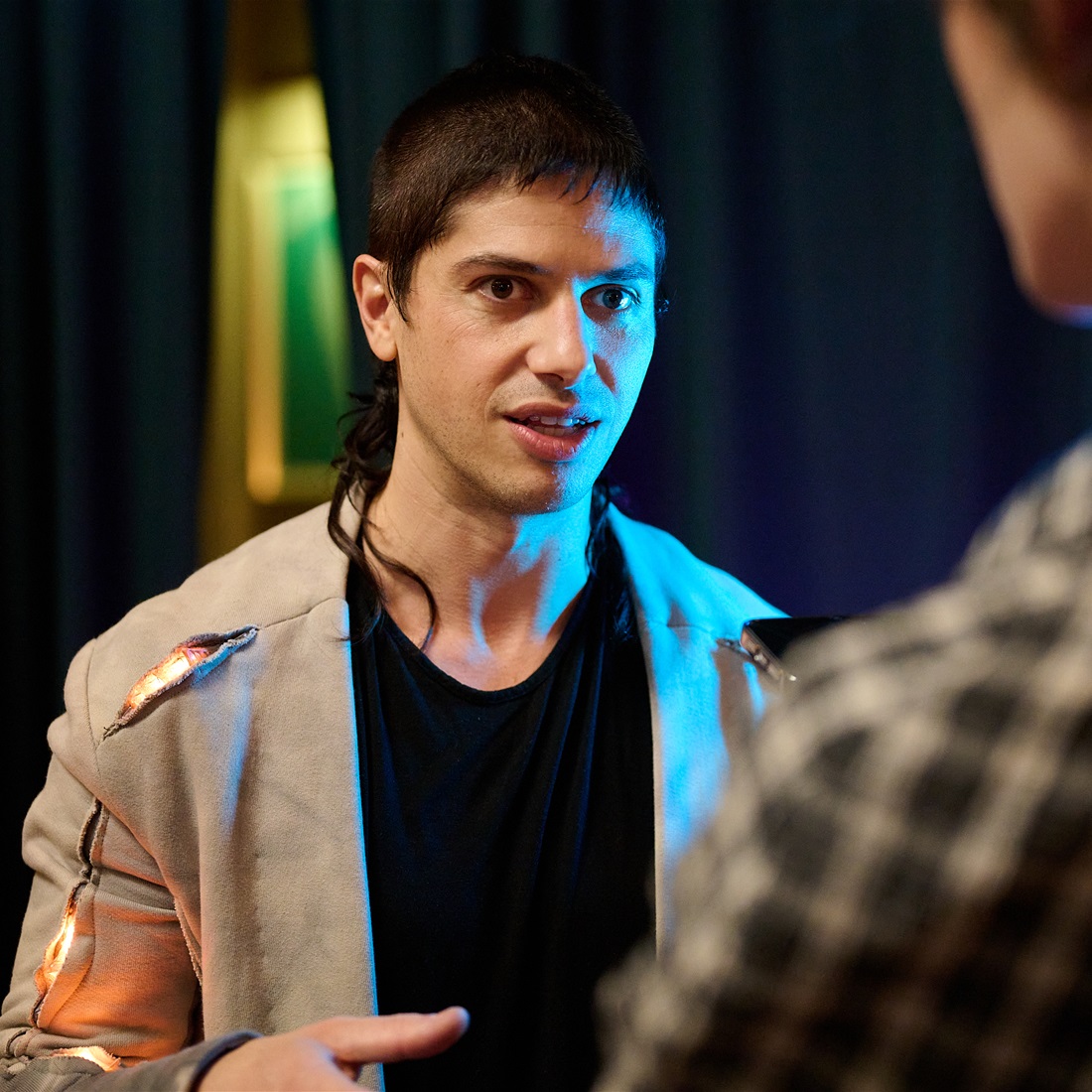
I kept the director and Chief Executive Officer of The Metropolitan Museum of Art waiting five minutes. I'd been given twenty. It was 10pm in Shanghai and apparently being a millennial qualifies me to do any number of things on a computer except get into Zoom on time. Max Hollein was already there. He was gracious. We had 15 minutes, so we dove in.
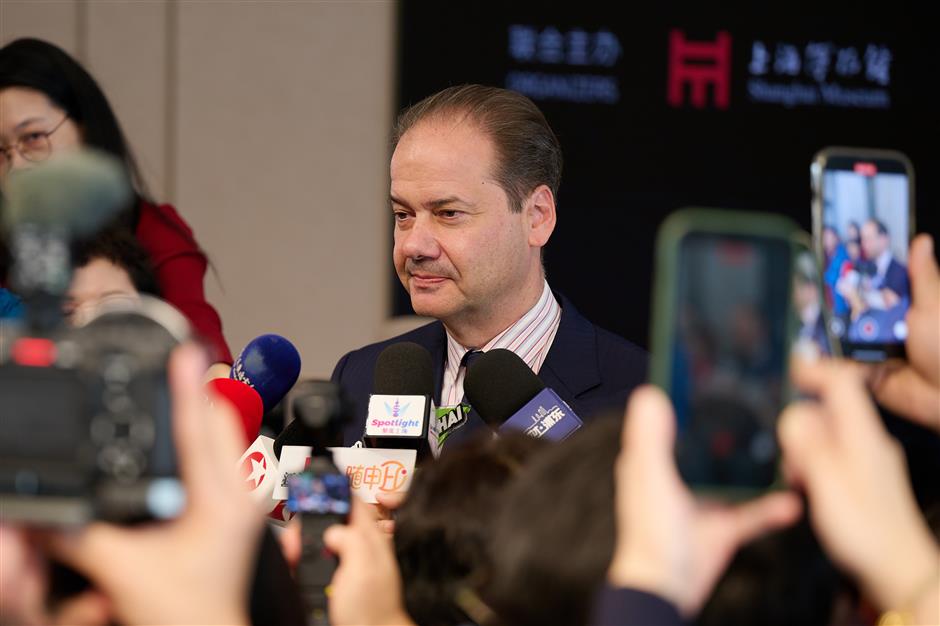
To begin, I wanted to understand the relationship between The Met, and The Shanghai Museum, two of the world's foremost cultural institutions and what exactly it means... that the pair would be signing a memorandum of understanding for long-term collaboration.
"Our relationship with the Shanghai Museum is based on deep mutual respect and trust. Over the past several years, that relationship has resulted in a number of important projects, including exhibitions presented in New York. Director Chu Xiaobo has been very energetic in exploring how we can expand our collaboration, and the development of Shanghai Museum East opens up further possibilities.
"What this agreement does is provide a framework for developing that relationship further, through research initiatives, curatorial exchange and exhibitions. Underlying all of this is an institutional friendship that has developed over many years. The jewelry exhibition is the first concrete expression of this next phase of our collaboration."
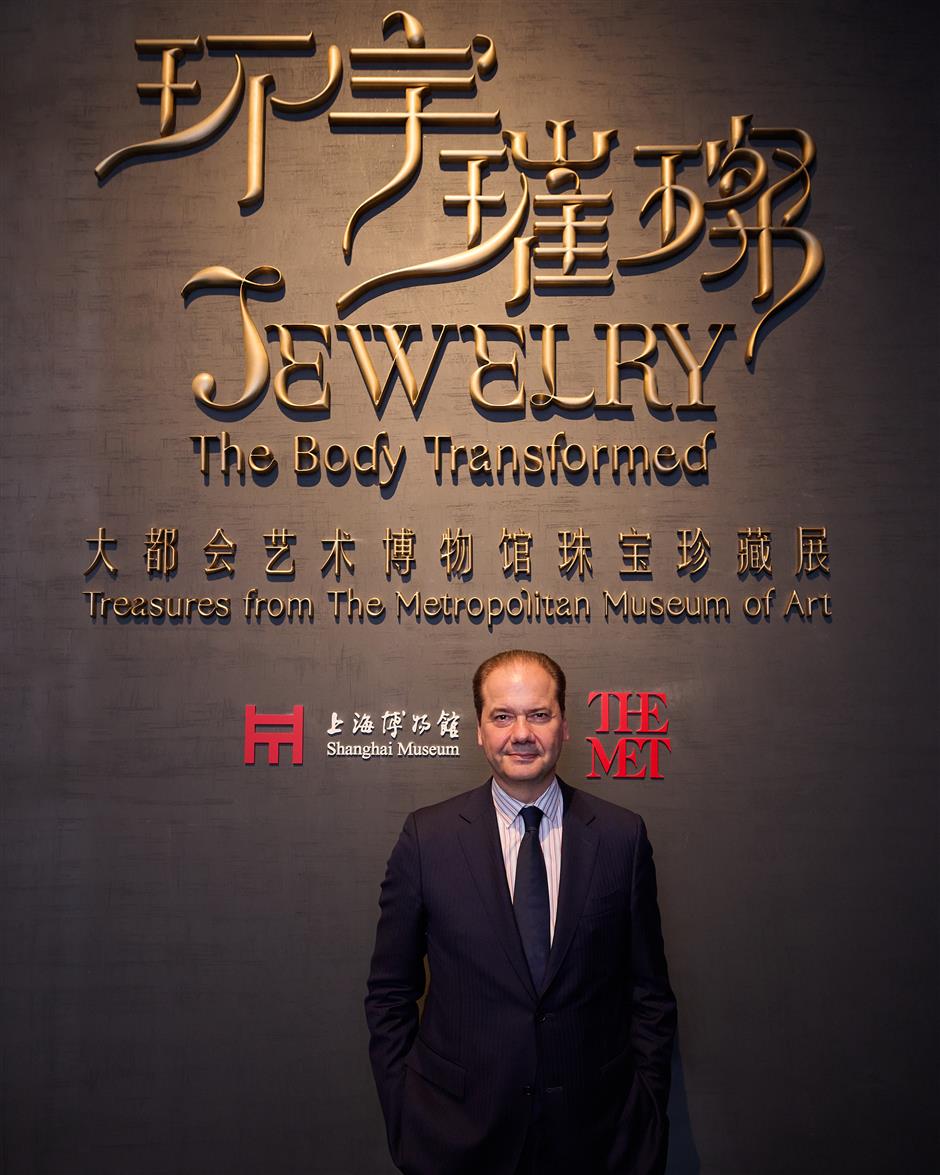
Max began the conversation by highlighting the relational ties between the organizations. This was the first conversation, and it wouldn't be until a week later that I got to meet him in person. Turns out The Met had brought an entire entourage from New York, and Max's leveling of "deep mutual respect", was something that was repeated constantly by others, in separate, private conversations, from both sides. You get the impression that this goes beyond professional admiration, and that perhaps, there may even be notes of friendship between the institutions.
On the call, Hollein spoke further about research and loans. And went on to share his thoughts on what American audiences should understand about Chinese art and culture.
"If you look at The Met's collection, Chinese art and culture are represented in many different facets. I think it is important for audiences in the United States to understand that this is a living tradition, one that is continuously evolving. There is an enormous history, and there is also a continuation of that history through new artistic expression.
"We want to show both those connections and that continuity. We have recently made a major acquisition of 38 paintings by Zhang Daqian, which is part of our commitment to ensuring that Chinese art is properly represented at The Met. That means conveying the depth of its history alongside the ways in which that tradition continues to develop."
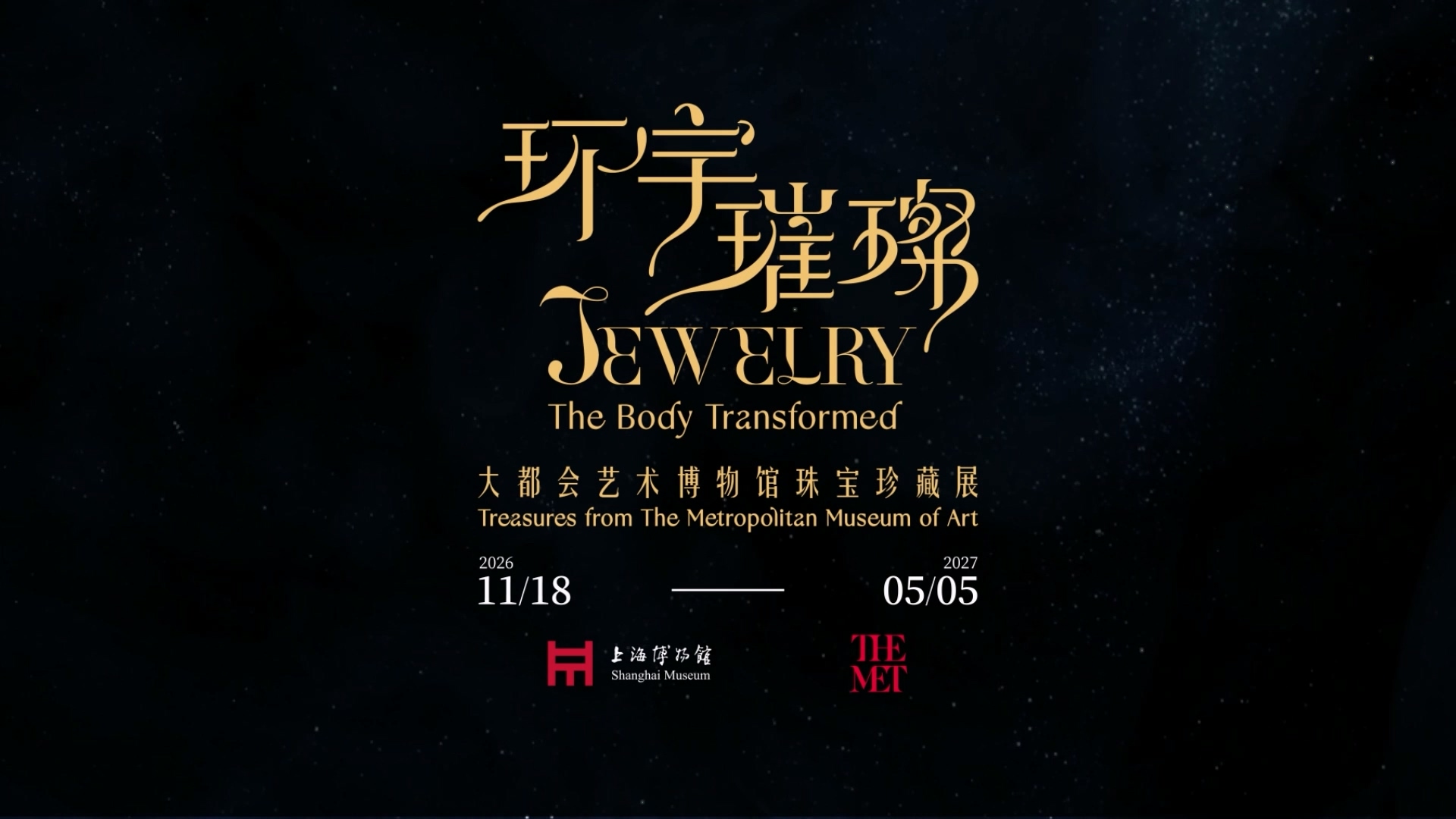
At "Jewelry: The Body Transformed" in Pudong, I got to see what the connectivity between these two museum stalwarts looked like, at a distance of about a foot.
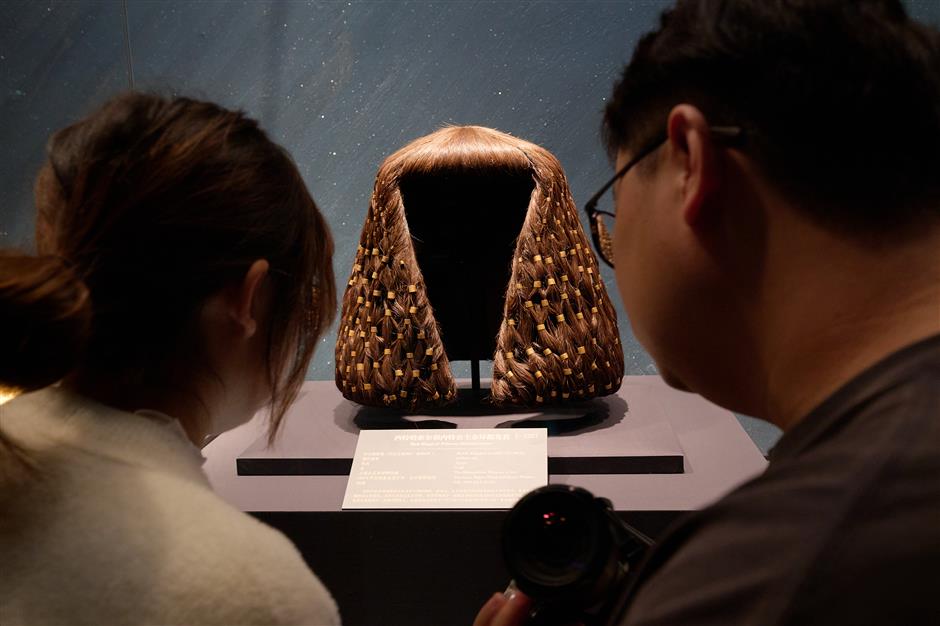
The princess's name was Sithathoryunet. The wooden boxes that held her wigs disintegrated in her tomb. So did the hair. What held up rather better were 1,251 little gold rings. How do you go from loose rings to the weight and fall of a woman's hair? Someone had to work that out. A wooden head excavated at another Egyptian cemetery gave researchers a clue to the arrangement. Now two people in Pudong can put their heads together in front of the glass and see how she might have worn it.
A ship on Century Avenue
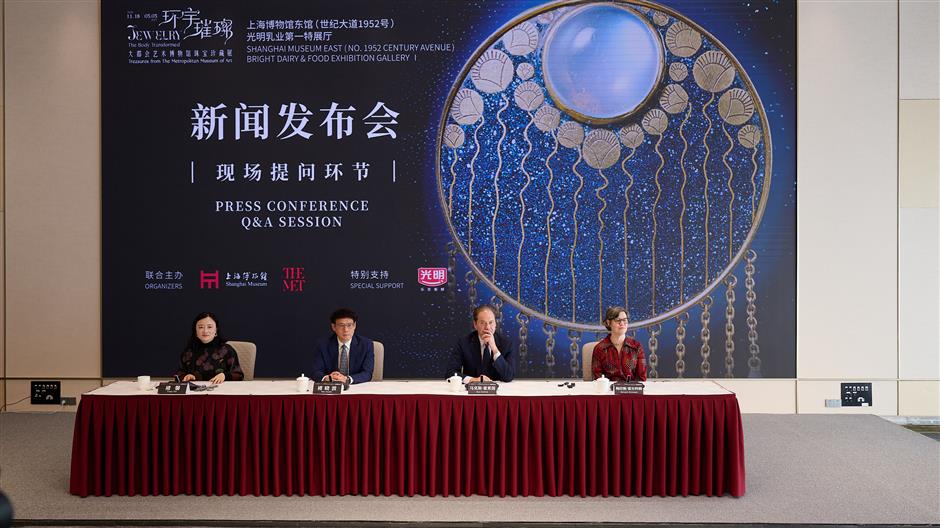
The show opened on November 18 at Shanghai Museum East. The Met sent 192 works and sets, drawn from 14 curatorial departments. Shanghai brought in more than 20 pieces from its own collection and other Chinese institutions. At the press briefing, Shanghai Museum director Chu Xiaobo made a point of giving the price early. "Most importantly, this exhibition is completely free of charge."
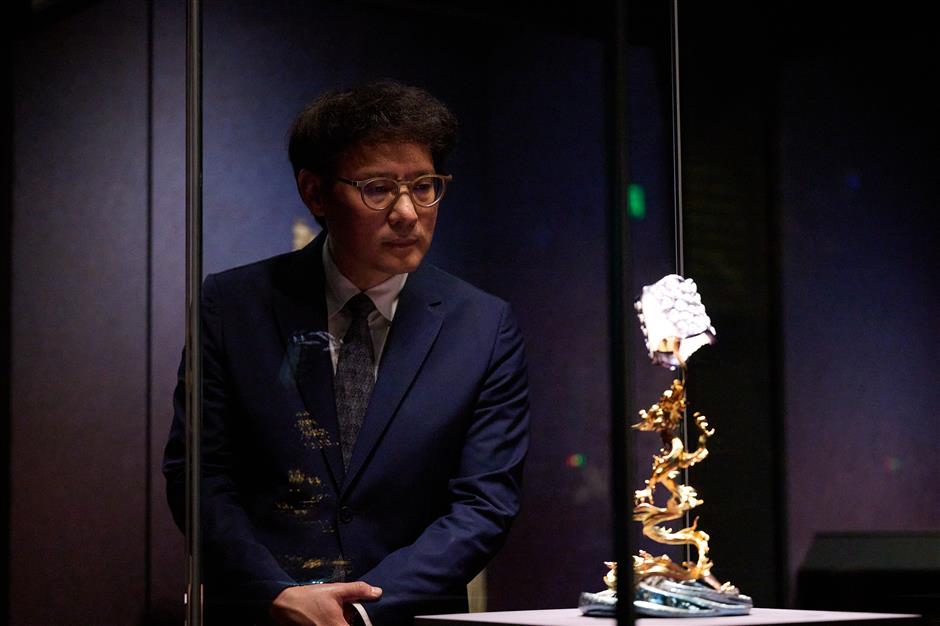
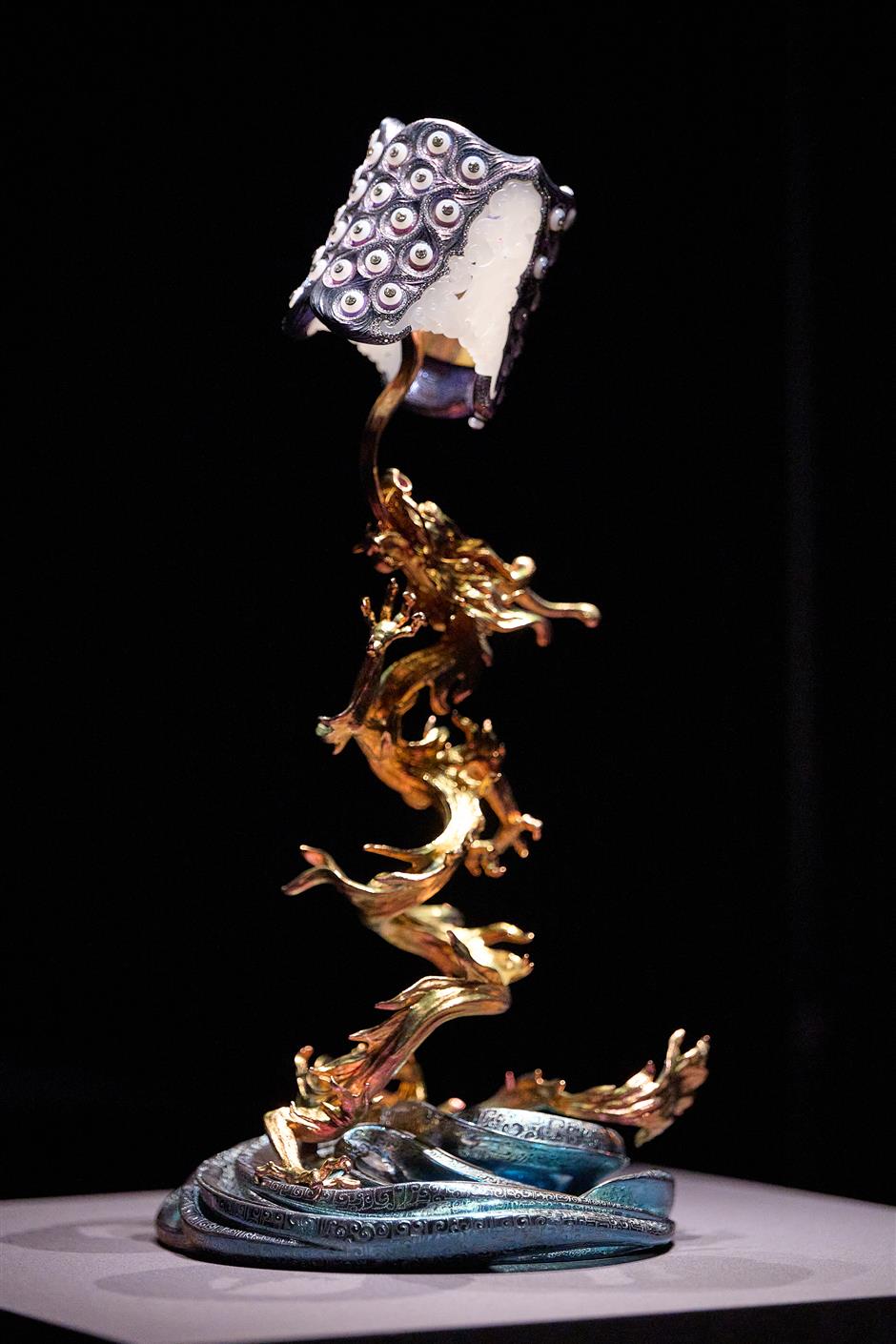
Chu went on to discuss how over 20 pieces of Ancient Chinese jewelry from the Shanghai Museum's own collection and other domestic museum institutions are integrated into the exhibition. I saw some of them, and they are truly things to behold in person, like this jeweled bangle by Wallace Chan.
"These Chinese jewels share the same exhibition space with The Met's exhibits, allowing Eastern and Western aesthetics to converge and shine together. We continue to advance our 'Great Museum' plan, bringing the world to Shanghai and building a bridge for mutual learning among civilizations." Chu said.
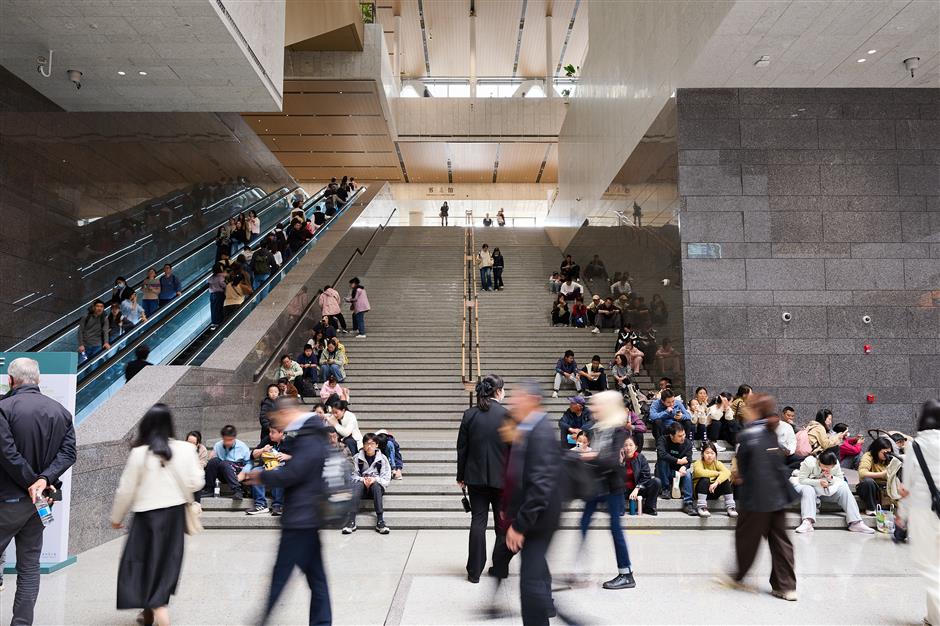
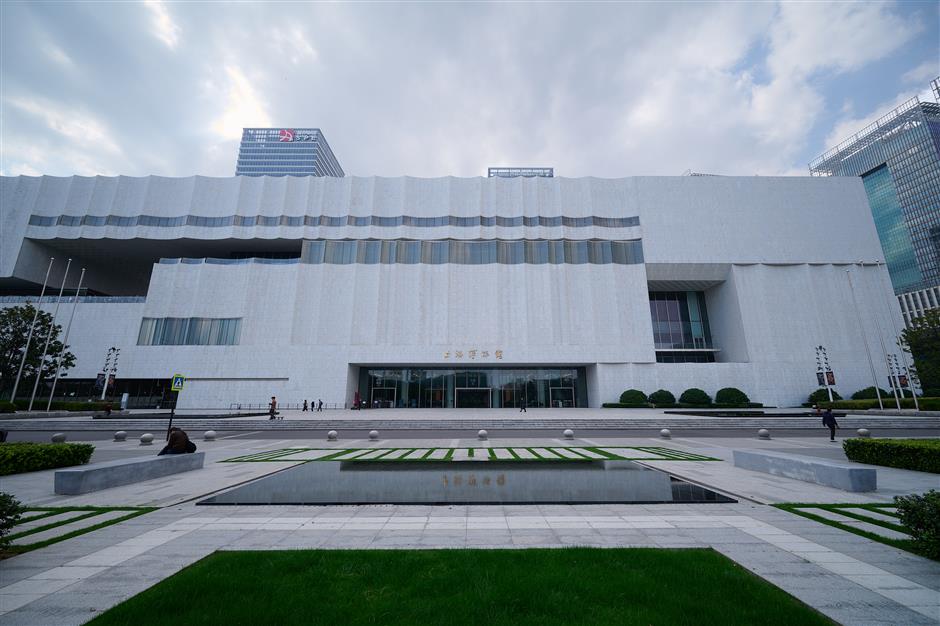
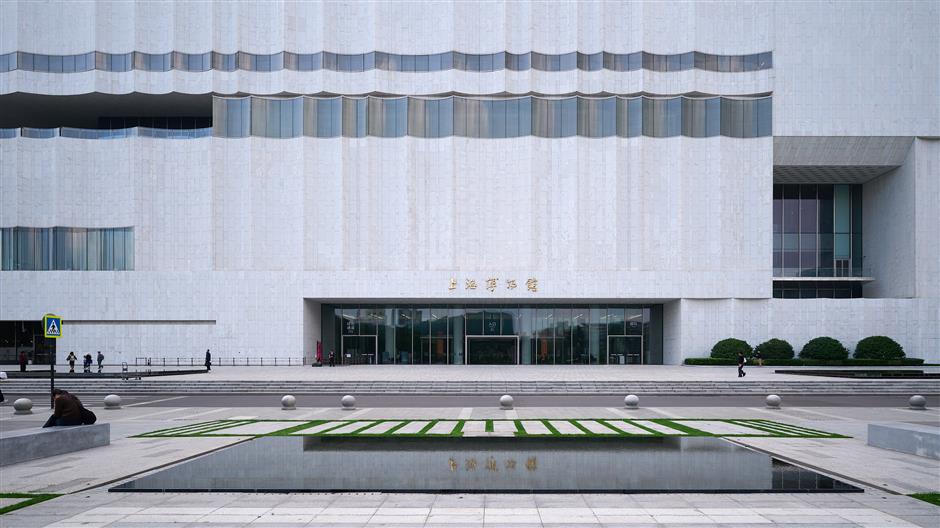
The Shanghai Museum East is a grand monument to culture
First, a word about where they put it. Shanghai has buildings that make me think that if anybody ever gets around to building an interstellar spaceship, China will have somewhere to park it. The National Exhibition and Convention Center, where they hold the import expo, is one. This is another. Remember the moment in the movie 2012 when the camera pulls back and you see the size of the arks? That's about the angle you need on this museum. It is massive.
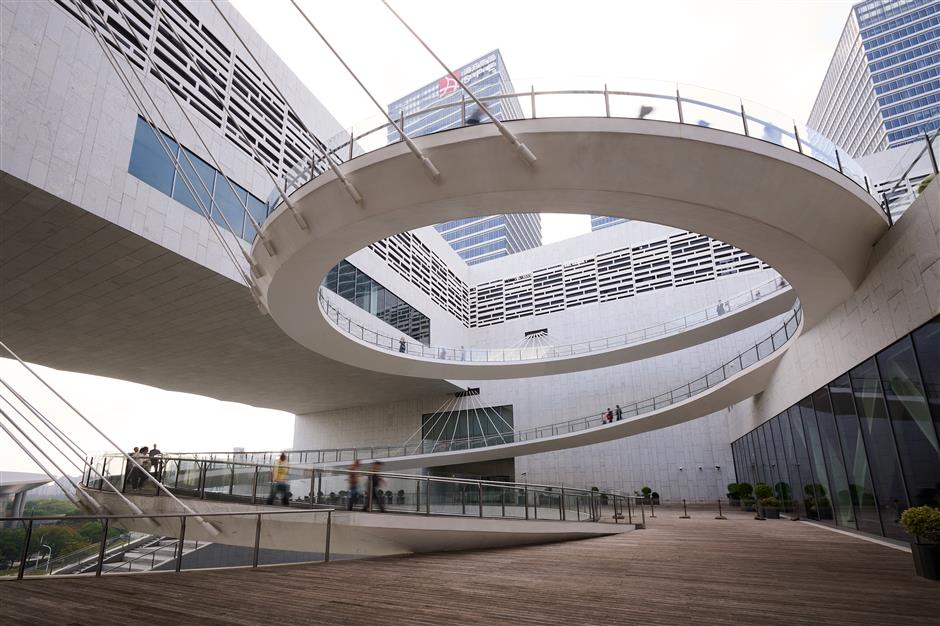
The Pudong branch began opening in 2024. It has 113,200 square meters of floor space and 13 permanent galleries. Its white facade ripples like waves. A ramp curls through an opening in the building, and the people up on it look about the size of marks on an architect's drawing. Inside are rooms devoted to things as small as seals and coins.
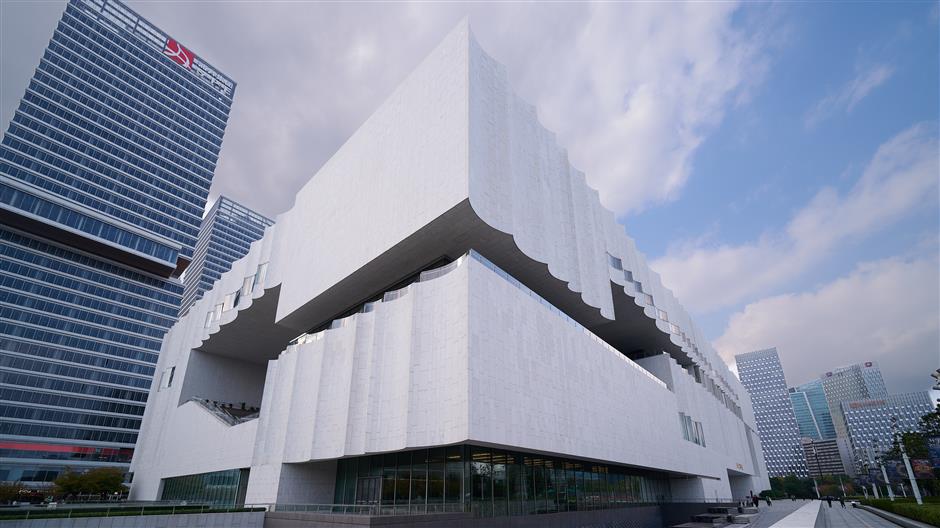
I asked Hollein what he made of the place. He talked about the cultural ambitions of the West Bund and Pudong, and the responsibility a museum takes on when it grows.
"I found Shanghai Museum East enormously impressive. The Shanghai Museum has a long history, and with this expansion it is helping to develop the surrounding area into a stellar cultural hub. I took a lot of photographs. It is inspiring to see what another institution is doing, and to recognize how our two institutions can inspire one another.
"It really is an impressive expansion of a museum. At The Met, we also recognize that as an institution grows, its responsibilities grow, and its audiences grow as well. The question is how to remain committed to the mission while responding to that growth. To expand so significantly while maintaining that commitment is a wonderful signal, and an achievement in itself."
Even after your first visit, you might find yourself uttering the word "impressive" more than once. I certainly have. Hint: This really should be on your bucket list while in Shanghai.
How Shanghai dressed a New York show
At the briefing, Melanie Holcomb, the Met curator who developed the original 2018 exhibition, sat at one end of a long red-skirted table. Behind her, a brooch had been blown up to the size of a satellite dish. "I imagine that every one of you owns a piece of jewelry," she told the room. I like a museum question you can answer by looking at your hands. Which piece would you notice first if you took it off? A wedding ring can leave your thumb looking for it all day.
Chu put it in local terms. In 2024, Shanghai had shown the work of Wallace Chan, then Cartier. Those shows let us see jewelry through the eyes of one artist and one house. This one could make room for a goldsmith in ancient Colombia whose name nobody knows. By the way, there is a piece on display by Wallace Chan at this exhibit. There's a photo of it later in this piece. It's magnificent.
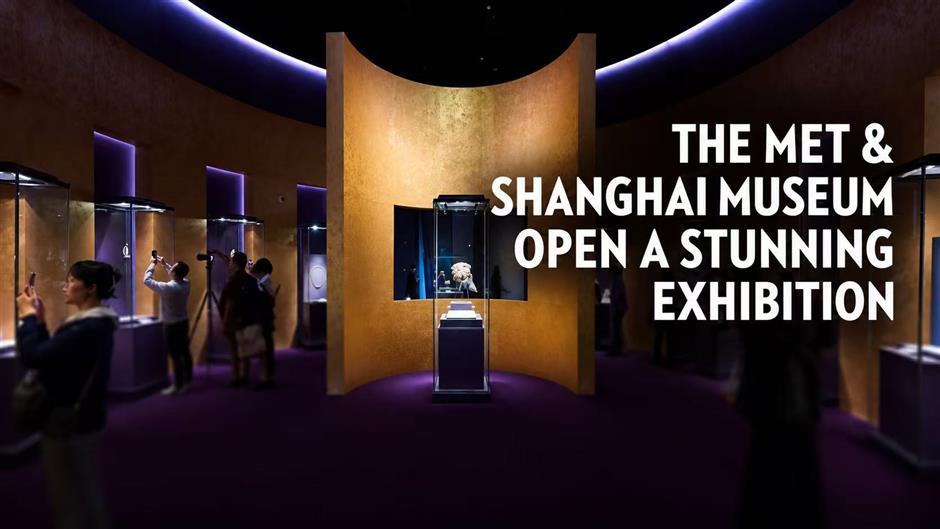
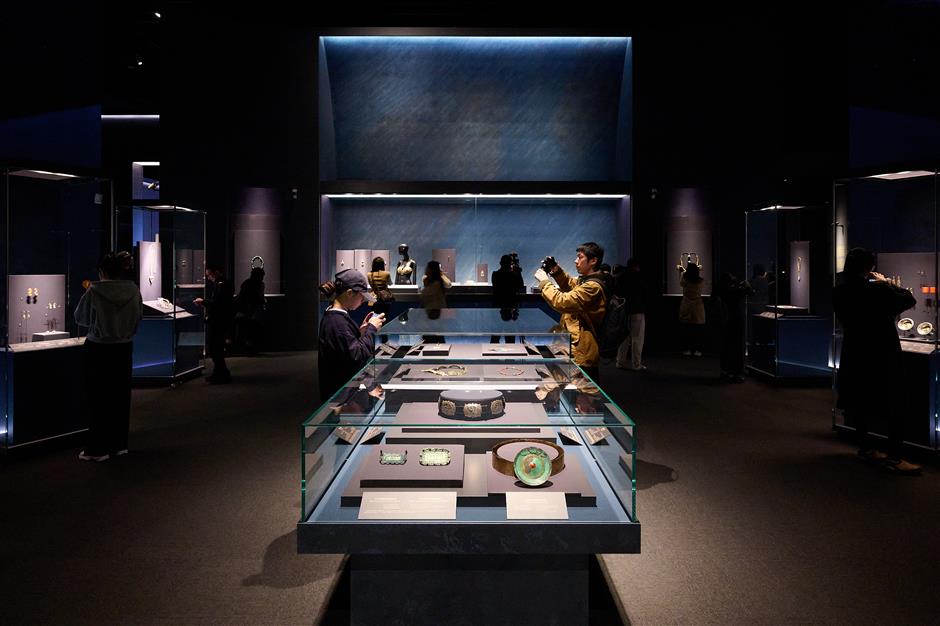
What I liked about the design was how clearly you could see both cities at work. Holcomb had organized the New York show around what jewelry does to a body. Shanghai's designers took their cue from the line where daylight meets night on the surface of the earth. The six galleries change color. A panel of Chinese and English lettering fades from blue to a thin blush of pink. Farther in, a gold wall curves around a case and a violet rim of light runs overhead.
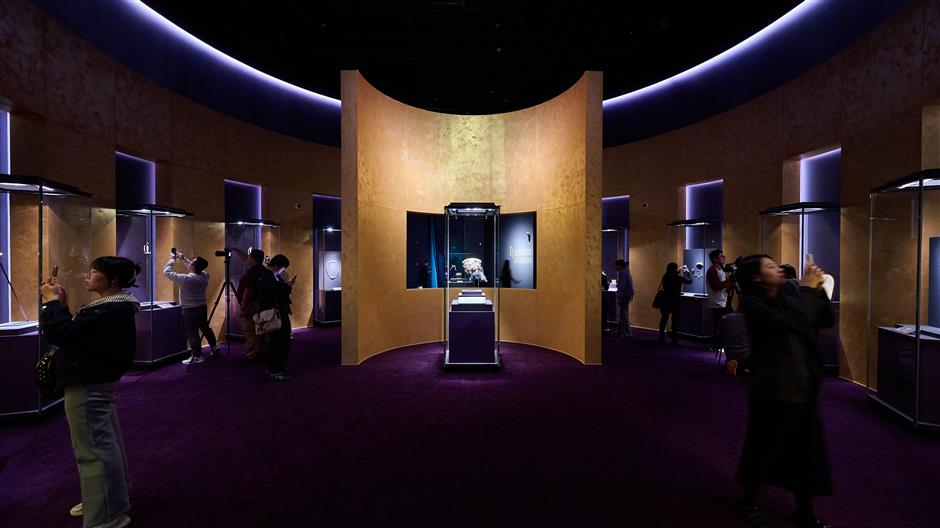
The projections grew out of a practical problem. In the opening gallery Holcomb had left the body invisible. The Shanghai team wanted you to be able to picture how the pieces sat on a person. The image can give you back a shoulder or a neck for a moment. Then you look at the thing again.
What the installers heard
On the tour, Holcomb stopped at a gold headdress ornament made by a Calima artist in what is now Colombia, sometime between the first and seventh centuries. A face looks out from the middle. It wears great round ear ornaments and a nose ornament with another face on it. All that, on something about 25 centimeters tall, before you even get to the face of the person underneath.
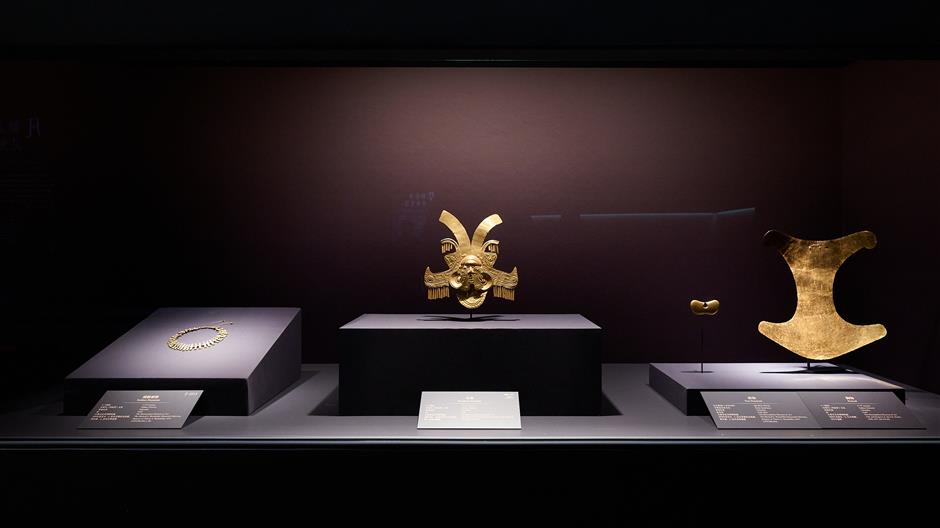
The goldsmith hammered the gold into sheets, cut them, and wired the pieces together. Some could swing free. When a ruler wearing the full ensemble turned in the sun, the light would have traveled across the gold covering the face and body. Holcomb explained what that meant to the people watching. "Jewelry can turn you into a god."
What caught me was an aside. The little hanging parts tinkled, she said. The people who installed the piece heard them. By the time the rest of us got there, the work was perfectly still. I'd gone to a press preview thinking we were getting the first look. The crew got the better one.
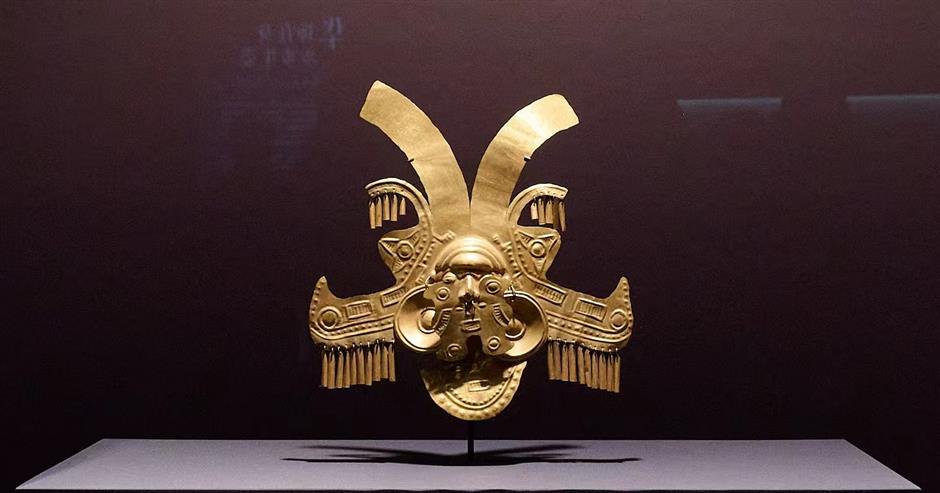
Try carrying that sound with you to the other cases. It changes what you look for. You start noticing the space between two bits of metal. You start wondering how far away you could stand and still hear somebody coming.
Two lions and a steel tiara
One of Shanghai's contributions is a Miao silver chest ornament. Two lions face a ball on the front of a lock-shaped plate. Follow the chains below it and you'll find little discs, cones and a whole row of dangling bells. A still photograph is an excellent way to count them. It leaves you to supply the first footstep.
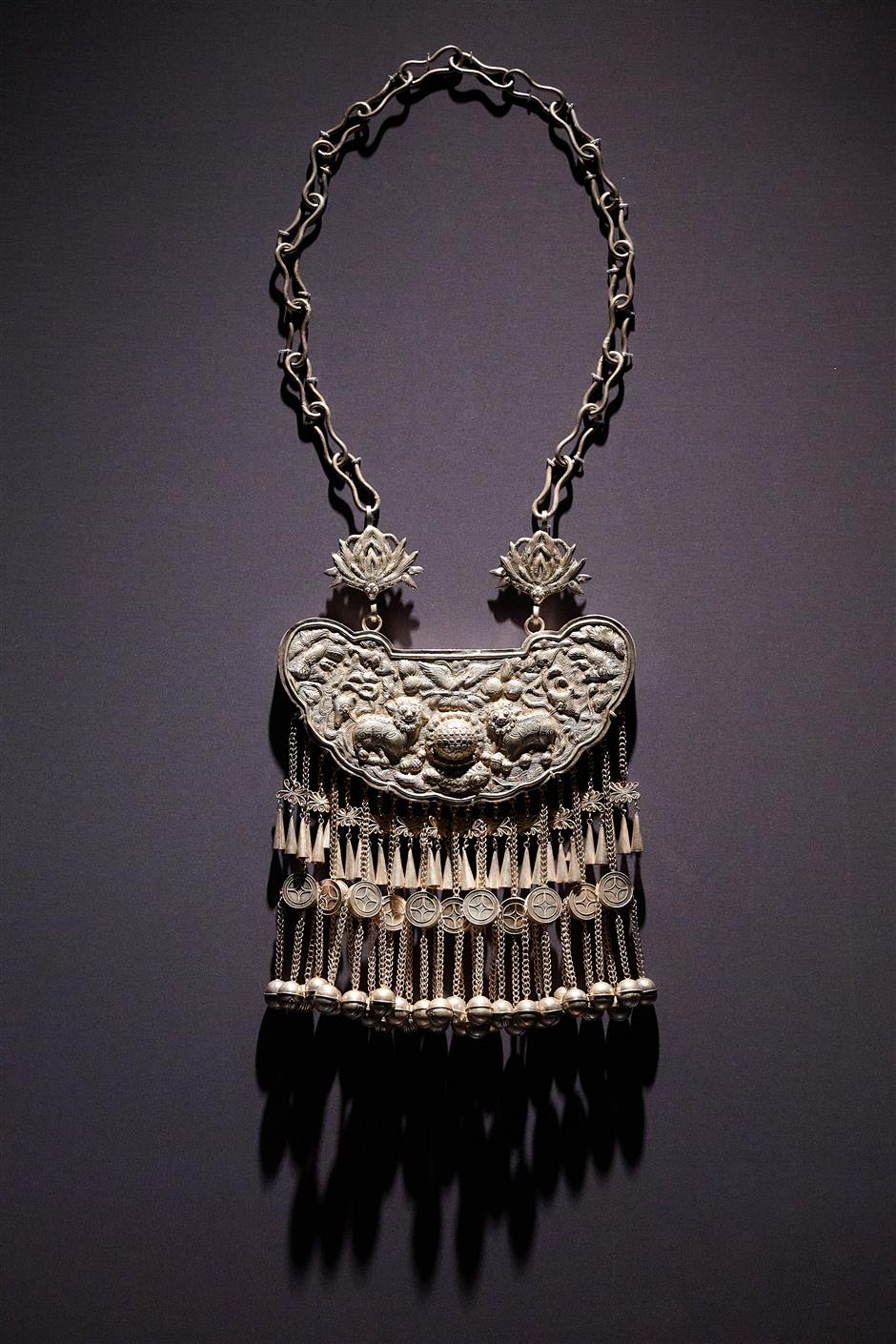
The Shanghai selection gets quite specific about who wore what. A Western Han buckle has foxes around its edge. A Liao necklace of gold, agate and crystal came out of the tomb of Yelü Yuzhi in Inner Mongolia. The Shandong Museum lent a gold belt ornament set with gems. The necklace measures 85 centimeters around. It's an oddly intimate thing to know about a person whose tomb was opened in 1992. You could cut a piece of string that length and see where the necklace would fall on you.
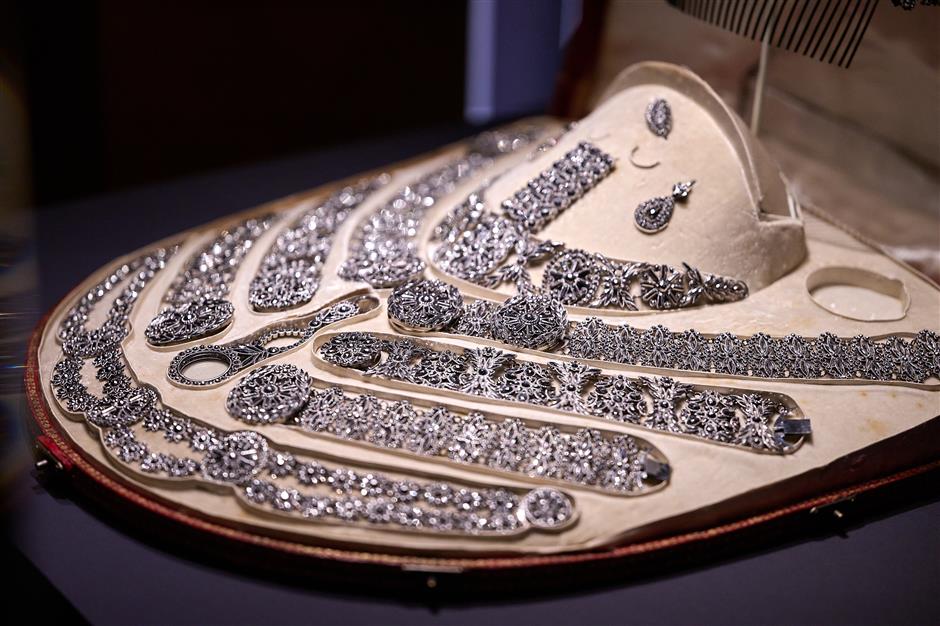
Then there's the French set in the fitted case. Have a guess before you read the label. Diamonds? It indeed looks like piece made from an overload of diamonds. Holcomb gave it away in two words. "Polished steel." Those nearby leaned in closer to the display as if to say "Polished steel...really?". Around 1810, a jeweler could cut and polish a steel stud until its facets threw light much as a diamond would. Do this over and over and you have a tiara, bracelets, earrings, even a pair of glasses you could raise by a handle. Napoleon gave his second wife, Marie Louise, a set made this way. Imagine how modern steel must have felt to get it as an empress's present. The full set:
The dress needs a dancer
Toward the end of the tour we came to a dress by Jodi Archambault, a Hunkpapa Lakota artist from North Dakota. Pink beadwork stretches across the shoulders. Long fringe falls from the sleeves. Holcomb told us Archambault drew the design on a computer and made the outfit with family and friends. The software was Adobe Illustrator. The finished outfit carries about 15 pounds of beads.
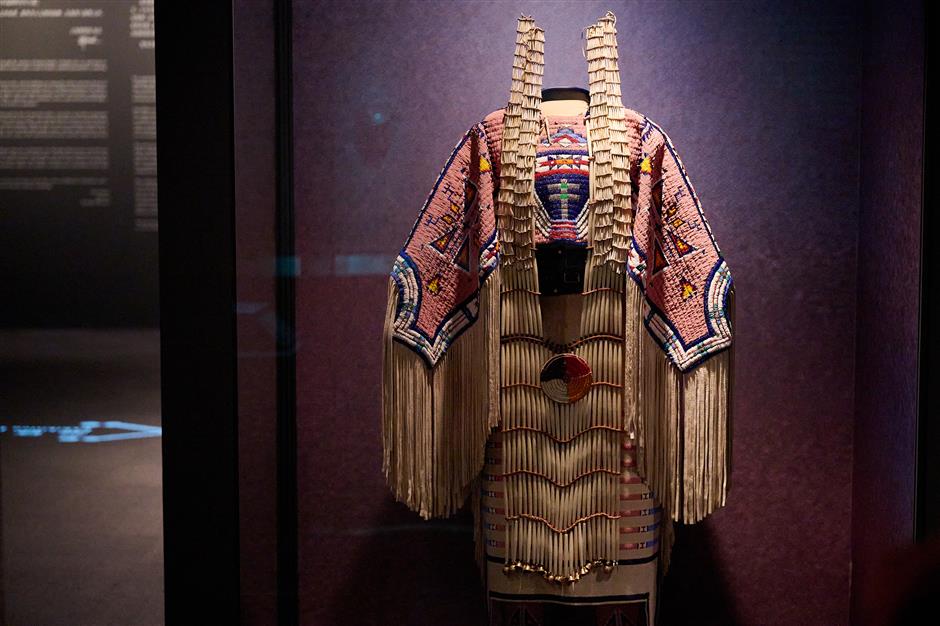
Archambault made it to wear herself in the Northern Traditional Dance at powwows. In a photograph from 2005 she stands in her regalia, fan in hand. She knows what it takes to keep time wearing nearly seven kilos of beads. And she has her own account of whom the dress was for. "I want my grandchildren to know that being Lakota is relevant and important, just like my grandmothers taught me," she wrote in a statement the Met displayed with the work.
In Shanghai, Holcomb stopped the tour in front of it. "This is a work that absolutely wants to move." After all the effort it took her team to get that display exactly right, I liked that she could stand there and tell us exactly what we were missing. I'd like to have seen Archambault dance.
What the signatures are worth
Across town, at the Shanghai Museum on People's Square, Chu and Hollein signed their memorandum of understanding on November 16. Their museums have been working together since 1980, when Shanghai contributed to The Great Bronze Age of China at the Met. In 2025 they co-organized Recasting the Past, a show about later Chinese bronzes that audiences in both cities got to see. By the time I turned up late on Zoom, these museums had known each other for 46 years.

Chu said in the announcement that the friendship was built on "a shared passion for art and cultural heritage and mutual trust." From our Zoom interview, here's Hollein on what actually changes. "What this agreement does is provide a framework for developing that relationship further, through research initiatives, curatorial exchange and exhibitions." The next shipment is already on the calendar. The Met is lending five works for Shanghai's exhibition marking the 400th anniversary of the birth of the painter and calligrapher Bada Shanren, opening December 19.
I'd also asked Hollein about the changes these two institutions have lived through in relations between China and the United States. "We have seen different stages in the relationship between our countries, but we have also seen sustained exchanges in culture that remain strong." The agreement also works in the other direction. He had a particular wish for visitors to the Chinese galleries in New York. "I think it is important for audiences in the United States to understand that this is a living tradition, one that is continuously evolving."
Who gets to see it first
When I moved to Shanghai in 2007, I could not have imagined somebody here building a museum the size of an intergalactic intergenerational ship. But looking back...Shanghai certainly had that sort of nerve (and still does apparently). The part I'd have had more trouble picturing, however, was a curator from New York standing in Pudong telling us that the Moche jewelry from Peru had been sitting in the Met's storeroom. Her colleagues in New York had the pieces conserved and restrung. As Holcomb put it at the briefing, "even people in New York have not yet seen them."
Walking alongside a deputy director from the American delegation, I heard real affection for the team here in Shanghai. These exchanges counted for more than people outside museums tended to realize, the deputy director felt. I shared that optimism. I thought of those Moche pieces. Someone in New York had sat down to restring jewelry made in Peru so that here in Shanghai you could get on the Metro and see it for free. When people talk to me about relations between China and the United States, I'd like to hear a little more about whoever held the thread.
To be concise. It's one of the best exhibitions I've seen. Go. Take the pictures where you're allowed (flash off). And if you can, go with someone who always wears the same piece of jewelry. On the way home, ask them where it came from. You may have been looking at it for years.
Plan your visit
"Jewelry: The Body Transformed, Treasures from The Metropolitan Museum of Art" runs through May 5, 2027.
Opening hours: 10am to 6pm, last entry 5pm. Closed Tuesdays except on national holidays.
Venue: Bright Dairy & Food Exhibition Gallery 1, Shanghai Museum East
Address: 1952 Century Avenue
Admission: Free entry. Individual visitors can bring an original, valid ID or passport to the B1 East Gate near Dingxiang Rd.
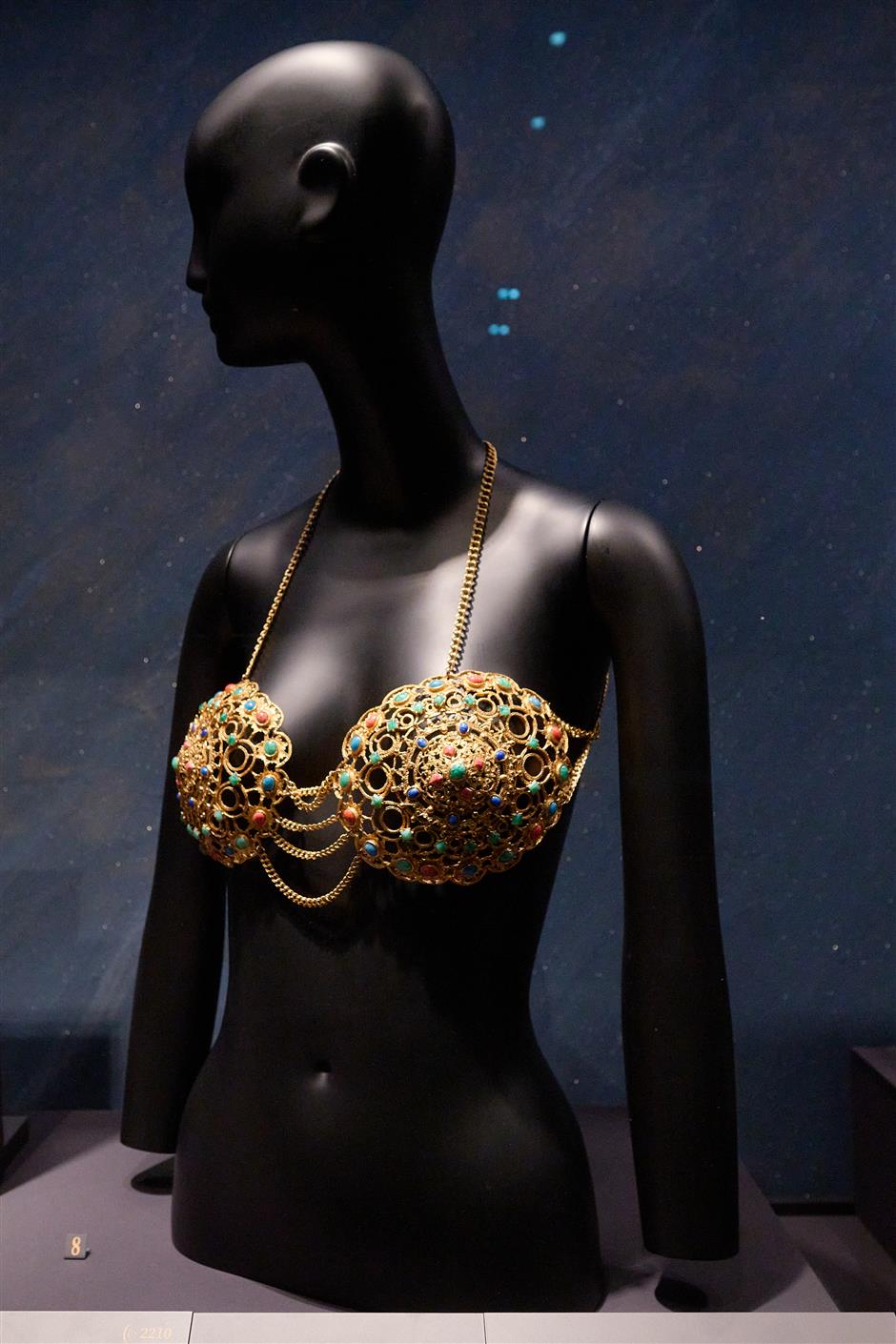
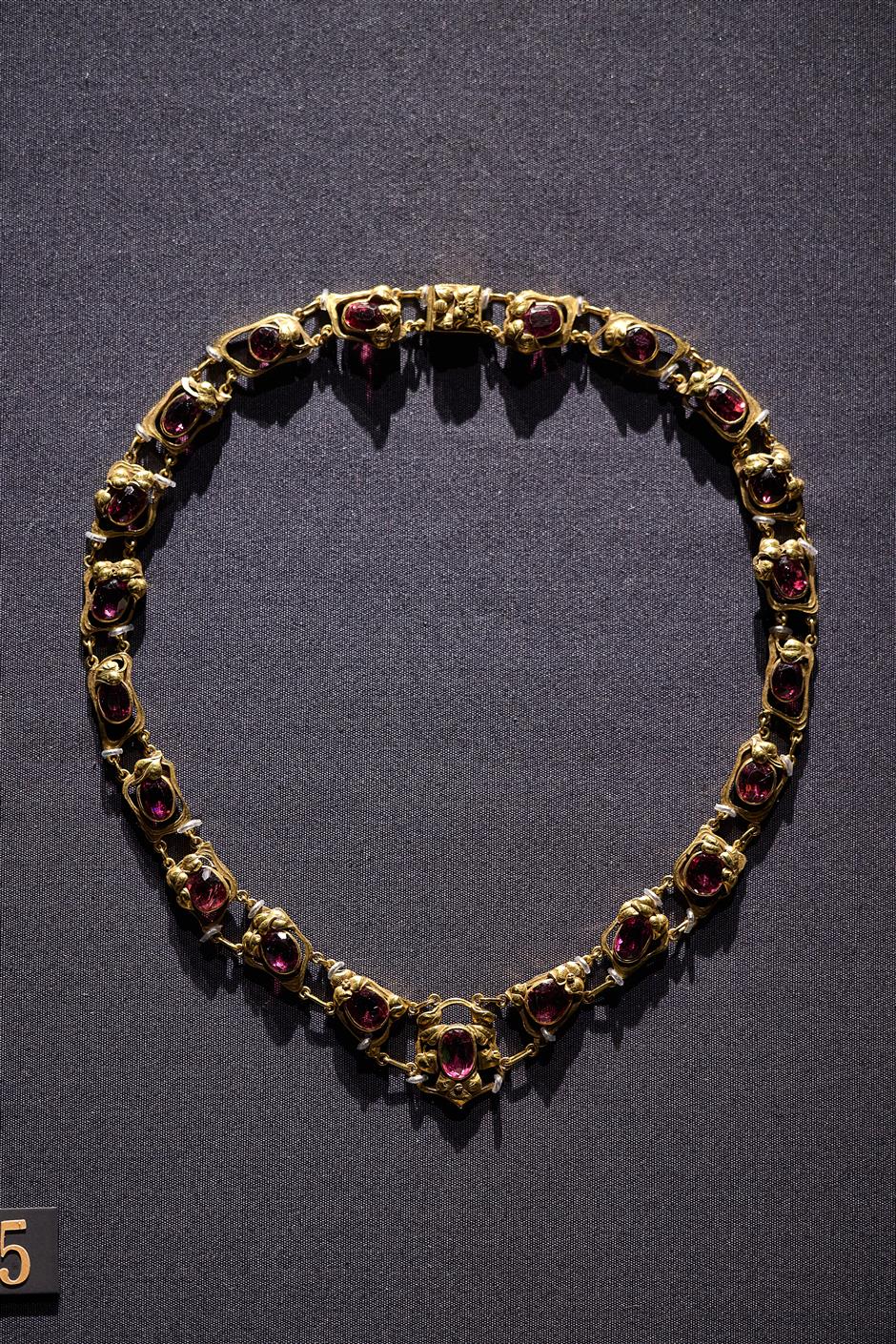
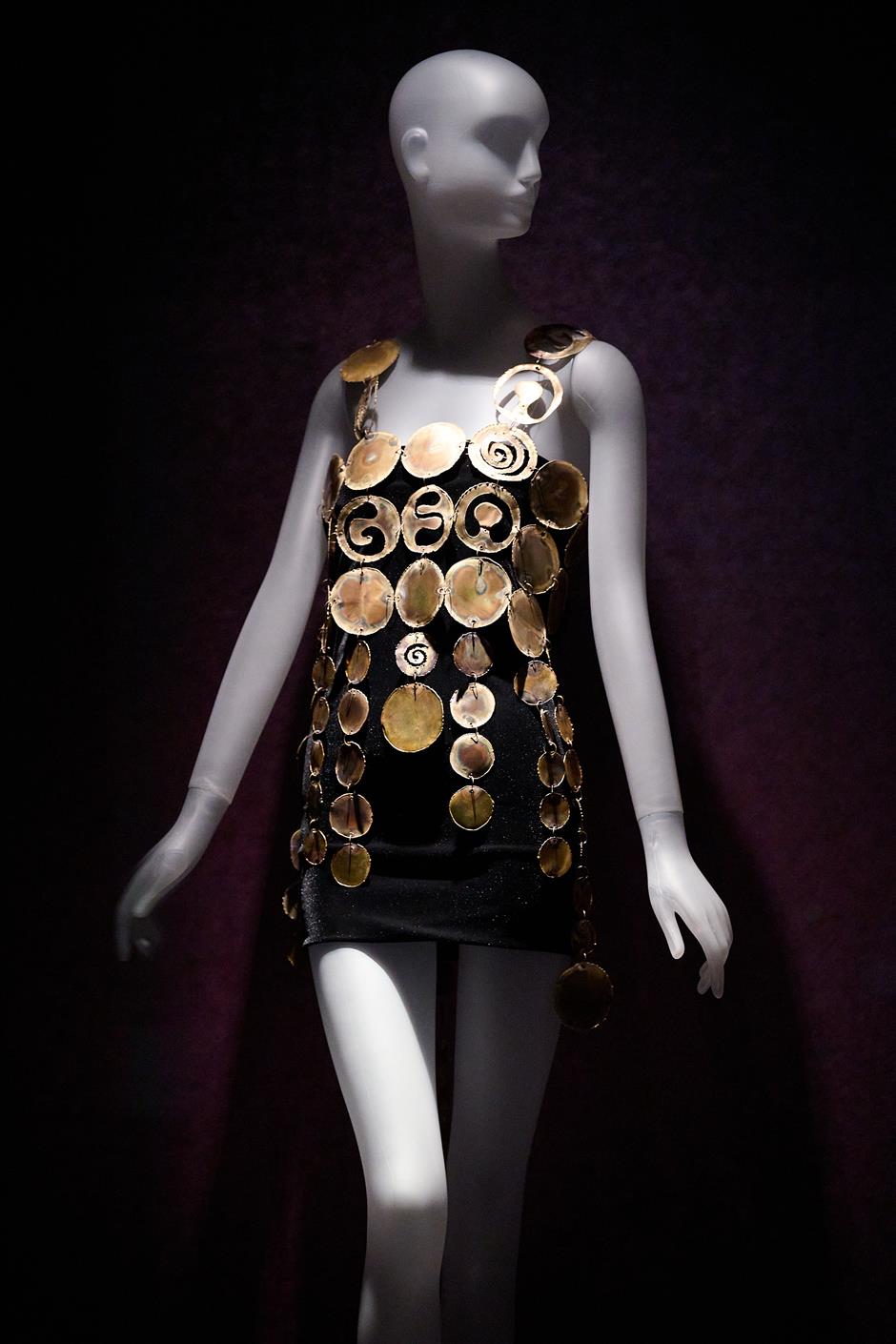
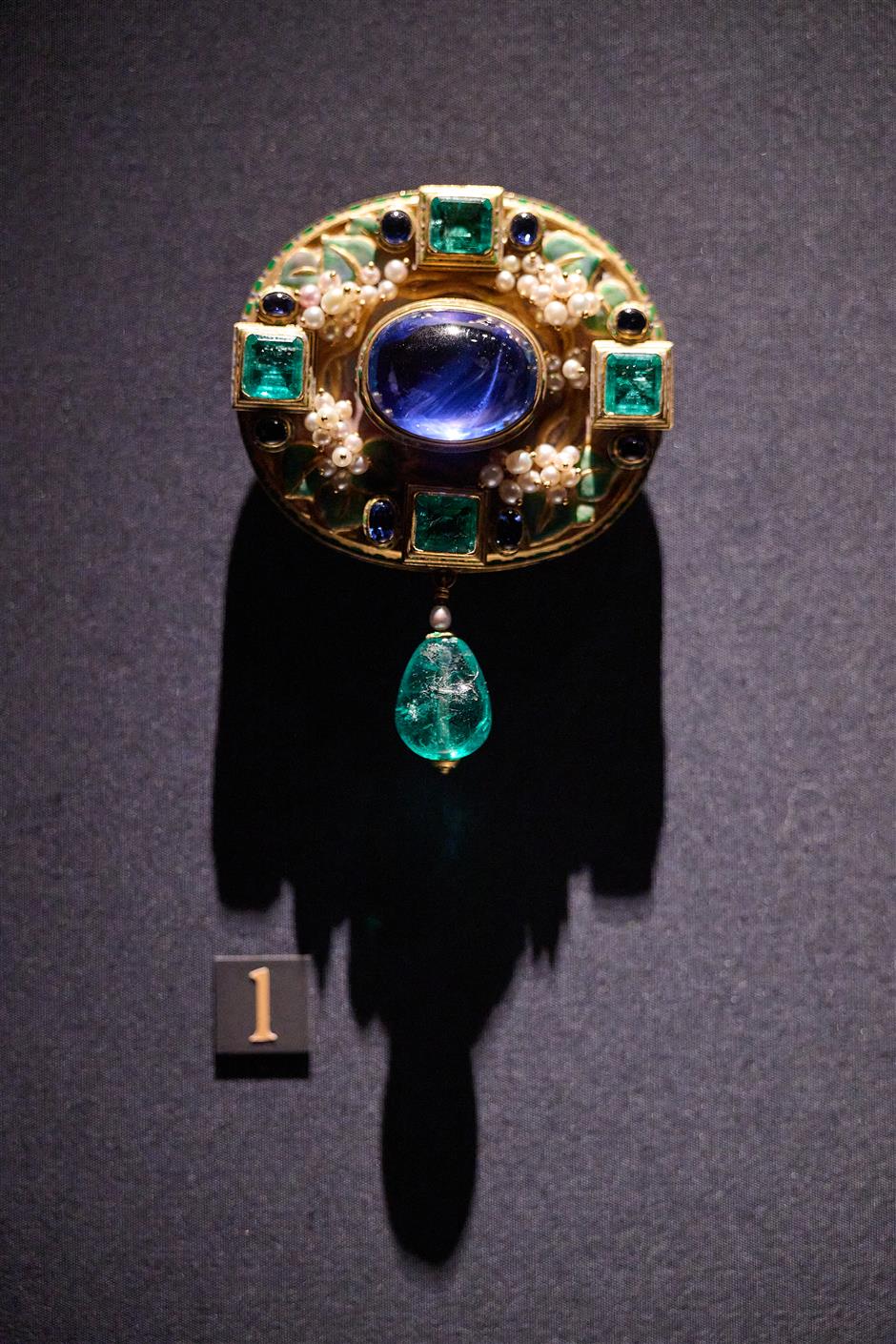
A few more photos from the exhibition
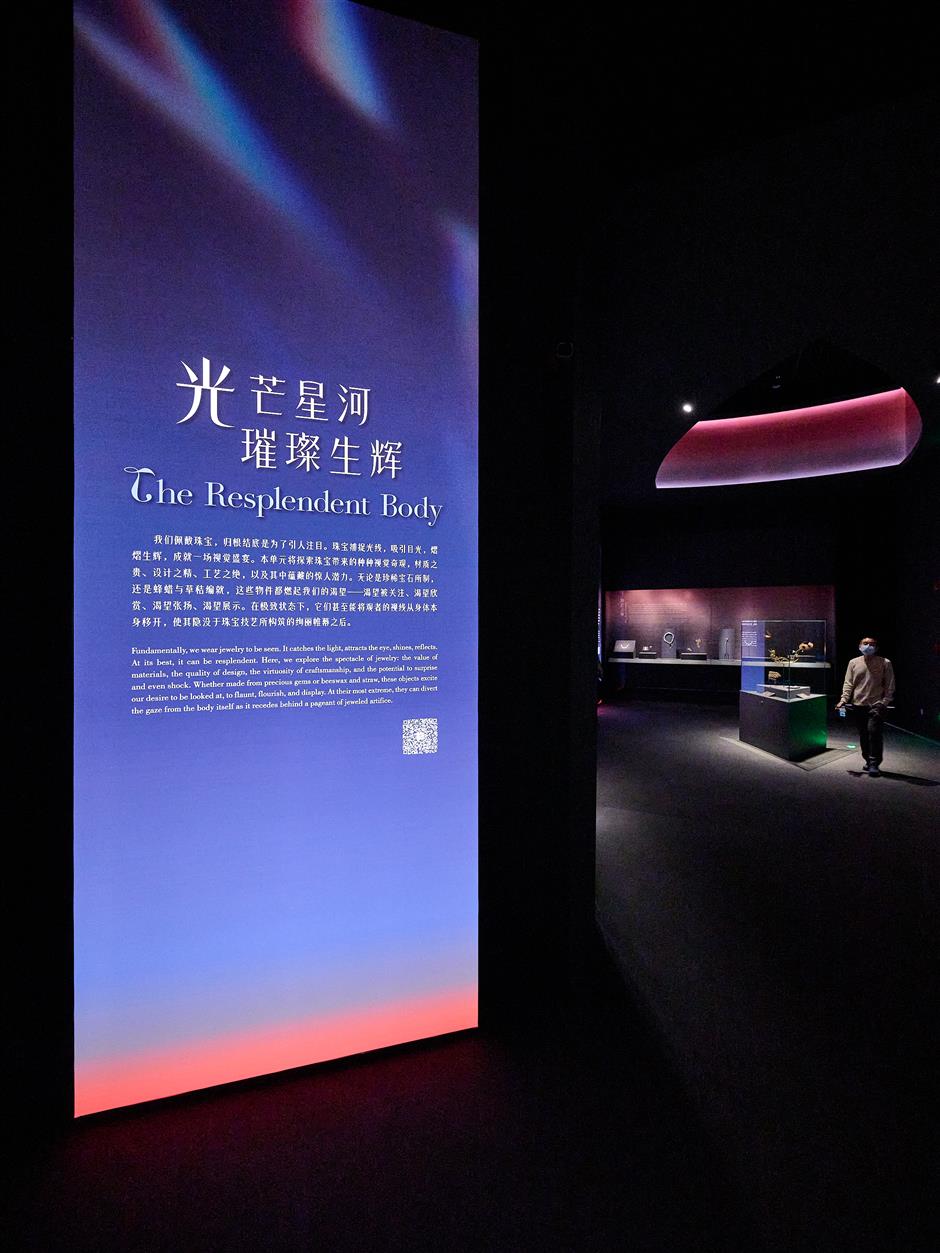
The Exhibition is divided into several sections with themed jewelry in each section.
The Adorned Body – jewelry as personal adornment
The Divine Body – divinity and spiritual belief
The Transcendent Body – protection and supernatural power
The Regal Body – power, wealth and social status
The Alluring Body – feminine beauty, attraction and self-expression
The Resplendent Body – brilliance, gemstones, cuts and design
Editor: Shi Jingyun
In Case You Missed It...
 Nov 23, 2026