[ChinaMaxxing] 24 Excuses to Eat According to the Chinese Solar Calendar
![[ChinaMaxxing] 24 Excuses to Eat According to the Chinese Solar Calendar](https://obj.shine.cn/files/2026/04/03/0d4a0395-aa08-473e-aacd-19dfecf71146_0.png)
ChinaMaxxing is our semi-regular column where we skip the tiktok performance and go deeper. We cover the cultural facts, figures, quirks, seasons, holidays and whatever else actually matters if you want to understand how to live here rather than just visit. Solar terms that dictate when you should eat what. Lunar festivals nobody explains. Hyperlocal Shanghai traditions that have nothing to do with the Bund. The stuff that separates people who actually live here from people who are still tourists. Come China Maxx with us.
This Sunday, April 5, marked China's traditional Qingming Festival, also known as the tomb-sweeping day, a moment when families honor their ancestors, step outdoors to embrace the season, and have the traditional delicacy of qingtuan (green glutinous rice balls). As one of China's 24 solar terms, Qingming signals the true arrival of spring, with clearer skies, warmer air, and nature stirring back to life.
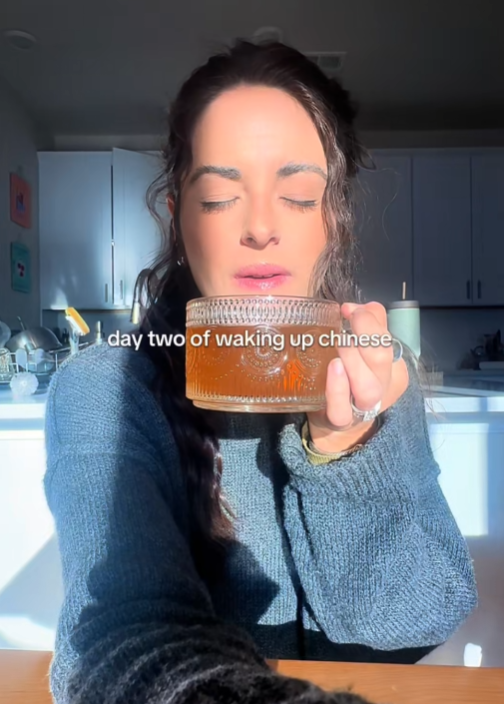
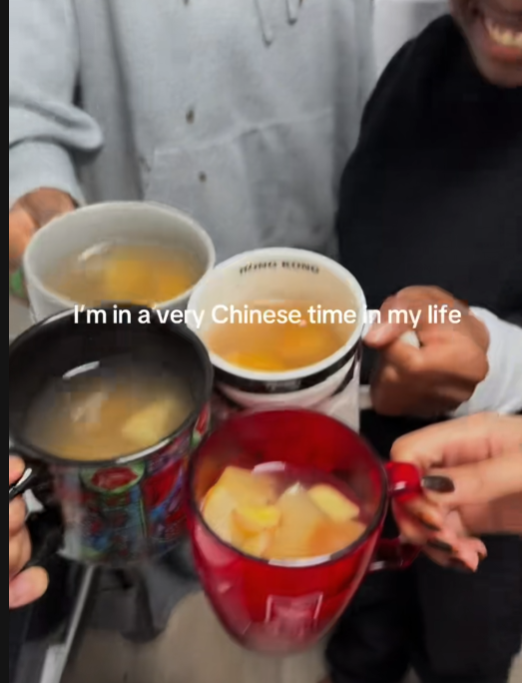
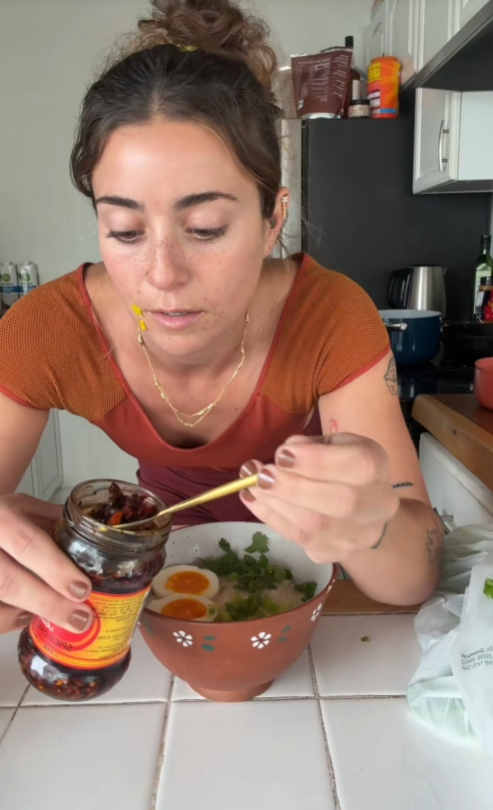
And lately, that way of living is resonating far beyond China. Among foreign visitors who come to China these days, a new wave of tongue-in-cheek trends has emerged. It is taking on various meme terms like "Becoming Chinese" or "China Maxxing" or "A very Chinese time of my life."
Foreigners are starting to drink hot water, wear cotton slippers, and even understand that the numbers in red envelopes matter when Chinese parents give them to children – 188 yuan (US$27.3), 1,888 yuan (symbolizing wealth). They proudly declare themselves "Chinese," and when they feel down, they tell themselves, "I'm going back to China," as a mantra of consolation.



![[ChinaMaxxing] 24 Excuses to Eat According to the Chinese Solar Calendar](https://obj.shine.cn/files/2026/04/03/4104ae0e-f866-42c2-8597-6e292d4f7804_0.png)
![[ChinaMaxxing] 24 Excuses to Eat According to the Chinese Solar Calendar](https://obj.shine.cn/files/2026/04/03/cde47de0-7011-4cb6-8760-6163419db049_0.png)
It all started in December 2025, when Sherry posted a series of videos about the 24 solar terms. When you meet foreigners in China, most of them know a bit about many "Chinese stories." But as Sherry later pointed out, if you don't have a solid Chinese background, it's genuinely hard to understand Chinese culture.
Things are different now. With so many social media platforms, information sharing has become a real way to start understanding China. But here's what most people miss: If you recognize a solar term like Liqiu (立秋 Beginning of Autumn), you're only getting half the story. The real one is about what you eat.
The 24 solar terms aren't mystical or romantic. They're practical. Each marks a moment when climate, humidity and daylight shift. Liqiu tells you autumn is arriving, and more importantly, it signals a shift in diet: away from summer's cooling foods (mung bean soup, bitter melon, cold noodles), toward things that nourish the lungs and ease the seasonal drying.
This is where it actually lands. By Liqiu, good restaurants have already started the shift. Soups reappear. Autumn ingredients (goji berries, lily bulb, Chinese yam) move from specialty to standard. If you've been here long enough, your appetite shifts without you noticing it's happening.
That's the real "Becoming Chinese" moment. Not learning the name from a video. It's the moment you realize your appetite has aligned with something designed 2,500 years ago, and it still works.
![[ChinaMaxxing] 24 Excuses to Eat According to the Chinese Solar Calendar](https://obj.shine.cn/files/2026/04/03/c0f4e9d6-75e4-4d78-a3f0-d9816c1436c4_0.jpg)
Where did the 24 solar terms come from?
Most regions in the world experience four seasons, but China traditionally divides the year into 24 stages. The "24 solar terms" refer to 24 periods that reflect seasonal changes and climate. In ancient China, they were a supplementary calendar system designed to guide farming, calculated according to the lunar calendar.
During China's agrarian era, people paid close attention to when to plant and harvest crops. Ancient Chinese observers tracked the sun's annual movement. Through long-term observation, exploration and careful calculation, they divided the sun's orbit into 24 equal parts – each representing one solar term.
![[ChinaMaxxing] 24 Excuses to Eat According to the Chinese Solar Calendar](https://obj.shine.cn/files/2026/04/03/fbc679b4-7865-4a54-86de-a76ffb2c26c4_0.jpg)
The history of the 24 solar terms stretches back thousands of years. Archeologists found ancient observatories and calibrated gnomons (instruments used to track the sun's position) at the Taosi site, dating back 4,000 years, proving Confucius' reference to using the Xia calendar was grounded in fact.
By the Western Zhou Dynasty (c.11th century-770 BC), ancestors had already determined four solar terms: Summer Solstice, Winter Solstice, Spring Equinox and Autumn Equinox.
By the mid-Spring and Autumn Period (770-476 BC), with improved sundial technology, the four "start of" solar terms (Beginning of Spring, Summer, Autumn and Winter) were established. These major divisions completed the main structure of the 24 solar terms.
By the Warring States Period (475-221 BC), the system was basically formed, and it became fully established during the Qin (221-206 BC) and Han (206 BC-AD 220) dynasties.
In December 2016, the 24 solar terms were inscribed on UNESCO's Representative List of the Intangible Cultural Heritage of Humanity.
![[ChinaMaxxing] 24 Excuses to Eat According to the Chinese Solar Calendar](https://obj.shine.cn/files/2026/04/03/066e8c79-ac35-4a0e-8cf6-85bc0b733fca_0.jpg)
Why does China have so many 'seasons'?
Originally, the 24 solar terms were designed to help people with agriculture. In an agrarian society, planting and harvesting were critical. The solar terms helped determine the timing of agricultural activities. For example, sowing begins around Jingzhe (惊蛰 Awakening of Insects) in February, and rice transplanting starts around Mangzhong (芒种 Grain in Ear) in May.
Essentially, the solar terms divide the earth's orbit around the sun into 24 equal sections of 15 degrees each, totaling 360 degrees, with each term representing a fixed position on that orbit.
Because the Earth's orbit is not uniform in speed, some terms last 14 days, others nearly 16, averaging just over 15 days.
As a precious cultural heritage created by the Chinese, the 24 Solar Terms have been continuously passed down for thousands of years. Once this natural law was discovered, it became closely linked with the history of the Chinese people. Even today, they allow us to roughly predict seasonal temperature changes.
Some solar terms have evolved into traditional Chinese festivals. Qingming (清明) in April is a nationwide holiday for honoring ancestors, while Dongzhi (冬至 Winter Solstice) is celebrated in northern China with dumplings and in the south with tangyuan (glutinous rice balls).
![[ChinaMaxxing] 24 Excuses to Eat According to the Chinese Solar Calendar](https://obj.shine.cn/files/2026/04/03/1b008c66-7f3c-4c56-b52b-62cb3985a0f0_0.jpg)
Meaning and traditions
According to the 24 solar terms, the year is divided into 24 periods, two per month. The first term each month is called a "solar term" (totaling 12), and the second is called "zhongqi" (also 12), together forming the 24 solar terms.
If you live in Shanghai, you can also explore the Shanghai-style 24 solar terms. In areas like Chongming and Fengxian, local winter traditions include brewing wine and sauces during Lidong (立冬 Beginning of Winter) and eating lamb and tangyuan during Dongzhi (冬至 Winter Solstice), many with mythological origins.
Being in eastern China, the sunrise marks the significance of terms like Lichun (立春 Beginning of Spring) and Chunfen (春分 Spring Equinox) for Shanghai, as locals observe the sun to track the seasons. Qiufen (秋分 Autumn Equinox) is another key marker, and many local folk songs, poems and sayings are tied to these solar terms.
![[ChinaMaxxing] 24 Excuses to Eat According to the Chinese Solar Calendar](https://obj.shine.cn/files/2026/04/03/9bc1c635-4101-4266-a4ad-f08e927b6e64_0.jpg)
You can check what each term represents and, when the time comes, see if the weather truly matches these descriptions – it's fascinating!
Lichun 立春
Beginning of Spring: February 3-5
"Li" means beginning; marks the start of spring, warmer weather, revival of life.
Traditions: Eat spring pancakes, spring rolls, radishes to "bite into spring."
Yushui 雨水
Rain Water: February 18-20
Rain begins, amount gradually increases.
Traditions: Married daughters visit their parents' homes to wish them health and longevity.
Jingzhe 惊蛰
Awakening of Insects: March 5-7
"Zhe" means hibernation; spring thunder awakens hidden animals, trees sprout.
Traditions: Eat pears to nourish lungs and ward off disasters.
Chunfen 春分
Spring Equinox: March 20-21
Equal day and night, daylight gradually lengthens.
Traditions: Eat spring vegetables, fly kites and try the spring egg challenge! (Pick a smooth, fresh egg just a few days old and see if you can stand it upright on a flat surface.)
![[ChinaMaxxing] 24 Excuses to Eat According to the Chinese Solar Calendar](https://obj.shine.cn/files/2026/04/03/ae678fec-6225-45fb-98d6-b4e08eed80cd_0.jpg)
Qingming 清明
Clear and Bright: April 4-6
Clear weather, lush vegetation
Traditions: Tomb sweeping, ancestor worship, spring outings, eat qingtuan (green glutinous rice balls for celebrating the Qingming Festival).
Guyu 谷雨
Grain Rain: April 19-21
Timely rain ensures crops thrive.
Traditions: Tea picking and tasting, sea offerings, admire peonies.
Lixia 立夏
Start of Summer: May 5-7
Nature flourishes.
Traditions: Weigh yourself, pray for health.
Xiaoman 小满
Grain Full: May 20-22
Summer crops begin to fill.
Traditions: Eat bitter herbs to clear heat and dampness.
Mangzhong 芒种
Grain in Ear: June 5-7
Summer heat arrives, grains mature, harvest urgently.
Traditions: Prayers for harvest, flower god ceremonies, cook plums or make plum wine.
Xiazhi 夏至
Summer Solstice: June 21-22
Longest day, peak yang energy
Traditions: Eat noodles and stay cool during the summer.
![[ChinaMaxxing] 24 Excuses to Eat According to the Chinese Solar Calendar](https://obj.shine.cn/files/2026/04/03/46e5b235-69da-45fa-a5bd-b3d8f8590beb_0.jpg)
Xiaoshu 小暑
Minor Heat: July 6-8
Weather begins to heat up.
Traditions: Try new rice, eat lotus root, sun-dry books and clothes.
Dashu 大暑
Major Heat: July 22-24
Hottest period
Traditions: Drink fu tea, sun-dry ginger, eat pineapple, keep cool.
Liqiu 立秋
Start of Autumn: August 7-9
Traditions: Eat meat for nourishment, melon to beat the heat.
Chushu 处暑
End of Heat: August 22–24
End of summer heat
Traditions: Eat duck, float river lanterns, ancestor worship.
![[ChinaMaxxing] 24 Excuses to Eat According to the Chinese Solar Calendar](https://obj.shine.cn/files/2026/04/03/b0020ab4-3025-4570-9a08-817da3cb0720_0.jpg)
Bailu 白露
White Dew: September 7-9
Weather cools, dew appears
Traditions: Eat longan, drink white dew tea or rice wine.
Qiufen 秋分
Autumn Equinox: September 22-24
Equal day and night, autumn deepens
Traditions: Harvest festival, celebrate grain abundance.
Hanlu 寒露
Cold Dew: October 8-9
Dew turns cold, frost imminent
Traditions: Eat sesame, crabs, persimmons, drink chrysanthemum wine.
![[ChinaMaxxing] 24 Excuses to Eat According to the Chinese Solar Calendar](https://obj.shine.cn/files/2026/04/03/2a428189-2de7-419f-8058-16039e3d57ef_0.jpg)
Shuangjiang 霜降
Frost Descent: October 23-24
Weather cools, frost begins
Traditions: Climb heights, admire chrysanthemums, eat persimmons and radishes, nourish for autumn dryness.
Lidong 立冬
Start of winter: November 7-8
Traditions: Eat chicken, duck, fish, mutton soup, ancestor worship.
Xiaoxue 小雪
Minor Snow: November 22-23
Cold sets in, first snow.
Traditions: Cure and dry meat, sun-dry fish, eat glutinous rice cakes, keep warm.
Daxue 大雪
Major Snow: December 6-8
Heavy snow, freezing cold
Traditions: Eat lamb, drink sweet potato porridge, watch first snow.
Dongzhi 冬至
Winter Solstice: December 21-23
Shortest day, winter peak
Traditions: Ancestor worship, northern China eats dumplings, southern China eats tangyuan (glutinous rice balls), start counting the 81-day cold period.
![[ChinaMaxxing] 24 Excuses to Eat According to the Chinese Solar Calendar](https://obj.shine.cn/files/2026/04/03/ec52e1ee-3eca-4e78-a968-695243ef9072_0.jpeg)
Editor: Liu Xiaolin
In Case You Missed It...
![[ChinaMaxxing] 24 Excuses to Eat According to the Chinese Solar Calendar](https://obj.shine.cn/files/2026/04/03/309b403b-fba3-4c41-93e6-89008e3b13e0_0.jpg)
 Apr 3, 2026
![[Hai Guide] Explore the Flowers and Exhibitions This Spring](https://obj.shine.cn/files/2026/04/03/6ead35ae-ea88-4c70-b14b-47ab01a9655f_0.jpg)

![[Explainer] Your Guide to Applying for A 5-Star Card in Shanghai](https://obj.shine.cn/files/2026/03/25/abba9cd8-a391-4d52-89cc-78e198e96628_0.jpg)
